TR
TR EN
EN

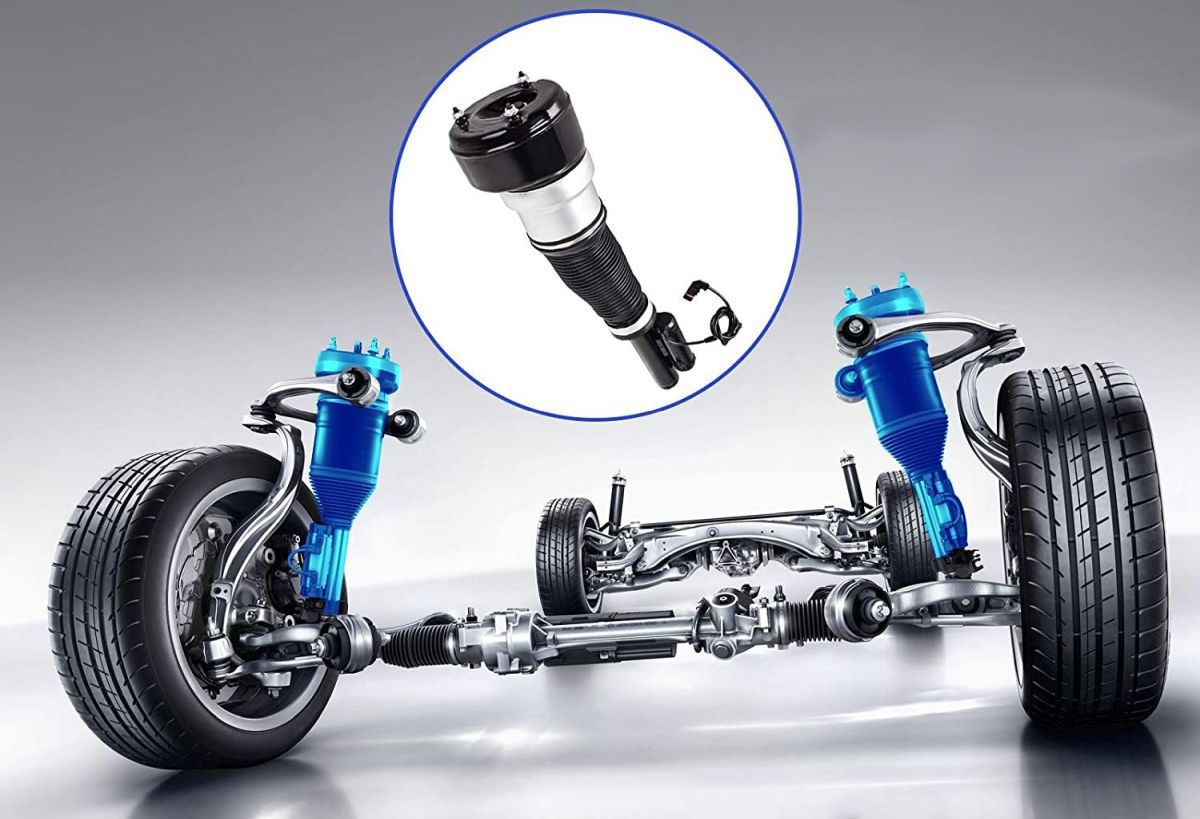
What Is Air Suspension? How Does It Work?
Air suspension is a type of vehicle suspension system that uses compressed air instead of conventional steel coil springs to support the vehicle’s weight and control its ride height. Depending on the vehicle, air suspension can also work together with other suspension components such as shock absorbers, control arms, and electronic control systems.
Air suspension is commonly found in luxury cars, SUVs, high-end vehicles, buses, trucks, and commercial vehicles. One of its biggest advantages is that the vehicle’s ride height can be adjusted according to driving conditions, vehicle load, or the selected driving mode.
How Does Air Suspension Work?
The basic principle of air suspension is relatively simple. Instead of a steel spring carrying the vehicle’s weight, an air spring or air bag filled with compressed air supports the vehicle.
The system continuously monitors the vehicle’s ride height through height sensors. When the vehicle is too low or too high, the suspension control module determines what needs to be done and controls the compressor and valves accordingly.
The basic operating sequence is:
Height sensor → Suspension control module → Compressor/valve block → Air spring → Vehicle height
If the vehicle is lower than the desired height, the system adds compressed air to the relevant air spring. If the vehicle is too high, the system releases some of the air.
This allows the suspension system to maintain a predetermined ride height even when the vehicle’s load changes.
Main Components of an Air Suspension System
An air suspension system can contain several mechanical, pneumatic, and electronic components. The exact design varies between manufacturers and models.
Air Springs
Air springs, also called air bags, are the components that support the vehicle’s weight. They are generally made from reinforced rubber and contain compressed air.
The pressure inside the air spring determines how much weight it can support and influences the vehicle’s ride height.
Air springs can deteriorate over time because of heat, cold weather, ozone, road salt, moisture, dirt, and constant flexing.
Air Suspension Compressor
The compressor produces compressed air for the system.
When the vehicle needs to be raised, the compressor supplies air to the air springs through the valve block.
A compressor should not normally have to run continuously. If it operates for unusually long periods or activates very frequently, an air leak or another system problem may be present.
Continuous compressor operation can also cause overheating and eventually damage the compressor.
Air Tank
Some air suspension systems use an air reservoir or air tank.
The tank stores compressed air so that the system can raise or adjust the suspension without requiring the compressor to operate every time.
Not every air suspension system has a separate air tank.
Valve Block
The valve block controls where compressed air goes.
It can direct air to individual air springs and can also release air from them when the vehicle needs to be lowered.
A faulty valve block can cause one side of the vehicle to sit higher or lower than the other, or it may prevent the suspension from adjusting correctly.
Ride Height Sensors
Ride height sensors measure the position of the vehicle body or suspension relative to the wheels or suspension components.
The suspension control module uses this information to determine whether the vehicle is at the correct height.
A faulty height sensor can cause incorrect ride height, uneven suspension, warning messages, or unexpected raising and lowering.
Suspension Control Module
The suspension control module is the electronic brain of the system.
It receives information from height sensors and, depending on the vehicle, pressure sensors and other vehicle systems.
It then controls the compressor, valve block, and other components to maintain the required ride height.
Air Lines and Fittings
Air lines transport compressed air between the compressor, valve block, and air springs.
Leaks can develop in the lines, fittings, O-rings, or connections.
Even a small leak can eventually cause the vehicle to lower while parked and force the compressor to work more frequently.
Air Dryer
Many systems include an air dryer to remove moisture from compressed air.
Moisture inside the pneumatic system can cause corrosion, freezing problems, and damage to valves or other components.
What Happens When the Vehicle Is Loaded?
One of the most useful features of air suspension is automatic load compensation.
Imagine that several passengers and heavy luggage are placed in the vehicle. The additional weight can cause the rear of the vehicle to sit lower.
The ride height sensors detect this change.
The suspension control module then commands the compressor and valve system to add air to the rear air springs.
The vehicle rises back to its target height.
This allows the vehicle to maintain a more consistent ride height even when the load changes.
What Happens When an Air Suspension Has a Leak?
Air leaks are among the most common problems in air suspension systems.
A leak can develop in an air spring, air line, fitting, valve block, or connection.
A slow leak may not be immediately obvious while driving. However, after the vehicle is parked for several hours, one corner may gradually become lower than the others.
For example, if the front-left air spring has a leak, the front-left corner may sit noticeably lower after the vehicle has been parked overnight.
The compressor may then run for a long time after the vehicle is started because the system is trying to restore the correct height.
This creates an important diagnostic clue:
A compressor that runs excessively does not necessarily mean the compressor itself is faulty.
An air leak may be causing the compressor to work continuously.
What Are the Symptoms of Air Suspension Failure?
Air suspension problems can produce several different symptoms.
Common symptoms include:
-
One corner of the vehicle sits lower than the others
-
The vehicle lowers while parked
-
The vehicle is leaning to one side
-
The compressor runs frequently
-
The compressor runs for an unusually long time
-
The vehicle cannot be raised
-
The vehicle cannot be lowered
-
Ride height is incorrect
-
Suspension warning light appears
-
A warning message appears on the dashboard
-
The ride becomes unusually hard
-
The vehicle feels unstable
-
Air can be heard escaping
-
The compressor becomes unusually noisy
-
Suspension height changes unexpectedly
The exact symptoms depend on which part of the system has failed.
Why Does One Corner of an Air Suspension Drop?
A single corner dropping is an important clue.
Possible causes include:
-
Leaking air spring
-
Damaged air line
-
Leaking fitting
-
Faulty valve block
-
Damaged O-ring
-
Height sensor problem
-
Electrical or control issue
A leaking air spring is a common possibility, but it should not automatically be assumed to be the cause.
The entire pneumatic system should be inspected before replacing expensive components.
Why Does the Vehicle Lower Overnight?
If the vehicle is at the correct height immediately after driving but becomes lower after several hours of parking, a slow air leak should be considered.
The leak may be small enough that the vehicle maintains its height while the system is active, but large enough to cause noticeable height loss after several hours.
The air spring, air lines, fittings, and valve block should be inspected.
A leak detection solution or soapy water can sometimes be used to identify escaping air. Bubbles forming around a connection can indicate a leak.
Why Does the Air Suspension Compressor Run Continuously?
Continuous or very frequent compressor operation can have several causes.
Possible causes include:
-
Air spring leakage
-
Air line leakage
-
Valve block leakage
-
Weak compressor
-
Faulty pressure sensor
-
Faulty height sensor
-
Air dryer problems
-
Electrical problems
-
Incorrect suspension height calibration
Replacing the compressor without finding the reason why it is overworking can result in the new compressor failing again.
If the compressor is running excessively, the system should be inspected for leaks before assuming the compressor itself is defective.
Common Causes of Air Suspension Problems
Air suspension components are exposed to harsh operating conditions.
Common causes of failure include:
Aging Air Springs
The rubber material in an air spring becomes harder and less flexible with age. Cracks can eventually develop, especially around areas that repeatedly fold and flex.
Air Leaks
Leaks can occur in air springs, hoses, fittings, O-rings, and valve blocks.
Compressor Wear
A compressor can become worn after years of operation. Excessive compressor operation caused by an air leak can accelerate this wear.
Valve Block Problems
A sticking or leaking valve can cause incorrect air distribution between suspension corners.
Height Sensor Failure
A damaged or incorrectly calibrated height sensor can provide incorrect information to the suspension control module.
Electrical Problems
Corroded connectors, damaged wiring, poor grounds, low battery voltage, and communication problems can interfere with the operation of the system.
Physical Damage
Air lines and air springs can be damaged by road debris, incorrect installation, rubbing against other components, or suspension modifications.
How Is Air Suspension Diagnosed?
A proper diagnosis should begin with a visual inspection.
The vehicle should be parked on a level surface and the height of each corner should be compared.
The following components should then be inspected:
-
Air springs
-
Air lines
-
Air fittings
-
Valve block
-
Compressor
-
Air dryer
-
Height sensors
-
Electrical connectors
-
Wiring
-
Suspension control module
The system should also be checked for air leaks.
On modern vehicles, a diagnostic scan tool can provide additional information. Stored fault codes and live data can help identify problems involving height sensors, pressure sensors, compressor operation, valve control, or communication between modules.
However, an OBD fault code does not automatically prove that the indicated component is defective.
For example, a height sensor-related code can sometimes be caused by damaged wiring, a poor electrical connection, incorrect calibration, or another suspension problem.
Can Air Suspension Be Repaired?
Yes. Air suspension systems are generally repairable, depending on the failed component.
Possible repairs include:
-
Air spring replacement
-
Air line replacement
-
Fitting or O-ring replacement
-
Compressor replacement
-
Valve block replacement
-
Height sensor replacement
-
Wiring repair
-
Connector repair
-
Suspension calibration
-
Control module programming or replacement
The correct repair depends on the actual cause of the problem.
Replacing several expensive components without performing a proper diagnosis can result in unnecessary costs.
Air Suspension vs. Conventional Coil Springs
Air suspension provides several advantages compared with conventional steel coil springs.
The biggest advantage is adjustability.
The vehicle can potentially be raised for increased ground clearance, lowered at higher speeds to improve aerodynamics, or automatically leveled when carrying additional weight.
Air suspension can also provide different suspension characteristics depending on the selected driving mode.
However, air suspension is mechanically and electronically more complicated.
A conventional coil spring is relatively simple. An air suspension system may contain compressors, air springs, valves, sensors, air lines, control modules, and additional electronic components.
This means there are more components that can potentially fail.
Air suspension is also generally more expensive to repair than a conventional spring suspension.
Advantages of Air Suspension
The main advantages include:
-
Adjustable ride height
-
Automatic load leveling
-
Improved ground clearance when required
-
Lower ride height at higher speeds on some vehicles
-
Different suspension modes
-
Better control of vehicle height
-
Improved load compensation
-
Ability to control individual suspension corners
The actual benefits depend on the vehicle manufacturer and suspension design.
Air suspension is not automatically more comfortable than every conventional suspension system. Ride comfort depends on the complete suspension design, damping characteristics, tires, chassis, and control strategy.
Disadvantages of Air Suspension
The main disadvantages include:
-
Higher repair costs
-
More components
-
Air spring aging
-
Compressor failure
-
Valve block problems
-
Air leaks
-
Sensor failures
-
More complicated diagnosis
-
Potential electronic control problems
A conventional suspension system may continue operating for many years with relatively little maintenance, while an air suspension system requires more attention as its pneumatic and electronic components age.
Is It Safe to Drive With a Faulty Air Suspension?
It depends on the severity of the problem.
A minor warning with normal ride height and normal vehicle behavior may allow the vehicle to be moved to a repair facility.
However, driving should be avoided if:
-
The vehicle is extremely low
-
A suspension corner is close to the tire
-
The vehicle is leaning significantly
-
The suspension cannot maintain its height
-
The compressor is overheating
-
There is a major air leak
-
The vehicle feels unstable
-
Suspension travel is severely restricted
-
The vehicle is contacting the bump stops
-
There is a significant warning or loss of suspension control
A vehicle with a severely lowered or uneven suspension can have reduced handling, altered suspension geometry, reduced ground clearance, and potentially unsafe tire or body clearance.
How Can Air Suspension Be Maintained?
Regular inspection can help detect problems before they become expensive failures.
When the vehicle is safely raised or inspected according to the manufacturer's procedure, check the air springs for cracks, dry rubber, damage, and unusual deformation.
Air lines should be checked for rubbing, kinks, corrosion, and physical damage.
Connections and fittings should be inspected for signs of leakage.
It is also useful to pay attention to compressor operation.
If the compressor suddenly starts running much more frequently than before, this should not be ignored.
Early detection of a small air leak can prevent excessive compressor operation and potentially avoid a much more expensive repair.
Final Thoughts
Air suspension is a sophisticated suspension technology that uses compressed air, air springs, sensors, valves, and electronic control systems to maintain and adjust vehicle ride height.
Its ability to compensate for vehicle load and change ride height provides advantages that conventional coil springs cannot easily offer.
However, the additional complexity also creates more potential failure points.
One corner dropping, the vehicle lowering overnight, unusual compressor operation, air leaks, incorrect ride height, or suspension warning messages should be investigated rather than ignored.
Most importantly, a faulty compressor is not always the root cause of an air suspension problem. A leaking air spring, damaged air line, faulty valve block, sensor problem, or electrical issue may be forcing the compressor to work harder than normal.
Correct diagnosis should therefore identify the actual cause before expensive components are replaced.