TR
TR EN
EN

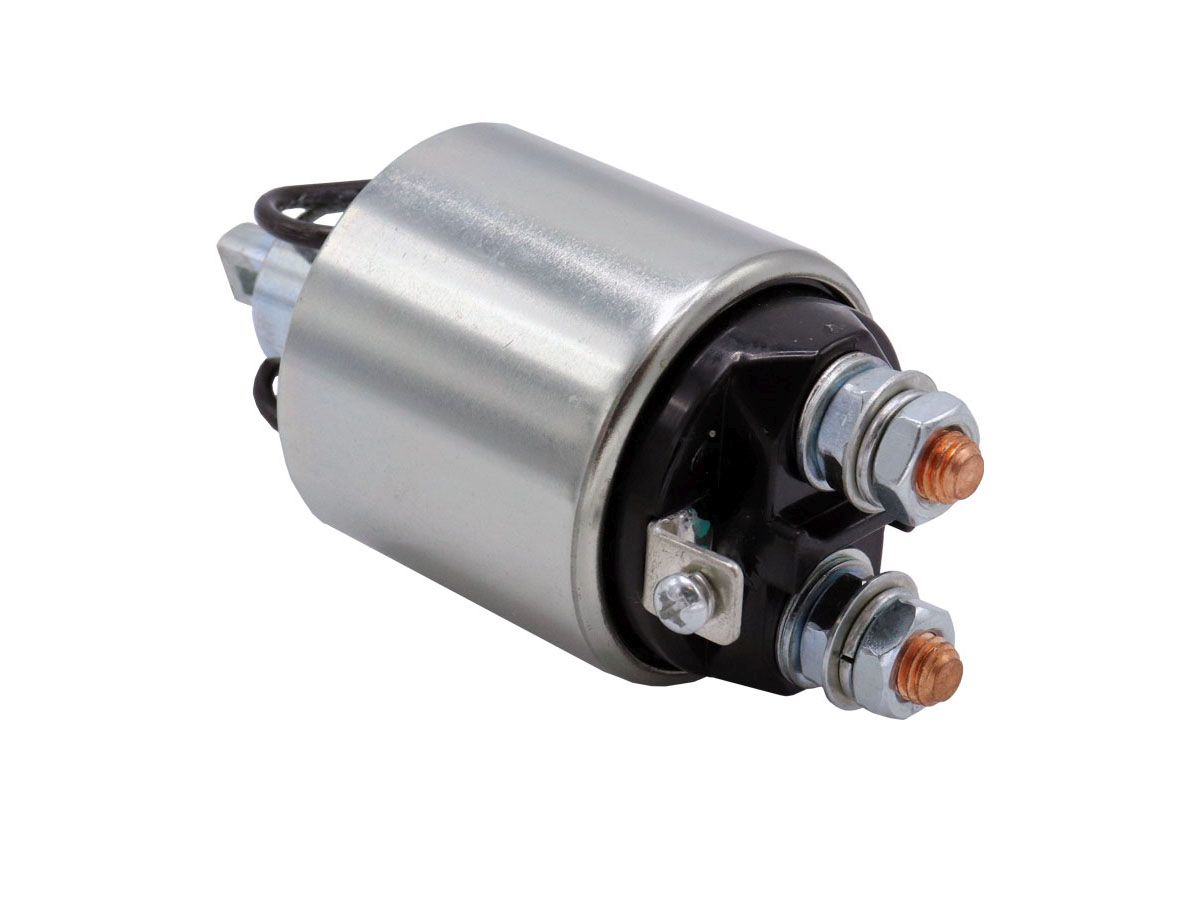
What Is a Starter Motor Solenoid? What Are the Symptoms of Failure?
The starter motor solenoid is a small but critical component of the engine starting system. When you turn the ignition key or press the start button, the solenoid helps connect the vehicle's battery to the starter motor and mechanically engages the starter gear with the engine's flywheel or flexplate.
Without this operation, the starter motor cannot properly crank the engine.
A starter solenoid problem can produce symptoms ranging from a single click when trying to start the vehicle to complete starter failure. However, similar symptoms can also be caused by a weak battery, poor electrical connections, damaged starter wiring, or a worn starter motor.
What Is a Starter Motor Solenoid?

The starter motor solenoid is an electromagnetic switching and engagement device mounted on or near the starter motor.
It performs two important functions:
-
It switches high electrical current to the starter motor.
-
It moves the starter drive gear into engagement with the engine's flywheel or flexplate.
The solenoid therefore acts as both an electrical switch and a mechanical actuator.
When the driver activates the starting system, the solenoid receives a relatively low-current control signal. Its internal electromagnetic coil creates a magnetic field, which moves a plunger.
This movement closes the high-current electrical contacts and, depending on the starter design, pushes the starter drive gear into engagement with the engine.
How Does the Starter Solenoid Work?
The starting process happens very quickly.
When the ignition switch or start button sends a start request:
-
The solenoid receives an electrical signal.
-
The solenoid coil creates a magnetic field.
-
The internal plunger moves.
-
The starter drive gear engages the flywheel or flexplate.
-
The high-current contacts close.
-
Battery current flows to the starter motor.
-
The starter motor rotates the engine.
-
Once the engine starts and the start command ends, the solenoid releases.
-
The starter gear disengages from the engine.
This entire process normally takes only a fraction of a second.
What Does a Starter Solenoid Sound Like When It Fails?
A failing solenoid can produce several different sounds.
The most common is a single click when the driver attempts to start the engine.
Other possibilities include:
-
Repeated clicking
-
A weak click
-
No sound at all
-
Clicking without engine cranking
-
A grinding sound
-
A starter that remains engaged
The sound can provide useful diagnostic information, but it does not identify the faulty component by itself.
What Are the Symptoms of a Bad Starter Solenoid?
A defective starter solenoid can cause several starting problems.
Common symptoms include:
-
Single click when starting
-
Repeated clicking
-
Starter motor does not turn
-
Engine cranks intermittently
-
Starter works sometimes and fails other times
-
Starter engages but does not crank the engine
-
Grinding noise during starting
-
Starter remains engaged after the engine starts
-
Slow or inconsistent cranking
-
No response when the start button is pressed
The exact symptoms depend on whether the solenoid's control circuit, electromagnetic coil, internal contacts, or mechanical mechanism has failed.
What Does a Single Click Mean When Starting?
A single click often means that the solenoid is receiving a start command and attempting to operate.
However, the click does not automatically mean that the solenoid itself is defective.
A single click with no engine cranking can also be caused by:
-
Weak battery
-
Corroded battery terminals
-
Poor engine ground
-
Damaged starter cable
-
High resistance in the electrical circuit
-
Worn solenoid contacts
-
Seized starter motor
The battery and high-current connections should therefore be tested before replacing the solenoid.
Why Does the Starter Click Repeatedly?
Rapid repeated clicking is commonly associated with insufficient electrical voltage or current.
Possible causes include:
-
Weak battery
-
Discharged battery
-
Loose battery terminal
-
Corroded battery connection
-
Poor ground connection
-
Damaged battery cable
-
Starter solenoid problem
When the solenoid tries to engage, the battery voltage may drop significantly. The solenoid then releases, voltage rises again, and the cycle repeats.
This produces the familiar rapid clicking sound.
Can a Weak Battery Look Like a Bad Starter Solenoid?
Yes.
This is one of the most common diagnostic mistakes.
A weak battery may have enough power to operate lights and other accessories but not enough to provide the very high current required by the starter motor.
When the starter is activated:
-
Battery voltage drops.
-
The solenoid may engage.
-
The starter cannot receive sufficient current.
-
The solenoid releases.
-
The process may repeat.
The result can sound exactly like a solenoid problem.
Battery condition and voltage should therefore be checked before replacing the starter or solenoid.
Can Corroded Battery Terminals Cause Starter Solenoid Problems?
Yes.
The starter motor requires very high current. Even a relatively small amount of resistance in the battery terminals or cables can cause a significant voltage drop.
Corrosion may occur at:
-
Battery terminals
-
Positive starter cable
-
Engine ground strap
-
Chassis ground connection
-
Starter connection
The vehicle may then produce a click but fail to crank the engine.
Cleaning the terminals may solve the problem if corrosion is the actual cause.
What Happens If the Starter Solenoid Contacts Wear Out?
The internal electrical contacts of the solenoid carry very high current.
Over time, repeated starting cycles can cause the contacts to:
-
Burn
-
Pit
-
Oxidize
-
Wear
-
Develop excessive electrical resistance
Eventually, the solenoid may still make a clicking sound but fail to deliver sufficient current to the starter motor.
This can produce an intermittent starting problem.
The vehicle may start normally several times and then suddenly produce only a click.
Why Does the Car Start Sometimes and Not Other Times?
Intermittent starting is a common symptom of electrical contact problems.
A worn solenoid may work correctly when its internal contacts make good contact but fail when the contacts are worn or contaminated.
Other possible causes include:
-
Battery terminals
-
Starter cable
-
Ground connection
-
Ignition switch
-
Start button
-
Starter relay
-
Neutral safety switch
-
Clutch safety switch
-
Immobilizer system
-
Engine control module
-
Starter motor
Because so many components can prevent cranking, intermittent starting should be diagnosed systematically.
Can a Bad Starter Motor Cause the Same Symptoms?
Yes.
The starter solenoid and starter motor work together.
A starter motor with worn brushes, damaged windings, worn bearings, or mechanical seizure can draw excessive current or fail to rotate.
The driver may hear the solenoid click but the engine does not crank.
Therefore, hearing a click does not automatically prove that the solenoid is faulty.
What Happens If the Solenoid Does Not Engage?
If the solenoid does not move the starter drive gear into position, the starter motor may not properly connect with the engine.
Possible symptoms include:
-
Clicking
-
Starter motor spinning without cranking the engine
-
Intermittent starting
-
Grinding noises
-
Complete starter failure
A mechanical problem inside the solenoid can prevent the starter gear from moving correctly.
Why Does the Starter Spin but the Engine Does Not Turn?
This can happen when the starter motor rotates but its drive gear does not properly engage the flywheel or flexplate.
Possible causes include:
-
Solenoid engagement problem
-
Damaged starter drive
-
Worn starter gear
-
Damaged flywheel teeth
-
Mechanical starter failure
In this situation, the starter may produce a spinning or whirring sound without actually cranking the engine.
What Causes a Grinding Noise When Starting?
A grinding sound can occur when the starter gear does not engage the flywheel or flexplate correctly.
Possible causes include:
-
Damaged starter gear
-
Worn flywheel teeth
-
Incorrect starter installation
-
Solenoid engagement problem
-
Starter mounting problem
-
Incorrect starter component
Grinding during starting should not be ignored.
Repeated attempts can damage both the starter gear and the flywheel or flexplate.
Why Does the Starter Stay Engaged After the Engine Starts?
This is a serious symptom.
Normally, the starter disengages immediately after the engine starts and the starting command ends.
If the starter continues running, possible causes include:
-
Sticking starter solenoid
-
Stuck relay
-
Faulty ignition switch
-
Start-button problem
-
Damaged wiring
-
Control-module problem
A starter that remains engaged can be damaged very quickly because the engine can spin the starter at extremely high speed.
If this happens, the starting circuit should be shut down and the vehicle inspected immediately.
Can a Faulty Ignition Switch Cause a Solenoid Problem?
Yes.
The ignition switch or start button provides the command that activates the starter circuit.
If the switch becomes worn or its contacts develop a fault, the solenoid may not receive the correct signal.
Possible symptoms include:
-
No starter response
-
Intermittent starting
-
Starting only when the key is held in a certain position
-
Starter activation after releasing the key
-
Unusual electrical behavior
Modern vehicles may use an electronic start request rather than directly switching the starter solenoid.
Can an Immobilizer Prevent the Starter From Operating?
Yes, depending on the vehicle's design.
The immobilizer system may prevent the starter from operating or prevent the engine from starting if the correct key authorization is not detected.
Possible causes include:
-
Incorrect key
-
Key transponder problem
-
Immobilizer antenna problem
-
Communication fault
-
Control-module problem
-
Key programming issue
If the vehicle displays an immobilizer warning at the same time as a no-crank condition, the immobilizer system should also be investigated.
Can an Automatic Transmission Prevent the Starter From Working?
Yes.
Automatic vehicles normally have a transmission range or neutral safety function that prevents the starter from operating unless the transmission is in an appropriate position, typically Park or Neutral.
A faulty range sensor, switch, wiring, or transmission control circuit can therefore create a no-crank condition that may initially look like a starter solenoid failure.
Trying the correct starting procedure in Neutral can sometimes provide a useful diagnostic clue, but the underlying fault should still be investigated.
Can a Manual Transmission Prevent Starting?
Yes.
Many manual-transmission vehicles use a clutch pedal switch.
The starter may only operate when the clutch pedal is fully depressed.
If the switch is defective or incorrectly adjusted, pressing the start button or turning the ignition key may produce no starter response.
This can be mistaken for a failed starter solenoid.
How Is a Starter Solenoid Diagnosed?
A proper diagnosis should begin with the battery and electrical connections.
A technician may check:
-
Battery voltage
-
Battery condition
-
Battery terminals
-
Positive starter cable
-
Engine ground
-
Starter fuse
-
Starter relay
-
Ignition/start signal
-
Solenoid control voltage
-
Voltage at the starter
-
Voltage drop under load
-
Starter current draw
-
Starter motor operation
The most useful test is often determining what happens electrically at the moment the start command is given.
Why Is Voltage-Drop Testing Important?
Voltage-drop testing can identify excessive resistance in high-current starter circuits.
A cable may look perfectly normal from the outside but have excessive resistance because of:
-
Corrosion
-
Damaged strands
-
Poor connections
-
Loose terminals
-
Internal cable deterioration
The starter may then receive insufficient voltage even though battery voltage appears normal when the vehicle is not cranking.
This is why simply measuring battery voltage is sometimes not enough.
Can an OBD Scanner Detect a Starter Solenoid Problem?
Sometimes, particularly on modern vehicles with electronically controlled starting systems.
An OBD or manufacturer-level diagnostic scan may reveal faults involving:
-
Starter control circuits
-
Body control modules
-
Engine control modules
-
Immobilizer authorization
-
Start request signals
-
Communication networks
However, a mechanical or internal electrical failure inside a conventional starter solenoid may not generate a diagnostic trouble code.
A multimeter and electrical testing are often necessary.
Can a Starter Solenoid Be Replaced Separately?
It depends on the starter design.
Some starter motors use a separately replaceable solenoid.
On many modern starters, however, the solenoid is integrated into the starter assembly.
In that case, replacing the complete starter motor assembly may be more practical or may be the manufacturer's recommended repair.
Before purchasing a replacement part, the exact starter configuration should be identified.
Should the Starter Motor Be Replaced With the Solenoid?
Not necessarily.
If the starter motor is healthy but the solenoid has failed and the solenoid is serviceable separately, replacing only the solenoid may be appropriate.
However, if the starter motor has worn brushes, damaged bearings, excessive current draw, or other internal problems, replacing only the solenoid may not solve the problem.
The entire starter assembly should be evaluated.
How Long Does a Starter Solenoid Last?
There is no universal service life.
Its lifespan depends on:
-
Number of starting cycles
-
Battery condition
-
Electrical system voltage
-
Starter motor condition
-
Vehicle usage
-
Temperature
-
Manufacturing quality
-
Corrosion and environmental conditions
A vehicle used for frequent short trips may perform many more starting cycles over its lifetime than one used primarily for long-distance driving.
Can Cold Weather Cause Starter Solenoid Problems?
Cold weather can make an existing starting-system problem more noticeable.
Low temperatures can reduce battery performance and increase the mechanical resistance of the engine.
As a result, the starter requires more effort while the battery may provide less available current.
A marginal battery or weak electrical connection may therefore appear to be a starter solenoid problem during cold weather.
Can a Bad Alternator Damage the Starter Solenoid?
A faulty alternator does not normally directly damage the starter solenoid.
However, a charging-system problem can leave the battery chronically undercharged.
Repeated low battery voltage can place additional stress on the starting system and may contribute to repeated starting problems.
If starter problems repeatedly occur, the battery and charging system should also be checked.
Is It Safe to Drive With a Bad Starter Solenoid?
If the engine is already running, a starter solenoid fault may not affect normal driving.
The major risk is that the vehicle may not restart after the engine is switched off.
For this reason, a suspected starter solenoid problem should not be ignored, particularly if the vehicle has already experienced intermittent no-start conditions.
A starter that remains engaged is more urgent because continued operation can cause severe damage.
What Is the Difference Between a Starter Relay and a Starter Solenoid?
These components are related but are not the same thing.
A starter relay is an electrical switching device that controls the starter circuit.
A starter solenoid is generally mounted on the starter motor and performs the high-current switching function while also mechanically engaging the starter drive gear.
Some vehicles use additional relays and electronic control modules between the ignition switch or start button and the starter solenoid.
Therefore, a fault in the starter relay can produce symptoms similar to a solenoid failure.
Final Thoughts
The starter motor solenoid is responsible for two critical jobs: switching high electrical current to the starter motor and helping engage the starter drive with the engine's flywheel or flexplate.
A faulty solenoid can cause:
-
Clicking without cranking
-
Intermittent starting
-
Complete starter failure
-
Starter engagement problems
-
Grinding noises
-
Starter operation without engine cranking
-
In severe cases, a starter that remains engaged
However, a clicking starter does not automatically mean that the starter solenoid is defective. A weak battery, corroded terminals, poor ground, damaged cables, starter relay, ignition switch, clutch switch, transmission range switch, immobilizer system, or starter motor can produce similar symptoms.
The correct diagnosis should therefore begin with battery condition, electrical connections, voltage-drop testing, and the starter control signal before replacing expensive components.
If the solenoid is receiving the correct command and sufficient electrical power but cannot switch the starter motor or engage the starter drive correctly, the solenoid or starter assembly becomes a much stronger suspect.