TR
TR EN
EN

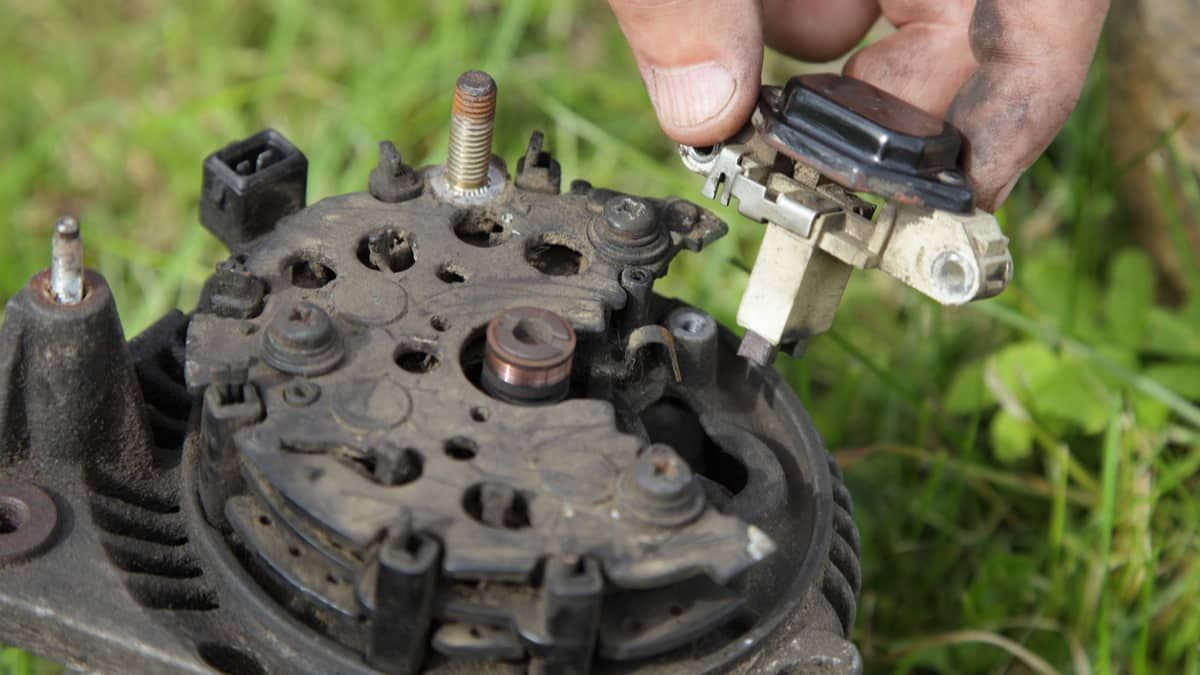
What Is a Voltage Regulator? What Are the Symptoms of Failure?
The voltage regulator is an important part of a vehicle's charging system. Its main job is to control the voltage produced by the alternator and keep the vehicle's electrical system within an appropriate operating range.
Without proper voltage regulation, the alternator can either produce too little voltage or excessive voltage. Both conditions can cause electrical problems, battery charging issues, warning lights, and in severe cases, damage to sensitive electronic components.
In many modern vehicles, the voltage regulator is integrated into the alternator. In some older or specially designed charging systems, it may be installed separately.
What Does a Voltage Regulator Do?
The alternator generates electrical power while the engine is running. However, the alternator's output is not simply fixed at one voltage.
The voltage regulator continuously monitors the electrical system and adjusts the alternator's output accordingly.
Its main functions are to:
-
Control alternator output voltage
-
Maintain proper battery charging
-
Prevent overcharging
-
Prevent insufficient charging
-
Compensate for changes in electrical load
-
Help protect electronic components
-
Maintain stable system voltage
The regulator essentially controls how much electrical energy the alternator produces according to the vehicle's requirements.
How Does a Voltage Regulator Work?
The alternator generates electricity through electromagnetic induction.
The voltage regulator controls the alternator's magnetic field, usually by controlling the current supplied to the rotor field winding.
When system voltage is too low, the regulator can increase the alternator's field excitation, allowing the alternator to produce more electrical power.
When voltage becomes sufficiently high, the regulator reduces field excitation.
This process happens continuously while the engine is running.
In modern vehicles, this control can be more sophisticated. The regulator may communicate with the engine or body control system and adjust charging behavior according to:
-
Battery state of charge
-
Battery temperature
-
Electrical load
-
Engine operating conditions
-
Vehicle operating mode
-
Start-stop requirements
-
Fuel-economy strategies
Where Is the Voltage Regulator Located?
The location depends on the vehicle.
In many modern vehicles, the regulator is mounted directly inside the alternator.
In some older systems, the voltage regulator may be installed separately in the engine compartment.
If the regulator is integrated into the alternator, replacing the regulator may require partial disassembly of the alternator or replacement of the complete alternator assembly.
What Are the Symptoms of a Bad Voltage Regulator?
A failing voltage regulator can cause a wide range of electrical symptoms.
Common symptoms include:
-
Battery warning light
-
Overcharging
-
Undercharging
-
Fluctuating electrical voltage
-
Headlights becoming unusually bright or dim
-
Battery repeatedly going flat
-
Difficult starting
-
Electrical accessories behaving abnormally
-
Flickering dashboard lights
-
Electronic warning lights
-
Premature battery failure
-
Bulbs burning out frequently
-
Unstable electrical system voltage
The symptoms depend on whether the regulator is failing in an undercharging, overcharging, or intermittent condition.
What Happens When the Voltage Regulator Fails?
A regulator can fail in several ways.
It may:
-
Reduce alternator output too much
-
Allow excessive alternator output
-
Produce unstable voltage
-
Fail intermittently
-
Respond incorrectly to electrical load
-
Stop controlling the alternator field correctly
A regulator that fails in an undercharging condition can leave the battery progressively discharged.
A regulator that fails in an overcharging condition can expose the battery and vehicle electronics to excessive voltage.
What Are the Symptoms of Overcharging?
Overcharging is one of the more serious voltage-regulator problems.
Possible symptoms include:
-
Battery becoming unusually hot
-
Battery electrolyte loss in serviceable batteries
-
Strong sulfur-like odor
-
Bulbs failing prematurely
-
Excessively bright lights
-
Electronic warning lights
-
Battery swelling
-
Rapid battery deterioration
-
Unstable electrical behavior
Modern vehicles contain numerous electronic control modules that are designed to operate within a specific voltage range.
Excessive voltage can therefore cause problems beyond the battery itself.
Can a Bad Voltage Regulator Drain the Battery?
Yes, but the mechanism matters.
If the regulator causes insufficient alternator output, the battery may not receive enough charge while driving.
Over time, the battery becomes progressively discharged.
The driver may initially notice:
-
Slow cranking
-
Difficult starting
-
Battery warning light
-
Dimming lights
-
Electrical accessories becoming weaker
Eventually, the battery may become too discharged to start the engine.
However, battery discharge does not automatically mean that the voltage regulator is faulty.
A defective alternator, damaged belt, poor electrical connection, or parasitic electrical drain can produce similar symptoms.
Can a Bad Voltage Regulator Overcharge the Battery?
Yes.
If the regulator fails to reduce alternator output when the system reaches the appropriate voltage, the alternator can continue charging excessively.
This can cause excessive battery charging and heat.
Overcharging can significantly shorten battery life and, depending on the battery type and severity of the fault, may cause physical battery damage.
A battery that repeatedly becomes hot or swells should be inspected promptly.
Why Do the Headlights Flicker?
Headlight flickering can be caused by unstable charging voltage.
If the voltage regulator is not maintaining stable system voltage, the voltage supplied to electrical equipment may fluctuate.
This can cause:
-
Headlights to flicker
-
Interior lights to fluctuate
-
Dashboard illumination to change
-
Electronic systems to behave inconsistently
However, flickering lights can also be caused by:
-
Loose battery terminals
-
Poor grounds
-
Alternator problems
-
Damaged wiring
-
Loose alternator connections
-
Battery problems
-
Other electrical faults
Therefore, flickering lights should not automatically be attributed to the regulator.
Why Does the Battery Warning Light Come On?
The battery warning light generally relates to the charging system, not simply the condition of the battery.
A voltage-regulator failure can cause the warning light to illuminate because the alternator is no longer producing the expected charging output.
Other possible causes include:
-
Alternator failure
-
Broken or slipping serpentine belt
-
Damaged alternator wiring
-
Poor ground connection
-
Faulty battery
-
Charging-system control problem
-
Alternator pulley problem
If the battery warning light remains illuminated while the engine is running, the charging system should be checked.
Can a Bad Voltage Regulator Cause Starting Problems?
Yes, indirectly.
If the regulator or alternator does not maintain proper charging voltage, the battery may not remain adequately charged.
After several days or repeated trips, the battery can become too weak to crank the engine effectively.
The driver may notice:
-
Slow starter operation
-
Clicking when starting
-
Longer cranking
-
Intermittent starting
-
Complete no-start condition
However, the starter motor and battery should also be tested before blaming the voltage regulator.
Can a Voltage Regulator Cause a Car to Stall?
In severe cases, yes.
If the alternator stops supplying sufficient electrical power, the vehicle may eventually rely heavily on the battery.
As battery voltage drops, critical electronic systems may stop functioning correctly.
Depending on the vehicle, this can eventually result in:
-
Engine-management problems
-
Multiple warning lights
-
Reduced electrical-system performance
-
Engine stalling
A vehicle that stalls because of a charging-system failure may not restart afterward.
Can a Voltage Regulator Cause Check Engine Light Problems?
It can contribute indirectly.
Modern engine control systems depend on stable electrical voltage.
If system voltage becomes abnormally low or high, various control modules and sensors may report faults.
A diagnostic scan may reveal:
-
Low-voltage codes
-
High-voltage codes
-
Communication faults
-
Control-module voltage-related faults
-
Charging-system-related codes
However, an OBD fault code does not necessarily prove that the voltage regulator itself has failed.
Can a Bad Voltage Regulator Damage Electronic Components?
Yes, particularly in an overcharging condition.
Modern vehicles contain many sensitive electronic systems, including:
-
Engine control modules
-
Transmission control modules
-
ABS modules
-
Airbag systems
-
Infotainment systems
-
Instrument clusters
-
Body control modules
-
Sensors
-
Actuators
These systems are designed to operate within specified voltage limits.
Abnormally high or unstable voltage can potentially damage sensitive electronic components.
This is one reason why an overcharging condition should not be ignored.
Can a Bad Voltage Regulator Damage the Battery?
Yes.
An undercharging regulator can leave the battery chronically undercharged, while an overcharging regulator can expose it to excessive charging voltage.
Both conditions can shorten battery life.
A battery that repeatedly fails shortly after replacement should therefore prompt an inspection of the charging system.
Replacing the battery without correcting the underlying charging problem may result in another premature battery failure.
How Do You Test a Voltage Regulator?
One of the first tests is measuring charging-system voltage with a multimeter.
A technician may measure voltage:
-
With the engine off
-
At idle
-
At higher engine speed
-
With electrical loads switched on
-
During different operating conditions
A conventional charging system often operates around the mid-14-volt range under appropriate conditions, but the exact voltage is vehicle-specific.
Modern vehicles can intentionally vary charging voltage, so a fixed number should not be treated as a universal specification.
The manufacturer's charging-system specifications should be used for accurate diagnosis.
Why Is Battery Voltage Not Always a Fixed Number?
Modern vehicles increasingly use intelligent charging systems.
Instead of maintaining one constant voltage at all times, the vehicle may vary alternator output according to operating conditions.
The charging voltage can change based on:
-
Battery temperature
-
Battery state of charge
-
Electrical load
-
Engine speed
-
Vehicle deceleration
-
Acceleration
-
Start-stop operation
-
Energy-management strategy
For this reason, seeing a voltage that is not exactly the same as a traditional charging-system value does not automatically mean the regulator is defective.
What Is a Smart Voltage Regulator?
Modern charging systems can use regulators that communicate with the vehicle's electronic control systems.
Instead of operating independently, the regulator may receive commands from a control module.
This allows the vehicle to manage charging more efficiently.
The system may intentionally reduce alternator load during acceleration and increase charging during suitable operating conditions.
This approach can improve:
-
Fuel economy
-
Battery management
-
Start-stop operation
-
Electrical efficiency
-
Emissions performance
A diagnostic procedure for these systems may therefore require a scan tool capable of accessing manufacturer-specific data.
Can a Battery Temperature Sensor Affect Voltage Regulation?
Yes.
Many modern vehicles monitor battery temperature because battery charging requirements change with temperature.
The battery monitoring system may provide information used by the charging system to adjust charging voltage.
If the battery temperature sensor or battery monitoring sensor provides incorrect information, the charging system may behave abnormally.
Possible symptoms can include:
-
Incorrect charging voltage
-
Battery warning
-
Start-stop malfunction
-
Battery discharge
-
Charging-system fault codes
Therefore, a charging problem does not always originate inside the alternator.
Can a Loose Battery Terminal Cause Regulator Symptoms?
Yes.
A loose or corroded battery terminal can create excessive resistance in the charging circuit.
This can cause:
-
Voltage fluctuations
-
Battery charging problems
-
Starting problems
-
Warning lights
-
Electrical instability
A technician should inspect the battery terminals and ground connections before replacing the alternator or voltage regulator.
Can a Bad Alternator Be Mistaken for a Bad Voltage Regulator?
Absolutely.
The voltage regulator is closely integrated with the alternator on many vehicles.
If the alternator is not producing sufficient electrical power, possible causes include:
-
Voltage regulator failure
-
Worn brushes
-
Damaged rotor
-
Stator problems
-
Rectifier failure
-
Bearing problems
-
Internal wiring failure
-
Pulley or mechanical problems
Therefore, low charging voltage does not automatically prove that the regulator needs to be replaced.
The entire charging system should be tested.
Can a Bad Serpentine Belt Cause Charging Problems?
Yes.
The alternator is normally driven mechanically by the engine through a belt.
If the belt is:
-
Broken
-
Loose
-
Slipping
-
Damaged
-
Contaminated
the alternator may not rotate correctly.
This can result in low charging voltage or complete loss of charging.
A faulty belt tensioner or alternator pulley can produce similar symptoms.
Before diagnosing an electronic regulator, the mechanical drive system should also be inspected.
Can a Voltage Regulator Make the Alternator Noisy?
Usually, the regulator itself is not the direct cause of mechanical alternator noise.
Unusual sounds are more commonly associated with:
-
Alternator bearings
-
Pulley
-
Belt tensioner
-
Rotor
-
Internal mechanical damage
However, electrical faults can sometimes change alternator operating behavior or create unusual symptoms.
A noisy alternator should therefore be inspected mechanically as well as electrically.
Can an OBD Scanner Diagnose a Voltage Regulator?
An OBD scanner can be very useful, particularly on modern vehicles.
Depending on the vehicle, diagnostic equipment may provide information about:
-
Battery voltage
-
Alternator requested output
-
Alternator actual output
-
Charging-system faults
-
Battery state of charge
-
Battery temperature
-
Energy-management status
-
Communication between modules
However, a basic OBD scanner may not provide enough information to determine whether the regulator, alternator, wiring, or battery is responsible.
Manufacturer-level diagnostic equipment may be required for advanced charging systems.
Should You Replace the Voltage Regulator or the Alternator?
This depends on the vehicle and the actual fault.
If the regulator is separately serviceable and the alternator itself is in good condition, replacing the regulator may be a reasonable repair.
However, if the regulator is integrated into the alternator or other alternator components are also worn, replacing or rebuilding the complete alternator may be more appropriate.
The cheapest component is not necessarily the correct repair.
Is It Safe to Drive With a Bad Voltage Regulator?
It depends on the type and severity of the failure.
A vehicle with a charging-system problem may continue running for a while using the battery as an electrical power source.
However, once the battery becomes discharged, the engine may stop running and the vehicle may not restart.
An overcharging condition can be even more concerning because excessive voltage can damage the battery and electronic components.
If the battery warning light remains on, electrical voltage is unstable, or the vehicle exhibits multiple electrical warnings, continued driving should be avoided until the charging system is inspected.
Final Thoughts
The voltage regulator controls alternator output and helps maintain a stable electrical supply for the vehicle while keeping the battery properly charged.
A faulty regulator can cause:
-
Battery warning light
-
Undercharging
-
Overcharging
-
Flickering lights
-
Electrical instability
-
Battery failure
-
Starting problems
-
Multiple electronic warnings
-
Abnormally high or low charging voltage
However, a charging problem does not automatically mean that the voltage regulator is defective. The alternator, battery, belt, terminals, grounds, wiring, battery temperature sensor, and charging-system control modules can all contribute to similar symptoms.
On older vehicles, testing may be relatively straightforward with a multimeter. On modern vehicles with intelligent charging systems, charging voltage can intentionally vary, so proper diagnosis requires understanding the vehicle's charging strategy.
The best approach is therefore to test the complete charging system rather than replacing the alternator or regulator based on a single voltage measurement or warning light.