TR
TR EN
EN

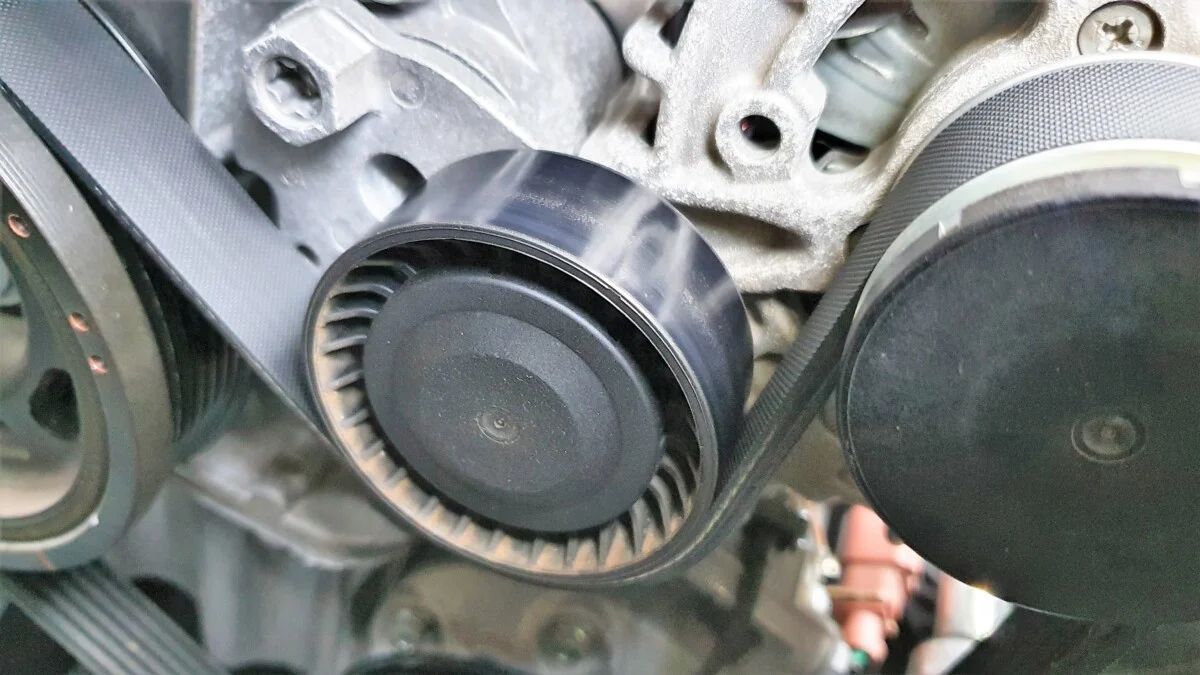
What Is an Idler Pulley? What Are the Symptoms of Idler Pulley Failure?
The idler pulley is an important component of the engine's accessory belt system. Its main purpose is to guide and support the belt as it travels around the crankshaft pulley and other belt-driven components.
Depending on the engine design, the accessory belt may need to follow a specific route around components such as the alternator, air conditioning compressor, power steering pump, and water pump. The idler pulley helps maintain the correct belt path and provides a stable contact surface for the belt.
Although an idler pulley is mechanically simple, its bearing operates continuously whenever the engine is running. Over time, the bearing can wear out, the pulley can develop excessive play, or the pulley surface can become damaged.
A failing idler pulley can produce unusual belt noises and, in severe cases, cause the accessory belt to come off or break.
What Does an Idler Pulley Do?
The idler pulley does not normally drive an accessory.
Instead, it guides the accessory belt and helps maintain the correct belt routing.
Its functions include:
-
Guiding the accessory belt
-
Supporting the belt between driven components
-
Maintaining the correct belt path
-
Reducing unwanted belt vibration
-
Helping the belt maintain proper contact with other pulleys
-
Contributing to smooth belt operation
The exact number and location of idler pulleys vary depending on the engine.
Some engines have one idler pulley, while others may use several.
How Does an Idler Pulley Work?
An idler pulley usually consists of a pulley wheel mounted on a bearing.
The accessory belt runs over the outer surface of the pulley while the bearing allows the pulley to rotate freely.
When the engine is running, the crankshaft rotates the accessory belt. The belt then rotates the idler pulley.
A healthy idler pulley should rotate smoothly and quietly.
The bearing should not have significant:
-
Roughness
-
Grinding
-
Side-to-side movement
-
Excessive resistance
-
Metallic noise
As the bearing wears, friction increases and the pulley may begin producing noise or vibration.
What Is the Difference Between an Idler Pulley and a Tensioner Pulley?
These two components are often confused.
An idler pulley primarily guides the belt and supports its routing.
A tensioner pulley is part of the belt tensioning mechanism and applies the required tension to the belt.
In simple terms:
Idler pulley → guides the belt
Tensioner pulley → maintains belt tension
However, some vehicles have designs where the distinction can be less obvious because several pulley and tensioner components work together.
What Are the Symptoms of a Bad Idler Pulley?
A worn idler pulley can produce several symptoms.
Common signs include:
-
Squealing or squeaking from the engine
-
Whining or humming noise
-
Grinding noise
-
Rattling noise
-
Chirping from the accessory belt
-
Belt vibration
-
Visible pulley wobble
-
Accessory belt misalignment
-
Damaged or uneven belt wear
-
Burning rubber smell
-
Accessory belt failure
-
Noise that increases with engine speed
In many cases, the noise becomes more noticeable as engine RPM increases.
Squealing Noise From the Belt Area
A squealing sound does not automatically mean the idler pulley is defective.
A worn or contaminated accessory belt can also squeal.
However, an idler pulley bearing that is beginning to seize can increase belt resistance and cause abnormal noise.
Possible causes should therefore include:
-
Idler pulley bearing
-
Tensioner pulley
-
Accessory belt
-
Alternator bearing
-
Air conditioning compressor pulley
-
Water pump bearing
-
Power steering pump
-
Belt misalignment
The entire accessory drive system should be inspected rather than replacing the first pulley that appears suspicious.
Grinding or Humming Noise
A grinding or humming noise is more concerning than a simple belt squeak.
If the idler pulley bearing is worn, its internal components may no longer rotate smoothly.
The noise can become:
-
Louder as engine speed increases
-
More noticeable when the engine is cold
-
More noticeable after the engine warms up
-
Intermittent at first and constant later
A severely damaged bearing can eventually seize.
If the pulley locks up while the engine is running, the accessory belt may overheat, slip, become damaged, or break.
Rattling or Chirping Noise
A worn pulley bearing can sometimes produce a rattling or chirping sound.
A chirping noise may also indicate that the pulley is not rotating perfectly or that the belt is moving laterally across the pulley.
Possible causes include:
-
Bearing wear
-
Pulley misalignment
-
Bent pulley
-
Excessive shaft play
-
Belt damage
-
Incorrect belt routing
This is why identifying the exact location of an engine-bay noise is important.
Idler Pulley Wobbling
A pulley should rotate in a stable and controlled manner.
If the idler pulley visibly wobbles while the engine is running, there may be a serious problem with:
-
Pulley bearing
-
Pulley mounting
-
Pulley shaft
-
Fastener
-
Bracket
-
Belt alignment
A small amount of movement can be difficult to judge visually, so the manufacturer's specifications and proper inspection procedures should be followed.
A significantly wobbling pulley should not be ignored.
Accessory Belt Vibrates or Moves Abnormally
A worn idler pulley can affect the movement of the accessory belt.
You may notice:
-
Belt flutter
-
Excessive vibration
-
Belt wandering
-
Uneven movement
-
Belt edge wear
However, belt vibration can also originate from a worn tensioner or another accessory pulley.
The belt routing and all pulleys should therefore be inspected together.
Uneven Accessory Belt Wear
A healthy belt should normally contact the pulleys evenly.
If an idler pulley is misaligned, the belt can run at an angle.
This can result in:
-
Edge wear
-
Cracking
-
Fraying
-
Shiny or glazed areas
-
Uneven rib wear
-
Belt deformation
If a new belt becomes damaged unusually quickly, the cause should be investigated instead of simply installing another belt.
Burning Rubber Smell
A burning rubber smell from the engine compartment can indicate severe belt friction.
A seized or partially seized idler pulley can cause the belt to slip over the pulley rather than rotating it normally.
This can generate significant heat.
Other possible causes include:
-
Seized accessory
-
Bad tensioner
-
Damaged belt
-
Pulley misalignment
-
Alternator bearing failure
-
Air conditioning compressor problem
A burning belt smell should be investigated promptly.
Can a Bad Idler Pulley Cause the Accessory Belt to Break?
Yes.
If the idler pulley bearing becomes excessively worn or seizes completely, the belt can experience abnormal friction and heat.
The belt may then:
-
Slip
-
Overheat
-
Fray
-
Become damaged
-
Jump off the pulley
-
Break
The consequences of a broken accessory belt depend on the vehicle.
Loss of the belt may disable components such as:
-
Alternator
-
Air conditioning compressor
-
Power steering system on some vehicles
-
Water pump on some engine designs
If the water pump is driven by the accessory belt, belt failure can lead to rapid engine overheating.
Can an Idler Pulley Cause Battery Problems?
Indirectly, yes.
If the accessory belt is slipping, damaged, or comes off because of an idler pulley problem, the alternator may stop rotating correctly.
This can cause:
-
Battery warning light
-
Low charging voltage
-
Battery discharge
-
Electrical system problems
-
Engine stalling after the battery becomes depleted
Therefore, an idler pulley problem can sometimes appear to be an alternator or battery problem.
Can an Idler Pulley Cause Overheating?
It depends on the engine design.
If the water pump is driven by the same accessory belt, an idler pulley failure that causes the belt to come off can stop the water pump.
This can result in:
-
Rapid coolant temperature increase
-
Engine overheating
-
Coolant boiling
-
Serious engine damage
Not every vehicle uses an accessory belt to drive the water pump, so this consequence varies by engine.
How Is an Idler Pulley Tested?
A proper inspection should be performed with the engine turned off when checking the pulley mechanically.
The belt can be inspected for:
-
Cracks
-
Fraying
-
Glazing
-
Missing ribs
-
Uneven wear
-
Contamination
The pulley can then be checked according to the manufacturer's procedure.
A technician may inspect for:
-
Rough bearing movement
-
Excessive play
-
Grinding
-
Noise
-
Resistance
-
Pulley damage
-
Misalignment
On some vehicles, removing the belt and manually rotating the pulley can help identify a rough or noisy bearing.
However, the belt should only be removed when following the correct service procedure.
Can You Spin the Idler Pulley by Hand?
With the engine off and the belt removed, a technician can often rotate the idler pulley by hand to check its condition.
A healthy bearing should generally rotate smoothly without:
-
Grinding
-
Notching
-
Excessive resistance
-
Significant side play
-
Rough movement
However, a simple hand-spin test is not always enough to identify every failure.
Some bearings may sound acceptable when unloaded but produce noise under operating conditions.
Why Does an Idler Pulley Fail?
Idler pulley failure is usually related to bearing wear or mechanical deterioration.
Common causes include:
-
High mileage
-
Normal bearing wear
-
Heat
-
Dust and contamination
-
Water intrusion
-
Poor-quality replacement parts
-
Pulley misalignment
-
Excessive belt tension
-
Accessory belt problems
The engine compartment is a harsh environment, and the pulley bearing is exposed to continuous rotation and temperature changes.
Can a Bad Idler Pulley Damage a New Belt?
Yes.
Installing a new belt without replacing a severely worn pulley can result in premature belt failure.
If the pulley bearing is rough or misaligned, the new belt can experience:
-
Excessive friction
-
Uneven wear
-
Edge damage
-
Heat buildup
-
Rib wear
Therefore, when replacing an accessory belt, the condition of the idler pulley and tensioner should also be checked.
Should the Idler Pulley Be Replaced With the Belt?
It depends on the vehicle and the condition of the pulley.
If the pulley bearing is noisy, rough, loose, or damaged, it should be replaced.
Some manufacturers recommend replacing certain pulleys or the complete tensioner assembly as part of scheduled maintenance, while others do not.
If the vehicle has high mileage and the pulley is showing signs of wear, replacing the worn component while servicing the belt can prevent future belt-drive problems.
Can You Drive With a Bad Idler Pulley?
Driving with a noisy or damaged idler pulley is not recommended.
A pulley bearing may continue working for some time after the first noise appears, but its condition can deteriorate without warning.
If the pulley seizes, the accessory belt can be thrown off or broken.
Stop driving and have the system inspected if you notice:
-
Loud grinding
-
Severe pulley wobbling
-
Burning rubber smell
-
Smoke from the belt area
-
Accessory belt damage
-
Battery warning light
-
Rapid engine temperature increase
-
Sudden loss of power steering on vehicles using belt-driven hydraulic steering
Idler Pulley Failure vs Tensioner Failure
The symptoms of a bad idler pulley and a bad tensioner can be very similar.
Both can cause:
-
Belt noise
-
Belt vibration
-
Misalignment
-
Uneven belt wear
-
Accessory belt damage
The difference is that the tensioner also has the job of maintaining belt tension.
A faulty tensioner may show:
-
Weak or excessive belt tension
-
Tensioner arm movement
-
Oscillation
-
Damaged tensioner spring or mechanism
A proper diagnosis should identify which component is actually causing the problem.
Does an OBD Scanner Detect an Idler Pulley Problem?
Usually, no.
An idler pulley is a mechanical component and normally does not contain an electronic sensor.
Therefore, a worn bearing will generally not create a specific OBD diagnostic trouble code.
However, the consequences of a pulley or belt failure can create other symptoms.
For example, if the accessory belt stops driving the alternator, the vehicle may develop charging-system problems and related warning lights.
This is why a mechanical inspection is often more important than an OBD scan when diagnosing accessory belt noises.
Conclusion
The idler pulley is a simple but important component of the engine's accessory belt system. It guides the belt, supports its routing, and allows the belt to travel smoothly between the driven components.
The most common symptoms of idler pulley failure are grinding, humming, squealing, chirping, rattling, pulley wobbling, abnormal belt movement, and uneven belt wear.
A worn bearing can eventually seize and cause the accessory belt to slip, jump off, or break. Depending on the engine design, this can result in loss of alternator charging, air conditioning, power steering, or even coolant circulation.
For this reason, unusual noise from the accessory belt area should not be ignored. The idler pulley, tensioner, belt, and other belt-driven components should be inspected together to identify the actual source of the problem.
Replacing a worn idler pulley before it reaches the point of seizure can prevent much more expensive secondary damage.