TR
TR EN
EN

What Is a Starter Relay? What Are the Symptoms of a Faulty Starter Relay?
The starter relay is an important component in a vehicle’s starting system. It helps activate the starter motor when the driver turns the ignition key or presses the Start button.
The starter motor requires a very high amount of electrical current to crank the engine. Instead of sending this high current directly through the ignition switch or electronic control system, the vehicle uses a relay or starter control circuit to switch the starter circuit safely.
When the starter relay fails, the vehicle may not crank at all, may crank intermittently, or may produce only a clicking sound when you try to start the engine.
However, these symptoms do not always mean that the starter relay itself is defective. A weak battery, poor ground connection, damaged wiring, faulty starter solenoid, defective starter motor, ignition switch, clutch switch, transmission range sensor, or immobilizer system can cause very similar symptoms.
What Does a Starter Relay Do?
The starter motor needs substantial electrical current to turn the engine's crankshaft during startup. The ignition switch or Start/Stop button is generally not designed to carry this high current directly.
The starter relay acts as an electrically controlled switch.
The basic sequence is:
-
The driver turns the ignition key or presses the Start button.
-
The vehicle checks whether the conditions required for starting are satisfied.
-
A control signal is sent to the starter relay or starter control circuit.
-
The relay contacts close.
-
Electrical power is supplied to the starter solenoid or starter circuit.
-
The starter motor begins to rotate.
-
The starter motor turns the engine until it starts.
Modern vehicles can have a more complicated starting strategy. The engine control module, body control module, immobilizer system, transmission control system, clutch switch, brake switch, and other modules may all be involved in authorizing the starter.
How Does a Starter Relay Work?
A conventional starter relay contains an electromagnetic coil and electrical contacts.
When the control circuit supplies power to the coil, the coil creates a magnetic field. This moves the relay contacts and completes the electrical circuit required to activate the starter system.
This allows a relatively low-current control circuit to operate a circuit that carries substantially more current.
The exact design varies between vehicles.
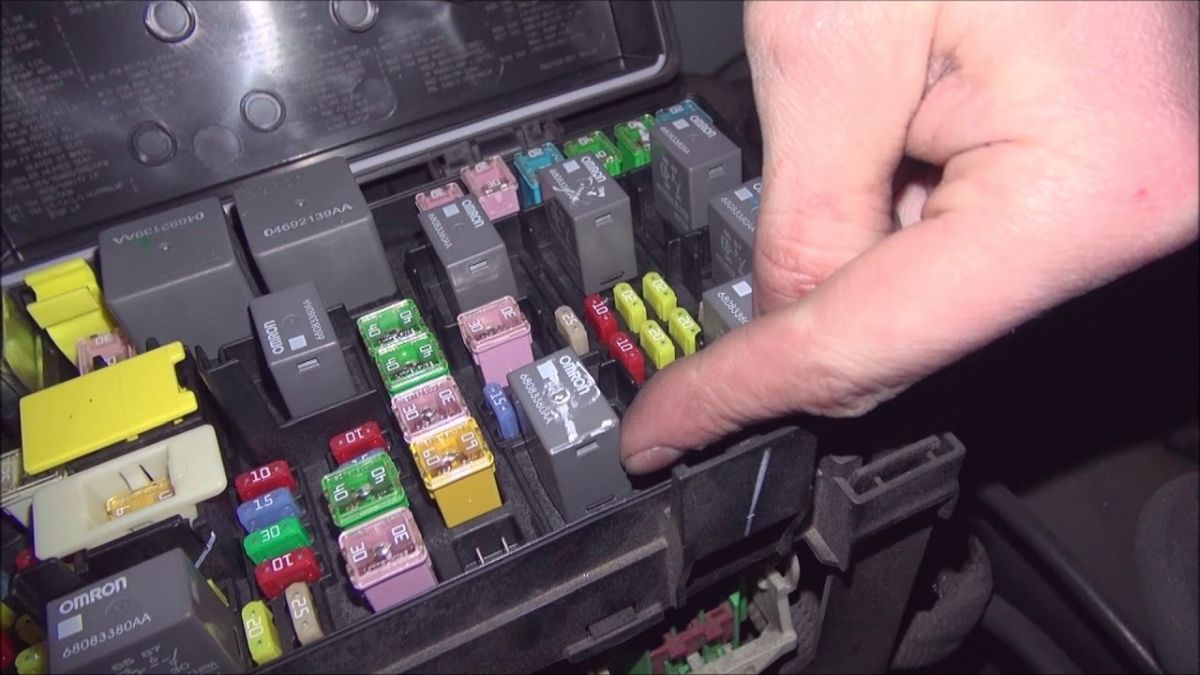
Some vehicles use a conventional plug-in starter relay that can be removed and replaced separately. Others use an integrated fuse and relay box or an electronic control module to manage the starter circuit.
What Are the Symptoms of a Bad Starter Relay?
A faulty starter relay can cause several different symptoms.
The most common include:
-
The engine does not crank.
-
The starter works intermittently.
-
A clicking sound is heard when starting.
-
The starter relay clicks but the starter motor does not turn.
-
The vehicle starts only after several attempts.
-
The starter works when the key is turned repeatedly.
-
Pressing the Start button produces no response.
-
The starter relay or relay socket becomes unusually hot.
-
The relay socket shows signs of burning or melting.
-
The starter circuit cuts out intermittently.
-
The problem appears only when the engine is hot or cold.
These symptoms should not automatically be interpreted as proof of a bad starter relay.
Only a Clicking Sound Is Heard When Starting
One of the most commonly misunderstood starter symptoms is a clicking sound.
If you turn the ignition key and hear a click but the starter motor does not rotate, several possibilities exist.
The problem could be caused by:
-
A faulty starter relay
-
A weak battery
-
Corroded battery terminals
-
A poor engine or chassis ground
-
A faulty starter solenoid
-
A defective starter motor
-
A damaged high-current cable
-
A poor electrical connection
If the relay clicks, it means that at least part of the relay control circuit may be operating. It does not necessarily mean that the relay's high-current contacts are working correctly.
The Car Sometimes Starts and Sometimes Does Not
An intermittent starting problem is particularly important when diagnosing a starter relay.
The relay contacts can become worn or burned over time. When this happens, the relay may establish a good electrical connection during one starting attempt but fail to provide a reliable connection during another.
A loose or corroded relay socket can create exactly the same symptom.
For example, a vehicle may start normally in the morning but fail to crank after the engine has become hot. This does not automatically identify the starter relay as the problem.
Starter motor and starter solenoid faults can also become more noticeable when components are hot.
Starter Relay Failure vs. Battery Failure
A starter relay problem and a weak battery can produce similar symptoms, which is why the battery should be checked before replacing the relay.
A vehicle may have enough battery power to operate:
-
Headlights
-
Interior lights
-
Dashboard electronics
-
Radio
-
Central locking
and still not have enough available current to crank the engine properly.
Therefore, the fact that the headlights work does not prove that the battery is capable of starting the engine.
Battery voltage should be evaluated along with battery condition and voltage behavior during the starting attempt.
What Are the Most Common Causes of Starter Relay Failure?
Starter relays can fail for several reasons.
Electrical contact wear
Repeated high-current switching can gradually wear the relay contacts.
Burned contacts
Electrical arcing can occur when the relay switches current. Over time, this can damage the contact surfaces and increase electrical resistance.
Coil failure
The electromagnetic coil inside the relay can become open-circuit or otherwise electrically defective, preventing the relay from operating.
Corrosion
Moisture and corrosion around the relay or its socket can create poor electrical connections.
Loose terminals
A loose terminal can create resistance and heat when current flows through the connection.
Excessive heat
High temperatures in the engine compartment can shorten the life of electrical components.
Incorrect replacement relay
Installing an incorrect relay with unsuitable electrical specifications can create starting-system problems.
Can a Bad Starter Relay Cause a Clicking Noise?
Yes, but a clicking noise does not necessarily mean the relay itself is bad.
There may actually be more than one clicking component involved in the starting circuit.
For example, the starter relay may click when its coil is energized, while the starter solenoid may produce another click when it receives the control signal.
If the relay clicks but the starter motor does not operate, the next step is to determine whether the appropriate voltage is actually reaching the starter solenoid.
This is why listening for a click alone is not a reliable diagnostic method.
Is the Starter Relay the Same as the Starter Solenoid?
No.
The starter relay and starter solenoid perform different functions, although their names are sometimes used interchangeably.
The starter relay is generally an electrically controlled switch used in the starter control circuit.
The starter solenoid is normally mounted on or integrated with the starter motor. It switches the high-current connection to the starter motor and, on many starter designs, also moves the starter drive mechanism toward the flywheel or flexplate.
Therefore, if the engine does not crank, both the starter relay and starter solenoid may need to be considered during diagnosis.
How Do You Diagnose a Starter Relay Problem?
A proper diagnosis should begin with the battery and then follow the starter circuit step by step.
Important checks include:
-
Battery condition
-
Battery terminal connections
-
Engine and chassis ground connections
-
Starter-related fuses
-
Starter relay
-
Relay socket
-
Relay control signal
-
Relay output voltage
-
Voltage at the starter solenoid
-
High-current cable between the battery and starter
-
Starter motor operation
If the relay is removable, the terminals should also be inspected.
Look for:
-
Corrosion
-
Discoloration
-
Burn marks
-
Melted plastic
-
Loose terminals
-
Signs of overheating
Replacing the relay without checking a damaged socket may not solve the problem.
How Can a Starter Relay Be Tested?
Testing depends on the vehicle's electrical design, so the relay terminal layout and circuit diagram should be identified before testing.
A basic electrical diagnosis can determine whether:
-
The starting command is being generated.
-
The relay is receiving its control signal.
-
The relay is switching correctly.
-
The relay output is reaching the starter circuit.
-
The starter solenoid is receiving the required voltage.
-
The starter motor is receiving sufficient current.
A relay may produce an audible click and still have damaged contacts.
For this reason, simply checking whether the relay clicks is not enough.
Voltage measurements and, when appropriate, voltage-drop testing under load provide much more useful information.
Can You Replace the Starter Relay Yourself?
A plug-in starter relay can often be replaced relatively easily if the vehicle uses a conventional relay.
However, the correct relay specification must be used.
Before replacement, it is important to identify:
-
The correct relay position
-
Terminal configuration
-
Electrical rating
-
Manufacturer specification
-
Whether the relay is actually responsible for the starter circuit
On some modern vehicles, the starter function may be controlled electronically rather than through a simple replaceable relay.
In those vehicles, replacing a conventional-looking relay may not address the actual problem.
Starter Relay Problems in Automatic Transmission Vehicles
Automatic transmission vehicles commonly prevent the starter from operating unless the transmission is in an approved position, usually Park or Neutral.
Therefore, if a vehicle does not start in Park but does crank in Neutral, the starter relay may not be the cause.
Possible causes can include:
-
Transmission range sensor
-
Wiring
-
Transmission control system
-
Start authorization logic
-
Poor electrical connections
This is an important diagnostic distinction.
Starter Relay Problems in Manual Transmission Vehicles
Manual transmission vehicles may use a clutch pedal switch to prevent the starter from operating unless the clutch pedal is pressed.
If this switch fails, the vehicle may appear to have a starter or relay problem even though the relay itself is functioning correctly.
A faulty clutch switch, wiring problem, or incorrect pedal adjustment can prevent the starter authorization signal from reaching the appropriate circuit.
Starter Relay Problems in Push-Button Start Vehicles
Modern push-button starting systems can be considerably more complicated than traditional ignition-switch systems.
When the driver presses the Start button, the vehicle may first verify several conditions, such as:
-
Key recognition
-
Immobilizer authorization
-
Brake pedal status
-
Clutch pedal status
-
Transmission position
-
Battery condition
-
Engine control module authorization
-
Steering lock status
-
Communication between control modules
Only after the necessary conditions are satisfied will the vehicle activate the starter circuit.
Therefore, a vehicle that produces no response when the Start button is pressed does not necessarily have a bad starter relay.
Can a Starter Relay Fault Trigger an OBD Code?
A starter relay is an electrical component, but its failure does not necessarily generate a dedicated OBD-II fault code.
Some vehicles may record diagnostic trouble codes related to:
-
Starter authorization
-
Immobilizer communication
-
Low system voltage
-
Control module communication
-
Starting-system faults
However, many basic starter relay failures will not produce a specific OBD-II code.
This means that the absence of an OBD fault code does not prove that the starter relay and starting circuit are functioning correctly.
Electrical testing remains essential.
Can a Bad Starter Relay Drain the Battery?
A normal starter relay failure does not usually drain the battery by itself.
However, a relay with contacts that become stuck closed can create a much more serious problem.
If the starter circuit remains energized after the starting command has ended, the starter motor or starter solenoid may remain active. This can cause excessive electrical load and potentially damage the starter system and battery.
If the starter motor continues running after the engine has started or the starter remains engaged unexpectedly, the vehicle should be switched off and inspected as soon as possible.
Can You Drive With a Bad Starter Relay?
If the starter relay has completely failed, the vehicle may not start at all.
If the problem is intermittent, the vehicle may continue to operate after starting, but there is a significant risk that it will not restart after being switched off.
This can leave the vehicle stranded.
The vehicle should also not be driven if there are signs of:
-
Burning electrical smell
-
Melted relay socket
-
Excessive relay heat
-
Smoke
-
Starter motor remaining engaged
-
Electrical arcing
These symptoms can indicate a more serious electrical fault.
What Should Be Checked Before Replacing the Starter Relay?
Replacing the starter relay without proper diagnosis can result in unnecessary parts replacement.
A logical diagnostic sequence is:
-
Check the battery condition.
-
Inspect the battery terminals.
-
Check engine and chassis grounds.
-
Inspect starter-related fuses.
-
Inspect the starter relay and relay socket.
-
Check whether the relay receives the correct control signal.
-
Check the relay output during a starting attempt.
-
Check voltage at the starter solenoid.
-
Check the high-current starter circuit.
-
Check the starter motor.
-
Check immobilizer and starter authorization systems when necessary.
-
Scan the vehicle for relevant diagnostic trouble codes.
This approach helps distinguish between a starter relay fault and a problem elsewhere in the starting system.
Final Thoughts
The starter relay is a relatively small component, but it plays an important role in the vehicle's starting system. It allows a low-current control circuit to activate the starter circuit without requiring the ignition switch or electronic control system to carry the starter motor's high current directly.
The most common symptoms of a faulty starter relay include no-crank conditions, intermittent starting, clicking without starter operation, starting only after several attempts, and excessive heat or damage around the relay socket.
However, these symptoms are not exclusive to the starter relay. A weak battery, poor ground, corroded terminals, damaged wiring, faulty starter solenoid, defective starter motor, ignition switch, clutch switch, transmission range sensor, or immobilizer system can produce similar symptoms.
For this reason, the best way to diagnose a suspected starter relay problem is to follow the starting circuit electrically and determine whether the correct control signal and output voltage are present.
A proper diagnosis can prevent unnecessary replacement of the starter motor, relay, control module, or other expensive components.