TR
TR EN
EN

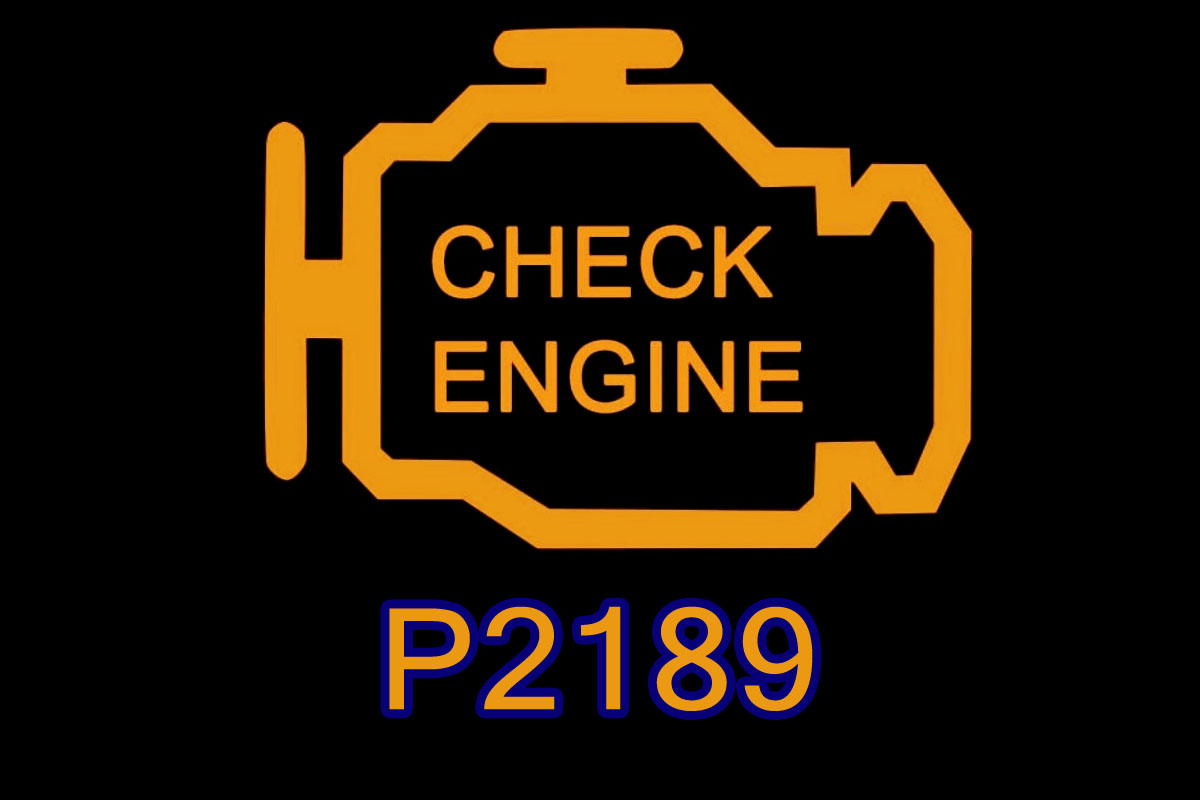
P2189 System Too Lean at Idle (Bank 2)
P2189 is an engine-management diagnostic trouble code that indicates the ECM has determined that the air-fuel mixture is too lean at idle on Bank 2.
The important part of this code is not simply the word “lean.” The code specifically says at idle.
That operating condition provides a valuable diagnostic clue.
If the engine is lean primarily at idle but becomes much closer to normal as engine speed increases, an unmetered-air or vacuum leak becomes a particularly important suspect. However, that is not the only possibility.
P2189 can also be caused by fuel-delivery problems, inaccurate airflow measurement, crankcase ventilation faults, exhaust leaks, injector problems, sensor errors, or other engine-management issues.
And, as with other fuel-trim codes, P2189 does not automatically mean that Bank 2 is receiving too little fuel.
Understanding “Too Lean”
A lean mixture means the engine is operating with more air and/or less fuel than the ECM expects.
The ECM continuously monitors oxygen content in the exhaust through the upstream oxygen or air-fuel ratio sensor.
If the exhaust indicates that the mixture is lean, the ECM increases fuel delivery.
This correction is reflected in the fuel trims.
When the ECM reaches a point where its correction exceeds the calibrated limit, it can store a lean-condition fault.
With P2189, the abnormal condition is specifically associated with idle operation on Bank 2.
Why Is the “At Idle” Part So Important?
The operating condition can tell you a great deal about the fault.
Imagine that the engine has a small intake leak after the MAF sensor.
At idle, the engine is drawing relatively little air through the throttle. A fixed amount of unmetered air entering through the leak can therefore represent a significant percentage of the engine's total airflow.
As engine speed increases, the engine draws considerably more measured air.
The same leak then becomes a smaller percentage of total airflow.
This can produce a pattern where:
Lean at idle → improves as RPM increases
That pattern strongly supports an intake or vacuum leak.
It is not absolute proof, but it is an important diagnostic clue.
What Is Bank 2?
Bank 2 is the side of a multi-bank engine that does not contain cylinder number 1.
This is especially relevant on:
-
V6 engines
-
V8 engines
-
V10 engines
-
Other engines with separate cylinder banks
On an inline four-cylinder engine, there is normally only one cylinder bank, so a Bank 2 code would not ordinarily apply.
Cylinder numbering and sensor configuration should always be confirmed for the specific engine.
Common Causes of P2189
Possible causes include:
-
Vacuum leak
-
Intake manifold gasket leak
-
PCV system leak
-
Crankcase ventilation problem
-
Brake-booster vacuum leak
-
Intake duct leak
-
EVAP purge valve stuck open
-
Unmetered air entering Bank 2
-
MAF sensor error
-
MAP sensor error
-
Low fuel pressure
-
Restricted fuel filter
-
Weak fuel pump
-
Restricted Bank 2 injector
-
Injector wiring problem
-
Exhaust leak near the upstream O2 sensor
-
Faulty upstream O2/A/F sensor
-
Engine misfire
-
Incorrect engine temperature information
-
Air-induction system problem
-
Software/calibration issue
The correct diagnosis depends on the fuel system and engine architecture.
Vacuum Leaks Are a Major Suspect
A vacuum leak is one of the first things worth investigating when P2189 is strongly concentrated at idle.
Potential leak locations include:
-
Intake manifold gasket
-
Throttle-body gasket
-
Vacuum hoses
-
PCV hoses
-
PCV valve
-
Brake-booster hose
-
EVAP connections
-
Intake manifold components
-
Vacuum-operated devices
-
Cracked plastic intake components
A leak downstream of the MAF sensor allows air to enter the engine without being properly accounted for by the airflow measurement.
The ECM then discovers that the amount of fuel it is adding is insufficient to maintain the expected mixture.
Why Bank 2 Can Have Its Own Vacuum Problem
Not every intake leak affects both banks equally.
The location of the leak matters.
An intake-manifold gasket leak or a vacuum passage positioned closer to Bank 2 can cause Bank 2 to run significantly leaner than Bank 1.
This is particularly useful when comparing fuel trims between banks.
If Bank 1 looks relatively normal while Bank 2 has strongly positive fuel trims, a localized Bank 2 intake problem becomes more plausible.
Compare Bank 1 and Bank 2 Fuel Trims
This is one of the most useful diagnostic techniques for P2189.
Look at:
-
STFT Bank 1
-
LTFT Bank 1
-
STFT Bank 2
-
LTFT Bank 2
If both banks are significantly positive, a common problem should be considered.
Possible causes include:
-
MAF measurement error
-
Low fuel pressure
-
Fuel delivery problem
-
Large intake leak
-
Incorrect engine-load calculation
If Bank 2 is significantly more positive than Bank 1, a Bank 2-specific problem becomes more likely.
This comparison can prevent unnecessary replacement of sensors and fuel-system components.
The Idle-to-RPM Fuel Trim Test
Fuel trims can be particularly revealing when observed at different engine speeds.
Suppose Bank 2 has a high positive fuel trim at idle.
Then the engine is held around 2,000–2,500 RPM and the fuel trim moves much closer to normal.
That pattern supports the possibility of an unmetered-air leak.
On the other hand, if the fuel trims remain strongly positive or become even worse under load, fuel delivery deserves more attention.
This is not a universal rule, but it is a very useful diagnostic pattern.
Can a MAF Sensor Cause P2189?
Yes.
The MAF sensor tells the ECM how much air is entering the engine.
If it underreports airflow, the ECM may inject too little fuel.
The result can be a lean mixture.
A MAF-related problem often affects both banks because the sensor measures the airflow entering the engine before it is divided between the banks.
Therefore, P2189 alone does not automatically point to a bad MAF sensor.
If Bank 1 and Bank 2 both show lean fuel trims, MAF accuracy becomes more interesting.
Can a MAP Sensor Cause P2189?
Depending on the engine architecture, the MAP sensor can also influence the ECM's calculation of engine load and airflow.
An incorrect MAP signal can cause inappropriate fuel delivery.
Look at MAP data together with:
-
Engine RPM
-
Throttle position
-
MAF
-
Intake temperature
-
Engine load
-
Fuel trims
A sensor value that does not make sense relative to the engine's operating condition can provide an important clue.
Fuel Pressure Problems Can Create a Lean Condition
The engine needs sufficient fuel pressure and volume to maintain the commanded mixture.
If fuel pressure is too low, the injectors may not deliver the amount of fuel the ECM expects.
Possible causes include:
-
Weak fuel pump
-
Restricted filter
-
Restricted pickup
-
Faulty pressure regulator
-
Fuel-pressure control problem
-
Electrical supply problem to the pump
-
Fuel-line restriction
A useful diagnostic distinction is whether the engine is lean only at idle or also under acceleration and load.
If the mixture becomes increasingly lean as fuel demand rises, inadequate fuel delivery becomes more suspicious.
A Restricted Injector Can Affect Bank 2
If one or more Bank 2 injectors are restricted, the affected cylinders may receive less fuel.
This can result in:
-
Positive fuel trims
-
Rough idle
-
Misfire
-
Poor acceleration
-
Bank-specific lean readings
An injector problem should be evaluated through appropriate injector testing rather than assuming the injector is faulty because P2189 is present.
If the engine has separate injector control or monitoring for individual cylinders, related injector or misfire codes may provide additional clues.
Can a Leaking Injector Cause P2189?
A leaking injector normally creates a rich condition in the affected cylinder rather than a lean one.
However, fuel-system problems can produce complicated feedback behavior.
A leaking injector can also cause rough running and misfires, which may distort oxygen-sensor readings.
Therefore, the complete fuel-trim and misfire picture should be considered rather than interpreting a single sensor value in isolation.
Don't Forget the PCV System
The crankcase ventilation system is a common source of unmetered air.
Depending on the engine, a damaged:
-
PCV hose
-
PCV valve
-
Oil separator
-
Breather line
-
Diaphragm
can introduce air into the intake system.
A failed PCV diaphragm can sometimes create a substantial vacuum leak and produce a lean-at-idle condition.
If P2189 appeared together with unusual crankcase vacuum, whistling noises, or other PCV-related symptoms, the ventilation system deserves careful inspection.
EVAP Purge Can Mimic a Vacuum Leak
The EVAP purge system can also introduce air and fuel vapor into the intake.
If the purge valve is stuck open when it should be closed, the engine can receive an unintended flow of vapor and air.
Depending on the system and operating condition, this can disturb idle fuel control.
A useful clue can be the relationship between the lean condition and purge operation.
If P2189 appears together with EVAP-related codes, the purge system should not be overlooked.
Can an Exhaust Leak Cause P2189?
Yes.
An exhaust leak located upstream of the Bank 2 oxygen sensor can allow outside oxygen into the exhaust.
The sensor may then report a leaner condition than the engine is actually producing.
Potential leak locations include:
-
Exhaust manifold
-
Manifold gasket
-
Cracked manifold
-
Upstream exhaust pipe
-
Sensor mounting area
-
Exhaust flange
This is particularly important if fuel trims seem inconsistent with the engine's actual behavior.
An exhaust leak can make a healthy engine appear lean to the oxygen sensor.
O2 Sensor Failure Is Possible, But Don't Start There
The upstream O2 or air-fuel ratio sensor can certainly become faulty.
It may:
-
Respond incorrectly
-
Become contaminated
-
Drift
-
Become biased lean
-
Develop a heater problem
-
Develop a wiring fault
However, replacing the sensor immediately is not the best diagnostic strategy.
The ECM is reporting that it sees a lean condition.
The sensor could be correctly reporting a genuinely lean engine.
Before replacing it, verify whether the engine really is lean using fuel-trim behavior and other available data.
What Symptoms Can P2189 Cause?
Possible symptoms include:
-
Check Engine Light
-
Rough idle
-
Engine hesitation
-
Poor acceleration
-
Increased fuel consumption
-
Engine stumble
-
Surging
-
Hard starting
-
Misfire
-
Reduced power
-
Higher combustion temperatures
-
Emissions-test failure
In some cases, the driver may notice only a Check Engine Light.
A small vacuum leak can produce a code without causing severe drivability problems.
What Happens to Fuel Trims When the Engine Is Lean?
The ECM attempts to compensate for the lean condition.
It increases injector pulse width and adds fuel.
This creates positive fuel-trim values.
If the lean condition continues, long-term fuel trim can also increase.
Eventually, if the correction exceeds the calibrated limit, the ECM can store a lean-condition code.
This is why fuel trims are so valuable when diagnosing P2189.
Short-Term vs Long-Term Fuel Trim
Short-Term Fuel Trim (STFT) responds relatively quickly to changes in the oxygen-sensor feedback.
Long-Term Fuel Trim (LTFT) represents learned correction accumulated over time.
For diagnosis, don't look at only one number.
Compare both trims at:
-
Idle
-
Light cruise
-
Higher RPM
-
Under load
The pattern is often more useful than the absolute value.
There is no single universal fuel-trim percentage that proves a particular component is faulty.
Check Engine Coolant Temperature
Engine temperature can influence fuel strategy.
If the ECM receives incorrect coolant-temperature information, it may calculate fueling incorrectly.
A sensor reporting an engine as colder or hotter than it really is can influence fuel delivery and closed-loop operation.
Compare coolant temperature with the actual engine condition, especially during a cold start.
A temperature reading that is implausible before the engine has warmed up is worth investigating.
Misfires Can Make P2189 More Complicated
A misfire can introduce oxygen into the exhaust.
The upstream oxygen sensor may then interpret the exhaust as lean even when the underlying fuel mixture is not actually lean.
This is why P2189 accompanied by:
-
P0300
-
P0301
-
P0302
-
P0303
-
P0304
-
Other misfire codes
should not be diagnosed as a simple vacuum leak without investigating the misfire.
Ignition, injector, compression, and valve-train problems may need to be considered.
What Does a Smoke Test Tell You?
A smoke test can be extremely useful when an intake leak is suspected.
Smoke can reveal leaks around:
-
Intake manifold
-
Vacuum hoses
-
PCV components
-
Throttle body
-
Intake ducting
-
EVAP connections
However, not every leak is equally easy to find with smoke.
Some leaks occur only under certain operating conditions or when components are hot.
Therefore, a negative smoke test does not necessarily eliminate every possible air leak.
A Practical Diagnostic Approach
A good P2189 diagnosis should follow the evidence rather than replacing parts in a fixed order.
Start by scanning the vehicle completely and recording all related codes.
Then examine freeze-frame data.
Next, compare Bank 1 and Bank 2 fuel trims.
Observe how the trims behave at idle and at increased RPM.
If Bank 2 is strongly lean at idle but improves substantially with RPM, inspect the intake and vacuum system carefully.
If both banks are lean, investigate common airflow and fuel-delivery causes.
If the lean condition becomes worse under load, check fuel pressure and fuel volume.
Then verify O2/A/F sensor operation, MAF/MAP data, injectors, EVAP purge, and exhaust integrity as appropriate.
A Useful Diagnostic Decision Pattern
Think of P2189 in terms of behavior.
Lean mainly at idle:
Look closely at vacuum leaks, PCV, intake-manifold leaks, EVAP purge, and localized air leaks.
Lean at idle and cruise, both banks:
Consider MAF accuracy, fuel pressure, fuel volume, and larger intake problems.
Lean mainly under acceleration/load:
Fuel delivery becomes increasingly important.
Bank 2 lean while Bank 1 is normal:
Look for Bank 2-specific intake, injector, exhaust, or sensor issues.
P2189 together with misfire codes:
Investigate the misfire before assuming the oxygen sensor is lying.
These patterns are not absolute rules, but they provide a much more effective starting point than simply replacing parts.
Do You Need to Replace the O2 Sensor?
Not necessarily.
Sensor replacement makes sense when testing demonstrates that the Bank 2 upstream sensor is inaccurate, biased, slow, or otherwise malfunctioning.
Before replacement, verify:
-
Sensor wiring
-
Sensor heater
-
Connector condition
-
Fuel-trim behavior
-
Intake leaks
-
Exhaust leaks
-
MAF/MAP plausibility
-
Fuel pressure
-
Injector operation
-
Misfire condition
If all of these systems are functioning correctly and the sensor's behavior remains implausible, sensor replacement becomes much more justified.
Can P2189 Damage the Engine?
A persistent lean condition should not be ignored.
Excessively lean combustion can increase combustion temperatures and, depending on the engine and severity, contribute to:
-
Detonation
-
Misfire
-
Exhaust-valve stress
-
Catalyst damage
-
Poor engine performance
The risk depends on how lean the engine actually is and why the code is occurring.
A vehicle with a minor vacuum leak is very different from one with a severe fuel-delivery failure.
Can You Continue Driving With P2189?
Short-distance driving may be possible if the engine runs normally and the problem is mild, but a persistent lean condition should be diagnosed rather than ignored.
Avoid continued driving if you experience:
-
Severe hesitation
-
Major power loss
-
Heavy misfire
-
Flashing Check Engine Light
-
Backfiring
-
Overheating
-
Severe engine knocking
A flashing Check Engine Light can indicate a severe misfire that may damage the catalytic converter.
Final Diagnosis
P2189 – System Too Lean at Idle (Bank 2) means the ECM has detected that the air-fuel mixture on Bank 2 is too lean primarily during idle operation.
The most important diagnostic possibilities include:
-
Vacuum or intake leaks
-
PCV problems
-
EVAP purge problems
-
Bank 2 intake-manifold leaks
-
MAF/MAP measurement errors
-
Low fuel pressure or volume
-
Restricted injectors
-
Exhaust leaks
-
Upstream O2/A/F sensor problems
-
Wiring faults
-
Misfires
-
Engine-management issues
The most useful clue is often what happens to the fuel trims when engine speed changes.
If Bank 2 is very lean at idle and the correction becomes much smaller as RPM increases, an unmetered-air leak deserves serious attention. If the engine remains lean or becomes even leaner as load increases, fuel delivery becomes more suspicious.
So the correct diagnosis is not simply:
“P2189 means the O2 sensor is bad.”
It is:
“Why does Bank 2 appear lean specifically at idle, and does the fuel-trim behavior prove a real lean condition?”
Finding that answer is what separates a proper diagnosis from unnecessary sensor, injector, or fuel-system replacement.