TR
TR EN
EN

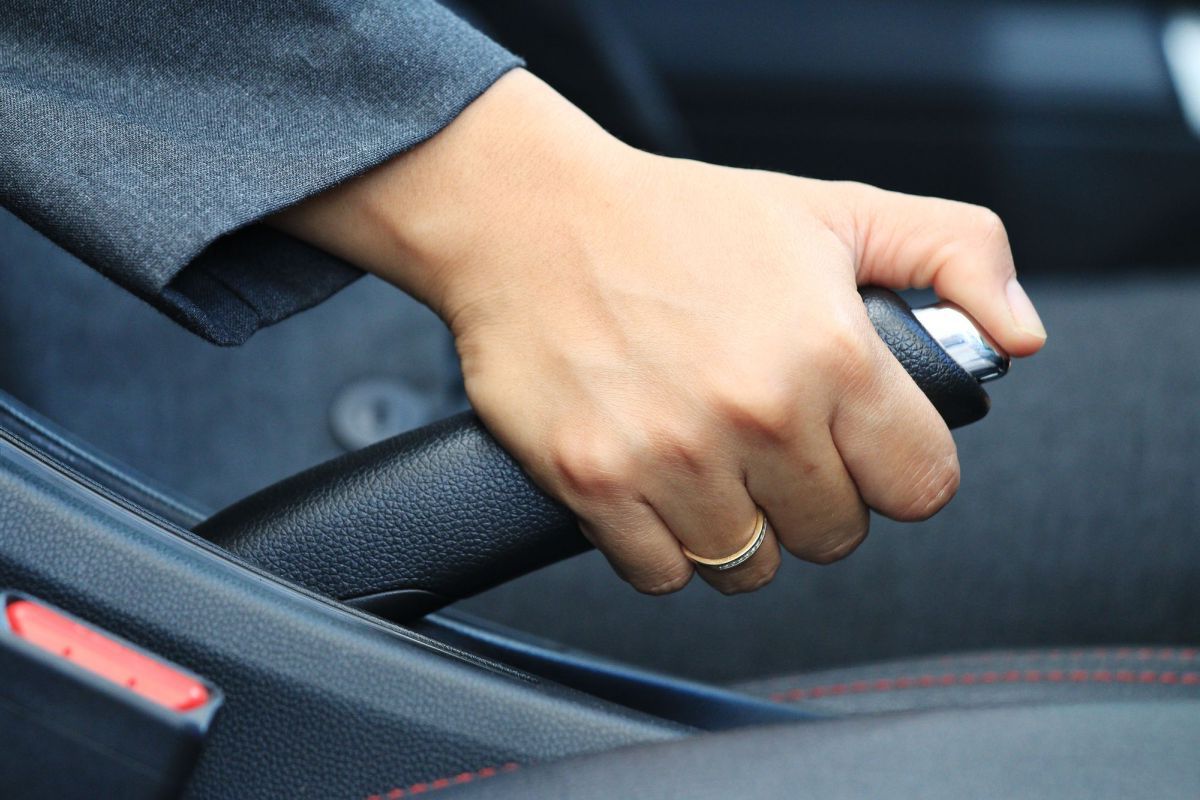
What Is a Handbrake? What Are the Common Handbrake Failures?
The handbrake, also known as the parking brake, is an important part of a vehicle's braking system. Its primary purpose is to keep the vehicle stationary when it is parked.
Unlike the main brake system, which is primarily designed to slow and stop a moving vehicle, the parking brake is designed to hold the vehicle in place after it has stopped.
Depending on the vehicle, the parking brake can be operated mechanically with a lever or pedal, or electronically with a button.
A properly functioning handbrake is particularly important when parking on slopes, because it prevents the vehicle from moving unintentionally.
How Does a Handbrake Work?
A traditional handbrake uses a mechanical mechanism to apply the rear brakes.
When the handbrake lever is pulled, the movement is transferred through cables and other mechanical components to the rear brakes. The brake mechanism then presses the brake pads or shoes against the appropriate friction surface.
The basic process is:
Handbrake lever → Cable/linkage → Rear brake mechanism → Brake pads or shoes → Vehicle held stationary
The exact design varies between vehicles.
Some vehicles use a dedicated parking-brake mechanism inside the rear brake caliper, while others use separate brake shoes inside the rear disc assembly.
What Is the Difference Between a Handbrake and the Main Brakes?
The handbrake and the main braking system are related, but they have different purposes.
The main brake system is controlled by the brake pedal and is designed to slow or stop the vehicle while driving.
The parking brake is primarily intended to keep a stationary vehicle from moving.
The main brake system generally uses hydraulic pressure, while a traditional parking brake uses mechanical force.
Modern vehicles equipped with an electronic parking brake (EPB) use electric motors and electronic controls instead of a conventional handbrake cable.
Types of Handbrakes
There are several different parking-brake designs.
Mechanical handbrake
This is the traditional system with a lever and cable.
Foot-operated parking brake
Some vehicles use a parking-brake pedal instead of a handbrake lever.
Electronic parking brake
An EPB is operated using a switch or button. Electric motors apply the parking brake.
Automatic parking brake
Some vehicles can automatically apply the parking brake when the vehicle is placed in Park or when the engine is switched off.
The exact operation depends on the vehicle manufacturer and model.
What Are the Symptoms of Handbrake Failure?
A parking-brake problem can produce several different symptoms.
Common signs include:
-
The handbrake does not hold the vehicle
-
The lever travels too far
-
The handbrake becomes unusually loose
-
The handbrake is difficult to pull
-
The parking brake does not release completely
-
One rear wheel remains partially locked
-
The vehicle moves despite the handbrake being engaged
-
A burning smell comes from the rear brakes
-
Rear brakes become excessively hot
-
The parking-brake warning light remains illuminated
-
An electronic parking-brake warning appears
-
Unusual noises occur when applying or releasing the parking brake
The symptoms can help identify the general area of the problem, but a proper inspection is needed for an accurate diagnosis.
Handbrake Does Not Hold the Vehicle
One of the most important parking-brake failures is when the handbrake is engaged but the vehicle can still move.
Possible causes include:
-
Stretched parking-brake cable
-
Incorrect cable adjustment
-
Worn brake pads or shoes
-
Worn parking-brake mechanism
-
Seized or damaged components
-
Damaged rear caliper
-
Excessive brake wear
-
Electronic parking-brake malfunction
If the vehicle does not remain stationary when the parking brake is applied, the problem should be repaired as soon as possible.
Parking on a slope with a defective handbrake can be particularly dangerous.
Handbrake Lever Is Too Loose
A loose handbrake lever can indicate excessive cable travel or a problem with the rear brake mechanism.
Possible causes include:
-
Stretched cable
-
Cable adjustment problem
-
Worn brake components
-
Incorrect installation
-
Excessive rear brake wear
-
Parking-brake mechanism wear
A loose lever does not necessarily mean that the cable itself is defective.
The entire parking-brake mechanism should be inspected before replacing the cable.
Handbrake Lever Is Too High
If the handbrake lever has to be pulled much higher than normal before the vehicle is held, something may be wrong with the system.
This can happen because of:
-
Cable stretch
-
Brake shoe adjustment problems
-
Worn rear brake components
-
Parking-brake mechanism wear
-
Incorrect adjustment
On vehicles with drum brakes, automatic or manual adjustment of the brake shoes can affect parking-brake travel.
Handbrake Is Difficult to Pull
A handbrake that suddenly becomes difficult to operate can indicate excessive friction or a seized component.
Possible causes include:
-
Rusted parking-brake cable
-
Damaged cable housing
-
Seized rear brake mechanism
-
Corroded caliper mechanism
-
Frozen cable
-
Damaged return mechanism
Forcing the lever harder is not a proper solution.
A seized cable or mechanism can eventually prevent the parking brake from releasing correctly.
Handbrake Does Not Release
This is another common and potentially serious problem.
A traditional parking brake may remain partially or completely engaged because of:
-
Seized cable
-
Rust
-
Frozen cable
-
Stuck caliper mechanism
-
Damaged return spring
-
Corrosion
-
Incorrect adjustment
On an electronic parking brake, the problem can instead involve:
-
Parking-brake motor
-
Wiring
-
Fuse
-
Control module
-
Switch
-
Battery voltage
-
Communication problems
If the parking brake remains applied, driving the vehicle can quickly overheat the rear brakes.
Can a Stuck Handbrake Cause a Burning Smell?
Yes.
If the parking brake remains partially applied while driving, the rear brake components continue generating friction and heat.
This can produce a strong burning smell.
You may also notice:
-
Hot rear wheels
-
Smoke
-
Reduced acceleration
-
Increased fuel consumption
-
Brake noise
-
Reduced braking performance
If a burning smell appears after driving, the vehicle should be stopped safely and the brakes allowed to cool.
A brake that has become extremely hot should be inspected before continued use.
Can a Faulty Handbrake Cause the Vehicle to Pull to One Side?
Yes, particularly when one side of the parking-brake mechanism remains partially engaged.
For example, if the left rear brake remains applied while the right rear brake releases normally, the vehicle may behave differently when moving.
A pulling sensation can also be caused by problems unrelated to the handbrake, including:
-
Brake caliper problems
-
Uneven brake-pad wear
-
Tire problems
-
Wheel alignment
-
Suspension components
Therefore, pulling to one side should not automatically be attributed to the parking brake.
Why Does the Handbrake Cable Fail?
Traditional parking-brake cables are exposed to moisture, dirt, road salt, temperature changes, and mechanical movement.
Over time, the cable can:
-
Stretch
-
Corrode
-
Become stiff
-
Fray
-
Break
-
Become stuck inside its housing
Corrosion is particularly common in older vehicles.
A cable that moves with excessive resistance may eventually stop returning to its normal position.
Can a Broken Handbrake Cable Cause Failure?
Yes.
If the parking-brake cable breaks, the corresponding parking-brake mechanism may no longer receive the necessary force.
Depending on the vehicle's design, the handbrake may become ineffective or may hold only one side.
A broken cable should be replaced rather than temporarily repaired.
What Causes Electronic Parking Brake Failure?
Electronic parking brakes have additional components compared with traditional mechanical systems.
Possible causes include:
-
Weak battery
-
Low system voltage
-
Failed parking-brake motor
-
Damaged wiring
-
Faulty switch
-
Control-module problem
-
Communication fault
-
Brake-caliper mechanism failure
-
Software or calibration problem
-
Corrosion in connectors
A weak vehicle battery can sometimes cause an EPB warning even though the parking-brake mechanism itself is mechanically healthy.
For this reason, battery and charging-system voltage should be checked during diagnosis.
Can a Weak Battery Affect the Electronic Handbrake?
Yes.
An electronic parking brake relies on the vehicle's electrical system.
If battery voltage is too low, the EPB may fail to apply or release correctly, or the vehicle may display a parking-brake warning.
This is especially relevant after:
-
A weak-battery condition
-
Jump-starting
-
Battery replacement
-
Long periods without driving
-
Charging-system problems
However, a low-voltage warning should not automatically be treated as proof that the battery is the only problem.
Can the Handbrake Warning Light Stay On?
Yes.
The parking-brake warning light can remain illuminated for several reasons.
Depending on the vehicle, it may indicate:
-
Parking brake is still engaged
-
Low brake fluid
-
Brake-system fault
-
Parking-brake malfunction
-
Electronic parking-brake fault
-
Sensor or switch problem
The meaning of the warning light depends on the vehicle.
If the warning remains on after the parking brake has been completely released, the braking system should be checked.
Can Worn Rear Brake Pads Affect the Handbrake?
Yes.
On some vehicles, the parking brake operates through the same rear brake components used by the service brakes.
As brake components wear, parking-brake travel or holding ability can change.
However, the relationship depends on the brake design.
A vehicle with separate parking-brake shoes may behave differently from one where the parking brake is integrated into the rear caliper.
Can Drum Brake Adjustment Affect the Handbrake?
Yes.
On vehicles with rear drum brakes, the distance between the brake shoes and drum affects parking-brake operation.
If the shoes are too far from the drum, the parking-brake mechanism may need excessive movement before the vehicle is held.
This can cause:
-
High handbrake lever travel
-
Weak parking-brake holding
-
Poor adjustment
-
Uneven operation
Correct adjustment is important for proper parking-brake performance.
Can the Handbrake Freeze in Cold Weather?
Yes.
Traditional mechanical parking-brake cables can freeze in very cold conditions if moisture enters the cable housing.
A frozen cable may prevent the parking brake from releasing properly.
Driving while the cable is frozen and the brake remains engaged can overheat the rear brakes.
Electronic parking brakes can also be affected by extremely cold conditions, although their failure mechanisms are different.
Is a Handbrake Adjustment Always Necessary?
No.
A parking-brake system should not simply be tightened whenever the lever travels too far.
Excessive travel may be caused by:
-
Worn brake components
-
Incorrect brake adjustment
-
Stretched cable
-
Damaged mechanism
-
Cable installation problems
Simply tightening the cable without finding the underlying cause can create another problem.
If the rear brakes are already worn or incorrectly adjusted, excessive cable tension may cause the brakes to remain partially applied.
Can an Over-Tightened Handbrake Cause Problems?
Yes.
A handbrake that is adjusted too tightly may prevent the rear brakes from fully releasing.
This can cause:
-
Brake drag
-
Excessive heat
-
Premature brake wear
-
Burning smell
-
Increased fuel consumption
-
Reduced acceleration
-
Rear brake damage
The parking brake should hold the vehicle securely while still allowing the rear brakes to release completely when disengaged.
How Is a Handbrake Problem Diagnosed?
Diagnosis starts with a visual and functional inspection.
A technician may check:
-
Handbrake lever travel
-
Cable movement
-
Cable condition
-
Rear brake pads or shoes
-
Brake discs or drums
-
Caliper mechanisms
-
Return springs
-
Parking-brake adjustment
-
Wheel rotation
-
Brake temperature
-
Electronic parking-brake motors
-
Wiring and connectors
-
Battery voltage
-
Diagnostic trouble codes
For an electronic parking brake, a diagnostic scanner may be necessary to identify stored faults and perform certain service procedures.
Can You Drive With a Faulty Handbrake?
If the parking brake simply does not hold the vehicle but the main braking system works correctly, the vehicle may still have normal service-brake operation.
However, this does not mean the vehicle should be used indefinitely without repair.
A faulty parking brake creates a serious risk when the vehicle is parked, especially on an incline.
If the parking brake is stuck on, the situation is more urgent because continued driving can overheat and damage the brakes.
What Should You Do If the Handbrake Gets Stuck?
If the parking brake does not release:
-
Stop in a safe location.
-
Do not repeatedly force the lever or EPB switch.
-
Check whether the vehicle is showing an electronic parking-brake warning.
-
Avoid driving if a rear brake appears to remain applied.
-
Allow overheated brakes to cool naturally.
-
Have the parking-brake system inspected.
If smoke or severe overheating is present, continuing to drive can turn a relatively simple parking-brake problem into a much more expensive brake-system repair.
How Can Handbrake Problems Be Prevented?
Regular brake-system maintenance can help prevent parking-brake problems.
Important practices include:
-
Have the rear brakes inspected during routine maintenance.
-
Do not ignore unusual brake noises.
-
Repair damaged or corroded cables.
-
Check the parking-brake operation periodically.
-
Do not drive with the parking brake partially engaged.
-
Keep the brake system properly adjusted.
-
Address brake-fluid or brake-system warnings immediately.
-
Check battery condition on vehicles with electronic parking brakes.
-
Repair water or corrosion damage around electrical connectors.
A parking brake is a relatively simple system on many vehicles, but neglect can eventually lead to more expensive problems.
Final Thoughts
The handbrake, or parking brake, is responsible for keeping a parked vehicle securely in place. Traditional systems generally use mechanical cables and rear-brake mechanisms, while modern vehicles may use an electronic parking brake.
Common handbrake failures include a loose or excessively high lever, difficulty applying or releasing the brake, a parking brake that does not hold the vehicle, a stuck cable, damaged rear-brake mechanisms, and electronic parking-brake faults.
One of the most important distinctions is whether the parking brake fails to hold or fails to release. A parking brake that does not hold creates a risk of the vehicle moving while parked. A parking brake that remains engaged can cause continuous brake friction, overheating, premature wear, and potentially serious brake damage.
Because the parking brake is part of the vehicle's safety system, unusual operation should not be ignored. Proper diagnosis should identify whether the problem comes from the cable, adjustment, rear brakes, caliper mechanism, electronic parking-brake motor, electrical system, or another component before repairs are carried out.