TR
TR EN
EN

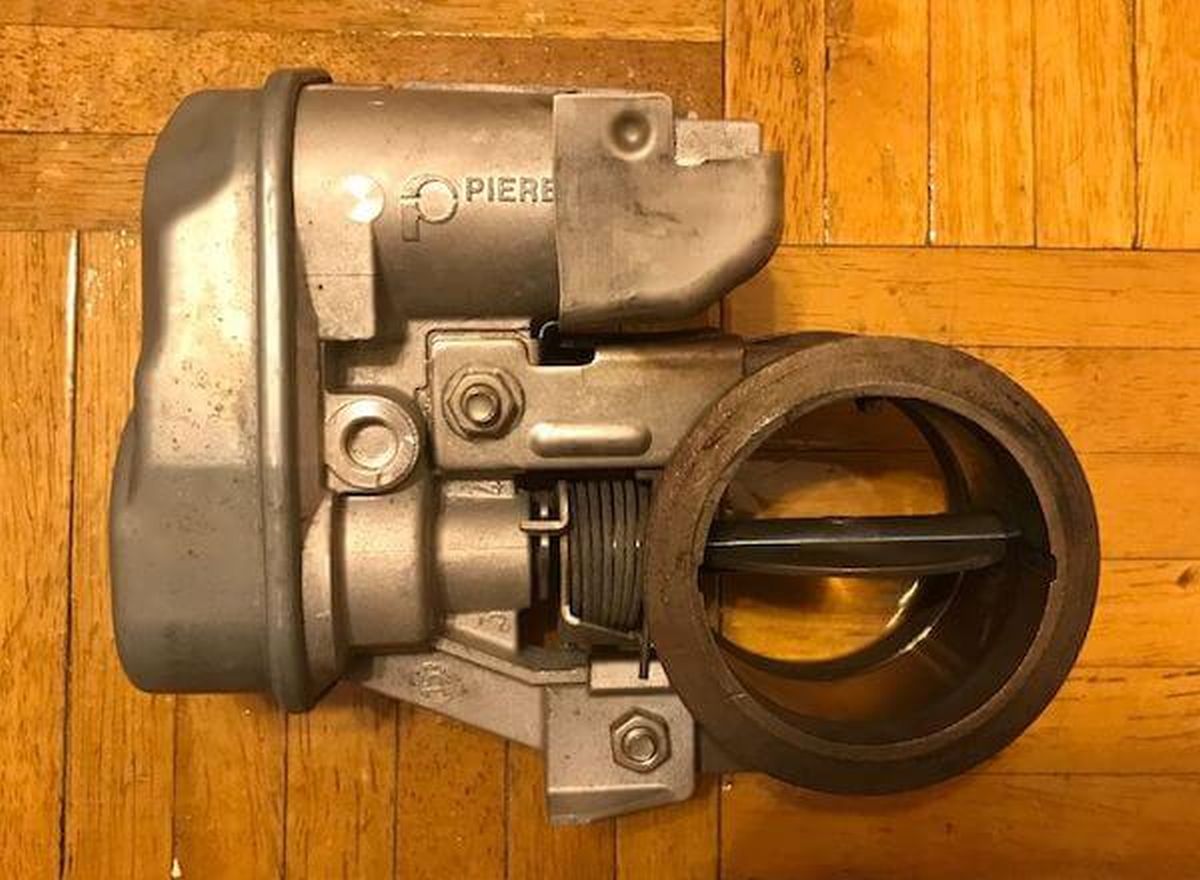
What Is an Exhaust Gas Pressure Control Valve? What Are the Symptoms of Failure?
The Exhaust Gas Pressure Control Valve is a component used in some modern engines to regulate exhaust gas pressure within the exhaust system.
Depending on the vehicle and engine design, this valve may be used to control exhaust backpressure for purposes such as emissions management, EGR operation, exhaust temperature control, diesel particulate filter regeneration, engine warm-up, or turbocharger and engine-control strategies.
The exact function of the valve varies considerably between manufacturers and engine types. It may also be referred to as an Exhaust Pressure Control Valve, Exhaust Back Pressure Valve, Exhaust Throttle Valve, or Exhaust Gas Pressure Regulator.
This component should not automatically be confused with the EGR valve. An EGR valve controls the flow of exhaust gas from the exhaust system back into the intake system, while an exhaust pressure control valve primarily changes exhaust-side pressure or flow characteristics.
When the valve becomes stuck, restricted, electrically faulty, or mechanically damaged, it can cause reduced engine performance, excessive exhaust pressure, increased fuel consumption, poor regeneration, warning lights, or abnormal exhaust temperatures.
What Does an Exhaust Gas Pressure Control Valve Do?
The primary purpose of an exhaust pressure control valve is to regulate exhaust flow and pressure according to engine operating conditions.
In a diesel engine, for example, the valve may partially restrict the exhaust system under certain conditions.
This restriction increases exhaust backpressure.
The engine control system can use this effect for several purposes, depending on the engine design.
Possible functions include:
-
Supporting EGR operation
-
Increasing exhaust temperature
-
Helping warm the engine
-
Supporting DPF regeneration
-
Managing exhaust pressure
-
Improving emissions performance
-
Supporting specific engine operating strategies
-
Controlling exhaust flow during certain operating conditions
Not every engine uses this valve, and its operating strategy can be very different from one vehicle to another.
How Does the Exhaust Pressure Control Valve Work?
The valve is installed in the exhaust system and contains a flap or similar mechanism that can alter the exhaust passage.
When the valve is open, exhaust gases can flow through the exhaust system with relatively little additional restriction.
When the valve partially closes, exhaust flow is restricted.
This increases pressure upstream of the valve.
Modern vehicles may control the valve electronically using an electric actuator.
Other designs may use vacuum control or a combination of electronic and pneumatic components.
The engine control module determines the required valve position based on operating conditions and sensor information.
Exhaust Pressure Control Valve and Diesel Engines
This component is particularly relevant on many diesel engines.
Diesel engines use extensive exhaust-management strategies because modern emissions systems must control:
-
Nitrogen oxides
-
Particulate matter
-
Hydrocarbons
-
Carbon monoxide
The exhaust pressure control valve can therefore be part of a larger system involving:
-
EGR
-
Turbocharger
-
DPF
-
Exhaust temperature sensors
-
Differential pressure sensors
-
SCR/AdBlue systems on some vehicles
A fault in one of these systems can sometimes produce symptoms that look like an exhaust pressure valve problem.
Is the Exhaust Pressure Control Valve the Same as the EGR Valve?
No.
Although the two components can work together, they perform different jobs.
The EGR valve controls exhaust gas entering the intake system.
The exhaust pressure control valve controls exhaust-side flow and pressure.
The exhaust pressure valve may help create the pressure difference required for EGR flow under certain operating conditions.
Therefore, an EGR-related fault does not automatically mean the EGR valve itself is defective.
Is It the Same as a Throttle Valve?
Not necessarily.
Diesel engines can have an intake throttle or air-control valve that regulates the amount of air entering the engine.
An exhaust pressure control valve operates on the exhaust side.
Some vehicles use both systems simultaneously.
Their functions can overlap as part of an overall emissions strategy, but they are physically and functionally different components.
Symptoms of a Bad Exhaust Gas Pressure Control Valve
A defective exhaust pressure control valve can produce several symptoms.
Common signs include:
-
Check engine light
-
Reduced engine power
-
Poor acceleration
-
Increased fuel consumption
-
Rough engine operation
-
Excessive exhaust smoke
-
Poor EGR operation
-
DPF regeneration problems
-
Increased exhaust temperature
-
Turbocharger-related symptoms
-
Limp mode
-
Difficult engine warm-up
-
Abnormal exhaust pressure
-
Exhaust-related diagnostic trouble codes
The symptoms depend on whether the valve is stuck open, stuck closed, partially restricted, or suffering from an actuator or electrical fault.
Check Engine Light
A malfunctioning valve can cause the engine control module to detect a difference between the requested valve position and the actual position.
The ECU may monitor:
-
Commanded valve position
-
Actual valve position
-
Actuator current
-
Exhaust pressure
-
EGR response
-
Exhaust temperature
-
DPF differential pressure
If the expected response does not occur, a diagnostic trouble code may be stored.
However, an exhaust-pressure-related fault code does not automatically prove that the valve itself has failed.
Reduced Engine Power
A valve stuck in the wrong position can interfere with normal exhaust flow.
If exhaust backpressure becomes excessive, the engine may have difficulty expelling exhaust gases.
This can reduce engine efficiency and power.
The driver may notice:
-
Slow acceleration
-
Poor response at higher RPM
-
Weak turbocharger performance
-
Difficulty climbing hills
-
Reduced top-end power
The ECU may also deliberately reduce engine torque if it detects an exhaust-management fault.
Exhaust Pressure Control Valve Stuck Closed
A valve stuck in a closed or excessively restricted position can create excessive exhaust backpressure.
This can become a serious problem.
Possible symptoms include:
-
Significant loss of power
-
Poor acceleration
-
High exhaust temperature
-
Turbocharger performance problems
-
Excessive exhaust pressure
-
Increased fuel consumption
-
Engine warning light
-
Limp mode
Excessive backpressure can interfere with turbocharger operation and overall engine breathing.
The engine may feel as though it is being restricted.
Exhaust Pressure Control Valve Stuck Open
A valve stuck open can produce a different set of symptoms.
The engine may fail to generate the exhaust pressure required for certain control strategies.
Depending on the vehicle, this can affect:
-
EGR operation
-
Exhaust temperature management
-
DPF regeneration
-
Emissions performance
-
Engine warm-up
The vehicle may continue to drive relatively normally while still storing a fault code.
Carbon and Soot Buildup
Carbon and soot contamination is one of the most important mechanical causes of exhaust valve problems on diesel engines.
Diesel exhaust contains particulate matter, and the valve operates in a very hot and contaminated environment.
Over time, deposits can accumulate around the valve mechanism.
This can cause:
-
Slow valve movement
-
Restricted movement
-
Valve sticking
-
Incorrect valve position
-
Actuator overload
The problem can become worse on vehicles that frequently operate under low-load conditions or make many short trips.
Soot Can Cause the Valve to Stick
The valve needs to move through its operating range.
If soot and carbon deposits accumulate around the flap or shaft, the valve may no longer move freely.
The actuator may command the valve to a particular position, but the mechanism may remain partially open or partially closed.
This can create a discrepancy between commanded and actual position.
Vacuum Problems
Some exhaust pressure control valves use vacuum-operated actuators.
In such systems, the valve itself may be mechanically healthy while the vacuum-control system has failed.
Possible causes include:
-
Cracked vacuum hose
-
Disconnected hose
-
Vacuum leak
-
Faulty vacuum solenoid
-
Weak vacuum supply
-
Damaged actuator diaphragm
A vacuum-operated valve should therefore not be replaced before the vacuum circuit has been tested.
Electric Actuator Failure
Modern vehicles increasingly use electrically controlled exhaust valves.
The actuator may contain an electric motor and position-sensing system.
Possible failures include:
-
Electric motor failure
-
Internal gear wear
-
Position sensor failure
-
Wiring damage
-
Connector corrosion
-
Short circuit
-
Open circuit
-
Internal actuator fault
A valve may therefore be mechanically clean but electronically unable to reach the commanded position.
Wiring and Connector Problems
Electrical problems can produce exactly the same symptoms as a defective valve.
Inspect:
-
Wiring harness
-
Electrical connector
-
Connector terminals
-
Power supply
-
Ground
-
Control circuit
-
Signal circuit
Heat exposure is particularly important because exhaust-system wiring operates close to extremely hot components.
Damaged insulation or melted wiring can create intermittent faults.
Exhaust Temperature Can Become Excessive
If the valve remains excessively closed, exhaust backpressure can increase.
This may also influence exhaust temperatures.
Depending on the engine's operating conditions, excessive temperature can place additional stress on:
-
Turbocharger
-
Exhaust manifold
-
DPF
-
Catalytic converter
-
Exhaust valves
-
Exhaust temperature sensors
This does not mean that every high exhaust temperature problem is caused by the pressure-control valve.
Fuel mixture, injection timing, DPF regeneration, turbocharger faults, and other problems can also raise exhaust temperatures.
DPF Regeneration Problems
On diesel vehicles equipped with a Diesel Particulate Filter (DPF), exhaust pressure control can be part of the regeneration strategy.
The engine management system may use several methods to increase exhaust temperature to burn accumulated soot.
The exhaust pressure control valve can contribute to this strategy on some engines.
If it fails, the DPF may have difficulty reaching the required operating conditions.
Possible symptoms include:
-
DPF warning light
-
Frequent regeneration attempts
-
Regeneration that does not complete
-
Increased fuel consumption
-
Reduced engine power
-
Limp mode
-
Increasing DPF soot load
However, a failed DPF regeneration does not automatically mean the exhaust pressure valve is defective.
EGR Problems Can Be Related
On some diesel engines, exhaust backpressure is important for EGR flow.
If the exhaust pressure control valve does not create the expected pressure difference, the actual EGR flow may differ from the ECU's requested value.
This can result in:
-
EGR-related fault codes
-
Increased emissions
-
Rough running
-
Poor acceleration
-
Increased fuel consumption
-
Warning light
An EGR problem therefore requires diagnosis of the entire EGR and exhaust-pressure system.
Turbocharger Performance Problems
The exhaust side of a turbocharger is directly affected by exhaust flow and pressure.
A severely restricted exhaust pressure valve can therefore influence turbocharger operation.
The driver may notice:
-
Slow boost response
-
Low power
-
Boost-related fault codes
-
Excessive exhaust temperature
-
Limp mode
But a turbocharger problem should not automatically be blamed on the exhaust pressure control valve.
The turbocharger, wastegate or variable-geometry mechanism, boost-control system, intake system, and exhaust system should also be checked.
Increased Fuel Consumption
A faulty exhaust pressure control valve can contribute to increased fuel consumption if it interferes with efficient engine operation or emissions strategies.
The ECU may also change fueling or regeneration strategies when an emissions-system fault is detected.
However, increased fuel consumption has many possible causes.
Other possibilities include:
-
Faulty injectors
-
EGR problems
-
DPF regeneration
-
MAF sensor problems
-
Coolant temperature sensor problems
-
Turbocharger faults
-
Low tire pressure
-
Thermostat problems
Excessive Black Smoke
A malfunctioning exhaust pressure valve can contribute indirectly to smoke problems by disturbing airflow, EGR behavior, or combustion conditions.
But black smoke is not a specific symptom of this valve.
Possible causes also include:
-
Excessive fueling
-
Injector problems
-
Insufficient air
-
Turbocharger problems
-
Boost leaks
-
MAF sensor faults
-
EGR problems
The entire air-fuel and exhaust system should be diagnosed.
Limp Mode
If the ECU detects a significant exhaust-management problem, it may enter a protective operating strategy.
The driver may notice:
-
Reduced engine power
-
Limited RPM
-
Poor acceleration
-
Turbocharger boost reduction
-
Warning messages
This is particularly likely when excessive exhaust pressure could potentially damage the engine or emissions components.
How Is an Exhaust Pressure Control Valve Diagnosed?
A proper diagnosis should begin with a complete scan.
The technician should identify:
-
Stored diagnostic trouble codes
-
Pending codes
-
Freeze-frame data
-
Requested valve position
-
Actual valve position
-
Exhaust pressure
-
DPF differential pressure
-
EGR values
-
Exhaust temperature
-
Engine load
-
Turbocharger boost
The next step is a physical inspection.
Inspect the Valve Mechanically
The valve should be checked for:
-
Carbon buildup
-
Soot contamination
-
Mechanical binding
-
Damaged flap
-
Shaft wear
-
Broken linkage
-
Corrosion
-
Exhaust leaks
If the valve cannot move freely, the mechanical condition needs to be addressed.
Test the Actuator
For an electronically controlled valve, a diagnostic scan tool may be able to perform an actuator test.
The technician can command different valve positions and observe whether the valve responds.
A useful comparison is:
Commanded position → actual position → exhaust pressure response
If the ECU commands movement but the valve does not respond, the actuator, wiring, or mechanical mechanism requires further investigation.
Check the Exhaust Pressure Sensor
Some systems use an exhaust-pressure sensor to measure pressure before or after a particular component.
A faulty pressure sensor can cause the ECU to believe that the exhaust pressure control valve is not operating correctly.
Therefore, the sensor itself must also be tested.
Possible problems include:
-
Blocked pressure hose
-
Cracked pressure hose
-
Sensor contamination
-
Wiring fault
-
Incorrect sensor reading
Check for Exhaust Leaks
An exhaust leak can alter pressure measurements and interfere with the operation of the emissions system.
Leaks may occur around:
-
Exhaust manifold
-
Turbocharger
-
EGR connections
-
Exhaust pressure valve
-
DPF
-
Catalytic converter
-
Exhaust pipes
A pressure-related fault should therefore include an inspection for leaks.
Can the Exhaust Pressure Control Valve Be Cleaned?
Sometimes.
If the valve is mechanically sound but contaminated with carbon deposits, cleaning may restore proper movement.
However, cleaning is not always an appropriate repair.
If the actuator, position sensor, shaft, bearings, wiring, or valve mechanism is damaged, cleaning alone will not solve the problem.
The correct service procedure depends on the specific valve and engine.
Should You Replace or Clean the Valve?
The answer depends on the failure.
Cleaning may be reasonable when:
-
Carbon buildup is causing sticking
-
The actuator works correctly
-
The valve mechanism is not damaged
-
The manufacturer allows cleaning
Replacement is more appropriate when:
-
The actuator has failed
-
Position feedback is incorrect
-
The valve is mechanically damaged
-
The shaft is excessively worn
-
The valve cannot move correctly after cleaning
-
The manufacturer specifies replacement
Replacing a contaminated valve without identifying why excessive deposits developed may also leave the underlying problem unresolved.
Can Short Trips Cause Exhaust Valve Problems?
Short trips can contribute to soot and exhaust-system problems on some diesel vehicles.
A diesel engine that rarely reaches full operating temperature may have less favorable conditions for complete combustion and emissions-system operation.
Frequent short-distance driving can also make DPF regeneration more difficult.
This can contribute to increased soot loading and deposits in the exhaust system.
However, short trips are not the only cause of exhaust valve contamination.
Engine condition, EGR operation, injection system performance, oil consumption, driving conditions, and emissions-system design also matter.
Can a Faulty Exhaust Pressure Valve Damage the Engine?
A severely malfunctioning valve can potentially cause excessive exhaust backpressure and elevated exhaust temperatures.
Depending on the engine design and severity, this can place additional stress on:
-
Turbocharger
-
Exhaust manifold
-
DPF
-
Catalytic converter
-
Exhaust valves
-
Other emissions components
A minor electrical fault that leaves the valve in a safe position may not immediately cause physical damage.
The risk depends on the actual valve position and engine operating conditions.
Can You Continue Driving With a Faulty Exhaust Pressure Control Valve?
It depends on the symptoms and the severity of the fault.
If the vehicle has only a warning light and drives normally, immediate mechanical failure may not be occurring.
However, continued driving can become problematic if the valve is stuck closed or the vehicle is repeatedly attempting unsuccessful DPF regeneration.
Driving should be avoided or minimized if there is:
-
Severe loss of power
-
Excessive smoke
-
Overheating
-
Very high exhaust temperatures
-
Repeated DPF warnings
-
Limp mode
-
Abnormal turbocharger noise
-
Strong exhaust smell inside the cabin
A proper diagnosis should be performed before the problem becomes more expensive.
Common Causes of Exhaust Pressure Control Valve Failure
The most common causes can include:
-
Carbon and soot buildup
-
Mechanical wear
-
Valve sticking
-
Electric actuator failure
-
Position sensor failure
-
Vacuum leaks
-
Faulty vacuum solenoid
-
Damaged wiring
-
Corroded connectors
-
Excessive exhaust temperature
-
Exhaust contamination
-
Incorrect installation
-
Exhaust leaks
-
Related DPF or EGR problems
The actual cause should be established before replacing the component.
Final Thoughts
The Exhaust Gas Pressure Control Valve is an important part of the exhaust-management system on vehicles that use this technology.
Its purpose is to regulate exhaust flow and backpressure under specific operating conditions. Depending on the engine, it can support EGR operation, exhaust-temperature management, DPF regeneration, emissions control, and other engine-management strategies.
A faulty valve can cause:
-
Check engine light
-
Reduced engine power
-
Poor acceleration
-
Increased fuel consumption
-
EGR-related problems
-
DPF regeneration problems
-
Excessive exhaust pressure
-
Limp mode
-
Increased exhaust temperature
-
Turbocharger-related symptoms
The most common mechanical problem is often soot and carbon buildup that prevents the valve from moving correctly, while electrical versions can also suffer from actuator, position-sensor, wiring, and connector problems.
However, an exhaust-pressure-related diagnostic code does not automatically mean that the valve itself needs to be replaced.
A proper diagnosis should examine the valve, actuator, wiring, exhaust-pressure sensor, vacuum system where applicable, exhaust leaks, EGR system, DPF, turbocharger, and relevant live data.
Correct diagnosis is especially important because exhaust pressure, EGR operation, turbocharger behavior, and DPF regeneration can all influence one another. Replacing one component without identifying the underlying cause can result in the fault returning shortly after the repair.