TR
TR EN
EN

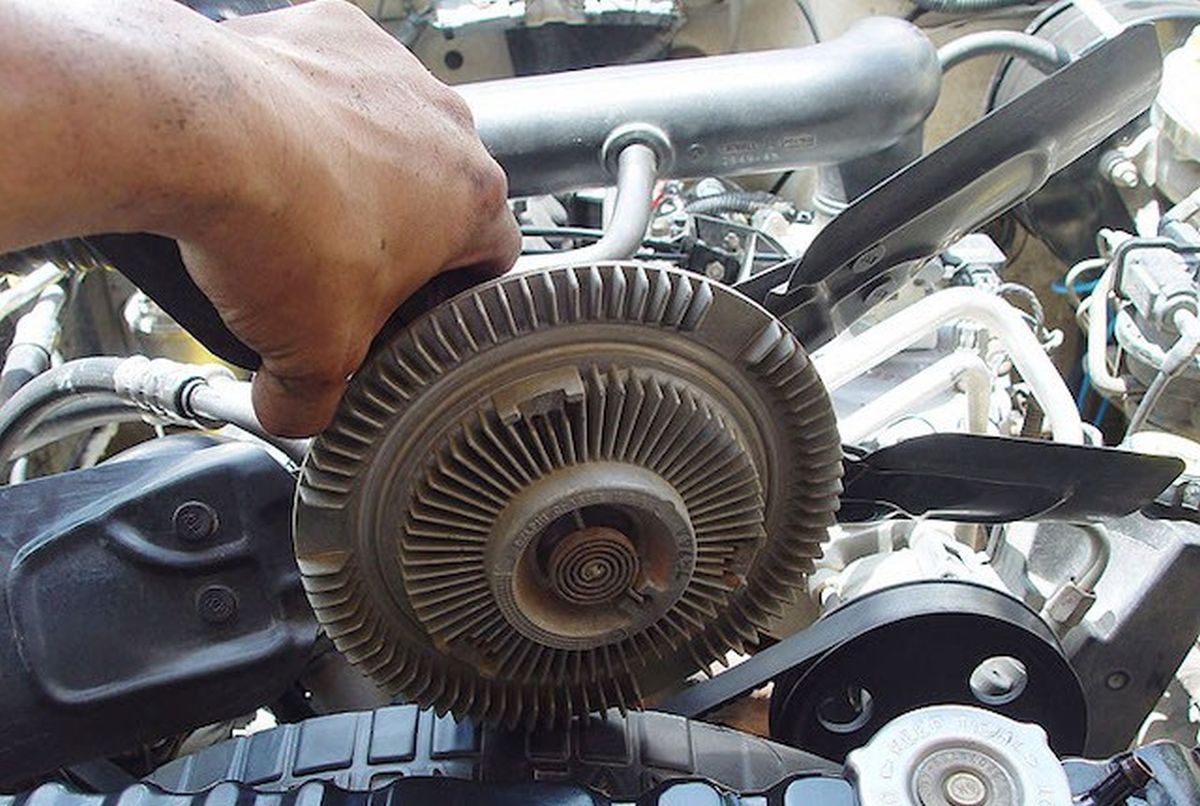
What Is a Fan Clutch? What Are the Symptoms of Fan Clutch Failure?
The fan clutch, also known as a viscous fan clutch or viscous coupling, is a mechanical component used in many vehicles to control the speed of the engine cooling fan.
It is especially common on vehicles with a mechanically driven radiator fan, including many older passenger cars, pickup trucks, SUVs, commercial vehicles, and diesel engines.
The fan clutch is mounted between the engine-driven pulley and the cooling fan. It allows the fan to rotate at different speeds depending on engine and cooling-system conditions.
The main purpose is simple: the fan should provide strong airflow when the engine needs cooling, but it should not consume unnecessary engine power when maximum airflow is not required.
When the fan clutch is working correctly, the fan can rotate relatively freely when the engine is cold and engage more strongly as temperature rises.
When the fan clutch fails, the fan may remain permanently engaged, fail to engage when needed, or operate inefficiently. This can lead to overheating, excessive fan noise, reduced performance, or unnecessary fuel consumption.
How Does a Fan Clutch Work?
A conventional viscous fan clutch uses silicone-based viscous fluid inside its housing to transfer rotational force from the engine-driven input to the cooling fan.
The clutch is connected to the engine through a pulley or shaft, while the fan is attached to the clutch assembly.
Inside the fan clutch are components that control how much torque is transferred through the viscous fluid.
When the engine is relatively cool, the clutch reduces the amount of torque transferred to the fan. The fan still rotates, but it does not necessarily spin at the same speed as the engine.
As temperature increases, the clutch progressively transfers more torque to the fan.
The fan then rotates faster and moves more air through the radiator.
This provides additional cooling when natural airflow through the radiator is insufficient.
Why Doesn't the Fan Always Spin at Full Speed?
A mechanically driven cooling fan is directly influenced by engine speed, but the fan clutch prevents the fan from being permanently locked to the engine.
If the fan were rigidly connected to the engine at all times, it would consume significant power even when the engine did not need maximum cooling.
At highway speeds, for example, large amounts of air naturally pass through the radiator. Maximum fan speed may not be necessary.
The fan clutch therefore allows some degree of slip.
This reduces unnecessary mechanical load, fan noise, and energy consumption.
What Is the Purpose of the Viscous Fluid?
The special silicone fluid inside the fan clutch is critical to its operation.
Unlike ordinary engine oil, this fluid is designed to provide predictable viscous coupling characteristics over a wide temperature range.
As the clutch engages, the viscous fluid transfers more rotational force between the internal components.
The amount of torque transmitted determines how closely the fan speed follows the engine speed.
If the internal fluid leaks out, becomes contaminated, or the clutch's internal mechanism fails, the fan may no longer operate correctly.
What Controls a Fan Clutch?
Many traditional fan clutches use a temperature-sensitive mechanism, commonly involving a thermostatic spring on the front of the clutch.
This mechanism responds to the temperature of the air passing through the radiator.
As the air temperature increases, the thermostatic mechanism changes position and allows the clutch to transfer more torque.
When the temperature decreases, the mechanism reduces engagement.
This means the fan clutch does not necessarily respond directly to the coolant temperature itself. It can respond to the temperature of the air leaving the radiator.
This distinction is important when diagnosing cooling-system problems.
What Are the Symptoms of a Bad Fan Clutch?
A failing fan clutch can produce several different symptoms depending on whether it is failing in an engaged or disengaged condition.
Common symptoms include:
-
Engine overheating
-
Overheating in traffic or at idle
-
Excessive fan noise
-
Fan running at very high speed all the time
-
Reduced engine performance
-
Increased fuel consumption
-
Fan not engaging when the engine becomes hot
-
Fan clutch silicone fluid leakage
-
Excessive fan movement or wobbling
-
Bearing noise
-
Fan operating inconsistently
-
Poor air conditioning performance in some vehicles
The most important symptom is overheating, but not every overheating problem is caused by the fan clutch.
Engine Overheats at Low Speed or While Idling
One of the classic symptoms of a weak fan clutch is an engine that stays relatively cool while driving at higher speeds but becomes too hot in traffic.
At highway speeds, natural airflow through the radiator can provide enough cooling.
When the vehicle slows down or stops, natural airflow decreases significantly.
The cooling fan must then provide the necessary airflow.
If the fan clutch does not engage properly, the fan may rotate too slowly to move enough air through the radiator.
The result can be:
-
Rising coolant temperature
-
Overheating during traffic
-
Temperature returning toward normal when driving faster
-
Cooling system pressure increasing
-
Air conditioning performance decreasing at idle
This pattern is particularly useful when diagnosing a mechanical fan system.
Fan Clutch Runs at Full Speed All the Time
A fan clutch can also fail in the opposite direction.
Instead of slipping when the engine is cold, it may remain heavily engaged.
In this situation, the fan can produce a very loud rushing sound, especially during acceleration.
The vehicle may sound as if a large fan is permanently operating at high speed.
This condition can cause:
-
Excessive fan noise
-
Increased mechanical load
-
Reduced engine power
-
Slower acceleration
-
Increased fuel consumption
-
Unnecessary fan and clutch wear
The effect can be particularly noticeable immediately after a cold start.
However, some vehicles intentionally engage the fan strongly for a short period after startup, so a brief period of increased fan noise does not automatically mean the clutch is defective.
Loud Fan Noise
A failing fan clutch may produce a distinctive roaring or rushing sound.
The noise can become much louder during acceleration because the fan is rotating at high speed.
A healthy viscous fan clutch can also produce some fan noise when engaged, so noise alone is not sufficient to diagnose a failure.
The important question is whether the fan remains excessively engaged when it should be slipping.
If the vehicle sounds like it is constantly driving with a large mechanical fan at full speed, the fan clutch should be inspected.
Fan Does Not Engage When the Engine Gets Hot
Another major failure mode occurs when the clutch fails to transfer enough torque as temperature rises.
The engine may reach a temperature at which additional radiator airflow is necessary, but the fan remains relatively slow.
This can cause overheating, particularly when:
-
The vehicle is stationary
-
The vehicle is moving slowly
-
Ambient temperature is high
-
The air conditioner is operating
-
The engine is under heavy load
-
The vehicle is carrying a heavy load or towing
This type of failure is more serious than excessive fan engagement because it can directly result in overheating.
Silicone Fluid Leakage
A viscous fan clutch contains specialized silicone fluid.
If the housing develops a leak, fluid may appear around the clutch assembly.
A leaking fan clutch may gradually lose its ability to transfer torque correctly.
Depending on the amount of fluid lost and the design of the clutch, the fan may become too loose and fail to engage sufficiently.
Fluid leakage is therefore an important visual inspection point.
The clutch should be examined for:
-
Wet or oily-looking residue
-
Fluid around the housing
-
Signs of leakage near the shaft
-
Contamination around the clutch body
The exact appearance can vary, and not every oily-looking substance around the area is necessarily fan-clutch fluid.
Fan Wobble or Excessive Play
A fan clutch can also develop mechanical wear.
If the bearing or internal shaft develops excessive play, the fan may wobble.
A visibly unstable fan is a serious problem because the fan rotates at high speed.
Excessive movement can damage:
-
Radiator fins
-
Fan shroud
-
Fan blades
-
Water pump components
-
Belts
-
Nearby wiring
-
Other components in the engine compartment
A severely loose fan should not be ignored.
A fan blade that breaks at high speed can cause significant damage.
Bearing Noise From the Fan Clutch
Not every fan-clutch problem is caused by the viscous coupling itself.
The clutch assembly can also suffer from bearing wear.
A worn bearing may produce:
-
Grinding
-
Rumbling
-
Whining
-
Growling
-
Mechanical clicking
Noise that changes with engine speed should be investigated carefully.
It is also important to distinguish fan-clutch bearing noise from water-pump bearings, idler pulleys, tensioners, alternator bearings, and other belt-driven components.
Reduced Engine Performance
A fan clutch that remains permanently engaged can consume more mechanical power than necessary.
The effect is usually most noticeable on engines where the cooling fan is large and mechanically driven.
The driver may notice:
-
Slower acceleration
-
Heavier engine response
-
Increased noise
-
Reduced fuel economy
The amount of power loss depends on the engine, fan design, clutch condition, and operating speed.
It would therefore be incorrect to claim that every bad fan clutch causes a dramatic horsepower loss.
Increased Fuel Consumption
A permanently engaged mechanical fan creates additional engine load.
The engine must provide more power to drive the fan.
As a result, fuel consumption can increase.
However, fuel economy changes caused by a fan clutch are highly vehicle-dependent.
A small increase in fuel consumption should not automatically be attributed to the fan clutch without checking other possible causes.
Poor Air Conditioning Performance at Idle
The engine cooling fan and the air-conditioning condenser are located close together on many vehicles.
When the vehicle is moving, natural airflow helps cool the condenser.
When the vehicle is stationary, the cooling fan becomes much more important.
If the mechanical fan does not provide enough airflow because the fan clutch is weak, the A/C system may not perform as well at idle.
The air conditioning may work better once the vehicle starts moving.
This symptom can therefore provide an additional clue when diagnosing a weak fan clutch.
However, refrigerant level, condenser condition, pressure sensors, compressor operation, and other A/C components must also be considered.
How Can You Tell If a Fan Clutch Is Bad?
Fan clutch diagnosis should not rely on one simple test.
A proper inspection combines visual inspection, temperature behavior, fan operation, and mechanical condition.
The following checks can help.
Inspect the clutch for leakage
Look for signs of silicone fluid leakage around the housing.
Check for excessive play
With the engine switched off, the fan and clutch can be inspected for abnormal looseness or wobbling.
Never attempt to inspect a rotating fan with the engine running.
Observe cold-start behavior
On some designs, the fan may be noticeably engaged immediately after startup and then become quieter as the clutch begins to slip.
This behavior varies by design, so it should be compared with the manufacturer's specifications rather than treated as a universal rule.
Monitor engine temperature
If the engine overheats primarily at low speed but stays cooler at higher road speeds, inadequate fan airflow becomes an important possibility.
Listen to fan operation
A fan that remains extremely loud under all conditions may indicate excessive engagement.
A fan that remains too quiet even when the engine is hot may indicate insufficient engagement.
The Classic Fan Clutch Spin Test
You may hear the advice to turn the fan by hand with the engine off and judge the clutch based on how many turns it makes.
This test can provide some information, but it is not a reliable universal pass/fail test.
The resistance of a viscous fan clutch varies by design, temperature, internal fluid condition, and manufacturer.
A fan that turns freely does not automatically mean the clutch is bad.
Likewise, a fan that offers resistance does not automatically prove that it is healthy.
The better approach is to evaluate the clutch according to the manufacturer's specifications and operating behavior.
Temperature Comparison Can Help
Temperature measurements can provide useful diagnostic information.
A technician can monitor the temperature of the cooling system and radiator while observing whether the fan clutch engages as expected.
If the engine becomes excessively hot while airflow remains inadequate, the fan clutch becomes a stronger suspect.
However, the radiator itself, thermostat, water pump, coolant level, radiator cap, airflow restriction, and other cooling-system components must also be checked.
Fan Clutch vs Electric Cooling Fan
A fan clutch system and an electric cooling fan system operate differently.
A mechanical fan clutch is driven by the engine.
An electric cooling fan is powered by an electric motor and controlled by switches, sensors, relays, fan modules, or the ECU.
Mechanical fan systems are common on many trucks, SUVs, diesel engines, and older vehicles.
Electric fans are extremely common on modern passenger cars.
Some vehicles can have more than one cooling fan or a combination of different cooling strategies.
Therefore, if a vehicle has an electric radiator fan, it may not have a conventional fan clutch at all.
Fan Clutch vs Fan Thermoswitch
These two components should not be confused.
A fan thermoswitch is an electrical temperature-sensitive switch used in certain cooling-fan circuits.
A fan clutch is a mechanical coupling that controls how much rotational force is transferred to a mechanically driven cooling fan.
They perform fundamentally different jobs.
A fan thermoswitch controls an electrical circuit.
A viscous fan clutch controls mechanical power transmission to the fan.
Fan Clutch vs Water Pump
The fan clutch is also sometimes incorrectly blamed for every cooling problem involving the front of the engine.
The water pump has a completely different function.
The water pump circulates coolant through the engine and cooling system.
The fan clutch controls the mechanical fan's rotational engagement.
A water pump can fail while the fan clutch remains perfectly functional, and a fan clutch can fail while the water pump is working correctly.
Both components should therefore be diagnosed independently.
What Causes Fan Clutch Failure?
Several problems can cause a fan clutch to deteriorate.
Age and wear
The internal components can wear after years of operation and repeated thermal cycling.
Silicone fluid leakage
Loss of the internal viscous fluid can reduce the clutch's ability to transfer torque.
Bearing wear
Mechanical wear can produce looseness, noise, or fan wobble.
Thermostatic mechanism failure
The temperature-sensitive mechanism may stop responding correctly.
Excessive heat
Long-term exposure to high temperatures can accelerate deterioration.
Physical damage
Impacts, fan blade damage, improper installation, or other mechanical problems can damage the clutch.
Poor-quality replacement parts
An incorrect or low-quality clutch may engage at the wrong temperature or have unsuitable coupling characteristics.
Can a Fan Clutch Cause Engine Overheating?
Yes.
A weak or non-engaging fan clutch can cause overheating when the engine depends on the mechanical fan for sufficient airflow.
This is especially noticeable at low vehicle speeds.
However, a fan clutch is only one part of the cooling system.
Overheating can also be caused by:
-
Low coolant
-
Coolant leaks
-
Thermostat failure
-
Blocked radiator
-
Damaged radiator fins
-
Water pump failure
-
Air trapped in the cooling system
-
Cooling-system pressure problems
-
Head-gasket problems
-
Incorrect coolant
-
Restricted airflow
-
Other fan-control problems
Replacing the fan clutch without checking these possibilities can result in an unnecessary repair.
Can a Fan Clutch Cause Overcooling?
A fan clutch that remains heavily engaged can contribute to excessive airflow and longer warm-up.
However, persistent low engine temperature is more commonly associated with problems such as a thermostat that is stuck open or incorrect temperature measurement.
A permanently engaged fan can contribute to unnecessary cooling, but it should not automatically be considered the only cause of an engine that runs too cold.
Should You Replace the Fan Clutch Immediately?
If the fan clutch is confirmed to be defective, replacement is generally the correct repair.
A viscous fan clutch is not normally repaired internally in ordinary workshop practice.
When replacing it, the technician should also inspect:
-
Fan blades
-
Fan mounting
-
Fan shroud
-
Water pump shaft and bearing
-
Drive belt
-
Belt tensioner
-
Pulley alignment
-
Radiator condition
-
Cooling-system temperature behavior
A damaged fan blade or loose water-pump bearing can create symptoms that look like a fan-clutch problem.
Can You Drive With a Bad Fan Clutch?
It depends on the type of failure.
If the clutch is permanently engaged, the vehicle may continue to operate, but excessive fan load and noise can occur.
If the clutch fails to engage when cooling airflow is required, the situation is more serious because the engine may overheat.
Driving an overheating engine can result in expensive damage to the cylinder head, head gasket, turbocharger, pistons, and other components.
If the temperature gauge rises abnormally or an overheating warning appears, the problem should be addressed immediately rather than continuing to drive normally.
Why Is the Fan Clutch Important?
The fan clutch provides a balance between engine cooling and mechanical efficiency.
The cooling fan needs to move large amounts of air when the engine is hot and the vehicle is moving slowly.
At other times, full fan speed is unnecessary.
The viscous clutch allows the fan to operate with more slip when maximum airflow is not required and transfer more torque when additional cooling is needed.
This helps reduce unnecessary mechanical load while still providing strong cooling when necessary.
Final Thoughts
The fan clutch, or viscous fan clutch, is an important part of the cooling system on vehicles equipped with a mechanically driven cooling fan.
Its job is not simply to turn the fan on and off. Instead, it controls how much engine power is transferred to the fan, allowing the fan to operate at an appropriate speed for the cooling conditions.
The most important signs of fan clutch failure include overheating at low speeds, excessive fan noise, a fan that remains heavily engaged, insufficient fan engagement when the engine is hot, silicone fluid leakage, and excessive fan or bearing play.
A weak fan clutch can cause serious overheating, while a clutch that remains permanently engaged can create unnecessary engine load, noise, and fuel consumption.
Because several cooling-system problems can produce similar symptoms, the fan clutch should be diagnosed together with the radiator, thermostat, water pump, coolant level, radiator airflow, and other cooling-system components rather than being replaced based on a single symptom.