TR
TR EN
EN

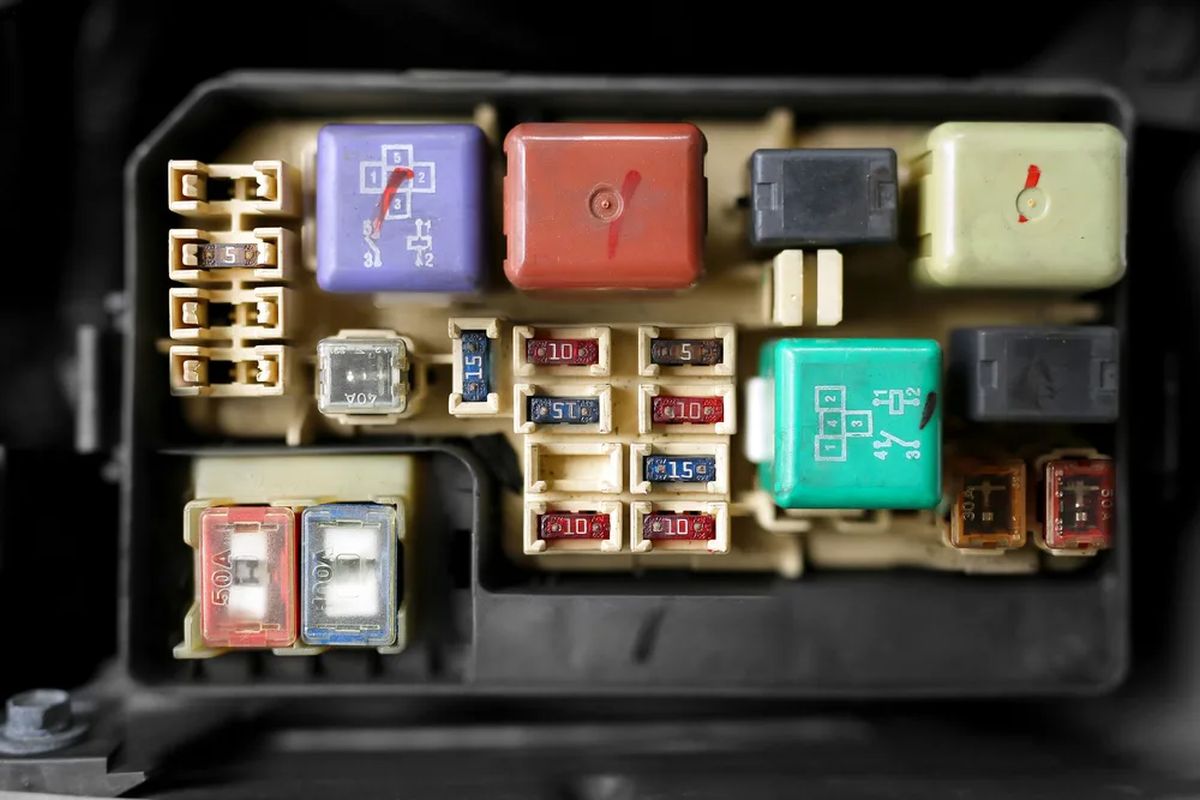
What Is an Electronic Control Module (ECU, ECM, PCM) Power Relay? What Are the Symptoms of Failure?
The ECU power relay is a small but critical electrical component that supplies power to the vehicle's engine and powertrain control electronics.
Depending on the manufacturer, the engine control unit may be called an ECU (Electronic Control Unit), ECM (Engine Control Module), or PCM (Powertrain Control Module). Although the terminology varies, these modules require a stable electrical supply to operate correctly.
The ECU power relay acts as an electrically controlled switch between the vehicle's battery/power supply and the control module and its related circuits.
When the ignition is turned on, the vehicle's electrical system commands the relay to close. The relay then supplies power to the ECU/ECM/PCM and, depending on the vehicle design, to other engine-management components.
If the relay fails, the ECU may receive no power or unstable power. The result can range from a simple no-start condition to intermittent stalling, multiple warning lights, communication errors, and seemingly unrelated sensor or actuator faults.
What Is an ECU Power Relay?
An ECU power relay is essentially an electrically operated switch.
The relay allows a relatively small control current from the vehicle's electrical system to control a larger power circuit.
This prevents the ignition switch or a control module from having to carry the full current required by the ECU and associated engine-management components.
A typical relay has:
-
A control circuit
-
A power supply circuit
-
Relay contacts
-
An electromagnetic coil
When the control circuit energizes the relay coil, the internal contacts close and provide power to the ECU circuit.
The exact circuit design differs between vehicles.
What Does the ECU Power Relay Do?
The relay's primary responsibility is to provide controlled electrical power to the ECU, ECM, PCM, and related circuits.
Depending on the vehicle, the relay may also supply power to components such as:
-
Fuel injectors
-
Ignition coils
-
Engine sensors
-
Oxygen sensors
-
Mass airflow sensor
-
Throttle actuator
-
Variable valve timing solenoids
-
Emission-control components
-
Fuel-system components
-
Transmission-related circuits
This means a failed ECU power relay can affect much more than the control module itself.
Why Does the ECU Need a Relay?
The ECU requires a stable and controlled electrical supply.
Modern engine control modules continuously process information and control numerous systems.
They may need to operate:
-
Fuel injection
-
Ignition timing
-
Electronic throttle control
-
Fuel pressure
-
Turbocharger control
-
Emission systems
-
Cooling fans
-
Variable valve timing
-
Engine torque management
The relay provides a practical way to switch this electrical supply on and off according to ignition status and vehicle operating conditions.
How Does an ECU Power Relay Work?
When the ignition is switched on, a control circuit energizes the relay.
The relay's internal electromagnetic coil creates a magnetic field that moves the relay contacts.
The contacts then connect battery or fused power to the ECU circuit.
When the vehicle is shut down, the relay may remain active briefly depending on the vehicle's control strategy.
This is why some vehicles continue to operate certain electrical components for a short period after the ignition is turned off.
The ECU may need time to complete shutdown procedures, store information, or operate cooling and emissions-related functions.
ECU Power Relay Failure Symptoms
A defective ECU power relay can produce many different symptoms.
Common symptoms include:
-
Engine will not start
-
Engine cranks but does not start
-
Engine stalls unexpectedly
-
ECU cannot communicate with a scan tool
-
Check engine light does not illuminate during key-on self-test
-
Multiple warning lights appear
-
Intermittent no-start condition
-
Engine starts and then immediately stalls
-
Fuel injectors lose power
-
Ignition coils lose power
-
Throttle actuator stops operating
-
Several sensors appear to fail simultaneously
-
Communication-related diagnostic trouble codes
-
Engine suddenly shuts off while driving
-
Electrical symptoms disappear after the vehicle cools down
The exact symptoms depend on the relay circuit and vehicle architecture.
The Engine Cranks but Does Not Start
One of the most important symptoms is a crank-no-start condition.
The starter motor may turn the engine normally, but the engine does not actually run.
If the ECU is not receiving proper power, it may not be able to control:
-
Fuel injectors
-
Ignition
-
Electronic throttle
-
Fuel system
-
Engine actuators
In such a situation, replacing spark plugs or fuel injectors without checking ECU power can lead to unnecessary repairs.
The Engine Does Not Crank
An ECU power relay does not normally control the starter motor directly.
Therefore, a vehicle that does not crank should not automatically be diagnosed as an ECU relay problem.
The starter system, battery, starter relay, ignition switch, clutch or brake switch, immobilizer, and starting-control module may need to be checked.
However, on some modern vehicles, communication between control modules can influence starting authorization.
This is why a complete diagnosis is more reliable than focusing on one component.
Engine Starts and Then Stalls
A vehicle may sometimes start normally and then shut down almost immediately when ECU power is interrupted.
If the relay contacts lose connection after the engine starts, the ECU and its controlled systems can suddenly lose power.
The engine can then stall.
This type of problem can be particularly dangerous if it occurs while driving.
Engine Stalls Randomly While Driving
An intermittent ECU power relay failure can cause an engine to shut off unexpectedly.
The driver may experience:
-
Sudden loss of engine power
-
Engine stops without warning
-
Dashboard warning lights appear
-
Steering may become heavier depending on the vehicle
-
Restart may be possible after several attempts
-
Vehicle works normally again after cooling down
A relay with worn internal contacts can sometimes work normally under one condition and lose contact under vibration, heat, or electrical load.
Intermittent No-Start Problems
A vehicle that sometimes starts normally and sometimes does not can be difficult to diagnose.
If the ECU power relay has worn contacts, the problem may appear randomly.
For example:
The car starts normally in the morning but refuses to start later.
After waiting several minutes, it starts again.
This can occur when relay contacts are affected by heat or mechanical movement.
However, intermittent no-start problems have many other possible causes, including:
-
Battery
-
Crankshaft position sensor
-
Camshaft position sensor
-
Fuel pump
-
Immobilizer
-
Ignition switch
-
Main grounds
-
Wiring
-
ECU
-
Fuel-pressure problems
The relay should therefore be tested rather than assumed to be defective.
Check Engine Light Does Not Come On
When the ignition is switched on before starting the engine, many vehicles perform a control-module self-check.
The check-engine light may illuminate briefly as part of this process.
If the ECU is not receiving power, the check-engine light may not behave as expected.
This can be a useful diagnostic clue.
However, dashboard warning-light behavior differs between vehicles, so it should be interpreted together with scan-tool communication and electrical testing.
The Scan Tool Cannot Communicate With the ECU
This is one of the strongest clues when investigating a complete loss of ECU power.
If a diagnostic scanner cannot communicate with the engine control module, possible causes include:
-
ECU power loss
-
ECU ground failure
-
Failed ECU relay
-
Blown fuse
-
CAN communication problem
-
Damaged wiring
-
ECU internal failure
-
Low battery voltage
If several modules remain accessible but the engine ECU is completely offline, the ECU's power, ground, and communication circuits should be checked.
Multiple Sensors May Appear to Fail
A failed ECU power relay can create a confusing diagnostic situation.
A scan tool may show faults involving:
-
MAF sensor
-
MAP sensor
-
Oxygen sensor
-
Throttle position
-
Fuel injectors
-
Ignition
-
Camshaft position
-
Crankshaft position
-
Fuel pressure
-
Communication
It may appear that several components have failed simultaneously.
In reality, they may simply have lost their common electrical supply.
This is an important diagnostic principle:
When several unrelated components fail at the same time, look for a shared power supply or ground.
Several Diagnostic Trouble Codes Appear Together
A power interruption can cause multiple diagnostic trouble codes to be stored.
Some codes may be genuine faults, while others may be consequences of the power loss.
For example, a sudden ECU shutdown can interrupt communication with other modules.
This may create communication-related codes.
Therefore, a large number of codes appearing simultaneously does not necessarily mean that the vehicle has dozens of failed components.
ECU Power Relay and Fuse Relationship
The ECU power circuit usually contains one or more fuses.
The basic electrical path may look something like:
Battery → fuse → relay → ECU/engine-management circuit
The exact arrangement varies considerably between vehicles.
A blown fuse should never simply be replaced repeatedly without investigating why it failed.
If a replacement fuse blows immediately, there may be:
-
Short circuit
-
Damaged wiring
-
Failed actuator
-
Failed ECU
-
Water intrusion
-
Excessive electrical load
Replacing the relay without checking the fuse and wiring can therefore miss the actual problem.
Can a Bad Relay Cause Low Voltage to the ECU?
Yes.
A relay does not necessarily have to fail completely.
Its internal contacts can become worn, burned, oxidized, or contaminated.
The relay may still conduct electricity but create excessive resistance.
Under electrical load, the voltage reaching the ECU can then drop.
This may cause:
-
ECU resets
-
Communication interruptions
-
Sensor errors
-
Intermittent stalling
-
Hard starting
-
Multiple warning lights
This is why measuring voltage only with the circuit unloaded may not reveal the problem.
Voltage Drop Testing Is Important
A voltage-drop test can be more informative than simply checking whether voltage exists.
For example, a technician can measure the voltage available at the ECU under operating conditions and compare it with the battery or relay output.
If there is a significant difference, excessive resistance may exist in:
-
Relay contacts
-
Fuse connections
-
Wiring
-
Connectors
-
Grounds
The exact acceptable voltage drop depends on the manufacturer's specifications.
Can Heat Cause ECU Relay Failure?
Yes.
Relay contacts and internal components can deteriorate with age and heat.
An intermittent relay may behave normally when cold but fail after the engine compartment becomes hot.
This can create a pattern such as:
-
Engine starts cold
-
Vehicle drives normally
-
Engine warms up
-
Engine suddenly stalls
-
Vehicle refuses to restart
-
After cooling down, the engine starts again
This pattern can also be caused by other heat-sensitive components, so temperature-related behavior is a clue rather than proof.
Can Vibration Cause Relay Problems?
It can.
A relay with worn contacts or a poor connection can be sensitive to vibration.
The problem may appear when:
-
Driving over rough roads
-
The engine vibrates at certain RPM
-
The relay box is moved
-
The relay or connector is disturbed
Loose terminals or damaged fuse-box connections can produce similar symptoms.
ECU Relay Clicking
A relay may produce a click when it switches on or off.
A single click during ignition operation can be completely normal.
Repeated clicking, rapid cycling, or clicking accompanied by engine shutdown or electrical instability is not normal.
Possible causes include:
-
Low battery voltage
-
Poor ground
-
Faulty relay
-
ECU power interruption
-
Ignition-switch problem
-
Control-circuit problem
The relay should be tested rather than replaced based only on the sound.
Can a Weak Battery Damage the ECU Relay?
Low battery voltage does not necessarily damage a relay, but unstable electrical conditions can cause control problems.
A weak battery can also create symptoms that resemble relay or ECU failure.
Before diagnosing an expensive electronic problem, check:
-
Battery condition
-
Battery terminal connections
-
Ground connections
-
Charging voltage
-
Alternator operation
Modern vehicles can behave unpredictably when system voltage is too low.
ECU Ground Problems Can Look Like Relay Failure
The ECU requires both proper power and proper ground.
If the ECU's ground connection is corroded or has excessive resistance, the module may behave as though its power supply is missing.
Possible causes include:
-
Corroded ground strap
-
Loose ground bolt
-
Damaged ground cable
-
Engine-to-body ground problem
-
Water or corrosion around the connector
Therefore, an ECU that appears to have no power should have both its positive supply and ground circuits tested.
Can a Bad ECU Relay Cause CAN Communication Errors?
Yes.
If the ECU loses power, it may disappear from the vehicle's communication network.
Other control modules may then report communication errors involving the engine ECU.
Possible symptoms include:
-
Lost communication codes
-
Multiple warning lights
-
Transmission warning
-
ABS/ESC warnings
-
Reduced-power mode
-
No-start condition
A communication code does not automatically mean the CAN network itself is defective.
The first step should be determining whether the affected module has proper power and ground.
ECU Relay Failure and Immobilizer Problems
The immobilizer system controls engine-start authorization on many modern vehicles.
If the ECU loses power or communication, the immobilizer system may be unable to complete the required authorization process.
The driver may see:
-
Security warning
-
No-start condition
-
Immobilizer-related fault
-
Engine cranks but does not run
However, a security warning does not automatically mean that the ECU relay is defective.
The immobilizer, key, antenna, wiring, and communication network may also be involved.
How to Test an ECU Power Relay
Testing should be performed according to the vehicle's wiring diagram.
A basic inspection can include:
1. Check the fuse
Make sure the ECU supply fuse is intact.
2. Check battery voltage
Verify that the battery and charging system are operating correctly.
3. Check relay control voltage
Determine whether the relay is being commanded on when the ignition is switched on.
4. Check relay output
Measure whether the relay supplies the expected voltage to the ECU circuit.
5. Perform a voltage-drop test
Check whether excessive resistance exists across the relay or its wiring under load.
6. Inspect the relay socket
Look for:
-
Burned terminals
-
Loose pins
-
Corrosion
-
Heat damage
-
Water intrusion
7. Check ECU power and ground
Verify that the control module receives the correct voltage and has a good ground.
Can You Swap the Relay With Another Relay?
Sometimes a relay can be temporarily swapped with another relay of the exact same electrical specification and pin configuration for diagnostic purposes.
However, relays that look physically identical are not necessarily electrically identical.
Before swapping, verify:
-
Part number
-
Pin configuration
-
Contact arrangement
-
Current rating
-
Coil characteristics
Never assume that two relays are interchangeable simply because they fit into the same socket.
Should You Replace the ECU Power Relay Immediately?
Not necessarily.
A relay is inexpensive compared with an ECU, but replacing it without testing can still lead to misdiagnosis.
The fault may actually be:
-
Fuse
-
Wiring
-
Connector
-
Ground
-
Ignition switch
-
Relay control circuit
-
Battery
-
Alternator
-
ECU
-
CAN network
A proper electrical diagnosis is preferable to random parts replacement.
ECU Power Relay vs Main Relay
The terminology used by manufacturers can be confusing.
Some vehicles refer to an ECU relay, while others use terms such as:
-
Main relay
-
Engine control relay
-
ECM relay
-
PCM relay
-
EFI relay
-
Engine-management relay
-
Main power relay
These terms do not always refer to exactly the same circuit.
The wiring diagram and manufacturer's service documentation should be used to identify the relay's actual function.
ECU Power Relay vs Fuel Pump Relay
These are different components in many vehicles.
The ECU power relay supplies power to the engine control module and associated circuits.
The fuel pump relay controls electrical power to the fuel pump.
However, some vehicle architectures combine or coordinate these functions through a common relay or control module.
A fuel-pump problem should therefore not automatically be attributed to the ECU relay.
ECU Power Relay vs Starter Relay
The starter relay controls the electrical circuit used to operate the starter motor.
The ECU power relay supplies power to the engine control system.
They perform different functions.
A vehicle can therefore have a perfectly functional starter relay but still fail to start because the ECU is not powered.
Likewise, the ECU can operate normally while a starter relay or starter motor is defective.
Can an ECU Power Relay Cause Poor Engine Performance?
It can, particularly if the relay is not completely failing but intermittently interrupts or reduces ECU power.
Possible symptoms include:
-
Hesitation
-
Sudden power loss
-
Engine misfires
-
Throttle problems
-
Intermittent warning lights
-
Reduced-power mode
-
Stalling
However, poor engine performance alone is not enough to diagnose an ECU relay.
Fuel, ignition, sensors, throttle control, air supply, and many other systems can produce similar symptoms.
How Long Does an ECU Power Relay Last?
There is generally no universal replacement interval for an ECU power relay.
A relay may last for many years, but its lifespan depends on:
-
Electrical load
-
Switching frequency
-
Temperature
-
Vibration
-
Manufacturing quality
-
Moisture exposure
-
Electrical system condition
There is normally no reason to replace a healthy relay simply because the vehicle has reached a certain mileage.
Can Water Damage the ECU Relay?
Yes.
Water or moisture entering the fuse/relay box can cause:
-
Corrosion
-
Short circuits
-
High resistance
-
Relay contact problems
-
Electrical communication faults
If a vehicle has recently experienced flooding, heavy rain, engine-bay washing, or water intrusion, the relay and fuse box should be inspected carefully.
ECU Relay Failure After Engine-Bay Washing
Engine-bay water exposure can sometimes create temporary or persistent electrical problems.
Water may enter:
-
Relay boxes
-
Fuse boxes
-
ECU connectors
-
Sensor connectors
-
Wiring harnesses
A vehicle that develops an intermittent no-start condition immediately after an engine-bay wash deserves a careful inspection for moisture.
High-pressure water should not be directed at sensitive electrical connectors.
What Should Be Checked Before Replacing an ECU?
Because ECU replacement can be expensive, the power supply should always be verified first.
Before condemning the ECU, check:
-
Battery
-
Fuses
-
ECU power relay
-
Relay control circuit
-
ECU power supply
-
ECU grounds
-
Connectors
-
Wiring
-
CAN communication
-
Ignition-switch signals
-
Relevant sensors and actuators
A module that appears "dead" may simply have lost its power or ground.
Final Thoughts
The Electronic Control Module power relay, often referred to as an ECU, ECM, or PCM power relay, is a relatively small component that plays a major role in vehicle operation.
Its job is to provide controlled electrical power to the engine or powertrain control module and, depending on the vehicle, various engine-management circuits.
When the relay fails, symptoms can range from an intermittent no-start condition to complete loss of engine operation.
Common symptoms include:
-
Engine cranks but does not start
-
Engine starts and stalls
-
Random engine stalling
-
Intermittent no-start
-
ECU communication failure
-
Check-engine light behaving abnormally
-
Multiple warning lights
-
Several seemingly unrelated sensor faults
-
Communication trouble codes
-
Sudden loss of engine power
However, these symptoms do not automatically prove that the ECU power relay is defective.
A blown fuse, poor ground, damaged wiring, corroded connector, low battery voltage, ignition-switch problem, CAN communication fault, or even an internal ECU problem can create similar symptoms.
The most reliable approach is to test the complete power and ground circuit.
Before replacing an ECU or other expensive electronic component, always verify that the module is receiving the correct power supply and has a reliable ground.
A relatively inexpensive relay or corroded connection can sometimes create symptoms that appear to indicate a major ECU failure. Correct electrical testing can prevent unnecessary component replacement and significantly reduce diagnostic time and repair costs.