TR
TR EN
EN

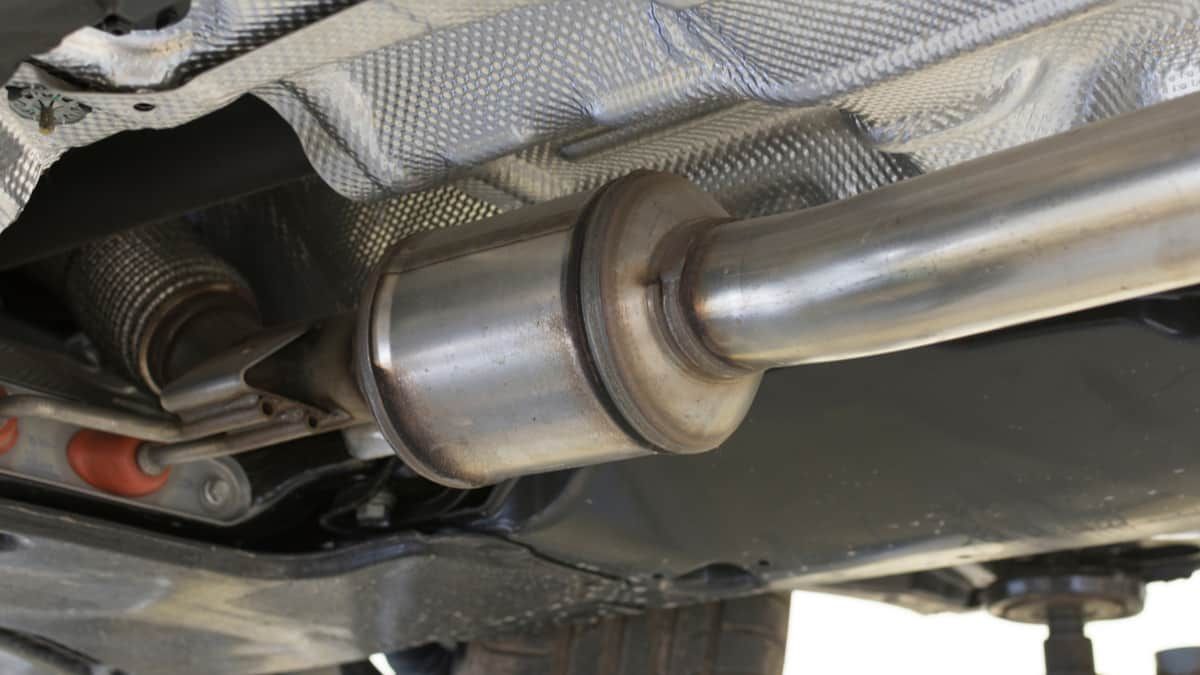
When Should the Catalytic Converter Be Replaced?
A catalytic converter is one of the most important components of a vehicle's exhaust and emissions-control system. Its job is to convert harmful exhaust gases into less harmful substances before they leave the tailpipe.
Unlike engine oil, filters, or spark plugs, a catalytic converter usually does not have a fixed replacement interval. A good-quality catalytic converter can last for many years and hundreds of thousands of kilometers when the engine and fuel system are working correctly.
The important question is therefore not simply how many kilometers the vehicle has traveled, but whether the catalytic converter is still functioning correctly and whether its internal structure is intact.
How Long Does a Catalytic Converter Last?
There is no universal mileage at which every catalytic converter must be replaced.
Its service life depends on factors such as:
-
Engine condition
-
Fuel quality
-
Oil consumption
-
Misfires
-
Fuel mixture
-
Exhaust temperature
-
Driving conditions
-
Contamination
-
Physical damage
-
Previous engine or ignition problems
A catalytic converter can last for a very long time on a properly maintained engine.
On the other hand, a converter can be damaged relatively quickly if the engine repeatedly sends unburned fuel into the exhaust.
This is particularly important with persistent misfires.
What Does a Catalytic Converter Do?
A gasoline three-way catalytic converter primarily helps reduce three major groups of pollutants:
-
Carbon monoxide (CO)
-
Unburned hydrocarbons (HC)
-
Nitrogen oxides (NOx)
Inside the converter are catalyst-coated substrates that promote chemical reactions as hot exhaust gases pass through.
The converter needs to reach an appropriate operating temperature before it can work efficiently.
Modern vehicles use oxygen or air-fuel-ratio sensors to help the engine control system monitor combustion and assess catalytic-converter performance.
When Should a Catalytic Converter Be Replaced?
A catalytic converter should generally be replaced when testing confirms that it has lost its required conversion efficiency, become physically damaged, or become sufficiently restricted to affect engine operation.
Several situations can justify replacement.
Confirmed low catalytic efficiency
One of the most common reasons is a confirmed efficiency problem.
For example, a diagnostic trouble code such as P0420 – Catalyst System Efficiency Below Threshold (Bank 1) may indicate that the converter is not performing as expected.
However, a P0420 code does not automatically mean that the catalytic converter itself must be replaced.
The oxygen sensors, exhaust leaks, fuel mixture, misfires and other problems must be ruled out first.
Catalytic converter is physically damaged
The ceramic or metallic substrate inside the converter can become damaged.
A broken ceramic substrate may produce:
-
Rattling
-
Metallic noises
-
Restricted exhaust flow
-
Reduced engine performance
If the internal substrate has broken apart, replacement is normally necessary.
Catalytic converter is clogged or severely restricted
A converter can become restricted when its internal substrate melts or becomes contaminated.
A severe restriction prevents exhaust gases from leaving the engine efficiently.
Possible symptoms include:
-
Poor acceleration
-
Loss of power at higher RPM
-
Difficulty reaching high engine speeds
-
Excessive exhaust backpressure
-
Poor engine performance
-
Increased exhaust temperature
A severely restricted catalytic converter should not simply be replaced based on symptoms alone. Exhaust backpressure or another appropriate diagnostic test should be used to confirm the restriction.
What Are the Symptoms of a Bad Catalytic Converter?
Check Engine Light
The Check Engine Light is one of the most common signs associated with catalytic-converter problems.
The ECU may detect that the downstream oxygen sensor behavior is inconsistent with a properly functioning catalyst.
But a warning light alone is not enough to condemn the converter.
Reduced engine power
A damaged or restricted converter can prevent exhaust gases from flowing normally.
The engine may feel increasingly weak, particularly under load or at higher RPM.
A vehicle that accelerates normally at low RPM but becomes noticeably restricted at higher engine speeds may warrant an exhaust-flow investigation.
Poor fuel economy
A catalytic-converter problem can sometimes be associated with increased fuel consumption.
However, poor fuel economy is a very nonspecific symptom.
Problems with fuel pressure, injectors, oxygen sensors, MAF/MAP sensors, ignition, tire pressure and driving conditions can all produce similar results.
Rattling from underneath the vehicle
A loose or broken ceramic substrate can create a rattling sound inside the catalytic converter.
The noise may be especially noticeable when the exhaust system is cold or when engine speed changes.
A rattling converter should be inspected rather than assumed to be harmless.
Unusual exhaust smell
A malfunctioning catalyst can change the composition and odor of exhaust gases.
A strong sulfur-like smell can sometimes occur under certain operating conditions.
However, exhaust odor is not a reliable standalone diagnostic method.
Engine performance deteriorates as RPM increases
This can be an important clue when a catalytic converter is severely restricted.
The engine may initially run reasonably well, but as exhaust volume increases, backpressure can become excessive and power may drop.
This symptom can also be caused by turbocharger, fuel, ignition or valve-timing problems, so testing is required.
Can a Catalytic Converter Be Cleaned Instead of Replaced?
Sometimes people recommend catalytic-converter cleaning products when a vehicle develops an efficiency-related fault.
These products should not be considered a guaranteed repair.
If the converter is contaminated because of an underlying mixture problem, fixing the engine problem is more important than attempting to clean the catalyst.
If the ceramic substrate has melted, cracked, collapsed or physically deteriorated, cleaning cannot restore it.
Likewise, a severely restricted or structurally damaged converter generally requires replacement.
Why Does a Catalytic Converter Fail?
A catalytic converter often fails because of another engine problem.
This is one of the most important points to understand.
Engine misfire
A misfiring engine can send unburned fuel into the exhaust.
That fuel may burn inside the catalytic converter and produce extremely high temperatures.
Repeated or severe misfires can melt the catalyst substrate.
This is why replacing a catalytic converter without fixing the misfire can result in another failed converter.
Rich fuel mixture
An excessively rich mixture can send too much unburned fuel into the exhaust.
Possible causes include:
-
Faulty fuel injectors
-
Incorrect fuel pressure
-
Sensor problems
-
Airflow measurement problems
-
Fuel-control faults
-
Engine-management problems
The underlying cause must be corrected.
Excessive oil consumption
If an engine burns excessive amounts of oil, oil-derived contaminants can enter the exhaust.
Over time, this can contaminate the catalytic converter and reduce its ability to function correctly.
A new catalytic converter will not solve the underlying oil-consumption problem.
Coolant entering the combustion chamber
A damaged head gasket, cylinder head or another internal engine problem can allow coolant into the combustion process.
Coolant contamination can damage the catalyst and oxygen sensors.
Physical impact
Because the catalytic converter is located underneath the vehicle, it can be exposed to road debris, speed bumps and impacts.
A severe impact can crack or damage the internal substrate.
Can a P0420 Code Be Fixed Without Replacing the Catalytic Converter?
Yes, depending on the cause.
P0420 indicates that the control system has detected catalytic-system efficiency below the expected threshold. It does not prove that the converter itself is defective.
Before replacement, a proper diagnosis should consider:
-
Exhaust leaks
-
Upstream oxygen/A/F sensor operation
-
Downstream oxygen sensor operation
-
Fuel trims
-
Misfire history
-
Fuel mixture
-
Engine oil consumption
-
Coolant consumption
-
Catalyst temperature
-
Catalyst efficiency
-
Exhaust restriction
An exhaust leak near an oxygen sensor can introduce outside air and affect the sensor signal, potentially creating a false impression of poor catalyst efficiency.
How Can a Catalytic Converter Be Tested?
There are several diagnostic approaches.
Scan-tool data
A technician can examine oxygen-sensor or air-fuel-ratio sensor behavior, fuel trims, misfire data and catalyst-related parameters.
On conventional gasoline systems, the downstream oxygen sensor should generally show a more stabilized signal than the upstream sensor once the catalyst is operating properly, but exact behavior depends on the vehicle and sensor technology.
Modern wideband systems require more careful interpretation.
Temperature testing
The temperature of the exhaust before and after the catalytic converter can provide useful information about catalyst operation.
However, temperature readings must be interpreted according to the specific system and operating conditions.
Simply comparing two temperatures without considering engine load, warm-up status and catalyst design is not enough to prove a failure.
Exhaust backpressure testing
When restriction is suspected, an exhaust backpressure test can help determine whether the converter or another exhaust component is restricting flow.
This is particularly useful when the vehicle has severe power loss at higher RPM.
Should the Oxygen Sensors Be Replaced With the Catalytic Converter?
Not automatically.
Oxygen sensors and catalytic converters have different functions.
The oxygen sensors monitor exhaust oxygen or air-fuel conditions, while the catalytic converter performs chemical conversion.
A faulty oxygen sensor can contribute to incorrect fuel control and potentially damage the converter.
But replacing both components without testing is not necessarily justified.
The actual fault should be identified first.
Can a Bad Catalytic Converter Damage the Engine?
A severely restricted catalytic converter can affect engine operation by creating excessive exhaust backpressure.
In extreme cases, this can lead to substantial performance loss and abnormal operating conditions.
However, it is equally important to understand the opposite relationship: engine problems can destroy the catalytic converter.
A persistent misfire, rich mixture, excessive oil consumption or coolant contamination can damage a converter even if the converter itself was originally healthy.
This is why catalyst replacement should normally be accompanied by an investigation into why the original converter failed.
Should You Replace the Catalytic Converter Immediately When It Becomes Inefficient?
Not necessarily.
If diagnostic testing confirms that the converter itself has genuinely lost efficiency and there is no underlying problem causing the failure, replacement is generally the appropriate repair.
But if the vehicle has:
-
Active misfires
-
Rich running
-
Excessive oil consumption
-
Coolant loss
-
Exhaust leaks
-
Fuel-control problems
those problems should be addressed as part of the repair.
Otherwise, the replacement converter may be damaged again.
What Happens If You Continue Driving With a Bad Catalytic Converter?
The consequences depend on the failure.
A converter that has simply lost some emissions efficiency may not immediately cause a noticeable drivability problem.
A severely restricted or physically damaged converter is a different situation.
Continued driving can result in:
-
Increasing power loss
-
Poor acceleration
-
Higher exhaust temperatures
-
Increased fuel consumption
-
Further exhaust-system damage
-
Additional engine-management problems
If the engine is misfiring severely, especially with a flashing Check Engine Light, continued driving can rapidly damage the catalytic converter.
Catalytic Converter Replacement Is Not a Maintenance Item
The catalytic converter should not normally be replaced simply because the vehicle has reached a certain mileage.
It is better to think of it as a condition-based component.
A healthy converter can remain in service for a very long time. Replacement becomes appropriate when its efficiency has genuinely fallen below the required level, its substrate is physically damaged, or testing confirms a significant restriction.
Most importantly, the reason for catalytic-converter failure should be identified before installing a new one.
A new converter installed on an engine with an unresolved misfire, excessively rich mixture, oil consumption or coolant contamination may suffer the same fate as the old one.
In other words, the right time to replace a catalytic converter is when diagnosis proves that the converter itself has failed—not simply when a fault code appears or the vehicle reaches a particular mileage.