TR
TR EN
EN

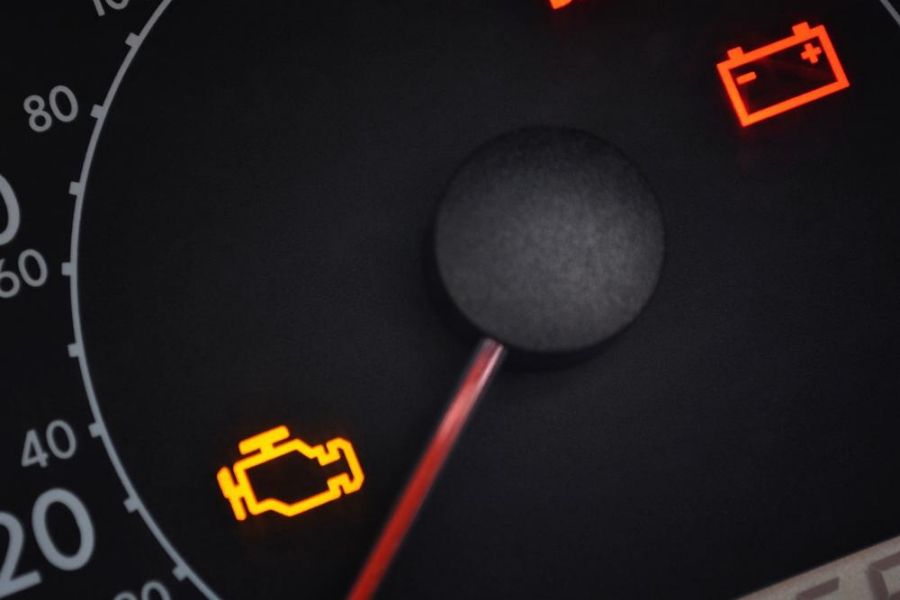
What Is the Exhaust Emission Light and Why Does It Come On?
The exhaust emission light, commonly recognized by the engine-shaped warning symbol on the dashboard, indicates that the vehicle's engine management system has detected a problem that may affect engine operation or exhaust emissions.
It is often referred to as the Check Engine Light, Malfunction Indicator Light (MIL), or engine warning light. Although the light is associated with emissions, it does not necessarily mean that the exhaust system itself is defective.
A wide range of problems can trigger the warning, from a loose fuel filler cap or faulty sensor to ignition problems, fuel-system faults, catalytic converter problems, or an issue with the engine's air-fuel mixture.
What Does the Exhaust Emission Warning Light Mean?
Modern vehicles use multiple sensors and control systems to monitor combustion and emissions.
The engine control unit (ECU) continuously evaluates information from components such as:
-
Oxygen sensors
-
Air-fuel ratio sensors
-
Mass airflow sensor
-
Manifold absolute pressure sensor
-
Engine coolant temperature sensor
-
Throttle position sensor
-
Crankshaft and camshaft position sensors
-
Fuel injectors
-
Ignition system
-
EGR system
-
EVAP system
-
Catalytic converter
When the ECU detects that a monitored parameter is outside its expected range, it may store a diagnostic trouble code (DTC) and illuminate the emission warning light.
The light therefore acts as an early warning that something in the engine management or emissions-control system needs attention.
Why Does the Exhaust Emission Light Come On?
There are many possible causes.
Common reasons include:
-
Faulty oxygen sensor
-
Incorrect air-fuel mixture
-
Misfiring spark plugs
-
Faulty ignition coils
-
Dirty or defective injectors
-
Mass airflow sensor problems
-
MAP sensor problems
-
Throttle body faults
-
EGR valve problems
-
EVAP system leaks
-
Catalytic converter problems
-
Diesel particulate filter problems
-
Exhaust leaks
-
Fuel pressure problems
-
Loose or defective fuel filler cap
-
Wiring or connector faults
-
Low battery voltage
-
Engine timing problems
The exact cause cannot be determined simply by looking at the warning light.
A diagnostic scanner is normally required to retrieve the stored fault code.
Is the Exhaust Emission Light the Same as the Check Engine Light?
In most cases, yes.
The same engine-shaped warning symbol is commonly used as the Check Engine Light or Malfunction Indicator Lamp (MIL).
Some manufacturers may describe it as an engine malfunction light, emissions warning light, or exhaust emission system warning.
Despite the different names, the important point is that the ECU has detected a fault that requires investigation.
What Does It Mean When the Light Is Yellow or Amber?
A steady yellow or amber engine warning light generally means that the ECU has detected a fault and stored a diagnostic code.
The vehicle may continue to operate normally, particularly if the problem is relatively minor.
However, this does not mean the fault should be ignored.
A persistent warning light can indicate a problem that gradually becomes more expensive to repair.
For example, an engine running with an incorrect air-fuel mixture can eventually damage the catalytic converter if the problem is left unresolved.
What Does a Flashing Exhaust Emission Light Mean?
A flashing engine warning light is much more serious than a steady light.
In many vehicles, a flashing MIL indicates a severe misfire that could cause excessive unburned fuel to enter the exhaust system.
That unburned fuel can overheat and damage the catalytic converter.
If the warning light is flashing and the engine is also:
-
Shaking
-
Losing power
-
Running roughly
-
Misfiring
-
Producing unusual exhaust smoke
-
Making abnormal noises
the vehicle should not continue to be driven unnecessarily.
The safest approach is to reduce engine load and have the vehicle inspected as soon as possible.
Can Bad Spark Plugs Cause the Emission Light to Come On?
Yes.
Worn or damaged spark plugs can cause an ignition misfire. The ECU can detect irregular crankshaft speed caused by the misfire and store a corresponding fault code.
Depending on the vehicle, codes such as P0300, P0301, P0302, P0303, or P0304 may be stored.
A misfire can also be caused by:
-
Ignition coils
-
Fuel injectors
-
Low fuel pressure
-
Vacuum leaks
-
Compression problems
-
Incorrect engine timing
Therefore, replacing spark plugs without confirming the cause is not always the correct solution.
Can a Bad Oxygen Sensor Turn On the Light?
Yes.
Oxygen sensors monitor the oxygen content of the exhaust gases and help the ECU control the air-fuel mixture.
A faulty oxygen sensor can cause:
-
Check engine light
-
Increased fuel consumption
-
Poor engine performance
-
Unstable idle
-
Increased emissions
-
Incorrect fuel mixture
However, an oxygen sensor fault code does not always mean the sensor itself needs to be replaced.
An exhaust leak, wiring problem, vacuum leak, fuel mixture problem, or catalytic converter issue can sometimes cause oxygen sensor-related codes.
The code and live data should therefore be evaluated before replacing the sensor.
Can a Catalytic Converter Cause the Emission Light?
Yes.
The catalytic converter reduces harmful pollutants in the exhaust gases. The ECU monitors its performance using oxygen sensor information.
If the ECU determines that the catalytic converter is not operating efficiently enough, it may store a fault such as P0420.
A failing catalytic converter can also be accompanied by:
-
Reduced engine performance
-
Increased fuel consumption
-
Unusual exhaust odor
-
Rattling noises
-
Increased exhaust temperature
However, a catalytic converter should not automatically be replaced simply because a catalyst-efficiency code is present.
An underlying engine misfire or incorrect air-fuel mixture may have damaged the converter in the first place.
Can a Loose Fuel Cap Cause the Emission Light?
Yes, particularly on vehicles with an evaporative emission control system.
The EVAP system prevents fuel vapors from escaping into the atmosphere. The ECU monitors the system for leaks.
A loose, damaged, or incorrectly installed fuel filler cap can allow the system to detect a leak.
This can trigger EVAP-related fault codes.
Depending on the vehicle, the warning light may disappear after the problem is corrected and the ECU completes its required self-tests.
Can a Vacuum Leak Turn On the Emission Light?
Yes.
A vacuum or intake leak allows air to enter the engine without being properly accounted for by the engine management system.
This can create a lean air-fuel mixture.
Possible symptoms include:
-
Rough idle
-
High idle speed
-
Engine hesitation
-
Poor acceleration
-
Increased fuel consumption
-
Stalling
-
Check engine light
Common leak points include vacuum hoses, intake manifold gaskets, PCV components, and throttle body seals.
Can a Dirty Throttle Body Cause the Light to Come On?
It can.
Carbon and oil deposits around the throttle plate can interfere with airflow and throttle operation.
Depending on the vehicle, this can cause:
-
Unstable idle
-
Poor throttle response
-
Stalling
-
High or low idle speed
-
Reduced engine performance
-
Check engine light
Some electronically controlled throttle bodies can also generate actuator or throttle-position-related fault codes.
Cleaning the throttle body may help in some cases, but modern electronic throttle systems may require an adaptation or relearn procedure afterward.
Can Low Battery Voltage Cause the Emission Light?
Yes.
Modern vehicles depend heavily on stable electrical voltage. A weak battery, charging-system problem, poor ground connection, or voltage drop during starting can cause control modules and sensors to behave incorrectly.
This can sometimes result in multiple unrelated warning lights or stored communication and sensor codes.
If an emission warning light appears shortly after a weak battery or starting problem, battery and charging voltage should be checked as part of the diagnosis.
Can the Emission Light Turn Off by Itself?
Yes, depending on the type of fault.
If the ECU detects a temporary problem and the condition does not occur again during subsequent driving cycles, the warning light may eventually turn off.
However, the fault code may remain stored in the ECU as a history or pending code for some time.
A light that turns off does not necessarily mean the underlying problem never existed.
If the warning light repeatedly appears and disappears, the vehicle should still be scanned.
Can You Drive With the Exhaust Emission Light On?
It depends on how the vehicle behaves and whether the light is steady or flashing.
If the light is steady and the vehicle is operating normally, it may be possible to drive a short distance to a repair shop.
However, the vehicle should still be diagnosed rather than being driven indefinitely.
If the light is flashing, especially when accompanied by engine shaking or severe power loss, continued driving can cause additional damage.
The situation becomes even more urgent if there is:
-
Severe misfire
-
Overheating
-
Major loss of power
-
Strong fuel smell
-
Heavy smoke
-
Unusual mechanical noise
How Is the Exhaust Emission Light Diagnosed?
The first step is to connect a suitable diagnostic scanner to the vehicle's OBD-II system.
The scanner can retrieve diagnostic trouble codes stored by the ECU.
For example:
-
P0300 – Random/multiple-cylinder misfire
-
P0420 – Catalyst system efficiency below threshold
-
P0171 – System too lean
-
P0172 – System too rich
-
P0441 – EVAP purge flow problem
These codes provide a direction for diagnosis, but they are not always a direct statement of which component must be replaced.
For example, an oxygen sensor-related code can be caused by another engine or exhaust problem.
A proper diagnosis may therefore require live data, electrical measurements, smoke testing, fuel-pressure testing, or inspection of the exhaust system.
Should You Clear the Emission Warning Light?
Simply clearing the code is not a repair.
A diagnostic scanner can erase the stored fault, but if the problem still exists, the warning light will usually return after the ECU completes its monitoring tests.
Clearing the code before diagnosis can also remove useful information that could help identify an intermittent problem.
The better approach is:
Read the code → diagnose the cause → repair the fault → clear the code → verify that the problem does not return.
Why Does the Emission Light Come On After Refueling?
If the light appears after refueling, the fuel cap and EVAP system are worth checking first.
Possible causes include:
-
Fuel cap not tightened correctly
-
Damaged fuel cap seal
-
EVAP hose leak
-
Purge valve problem
-
EVAP vent valve problem
-
Fuel tank pressure sensor problem
If the vehicle does not use a conventional fuel cap, the diagnosis may involve the electronically controlled fuel-filling and EVAP system instead.
Does the Emission Light Always Mean an Emissions Problem?
Not necessarily.
The warning system covers many components that influence engine operation and emissions.
For example, a crankshaft position sensor problem may trigger the same engine-shaped warning light even though the sensor is not physically part of the exhaust system.
Likewise, a throttle actuator fault, ignition problem, or fuel pressure issue can illuminate the same warning symbol.
The warning light should therefore be understood as an engine management and emissions-related fault indicator, rather than a warning that only the exhaust system is defective.
How Can the Exhaust Emission Light Be Turned Off?
The correct way to turn off the light is to repair the underlying fault.
For example:
-
Replace a genuinely defective oxygen sensor
-
Repair a vacuum leak
-
Correct a fuel-pressure problem
-
Repair an ignition misfire
-
Fix an EVAP leak
-
Repair damaged wiring
-
Replace a failed injector
-
Correct a throttle-control problem
-
Repair or replace a damaged catalytic converter
Once the problem has been repaired, the fault code can be cleared with a diagnostic scanner if necessary.
In some cases, the ECU will turn the light off automatically after several successful driving cycles.
Why Should You Not Ignore the Warning Light?
A small fault can sometimes develop into a much more expensive problem.
For example, a minor misfire may initially cause little noticeable performance loss. If ignored, however, excessive fuel entering the exhaust can overheat the catalytic converter.
Similarly, a small EVAP leak may not affect drivability, while an untreated fuel or ignition problem can have a much greater effect on the engine.
The warning light is therefore best treated as an early indication that the vehicle needs diagnosis.
The Most Important Point About the Exhaust Emission Light
The exhaust emission light does not identify a specific failed component. It tells you that the vehicle's engine management system has detected an abnormal condition.
The most useful information comes from the diagnostic trouble code, live data, driving symptoms, and the conditions under which the warning appears.
A steady light with normal vehicle operation usually requires timely diagnosis, while a flashing light accompanied by misfire or severe running problems should be treated as an urgent warning.
Rather than simply clearing the light or replacing parts based on the warning symbol alone, the fault should be diagnosed systematically. This is the best way to prevent unnecessary repairs and avoid turning a relatively simple problem into an expensive engine or exhaust-system repair.