TR
TR EN
EN

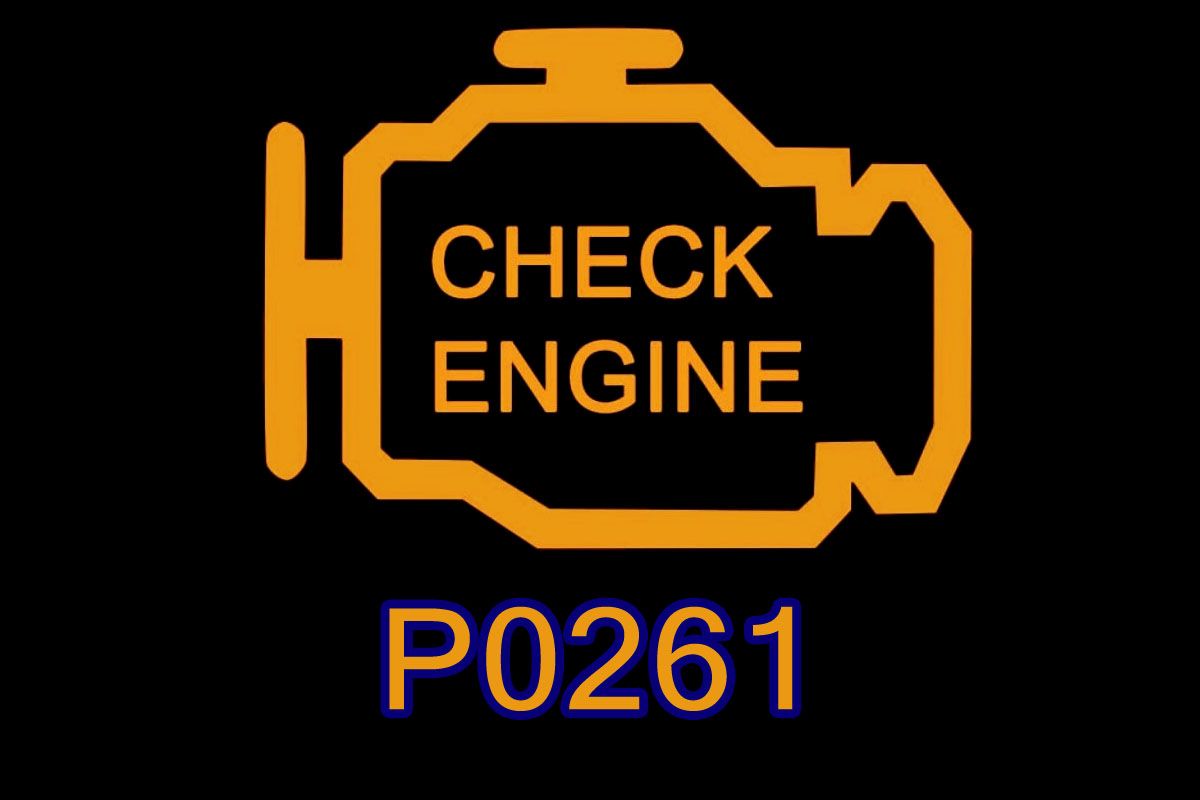
P0261 Cylinder 1 Injector Circuit Low
The P0261 trouble code means the engine control module (ECM/PCM) has detected an abnormally low electrical condition in the fuel injector circuit for cylinder 1.
The important word here is “Low.” It refers to the electrical behavior of the injector circuit, not necessarily low fuel pressure, low fuel quantity, low engine power, or low engine speed.
P0261 is therefore primarily an injector electrical circuit code. It does not automatically mean that the cylinder 1 injector itself needs to be replaced.
What Does P0261 Actually Mean?
The ECM controls and monitors the fuel injectors while the engine is running.
When it commands the cylinder 1 injector and sees an electrical response that is lower than the expected range, it can store P0261.
Depending on the vehicle, the ECM may monitor:
-
Injector control voltage
-
Current flow
-
Driver operation
-
Electrical resistance
-
Injector activation response
-
The relationship between commanded and actual injector behavior
The exact monitoring strategy differs between manufacturers and engine types.
In simple terms, the ECM is detecting:
“The electrical condition of the cylinder 1 injector circuit is lower than expected.”
That could be caused by the injector itself, but it could just as easily be caused by wiring, a connector, a short to ground, a power-supply problem, or the ECM's injector driver.
What Does “Circuit Low” Mean?
“Circuit Low” is an electrical description.
It does not necessarily mean:
-
Low fuel pressure
-
Low fuel level
-
Low injector flow
-
Low compression
-
Low RPM
-
Low engine temperature
-
Low engine power
For example, a control wire that is shorted to ground can cause the circuit voltage to remain lower than the ECM expects.
An injector with an internal electrical fault can also cause abnormal current or voltage behavior.
This distinction is important because replacing a fuel injector without testing the circuit can easily result in replacing a good component.
How the Cylinder 1 Injector Circuit Works
A conventional injector system generally contains:
-
Injector power supply
-
Injector control circuit
-
ECM/PCM injector driver
-
Injector connector
-
Injector wiring
-
Fuel injector
-
Power and ground circuits
On many conventional systems, the injector receives power from a common supply and the ECM controls the injector by switching the ground side.
When the ECM activates the injector, current flows through the injector and the ECM driver.
If the control circuit is shorted, damaged, has excessive resistance, or the injector has an internal electrical problem, the ECM may detect an abnormal electrical response and set P0261.
However, this architecture is not universal. Modern gasoline direct-injection and diesel systems can use substantially different injector control strategies.
Common Causes of P0261
Several problems can produce this code.
Cylinder 1 injector internal electrical fault
The injector may have an internal coil or electrical problem.
An injector can develop an abnormal electrical characteristic that causes the ECM to detect excessive or unexpected current.
However, the injector must be tested against the correct manufacturer specifications.
Short to ground
A shorted injector control wire can pull the circuit voltage lower than expected.
This is one of the important causes to investigate when diagnosing a “circuit low” code.
The short can occur:
-
Inside the engine harness
-
Near the injector connector
-
Where the harness contacts metal
-
At a previous repair
-
Where insulation has melted
-
Inside a damaged connector
Damaged or chafed wiring
Injector wiring is exposed to considerable heat and vibration.
If the insulation becomes damaged and the conductor contacts ground, P0261 can occur.
Look particularly carefully around areas where the harness is close to:
-
Cylinder head
-
Engine brackets
-
Exhaust components
-
Intake components
-
Fuel rail
-
Sharp metal edges
Poor injector connector
The injector connector can cause an electrical fault even when the injector itself is healthy.
Inspect for:
-
Corrosion
-
Bent terminals
-
Loose terminals
-
Poor terminal tension
-
Water contamination
-
Damaged locking mechanisms
-
Terminals pushed backward
-
Oil contamination
A connector can appear physically intact while having poor electrical contact.
Injector power-supply problem
Some injector systems use a common power supply for several injectors.
If the supply voltage is incorrect, several injector-related faults may appear.
This is why other injector codes should always be checked before replacing cylinder 1's injector.
Excessive resistance in the circuit
A damaged wire or poor connection can introduce unwanted resistance.
Depending on the circuit design and how the ECM monitors the injector, this can interfere with the expected injector current and voltage.
ECM injector driver fault
The ECM contains electronic circuitry that controls the injector.
A failed injector driver can cause an abnormal electrical condition, including a low circuit condition.
However, the ECM should normally be one of the last components considered, not the first.
Symptoms of P0261
The symptoms depend on how severe the electrical problem is.
Possible symptoms include:
-
Check Engine Light
-
Rough idle
-
Engine hesitation
-
Reduced engine power
-
Poor acceleration
-
Engine vibration
-
Increased fuel consumption
-
Difficult starting
-
Engine misfire
-
Poor throttle response
-
Reduced engine smoothness
If the cylinder 1 injector stops operating completely, the engine may effectively run on fewer cylinders.
On a gasoline engine, this can produce P0301 – Cylinder 1 Misfire Detected.
A severe active misfire can also cause the Check Engine Light to flash. In that situation, continued driving should be minimized because unburned fuel can overheat and damage the catalytic converter.
Can P0261 Cause P0301?
Yes.
If the cylinder 1 injector is not operating correctly, cylinder 1 may receive insufficient fuel or no fuel.
The resulting combustion failure can produce a cylinder 1 misfire.
However, P0261 itself does not prove that the injector is mechanically responsible for the misfire.
If P0261 and P0301 are stored together, first determine whether the injector circuit is actually functioning correctly.
If the electrical circuit checks out, other causes of the cylinder 1 misfire should be investigated, including:
-
Spark plug
-
Ignition coil
-
Fuel delivery
-
Compression
-
Intake air leak
-
Valve operation
-
Valve timing
-
Camshaft/crankshaft synchronization
Start With a Complete Scan
Before testing individual components, scan all available modules and retrieve:
-
Stored DTCs
-
Pending DTCs
-
Freeze-frame data
-
Misfire counters
-
Fuel-trim information
-
Injector-related data, where available
The combination of codes can provide important clues.
For example, P0261 by itself points toward the cylinder 1 injector circuit.
P0261 plus several injector circuit codes suggests a possible common electrical problem.
P0261 plus P0301 suggests that the injector circuit fault may be contributing to a cylinder-specific misfire.
Inspect the Cylinder 1 Injector Connector
The injector connector is one of the easiest places to start.
Disconnect it using the appropriate procedure and inspect the terminals carefully.
Check for:
-
Corrosion
-
Moisture
-
Oil
-
Burn marks
-
Loose terminals
-
Bent terminals
-
Terminals pushed into the connector
-
Broken connector locks
Terminal tension is particularly important.
A terminal can make intermittent contact even though the connector appears properly plugged in.
If the problem changes when the harness or connector is moved, that is a strong diagnostic clue.
Inspect the Wiring Harness
Follow the cylinder 1 injector wiring through the engine compartment.
Look for:
-
Broken insulation
-
Chafing
-
Melted insulation
-
Previous splices
-
Poor repairs
-
Stretched wiring
-
Harnesses trapped against brackets
-
Damaged clips
-
Oil-soaked connectors
Pay special attention to areas exposed to engine movement.
A wire may function normally while the vehicle is stationary but lose contact when the engine moves during acceleration.
Check the Injector Power Supply
Determine how the injector is powered using the correct wiring diagram.
On many systems, several injectors share a power source.
Check the supply according to the manufacturer's procedure.
Do not assume that seeing battery voltage at one point proves the entire circuit is healthy.
A circuit can show acceptable voltage with almost no load but develop a significant voltage drop when the injector operates.
This is why voltage-drop testing can be more useful than simply measuring static voltage.
Test for a Short to Ground
Because P0261 is a circuit-low code, checking for an unwanted connection to ground is important.
The control circuit should be tested according to the manufacturer's specifications to determine whether it is:
-
Shorted to ground
-
Shorted to another circuit
-
Open
-
Excessively resistant
-
Receiving an unwanted voltage
The exact expected readings depend on the injector control strategy.
A wiring diagram should be used rather than assuming the control wire is always ground-controlled.
Do Not Depend Only on a Continuity Test
Continuity testing is useful, but it does not prove that a circuit is capable of carrying the required current.
For example, a wire can have enough continuity to produce a normal multimeter reading while having:
-
Internal corrosion
-
Partially broken strands
-
Excessive resistance
-
A poor crimp
-
A weak terminal connection
A voltage-drop test under load can expose these problems.
This distinction is particularly important when dealing with intermittent injector faults.
Test the Injector
Once the external wiring and connector have been checked, test the injector itself.
Depending on the engine, testing may involve:
-
Coil resistance
-
Current draw
-
Injector activation
-
Electrical waveform
-
Injector balance
-
Flow testing
-
Comparison with another injector
There is no universal injector resistance value that applies to every engine.
A gasoline port injector, gasoline direct injector, and diesel injector can have completely different electrical characteristics.
Always use the specification for the exact injector and engine.
Injector Resistance Is Not a Complete Diagnosis
A common mistake is to measure injector resistance and conclude:
“The resistance is normal, so the injector is good.”
That conclusion is not always correct.
An injector can have electrically normal resistance but still suffer from:
-
Restricted flow
-
Mechanical sticking
-
Poor spray pattern
-
Contamination
-
Internal mechanical wear
Likewise, an injector with an electrical problem may show a clearly abnormal resistance or current pattern.
Electrical testing and fuel-flow testing answer different questions.
Oscilloscope Testing
For difficult or intermittent P0261 faults, oscilloscope testing can be extremely useful.
A technician can observe the injector control waveform and compare cylinder 1 with another injector.
Depending on the system, this can reveal abnormalities involving:
-
Injector current
-
Control voltage
-
Driver operation
-
Short circuits
-
Open circuits
-
Injector coil behavior
-
Electrical connection problems
The expected waveform varies by engine and injector technology, so comparison with a known-good circuit or manufacturer information is preferable to relying on a generic waveform.
What If the Problem Appears Only During Acceleration?
This is an important clue.
If the vehicle runs normally at idle but P0261 appears during acceleration, don't assume that the injector suddenly becomes defective only under load.
Consider:
-
Engine movement
-
Harness movement
-
Vibration
-
Heat
-
Connector movement
-
Voltage supply changes
-
Increased injector operating demand
The engine can move significantly on its mounts during hard acceleration.
A damaged wire or weak terminal may remain connected at idle and momentarily lose the correct electrical condition when the engine moves.
If Several Injector Codes Appear
If P0261 appears together with other injector circuit codes, investigate common electrical components before replacing individual injectors.
Potential common causes include:
-
Injector fuse
-
Injector relay
-
Shared power supply
-
Common wiring
-
Engine ground
-
ECM power supply
-
Main harness
-
Connector problems
Several injectors failing independently at exactly the same time is often less likely than a common electrical problem.
Gasoline and Diesel Diagnosis
The general meaning of P0261 remains the same, but the actual diagnosis can be very different depending on the engine.
A conventional gasoline port injector may be relatively straightforward electrically.
Gasoline direct injection systems can use more complex injector drivers and high-pressure fuel systems.
Modern diesel engines may use sophisticated electronically controlled injectors with very different electrical requirements.
Therefore, a technician should not use the same resistance values, activation methods, or voltage expectations across different engine types.
Never apply battery voltage or ground directly to an injector control terminal unless the manufacturer specifically specifies that test. Doing so can damage the injector or ECM driver.
Should You Replace the Cylinder 1 Injector?
Not simply because P0261 is stored.
The correct question is:
Why is the cylinder 1 injector circuit electrically low?
The diagnostic sequence should normally be:
-
Scan all modules and record all DTCs.
-
Check freeze-frame and relevant live data.
-
Inspect the cylinder 1 injector connector.
-
Inspect the complete injector harness.
-
Check injector power supply.
-
Test the control circuit for shorts and opens.
-
Perform voltage-drop testing where appropriate.
-
Test the injector electrically.
-
Compare its electrical behavior with a known-good injector.
-
Check the ECM driver only after the external circuit has been verified.
If the injector itself fails the manufacturer's electrical or functional tests, replacement becomes justified.
If the injector passes but the control circuit is abnormal, replacing the injector will not solve the problem.
Can the ECM Cause P0261?
Yes.
The ECM's injector driver can fail and cause an abnormal electrical condition.
But an ECM replacement should be considered only after the rest of the system has been proven correct.
Before condemning the ECM, verify:
-
Injector condition
-
Injector power supply
-
Control wiring
-
Connector condition
-
Shorts to ground
-
Shorts to voltage
-
Circuit resistance
-
Voltage drop
-
ECM power and ground circuits
Only when these areas are confirmed should an ECM driver fault become a serious suspect.
P0261 vs P0262 vs P0263
These three codes are easy to confuse.
P0261 – Cylinder 1 Injector Circuit Low
The ECM detects an electrically low condition in the cylinder 1 injector circuit.
P0262 – Cylinder 1 Injector Circuit High
The ECM detects an electrically high condition in the cylinder 1 injector circuit.
P0263 – Cylinder 1 Contribution/Balance Fault
The ECM determines that cylinder 1 is not contributing the expected amount of power compared with the other cylinders.
P0263 is therefore not simply an injector electrical circuit code.
A vehicle can have P0261 and P0263 together, but they describe different aspects of the problem.
P0261 vs P0301
P0261 concerns the electrical behavior of the cylinder 1 injector circuit.
P0301 concerns a misfire detected on cylinder 1.
P0301 can be caused by an injector problem, but also by ignition, compression, air/fuel mixture, valve operation, or timing.
If both codes are present, the injector circuit should be checked first because P0261 provides a specific electrical clue.
Final Diagnosis
P0261 – Cylinder 1 Injector Circuit Low means the ECM has detected an abnormally low electrical condition in the injector circuit associated with cylinder 1.
The fault may be caused by the injector, wiring, connector, power supply, a short to ground, excessive circuit resistance, or the ECM injector driver.
The most important diagnostic principle is that P0261 does not automatically mean the cylinder 1 injector is defective.
A proper diagnosis starts with the wiring diagram and a complete inspection of the injector circuit. Connector condition, wiring integrity, power supply, control-signal behavior, voltage drop, and injector operation should all be verified before replacing expensive components.
If the electrical circuit is proven to be correct, then fuel-flow, ignition, compression, valve operation, and other mechanical causes should be investigated if the engine is still experiencing a cylinder 1 misfire.