TR
TR EN
EN

What Happens If You Drive With the Handbrake On?
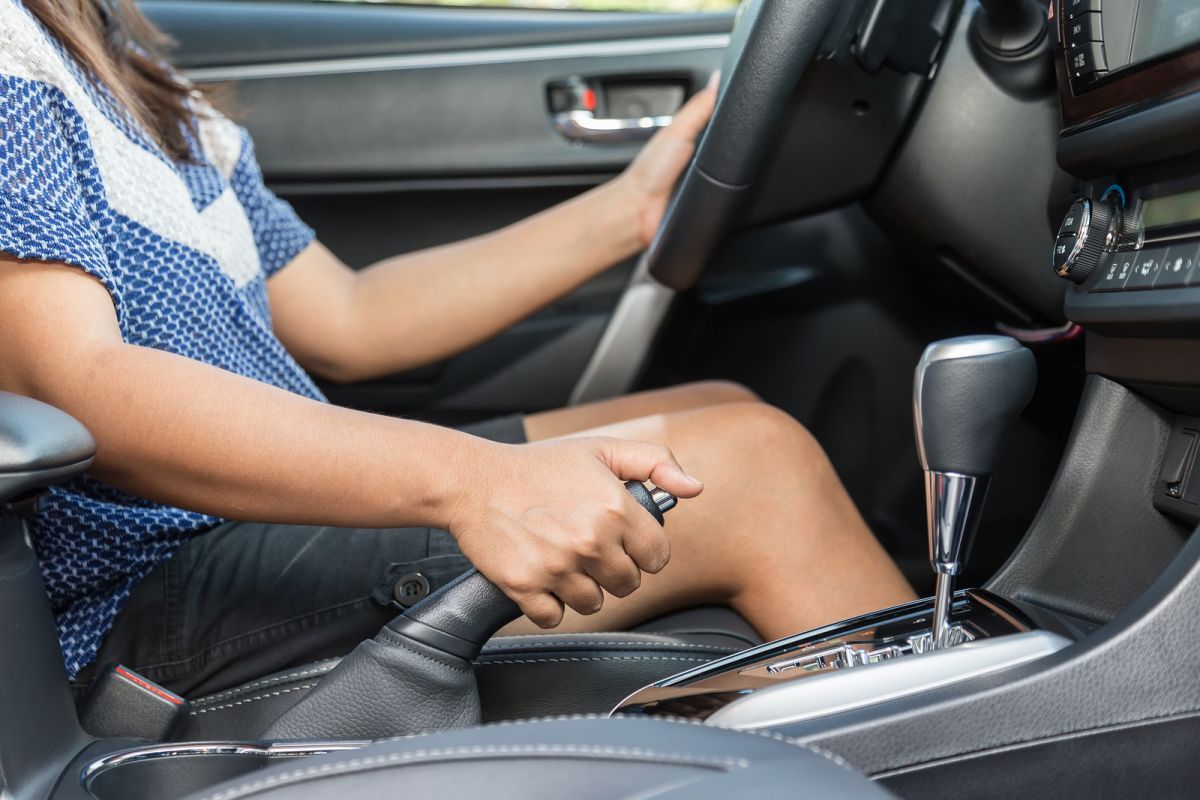
Driving with the handbrake engaged is a common mistake, especially when the driver forgets to release it completely before moving off. The consequences depend on how far the handbrake is engaged, how long the vehicle is driven, the driving speed, and whether the vehicle uses a traditional mechanical handbrake or an electronic parking brake.
A vehicle can sometimes move with the handbrake partially engaged, but this does not mean it is safe to continue driving. The rear brakes can overheat, brake components can wear rapidly, and in severe cases the braking system can be damaged.
What Does the Handbrake Do?
The handbrake, also called the parking brake, is designed to keep the vehicle stationary when it is parked.
In a traditional system, pulling the handbrake operates cables or mechanical linkages that apply the rear brakes.
Depending on the vehicle, the parking brake may operate:
-
Rear brake calipers
-
Dedicated parking-brake mechanisms inside rear calipers
-
Brake shoes inside a drum-in-hat system
-
Rear brake shoes in drum brakes
-
Electric parking-brake motors
The system is designed to hold a stationary vehicle rather than resist continuous driving.
What Happens When You Drive With the Handbrake Engaged?
When the parking brake remains applied while the vehicle is moving, the rear brakes continue to create resistance.
The engine must work harder to move the vehicle against this resistance.
The severity of the problem depends on how strongly the parking brake is applied.
If the handbrake is only slightly engaged, you may notice:
-
The vehicle feels unusually heavy
-
Acceleration is weaker
-
The engine seems to work harder
-
Fuel consumption increases
-
A burning smell may appear
-
The rear brakes become hot
If the parking brake is fully engaged, the consequences can be much more serious.
Can Driving With the Handbrake On Damage the Brakes?
Yes.
The most immediate concern is excessive heat.
When the vehicle moves, the brake pads or shoes remain in contact with the rotating brake components. Friction converts mechanical energy into heat.
If this continues for a long period, the temperature of the brake system can rise significantly.
Excessive heat can affect:
-
Brake pads
-
Brake shoes
-
Brake discs
-
Brake drums
-
Brake calipers
-
Wheel bearings in severe cases
-
Parking-brake cables
-
Parking-brake mechanisms
-
Brake fluid
The longer and faster the vehicle is driven, the greater the potential for overheating.
What Happens to the Brake Pads?
If the parking brake operates through the rear brake pads, keeping it engaged while driving causes the pads to remain in contact with the disc.
This produces continuous friction.
The pads can wear much faster than normal and may become overheated.
Severe overheating can cause the friction material to lose some of its effectiveness. This condition is commonly associated with brake fade.
After significant overheating, the brake pads may also develop abnormal surface characteristics and reduced braking performance.
Can the Brake Disc Be Damaged?
Yes.
A brake disc can become extremely hot when a parking brake remains engaged while driving.
Repeated or severe overheating can cause:
-
Disc discoloration
-
Uneven friction surfaces
-
Heat spots
-
Surface cracking in extreme cases
-
Brake vibration
-
Reduced braking performance
A disc that has been severely overheated may need to be inspected before the vehicle is returned to normal use.
What About Drum Brakes?
Vehicles equipped with rear drum brakes can also suffer damage when driven with the parking brake engaged.
The brake shoes can remain pressed against the inside of the drum while the wheel rotates.
This can generate substantial heat.
Possible consequences include:
-
Accelerated shoe wear
-
Overheated brake drums
-
Burning smell
-
Reduced braking effectiveness
-
Damage to springs or other hardware
-
Parking-brake mechanism problems
Because drum brakes enclose the friction components, heat can build up inside the assembly.
Can the Handbrake Cable Be Damaged?
It can, particularly if the parking brake is operated excessively or driven against for a long time.
A mechanical handbrake uses cables and mechanisms to transfer force from the lever to the rear brakes.
If the system becomes excessively hot, components can be affected.
The cable may also become stretched or damaged over time, although simply driving a short distance with the handbrake accidentally engaged does not normally destroy the cable.
Does Driving With the Handbrake On Increase Fuel Consumption?
Yes.
The brakes create additional rolling resistance.
The engine therefore needs to produce more power to maintain the same speed.
The additional fuel consumption may be small if the parking brake is only slightly engaged and the vehicle is driven for a short distance.
However, if the brake is strongly applied, the vehicle may feel noticeably sluggish and fuel consumption can increase considerably.
Why Does the Car Feel Slow With the Handbrake On?
The parking brake creates resistance against the rear wheels.
The engine has to overcome this resistance in addition to normal road resistance.
As a result, the vehicle may feel:
-
Sluggish
-
Heavy
-
Reluctant to accelerate
-
Unusually difficult to move on hills
In some cases, the driver may mistakenly think there is an engine or transmission problem when the actual issue is an engaged parking brake.
Why Does a Burning Smell Appear?
A burning smell is one of the most important warning signs.
When brake components remain in contact while driving, friction generates heat.
If the temperature becomes high enough, the brake pad or shoe material can produce a strong odor.
You may notice the smell after:
-
Driving several kilometers
-
Climbing a hill
-
Accelerating repeatedly
-
Driving at higher speeds
-
Stopping the vehicle after a long drive
A strong burning smell should not be ignored.
Can Smoke Come From the Rear Brakes?
Yes.
If the parking brake has been left fully engaged and the vehicle is driven for a sufficiently long distance, the rear brakes can become extremely hot.
In severe cases, smoke may appear.
This is a serious warning that the braking components have reached an excessive temperature.
If smoke is visible, stop the vehicle safely and allow the brakes to cool. Do not continue driving simply because the vehicle still moves.
Can Driving With the Handbrake On Cause Brake Fade?
Yes.
Brake fade occurs when braking performance decreases because the brake system becomes excessively hot.
If the rear brakes have already been overheated by driving with the parking brake engaged, their ability to provide consistent braking can be reduced.
The driver may notice:
-
Weaker braking
-
Longer stopping distance
-
A different brake-pedal feel
-
Reduced braking performance after repeated stops
Brake fade can be dangerous, particularly if the vehicle is driven downhill or at high speed.
How Long Can You Drive With the Handbrake On?
There is no safe universal distance or time.
Driving a few meters while maneuvering may cause little or no damage.
Driving several kilometers with the parking brake partially or fully engaged can produce significant heat and wear.
The risk increases with:
-
Higher speed
-
Longer driving time
-
Greater parking-brake force
-
Heavy vehicle load
-
Hot weather
-
Hills
-
Frequent acceleration
-
Stop-and-go traffic
Therefore, the correct response is to release the parking brake as soon as the mistake is noticed rather than trying to estimate how far the vehicle can safely travel.
What If You Only Drove a Short Distance?
If you accidentally drove with the handbrake engaged for a very short distance at low speed, serious damage is unlikely.
After releasing it, pay attention to:
-
Burning smell
-
Unusual brake noise
-
Smoke
-
Rear-wheel heat
-
Pulling to one side
-
Reduced braking performance
-
Brake warning lights
If none of these symptoms are present, the vehicle may not have suffered significant damage.
However, if the brakes became extremely hot, they should be allowed to cool before continuing.
What If You Drove Several Kilometers?
If you have driven several kilometers with the handbrake engaged, the brake system should be checked more carefully.
The rear brakes may have experienced considerable heat buildup.
After safely stopping, allow the brakes to cool naturally.
Do not immediately pour cold water over hot brake discs or drums. A sudden temperature change can potentially cause thermal stress and damage.
Once the system has cooled, inspect for obvious signs of overheating and pay attention to brake performance.
If there was heavy smoke, a strong burning odor, severe heat, or any change in braking behavior, professional inspection is recommended.
Can the Wheel Become Very Hot?
Yes.
Because the brake assembly is located near the wheel, excessive brake friction can make the wheel and surrounding components unusually hot.
You may notice that one rear wheel is significantly hotter than the other.
However, do not touch a potentially overheated brake disc, drum, or wheel with your bare hand.
Severe burns can occur even after the vehicle has stopped.
What If Only One Rear Brake Remains Engaged?
This can happen if there is a problem with the parking-brake cable or mechanism.
In this situation, one rear brake may remain partially applied while the other releases normally.
Possible symptoms include:
-
Vehicle pulling slightly
-
One rear wheel becoming much hotter
-
Burning smell from one side
-
Uneven brake-pad or shoe wear
-
Increased rolling resistance
-
Noise from one rear wheel
This situation should be diagnosed because a brake that remains partially applied can overheat even when the handbrake lever appears to be released.
What Happens With an Electronic Parking Brake?
Modern vehicles increasingly use an electronic parking brake (EPB) instead of a conventional handbrake lever.
An EPB may use electric motors integrated into the rear brake calipers or a central mechanism that operates the parking brake.
The electronic system can behave differently depending on the vehicle.
Many vehicles can automatically release the parking brake when driving away under the appropriate conditions. Some can also detect vehicle movement while the parking brake is applied and provide a warning.
However, these features should not be relied upon as protection against overheating.
If the electronic parking brake remains applied while the vehicle is moving, the system and rear brakes can still experience excessive heat and wear.
Can the Electronic Parking Brake Release Automatically?
Some vehicles have an automatic release function.
Depending on the vehicle, the system may release the parking brake when:
-
The engine is running
-
The driver is wearing the seat belt
-
A gear is selected
-
The accelerator is pressed
-
Certain operating conditions are met
Other vehicles may require manual release.
The exact behavior depends on the manufacturer and vehicle configuration.
Can the Parking Brake Get Stuck After Driving?
It is possible.
Excessive heat can contribute to problems with parking-brake mechanisms, particularly in older mechanical systems.
Other factors can also cause a parking brake to remain engaged, including:
-
Corroded cables
-
Seized caliper mechanisms
-
Damaged return springs
-
Frozen cables in cold weather
-
Corrosion in the rear brake assembly
-
Electronic parking-brake faults
If the parking brake does not fully release, the vehicle should not be driven normally until the cause is identified.
Can Driving With the Handbrake On Damage the Tires?
Usually, tire damage is not the primary concern.
The brake system is generally affected first.
However, if one rear brake remains heavily applied, the additional heat can spread to nearby components, including the wheel and tire.
A tire exposed to excessive heat or a severely overheated wheel assembly should be inspected if the overheating was substantial.
Can It Damage the Wheel Bearing?
A short accidental drive normally will not damage a wheel bearing.
However, severe and prolonged brake overheating can transfer heat to nearby components.
Wheel bearings are sensitive to excessive temperatures, lubrication problems, and prolonged heat exposure.
If a brake has become extremely hot, the entire wheel-end assembly may need to be inspected if unusual noise or other symptoms develop afterward.
What Should You Do If You Realize the Handbrake Is On?
The first step is to safely release the parking brake.
Then pay attention to the vehicle's behavior.
If you notice no unusual symptoms after a very short drive, the vehicle may be fine.
If there is:
-
A strong burning smell
-
Smoke
-
Severe brake heat
-
Unusual brake noise
-
Reduced braking performance
-
Pulling to one side
-
Brake warning lights
stop driving and have the vehicle inspected.
Do not continue driving simply because the engine still runs normally.
Can You Drive Immediately After the Brakes Overheat?
It is better to allow the brakes to cool first.
If the vehicle has experienced significant overheating, park it safely and wait for the brake components to cool naturally.
Avoid repeatedly applying the brakes unnecessarily while they are hot.
If braking performance has changed, the vehicle should not be driven until the braking system has been checked.
How Can You Tell If the Brakes Were Damaged?
After the system has cooled, several symptoms can indicate possible damage.
Look for:
-
Persistent burning odor
-
Brake vibration
-
Grinding or unusual noises
-
Reduced braking performance
-
Vehicle pulling to one side
-
Uneven brake wear
-
Discolored brake discs
-
Parking brake that does not release correctly
-
Brake warning lights
A technician can inspect the brake pads, discs, drums, calipers, cables, and parking-brake mechanism to determine whether replacement is necessary.
Does Driving With the Handbrake On Damage the Engine or Transmission?
Normally, the brakes are affected before the engine or transmission.
However, if the parking brake is strongly applied, the engine has to work harder to overcome the additional resistance.
In extreme cases, the additional load can place unnecessary stress on the drivetrain.
This does not mean that a short accidental drive will normally damage the engine or transmission. The primary concern remains brake overheating and accelerated brake wear.
Final Thoughts
Driving with the handbrake engaged is not something that should be ignored.
A very short drive at low speed may cause little or no damage, but keeping the parking brake applied for several kilometers can generate substantial heat and accelerate the wear of brake pads, shoes, discs, drums, and parking-brake components.
The most important warning signs are a burning smell, excessive heat, smoke, unusual brake noise, reduced braking performance, and a vehicle that feels unusually heavy or sluggish.
If you realize that you have driven with the handbrake on, release it as soon as it is safe to do so. If the brakes became extremely hot or the vehicle's braking behavior changed, allow the system to cool and have it inspected before continuing to drive.