TR
TR EN
EN

What Is a Clutch Switch? Clutch Switch Failure Symptoms and Causes
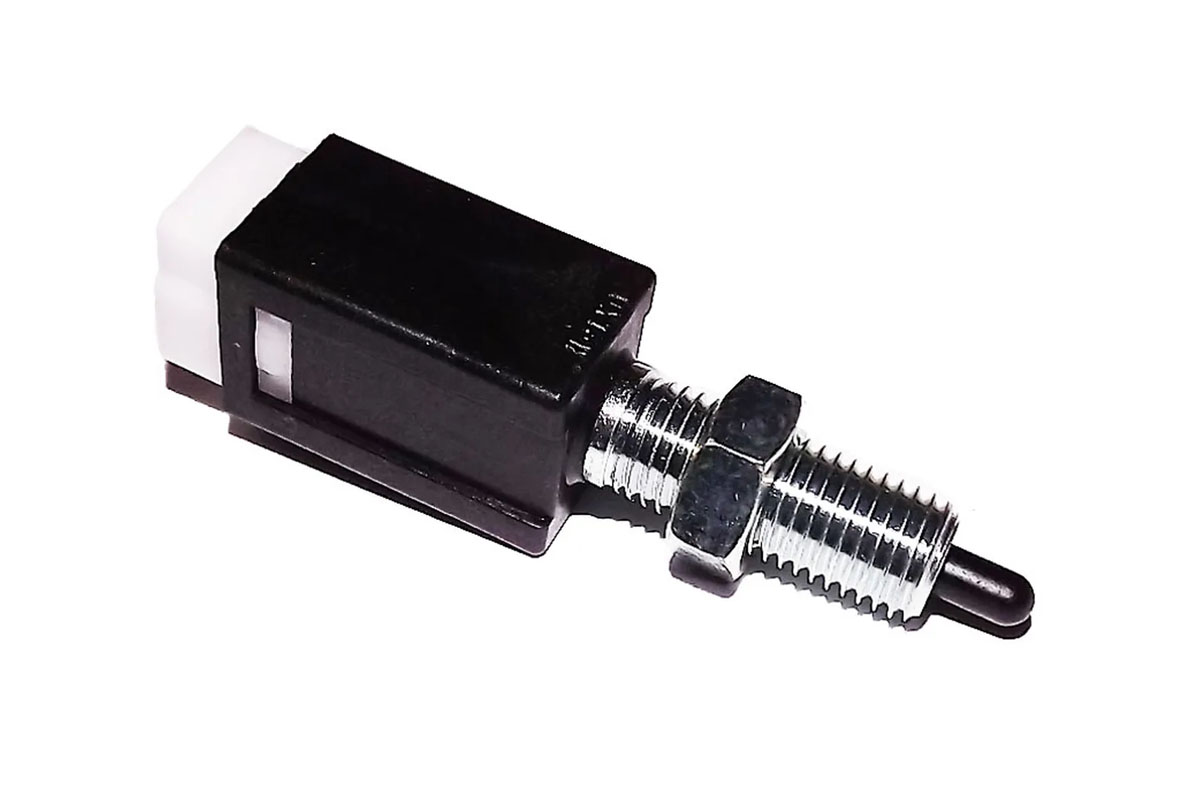
The clutch switch, also called a clutch pedal switch or clutch pedal sensor, is a small but important component mounted around the clutch pedal. Its job is to tell the vehicle's electronic control systems whether the clutch pedal is pressed or released.
Although it is physically simple, the signal from the clutch switch can be used for several different functions. Depending on the vehicle, it can affect engine starting, cruise control, engine speed control, gear shifting, idle control, and various safety functions.
When the clutch switch fails or its adjustment becomes incorrect, the vehicle may develop symptoms that initially appear unrelated to the clutch itself.
What Does the Clutch Switch Do?
The clutch switch monitors the position of the clutch pedal.
In a manual-transmission vehicle, the ECU or another control module may need to know whether the driver is pressing the clutch before performing certain actions.
For example, the vehicle may require the clutch pedal to be pressed before allowing the engine to start.
The switch can also be used to:
-
Enable or disable cruise control
-
Detect clutch pedal movement
-
Adjust engine speed during gear changes
-
Prevent unwanted engine acceleration during clutch operation
-
Assist with idle control
-
Control certain emissions strategies
-
Support start-stop operation on some vehicles
-
Provide information to the transmission or body control module
-
Prevent starting in an unsafe condition
The exact functions depend on the vehicle's electrical and control-system design.
How Does a Clutch Switch Work?
A conventional clutch switch usually works as an electrical contact switch.
It is normally installed so that movement of the clutch pedal operates the switch mechanism.
Depending on the design, there may be:
-
A normally open contact
-
A normally closed contact
-
Two separate switching circuits
-
A multi-stage clutch pedal switch
-
A clutch position sensor rather than a simple mechanical switch
Some newer vehicles use a more sophisticated sensor that can provide information about pedal position rather than simply indicating "pressed" or "released."
This distinction is important when diagnosing the system because not every vehicle uses the same type of clutch input.
Where Is the Clutch Switch Located?
The clutch switch is generally located above or near the clutch pedal, where the pedal mechanism can operate it.
You may find it attached to:
-
The clutch pedal bracket
-
The pedal support assembly
-
A mounting bracket behind the dashboard
Access can sometimes be difficult because the switch is positioned high in the pedal area.
On some vehicles there may be more than one switch or sensor around the clutch pedal. One circuit may be used for starting authorization while another is used for cruise control or engine-management functions.
Clutch Switch Failure Symptoms
A defective clutch switch does not necessarily cause the clutch itself to slip or become difficult to operate.
Instead, the symptoms are usually related to the electrical information being sent to the vehicle's control modules.
Common symptoms include:
-
Engine does not start
-
Engine starts without pressing the clutch on vehicles designed to require clutch engagement
-
Cruise control does not operate
-
Cruise control does not cancel correctly
-
Engine speed behaves unusually during gear changes
-
Start-stop system does not operate
-
Check Engine Light
-
Clutch pedal status appears incorrectly on a diagnostic scanner
-
Intermittent starting problems
-
Related fault codes
The exact symptoms depend on how the manufacturer uses the clutch switch signal.
Engine Does Not Start
One of the most recognizable symptoms is a no-start condition.
Many manual-transmission vehicles use a clutch-start interlock. The ECU, body control module, or starter-control system may require confirmation that the clutch pedal is depressed before allowing the starter motor to operate.
If the switch incorrectly reports that the clutch is released, the vehicle may refuse to crank.
This can sometimes be mistaken for:
-
A bad starter
-
A weak battery
-
An ignition switch problem
-
A starter relay problem
-
An immobilizer problem
Therefore, checking clutch pedal status with a diagnostic scanner can be useful when the vehicle suddenly refuses to crank.
Cruise Control Does Not Work
The clutch switch is also commonly involved in cruise control operation.
When the driver presses the clutch pedal, the system needs to know that the driver is changing gear. The ECU can then cancel or temporarily interrupt cruise control.
If the clutch switch remains stuck in the wrong position, the vehicle may interpret the clutch as being pressed continuously.
As a result, cruise control may refuse to activate.
In some vehicles, cruise control can also behave incorrectly if the clutch signal intermittently changes while driving.
Cruise Control Does Not Cancel Correctly
A more serious possibility is an incorrect clutch signal that prevents cruise control from responding normally.
The vehicle manufacturer generally has multiple conditions for cruise-control cancellation, and the clutch switch is only one of them. Brake-pedal input, vehicle speed, engine control conditions, and other signals may also be involved.
Therefore, a cruise-control problem does not automatically mean the clutch switch is defective.
Engine Speed Problems During Gear Changes
The ECU can use clutch-pedal information when controlling engine speed.
For example, when the driver presses the clutch during a gear change, the ECU may alter throttle or fuel-control strategies to prevent undesirable engine-speed behavior.
If the clutch switch signal is incorrect, the engine may sometimes:
-
Hold revs longer than expected
-
Drop revs differently during shifting
-
Respond unusually when the clutch is pressed
-
Show inconsistent engine-speed behavior during gear changes
These symptoms can be subtle and may not occur during every gear change.
Common Causes of Clutch Switch Failure
A clutch switch can fail electrically, mechanically, or simply become incorrectly adjusted.
Internal switch failure
The contacts inside the switch can wear, burn, oxidize, or become unreliable.
An aging switch may work correctly at one pedal position and fail at another.
Incorrect adjustment
The position of the switch relative to the clutch pedal is critical.
If the switch is too far away or too close, the pedal may not activate it correctly.
This can produce symptoms that look like an electrical failure even though the switch itself is functional.
Damaged mounting bracket
If the bracket holding the switch becomes bent, loose, or damaged, the switch may no longer move correctly with the pedal.
Broken or damaged wiring
The signal can be interrupted by:
-
Broken wires
-
Chafing
-
Poor repairs
-
Short circuits
-
Damaged insulation
-
Loose wiring near the pedal assembly
Because the clutch pedal moves frequently, wiring around this area can experience mechanical stress.
Corroded connector
Moisture or oxidation at the connector can increase electrical resistance or interrupt the signal.
An intermittent connector problem can be particularly difficult to find because the vehicle may work normally most of the time.
Clutch pedal problems
The switch may be perfectly functional while the pedal itself is not reaching the correct position.
Possible causes include:
-
Worn pedal bushings
-
Damaged pedal stop
-
Bent pedal components
-
Loose mounting
-
Mechanical interference
Can a Clutch Switch Be Adjusted?
On some vehicles, yes.
Certain clutch switches are designed with an adjustable plunger or mounting position. Others are self-adjusting during installation.
The correct procedure is vehicle-specific.
Improper adjustment can create a situation where the switch reports the clutch as pressed when it is actually released, or vice versa.
For this reason, the switch should not simply be moved until the vehicle starts. The correct pedal position and switch operation should be confirmed according to the manufacturer's procedure.
How Is a Clutch Switch Diagnosed?
A good diagnosis starts with determining what the vehicle thinks the clutch pedal is doing.
First, scan the vehicle for fault codes.
Look for engine, transmission, body-control, and cruise-control-related codes rather than limiting the inspection to one module.
Then check clutch pedal live data.
If the diagnostic scanner provides clutch-switch status, observe the value while slowly pressing and releasing the pedal.
The displayed status should change at the appropriate point.
An intermittent or permanently fixed status is a strong indication that further investigation is needed.
Inspect the switch physically.
Check whether:
-
The switch is loose
-
The pedal contacts the switch correctly
-
The mounting bracket is damaged
-
The switch plunger moves properly
-
The pedal reaches its normal resting position
Check the electrical circuit.
Depending on the design, testing may include:
-
Power supply
-
Ground
-
Signal circuit
-
Continuity
-
Switch contact operation
-
Connector condition
Do not assume that every clutch switch uses the same voltage or resistance values. The correct specifications should come from the vehicle's wiring diagram and service information.
Can You Test a Clutch Switch With a Multimeter?
Yes, a conventional mechanical clutch switch can often be tested with a multimeter.
With the switch disconnected and the vehicle manufacturer's testing procedure followed, the technician can check whether the electrical contacts change state when the switch is operated.
However, a simple continuity test does not always prove that the entire system is working.
A switch can pass a bench test but fail when installed because of:
-
Incorrect adjustment
-
Pedal movement
-
Wiring problems
-
Connector problems
-
Mechanical mounting issues
On vehicles using a clutch position sensor or multiple circuits, live-data testing can be more informative than a simple continuity test.
Can a Bad Clutch Switch Cause Clutch Slipping?
Usually, no.
A clutch switch is an electrical input device. It does not physically engage or disengage the clutch.
Actual clutch slipping is normally associated with mechanical or hydraulic problems such as:
-
Worn clutch disc
-
Weak pressure plate
-
Oil contamination
-
Flywheel problems
-
Hydraulic faults
A defective clutch switch can cause electronic drivability or starting problems, but it normally does not cause the clutch friction material itself to slip.
Clutch Switch vs Clutch Position Sensor
These terms are sometimes used interchangeably, but they are not always technically identical.
A traditional clutch switch generally provides a simple state such as:
Pressed / Released
A clutch position sensor may provide more detailed information about pedal position.
Modern vehicles may use multiple clutch-related signals, and the terminology used by the manufacturer can differ.
Therefore, when diagnosing a DTC, always follow the manufacturer's description rather than assuming that every "clutch sensor" is a simple on/off switch.
Is It Safe to Drive With a Faulty Clutch Switch?
It depends on the symptoms.
If the vehicle drives normally but cruise control is unavailable, the problem may not immediately affect basic vehicle movement.
However, if the clutch switch is part of the starting interlock or if the signal is causing abnormal engine behavior, the vehicle should be inspected.
A particularly important issue is an incorrect clutch signal that affects cruise control cancellation or other engine-management functions.
Because the clutch switch is part of the vehicle's control logic, it should not be bypassed permanently just to make the vehicle start.
The Important Point About Clutch Switch Faults
A clutch switch is a small component, but its signal can be used by several different vehicle systems.
A failure may therefore appear as a starting problem, cruise-control problem, engine-speed issue, or electronic fault rather than a conventional clutch problem.
The most reliable diagnosis is to determine what the ECU or other control module sees when the clutch pedal is pressed and released. If the pedal status is incorrect, inspect the switch adjustment, pedal mechanism, wiring, connector, and power/ground circuits before replacing the component.
And importantly, a clutch-related fault code does not automatically prove that the clutch switch itself is defective. The fault may be somewhere else in the circuit or in the mechanical mechanism that operates the switch.