TR
TR EN
EN

What Is an Exhaust Manifold Gasket? Failure Symptoms and Causes
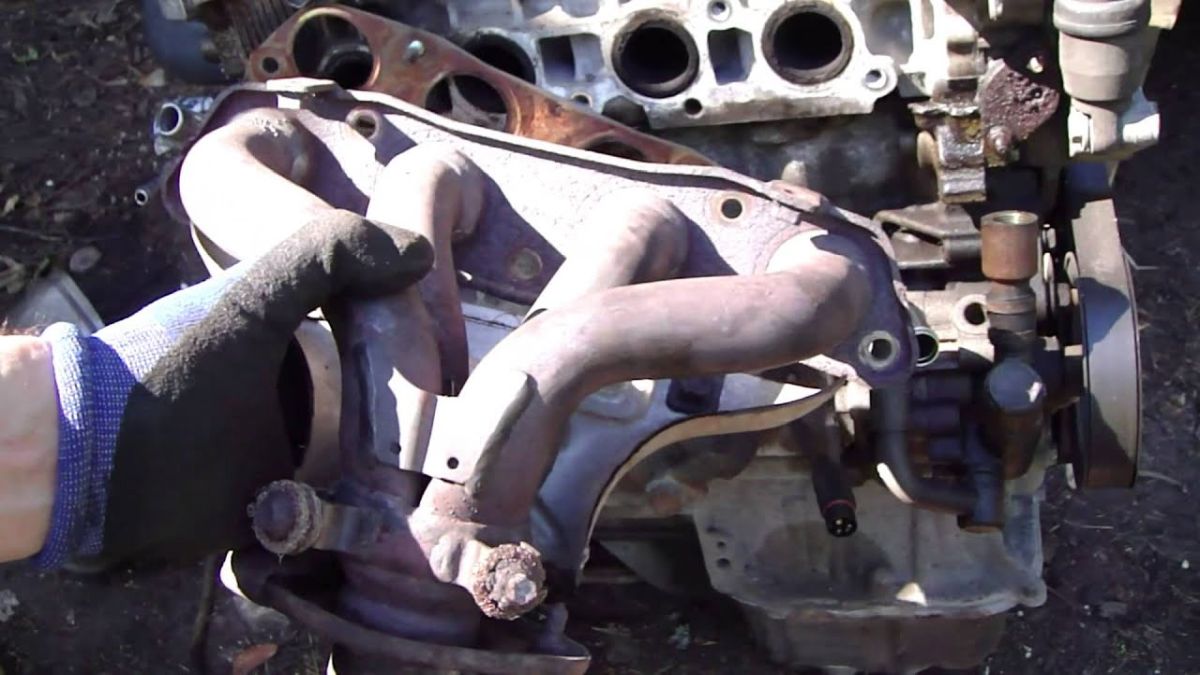
The Exhaust Manifold Gasket is a sealing component installed between the engine cylinder head and the exhaust manifold. Its primary purpose is to create a gas-tight seal between these two components and prevent hot exhaust gases from escaping before they reach the rest of the exhaust system.
The exhaust manifold collects exhaust gases from the engine's cylinders and directs them toward the exhaust system. Because the manifold is exposed to extremely high temperatures and repeated thermal expansion and contraction, the gasket works under demanding conditions.
When the gasket loses its sealing ability, exhaust gases can escape from the connection between the cylinder head and exhaust manifold. This can produce an exhaust leak, unusual noises, reduced engine performance and, depending on the location of the leak, incorrect oxygen sensor readings.
An exhaust manifold gasket problem should not be confused with a damaged exhaust manifold itself. A cracked manifold, loose mounting bolts or a warped sealing surface can create symptoms very similar to those of a failed gasket.
What Does an Exhaust Manifold Gasket Do?
The gasket has a relatively simple job, but it is extremely important.
It seals the connection between:
Cylinder head → Exhaust manifold
The gasket must withstand:
-
Very high exhaust temperatures
-
Rapid temperature changes
-
Exhaust pressure pulses
-
Engine vibration
-
Thermal expansion and contraction
-
Mechanical stress
A properly functioning gasket prevents exhaust gases from escaping into the engine compartment.
It also helps ensure that the exhaust gases travel through the intended exhaust path.
Why Does the Exhaust Manifold Need a Gasket?
The cylinder head and exhaust manifold are manufactured as separate components.
Even when their surfaces appear perfectly flat, microscopic irregularities can prevent them from forming a completely gas-tight seal by themselves.
The gasket fills these small imperfections and maintains the seal as the components expand and contract with temperature.
Without an effective gasket, high-temperature exhaust gases can escape through even a relatively small gap.
Exhaust Manifold Gasket Failure Symptoms
A damaged or leaking exhaust manifold gasket can produce several symptoms.
Some are immediately noticeable, while others may only appear during cold starts or under engine load.
Exhaust Leak Noise
One of the most recognizable symptoms is an unusual ticking, tapping or hissing noise from the engine compartment.
The noise can be especially noticeable when the engine is cold.
As the engine warms up, the metal components expand and the size of the leak can change. In some cases, the noise becomes quieter once the engine reaches operating temperature.
A ticking sound near the exhaust manifold should therefore not automatically be interpreted as an internal engine problem.
Exhaust Smell in the Engine Bay
A leaking exhaust manifold gasket can allow exhaust gases to escape directly into the engine compartment.
The driver may notice an unusual exhaust smell, particularly:
-
After a cold start
-
When the vehicle is stationary
-
With the hood open
-
When the ventilation system draws outside air into the cabin
Exhaust gases contain harmful substances, including carbon monoxide.
If exhaust fumes are entering the passenger compartment, the vehicle should be inspected promptly.
Check Engine Light
An exhaust manifold leak can sometimes trigger the Check Engine Light, particularly when the leak is located near an oxygen sensor.
An exhaust leak upstream of an oxygen sensor can allow outside air to enter the exhaust stream.
The oxygen sensor may then detect oxygen that did not actually come from the combustion process.
The ECU can interpret this as an abnormal air-fuel condition and may adjust fuel trim accordingly.
This can result in oxygen-sensor or fuel-trim-related diagnostic trouble codes.
Rough or Unstable Engine Operation
A significant exhaust leak close to the cylinder head can sometimes affect engine operation.
If the leak influences oxygen sensor readings, the ECU may make fuel corrections based on inaccurate information.
This can potentially contribute to:
-
Rough idle
-
Hesitation
-
Surging
-
Poor throttle response
-
Unstable fuel trims
However, these symptoms have many possible causes and do not by themselves prove that the exhaust manifold gasket is leaking.
Reduced Engine Performance
A gasket leak does not always cause a dramatic loss of power.
However, a major exhaust leak can affect exhaust flow and, on turbocharged engines, may be particularly important.
If the exhaust manifold is located before the turbocharger, an exhaust leak can reduce the amount of exhaust energy reaching the turbine.
This may contribute to reduced turbocharger performance and lower boost pressure.
Increased Fuel Consumption
A leaking exhaust manifold gasket can sometimes contribute to increased fuel consumption if the leak affects the readings of an upstream oxygen sensor.
The ECU may interpret the sensor signal as indicating a lean condition and increase fuel delivery.
This does not happen with every exhaust leak, however.
The location and size of the leak, sensor position and engine-management strategy all matter.
Visible Soot Around the Manifold
A small exhaust leak can sometimes leave a black or dark soot mark around the gasket area.
This can be a useful visual clue.
Soot may appear around:
-
Manifold-to-cylinder-head joints
-
Exhaust manifold mounting points
-
Flange connections
-
Cracks in the manifold
-
Nearby exhaust components
A visual inspection can therefore provide useful evidence, although a small leak may not leave an obvious mark.
Exhaust Manifold Gasket Failure Causes
Several factors can cause an exhaust manifold gasket to fail.
High Exhaust Temperature
The exhaust manifold operates in an extremely hot environment.
Repeated exposure to high temperatures can cause the gasket material to deteriorate.
The problem can become more severe if the engine experiences abnormally high exhaust temperatures.
Potential contributors include:
-
Lean air-fuel mixture
-
Ignition problems
-
Excessive engine load
-
Turbocharger problems
-
Incorrect ignition timing
-
Fuel-system problems
Thermal Expansion and Contraction
Every time the engine starts and warms up, the exhaust manifold expands.
After the engine is switched off, it cools and contracts.
This cycle happens thousands of times throughout the life of a vehicle.
Eventually, repeated thermal movement can contribute to gasket deterioration or loss of sealing.
Warped Exhaust Manifold
The gasket may be blamed when the real problem is a warped exhaust manifold.
If the manifold sealing surface is no longer flat, installing a new gasket may not provide a reliable long-term repair.
The manifold should therefore be inspected for distortion when a gasket is replaced.
Cracked Exhaust Manifold
A cracked exhaust manifold can create almost exactly the same symptoms as a failed gasket.
Both can produce:
-
Exhaust ticking
-
Exhaust smell
-
Soot deposits
-
Reduced performance
-
Check Engine Light
The manifold should therefore be carefully inspected rather than assuming that the gasket is the only possible source of the leak.
Loose or Damaged Manifold Bolts
The gasket depends on sufficient clamping force to maintain the seal.
Loose, damaged or broken mounting bolts can allow the manifold to move away from the cylinder head.
This can create an exhaust leak even if the gasket itself is relatively new.
Incorrect Installation
A gasket can fail prematurely if it is installed incorrectly.
Possible installation problems include:
-
Incorrect gasket orientation
-
Wrong gasket for the engine
-
Damaged sealing surface
-
Incorrect bolt tightening sequence
-
Incorrect tightening torque
-
Reusing components that should be replaced
-
Failure to clean the mating surfaces
Manufacturer specifications should be followed during installation.
Engine Movement and Vibration
Excessive engine vibration can place additional stress on the exhaust manifold and gasket.
Possible causes include worn engine mounts, misfire conditions or other mechanical problems.
If the underlying vibration is not corrected, a replacement gasket may fail again.
Poor-Quality Replacement Gasket
Not all replacement gaskets have the same quality.
The exhaust manifold operates under severe temperature conditions, so the gasket material must be appropriate for the specific application.
Using an unsuitable or low-quality gasket can result in premature leakage.
How Is an Exhaust Manifold Gasket Leak Diagnosed?
Diagnosis should begin with a visual and auditory inspection.
A technician may start the engine from cold and listen carefully around the exhaust manifold.
A small leak may produce a rhythmic ticking sound that changes with engine speed.
The manifold and surrounding components should also be inspected for:
-
Soot marks
-
Cracks
-
Broken bolts
-
Loose fasteners
-
Damaged gasket surfaces
-
Signs of exhaust gas leakage
The exact location of the leak is important because exhaust gases can travel along the manifold and make the leak appear to originate somewhere other than the actual failure point.
Smoke Testing and Other Leak Tests
Depending on the vehicle and workshop equipment, a smoke machine can sometimes be useful for locating an exhaust leak.
Specialized diagnostic methods may also include monitoring oxygen sensor behavior or using other techniques to identify the source of the leak.
Care must be taken because exhaust components can become extremely hot.
Checking Oxygen Sensor Data
If the exhaust manifold leak is close to an oxygen sensor, live-data analysis can provide additional information.
Fuel trims and oxygen sensor behavior may reveal that the ECU is responding to an unexpected oxygen signal.
However, abnormal fuel trims do not prove that the exhaust manifold gasket is leaking.
A vacuum leak, fuel-delivery problem, faulty sensor or other engine-management issue can produce similar data.
The data should therefore be interpreted together with a physical inspection.
Can You Drive With a Bad Exhaust Manifold Gasket?
A small leak may allow the vehicle to continue operating, but ignoring an exhaust manifold leak is not recommended.
The risk depends on the location and severity of the leak.
Potential problems include:
-
Exhaust gases entering the engine compartment
-
Exhaust fumes entering the cabin
-
Damage to nearby components from hot gases
-
Incorrect oxygen sensor readings
-
Increased fuel consumption
-
Reduced engine performance
-
Turbocharger performance problems on turbocharged engines
-
Additional exhaust-system damage
If exhaust fumes are noticeable inside the cabin, the vehicle should be inspected as soon as possible.
Can an Exhaust Manifold Gasket Cause an O2 Sensor Code?
Yes, it can.
This is particularly possible when the leak occurs upstream of an oxygen sensor.
Outside air can enter the exhaust through the leak, introducing additional oxygen into the exhaust stream.
The oxygen sensor may then report a condition that the ECU interprets as a lean mixture.
The ECU may respond by increasing fuel delivery, potentially creating fuel-trim-related diagnostic trouble codes.
This is why replacing an oxygen sensor without checking for exhaust leaks can sometimes fail to solve the original problem.
Can an Exhaust Manifold Gasket Cause Turbo Problems?
On a turbocharged engine, the answer can be yes.
If the exhaust manifold is located upstream of the turbocharger, an exhaust leak can allow some exhaust gas to escape before it reaches the turbocharger turbine.
This can reduce the energy available to drive the turbocharger.
Depending on the severity of the leak, the vehicle may experience:
-
Slow turbo spool
-
Reduced boost
-
Poor acceleration
-
Boost-control faults
-
Increased exhaust noise
Again, this does not mean every turbo-related problem is caused by the manifold gasket. The turbocharger, actuator, wastegate, boost system and sensors must also be evaluated.
Replacing an Exhaust Manifold Gasket
Replacing the gasket usually requires removing the exhaust manifold from the cylinder head.
Before installing the new gasket, the sealing surfaces should be inspected carefully.
The technician should check whether:
-
The manifold is warped
-
The manifold is cracked
-
Mounting studs or bolts are damaged
-
The cylinder-head sealing surface is damaged
-
The correct gasket is being used
The mounting hardware should be tightened according to the manufacturer's specified procedure and torque.
Simply installing a new gasket without correcting a warped manifold or damaged mounting hardware can result in another leak.
Does an Exhaust Manifold Gasket Need to Be Replaced Regularly?
No.
An exhaust manifold gasket is not normally a routine maintenance item like engine oil, filters or spark plugs.
It is generally replaced when there is evidence of leakage, deterioration or when the exhaust manifold is removed and the manufacturer recommends installing a new gasket.
A healthy gasket can remain functional for many years.
Exhaust Manifold Gasket vs. Exhaust Manifold Leak
These terms are related but not identical.
An exhaust manifold gasket failure means the sealing component between the cylinder head and manifold is no longer sealing properly.
An exhaust manifold leak describes the result: exhaust gases are escaping from the intended exhaust path.
The leak can also be caused by:
-
A cracked manifold
-
Warped manifold
-
Loose bolts
-
Broken studs
-
Damaged flange
-
Damaged sealing surface
Therefore, finding an exhaust leak does not automatically prove that the gasket is defective.
Final Thoughts
The Exhaust Manifold Gasket plays a small but essential role in maintaining a sealed connection between the engine cylinder head and exhaust manifold.
When it fails, the first clue is often a ticking or hissing noise during cold starts. Other symptoms can include exhaust smells, soot around the manifold, reduced performance, increased fuel consumption and, in some cases, a Check Engine Light.
The location of the leak is especially important. A leak near an oxygen sensor can affect sensor readings, while a leak before a turbocharger can reduce the energy available to the turbine.
For this reason, diagnosing an exhaust manifold gasket problem should involve more than simply replacing the gasket. The manifold, sealing surfaces, mounting hardware, oxygen sensor readings and surrounding exhaust system should all be checked to make sure the actual source of the leak is repaired.