TR
TR EN
EN

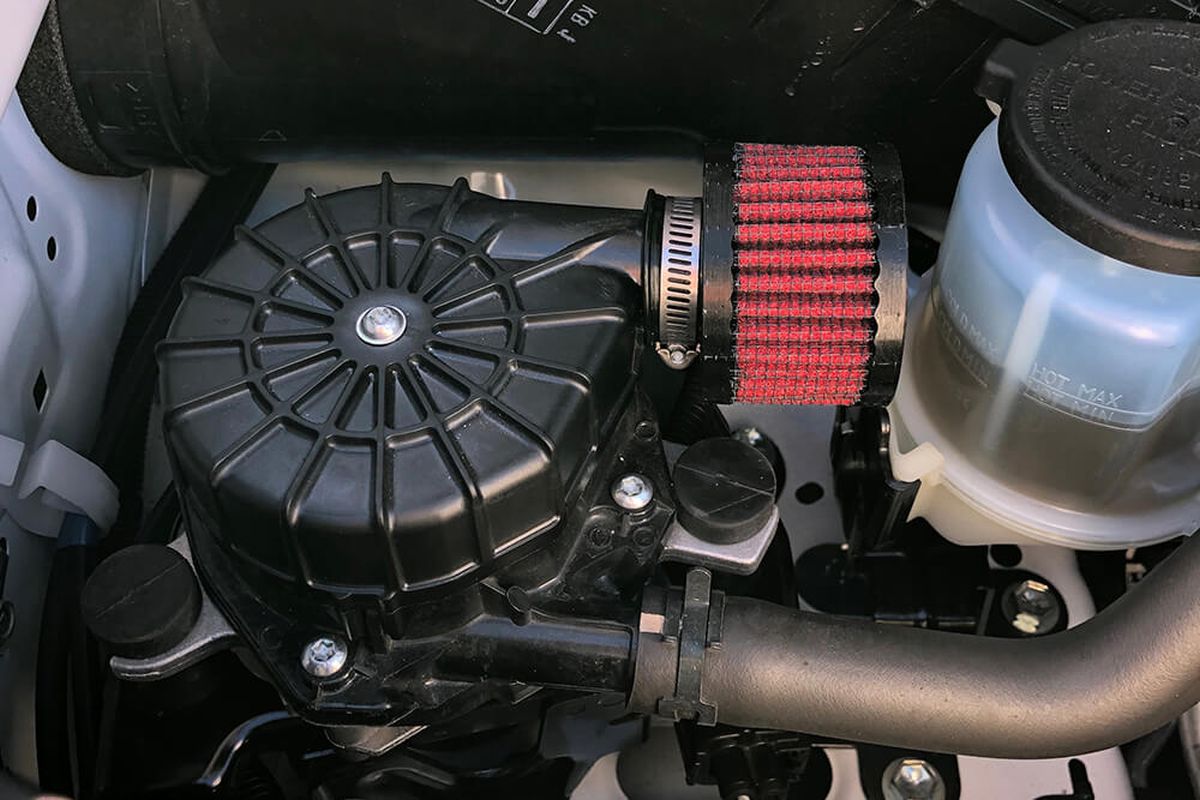
What Is a Secondary Air Injection Pump? What Are Its Failure Causes and Symptoms?
The Secondary Air Injection Pump (SAI Pump) is a component used in many gasoline-powered vehicles to reduce harmful exhaust emissions, particularly during a cold start.
When a cold engine is started, the catalytic converter does not immediately reach its normal operating temperature. During this short warm-up period, combustion can produce higher levels of unburned hydrocarbons and carbon monoxide.
The secondary air injection system helps the catalytic converter heat up more quickly by introducing fresh air into the exhaust system.
The pump supplies this additional air, while valves and the engine control module (ECU/PCM) control when and where the air is introduced.
Although the system is mainly an emissions-control system, a malfunctioning secondary air injection pump can trigger the Check Engine Light and store diagnostic trouble codes.
How Does the Secondary Air Injection System Work?
The system is relatively simple in principle.
When the engine is started cold, the ECU activates the secondary air injection pump for a limited period.
The pump draws fresh air from the atmosphere and sends it through the secondary air injection system toward the exhaust.
The additional oxygen helps promote the oxidation of unburned fuel in the exhaust gases.
This generates additional heat and helps the catalytic converter reach its effective operating temperature faster.
Once the catalytic converter has warmed sufficiently, the ECU normally switches the secondary air injection pump off.
The system is therefore used mainly during specific operating conditions rather than continuously.
What Is the Purpose of the Secondary Air Injection Pump?
The main purpose of the pump is to help reduce emissions during the engine's cold-start phase.
When the engine is cold, the catalytic converter is not yet operating at its optimal temperature.
By supplying additional oxygen to the exhaust stream, the system can support the oxidation of:
-
Unburned hydrocarbons (HC)
-
Carbon monoxide (CO)
This helps the catalytic converter become effective sooner after startup.
The secondary air system therefore has an important role in meeting emissions requirements, even though it does not normally contribute directly to engine power.
Main Components of the Secondary Air Injection System
The exact design varies between manufacturers, but a typical system can contain several components.
These may include:
-
Secondary air injection pump
-
Secondary air injection valve
-
Check valve
-
Air hoses or pipes
-
Vacuum control solenoid
-
Pressure sensor
-
Air filter
-
Electrical wiring
-
Relays and fuses
-
ECU/PCM
The pump is only one part of the complete system.
This is important during diagnosis because a secondary air injection fault does not automatically mean that the pump itself has failed.
Secondary Air Injection Pump Failure Symptoms
A faulty secondary air injection system can produce several symptoms.
Some problems are noticeable to the driver, while others may only be detected by the ECU.
Check Engine Light
The most common symptom is an illuminated Check Engine Light.
Because the secondary air injection system is monitored by the ECU, a problem with the pump, valve, wiring, airflow or pressure response can cause a diagnostic trouble code.
The vehicle may continue to drive normally because the system is primarily involved in emissions control during cold starts.
Secondary Air Injection Fault Codes
A malfunction can trigger diagnostic trouble codes related to:
-
Secondary air injection system performance
-
Insufficient secondary air flow
-
Excessive secondary air flow
-
Pump circuit problems
-
Switching valve problems
-
Pressure sensor problems
For example, P0410 is associated with a secondary air injection system malfunction.
Other codes in the P0410–P0419 family can relate to different parts or operating conditions of the secondary air system, depending on the vehicle.
The exact meaning should always be checked against the manufacturer's diagnostic information.
Unusual Noise During Cold Start
A failing secondary air pump can produce an unusual sound immediately after a cold start.
A healthy pump may already be noticeable because it is an electric motor moving a significant amount of air.
However, a damaged pump can produce:
-
Grinding
-
Whining
-
Rattling
-
Squealing
-
Excessive vibration
If the noise occurs specifically for a short period after a cold start and then disappears, the secondary air injection system should be considered.
Secondary Air Pump Does Not Run
If the pump does not operate when commanded, several possibilities exist.
The pump itself may be defective, but the problem could also be caused by:
-
Blown fuse
-
Failed relay
-
Damaged wiring
-
Poor ground
-
Connector corrosion
-
ECU control problem
-
Mechanical blockage
-
Control valve problem
Testing the electrical supply and ECU command is therefore important before replacing the pump.
Increased Emissions
Because the secondary air injection system is designed to reduce cold-start emissions, a malfunction can increase emissions during the period when the system should be operating.
The vehicle may still feel completely normal from the driver's perspective.
This is one reason why secondary air injection problems can sometimes remain unnoticed until the Check Engine Light appears or the vehicle undergoes an emissions inspection.
Emissions Inspection Failure
Depending on local regulations and inspection procedures, a stored secondary air injection fault can cause the vehicle to fail an emissions-related inspection.
Even if the vehicle drives normally, the presence of a stored emissions-related DTC or an illuminated malfunction indicator can be enough to create an inspection problem.
Secondary Air Injection Pump Failure Causes
There are several common reasons why a secondary air injection pump or its system can fail.
Water Entering the Pump
One of the more serious problems occurs when water or condensation enters the secondary air injection pump.
The pump is designed to move air, not exhaust gas or water.
If the check valve or other components fail, exhaust condensation can travel back toward the pump.
Water contamination can damage the electric motor and internal components.
In some vehicles, this is a known failure pattern.
Failed Check Valve
The secondary air system commonly uses a check valve to prevent exhaust gases and condensation from traveling backward toward the pump.
If the valve becomes stuck, leaks or fails to seal correctly, hot exhaust gases can enter parts of the system that should only receive fresh air.
This can eventually damage the pump and hoses.
Blocked Air Passage
Carbon deposits can accumulate inside secondary air passages.
Over time, these deposits can restrict airflow between the exhaust ports and the secondary air system.
The pump may operate correctly but the ECU may detect insufficient airflow.
In this situation, replacing the pump alone may not solve the problem.
Carbon Deposits in the Secondary Air Passage
Some engines can develop significant carbon buildup in the exhaust passages used by the secondary air injection system.
This is particularly relevant to systems that have been operating for many years.
The pump may produce the required airflow, but the air cannot reach the intended location efficiently.
The ECU can then interpret the system as malfunctioning.
Failed Secondary Air Valve
The valve controlling secondary air flow can become stuck open or closed.
A valve that does not open when commanded can prevent the required airflow from reaching the exhaust.
A valve stuck open can allow unwanted airflow at times when the system should be inactive.
Depending on the system design, the valve may be controlled electrically, pneumatically or through a combination of methods.
Vacuum Control Problems
Some secondary air systems use vacuum-operated valves.
Possible problems include:
-
Cracked vacuum hoses
-
Vacuum leaks
-
Failed vacuum solenoid
-
Blocked vacuum passage
-
Incorrect valve operation
In such a system, the pump may be perfectly healthy while the air-control valve fails to operate.
Electrical Problems
The pump is an electric motor, so electrical faults can prevent it from operating.
Possible causes include:
-
Blown fuse
-
Faulty relay
-
Open circuit
-
Short circuit
-
Damaged wiring
-
Poor ground
-
Corroded connector
-
Internal motor failure
A basic visual inspection of the wiring can sometimes reveal the problem, but electrical testing is usually required for a reliable diagnosis.
How Is a Secondary Air Injection Pump Diagnosed?
Diagnosis should begin by identifying the exact DTC stored in the ECU.
The code description provides useful direction, but it does not automatically identify the failed component.
The technician should then determine whether the pump is actually being commanded to operate.
A scan tool may be able to activate the secondary air injection pump using an actuator test.
If the pump is commanded on, its operation can be observed and its electrical supply can be checked.
The technician should verify:
-
Battery/power supply
-
Ground
-
Fuse
-
Relay
-
Pump operation
-
Electrical current draw
-
Airflow
-
Valve operation
-
Vacuum supply where applicable
-
Pressure or airflow sensor readings
-
Hoses and pipes
-
Check valves
-
Secondary air passages
Checking the Pump Before Replacing It
If the pump does not operate, it is tempting to conclude that the pump has failed.
However, the pump may not be receiving power or a proper control signal.
For this reason, the electrical circuit should be tested.
If power and ground are correct and the ECU is commanding the pump to operate, but the motor does not run or operates abnormally, the pump becomes a much stronger suspect.
The manufacturer's test procedure should be followed because electrical configurations vary between vehicles.
What If the Pump Works but the Fault Remains?
This is an important situation.
A secondary air pump can operate normally while the system still has insufficient airflow.
Possible causes include:
-
Blocked passages
-
Failed check valve
-
Stuck switching valve
-
Damaged air hose
-
Vacuum control problem
-
Faulty pressure sensor
-
Exhaust-side restriction
Therefore, hearing the pump run does not prove that the entire secondary air injection system is functioning correctly.
The ECU is generally interested in the result of the air injection, not simply whether the electric motor makes noise.
Can a Secondary Air Injection Pump Cause Poor Engine Performance?
Usually, a secondary air injection problem does not cause major power loss because the system is primarily active during cold-start operation.
However, unusual drivability symptoms can occur in certain situations.
For example, a valve that becomes stuck open can introduce unwanted air into the exhaust or intake-related systems, depending on the design.
A major vacuum leak or another related fault can also create drivability problems.
If the vehicle has severe power loss, rough running or misfires, the secondary air pump should not automatically be blamed.
Other engine-management systems should be diagnosed at the same time.
Can a Bad Secondary Air Pump Damage the Engine?
A failed secondary air pump by itself is generally more likely to cause an emissions problem than direct engine damage.
However, a malfunctioning valve or check valve can create secondary problems.
For example, if exhaust gases or condensation travel in the wrong direction, they can damage the pump, hoses or other components.
The actual risk depends on the system design and the nature of the failure.
Can You Drive With a Bad Secondary Air Injection Pump?
In many cases, the vehicle can still be driven because the secondary air injection system is primarily used during the cold-start emissions phase.
The engine may start, idle and drive normally.
However, the fault should not be ignored indefinitely.
A malfunctioning system can result in:
-
Increased emissions
-
Check Engine Light
-
Failed emissions inspection
-
Additional component damage
-
More expensive repairs if water or exhaust contamination spreads through the system
If the vehicle has additional symptoms such as severe misfire, overheating, stalling or major loss of power, those symptoms should be diagnosed separately and promptly.
Secondary Air Injection Pump vs. Secondary Air Injection Valve
These components are often confused.
The secondary air injection pump supplies the air.
The secondary air injection valve controls where and when that air enters the exhaust system.
A pump can be operating normally while the valve remains stuck closed.
Likewise, a valve can function correctly while the pump motor has failed.
This distinction is important when interpreting diagnostic trouble codes.
Secondary Air Injection Pump vs. Turbocharger
The secondary air injection pump should not be confused with the turbocharger.
A turbocharger uses exhaust energy to compress intake air and increase the amount of air entering the engine.
A secondary air injection pump, on the other hand, supplies fresh air directly into the exhaust system as part of an emissions-control strategy.
The two systems perform completely different functions.
How to Prevent Secondary Air Injection Problems
There is no universal maintenance interval for a secondary air injection pump.
However, several practices can help reduce the risk of problems.
The system should be inspected if:
-
The Check Engine Light appears with an SAI-related code
-
The pump becomes unusually noisy
-
Water is found in the system
-
A valve is suspected of leaking
-
Hoses become cracked
-
The vehicle develops repeated cold-start emissions faults
If a failed check valve has allowed water or exhaust gases to reach the pump, replacing only the pump may result in another failure.
The underlying cause should be corrected as well.
Conclusion
The Secondary Air Injection Pump is an emissions-control component designed to supply fresh air to the exhaust system, especially during cold starts. The additional oxygen helps the catalytic converter reach its effective operating temperature more quickly and supports the reduction of cold-start emissions.
A failed pump can cause a Check Engine Light, unusual pump noise, emissions problems and secondary air injection diagnostic trouble codes.
However, the pump is only one part of the system. A faulty check valve, blocked passage, damaged hose, defective switching valve, vacuum problem, blown fuse, relay failure or wiring fault can produce very similar symptoms.
For that reason, the correct diagnosis should determine whether the pump is receiving the correct electrical supply, whether it operates when commanded, and whether the required airflow actually reaches the exhaust system. Replacing the pump without checking the rest of the secondary air injection system can leave the original problem unresolved.