TR
TR EN
EN

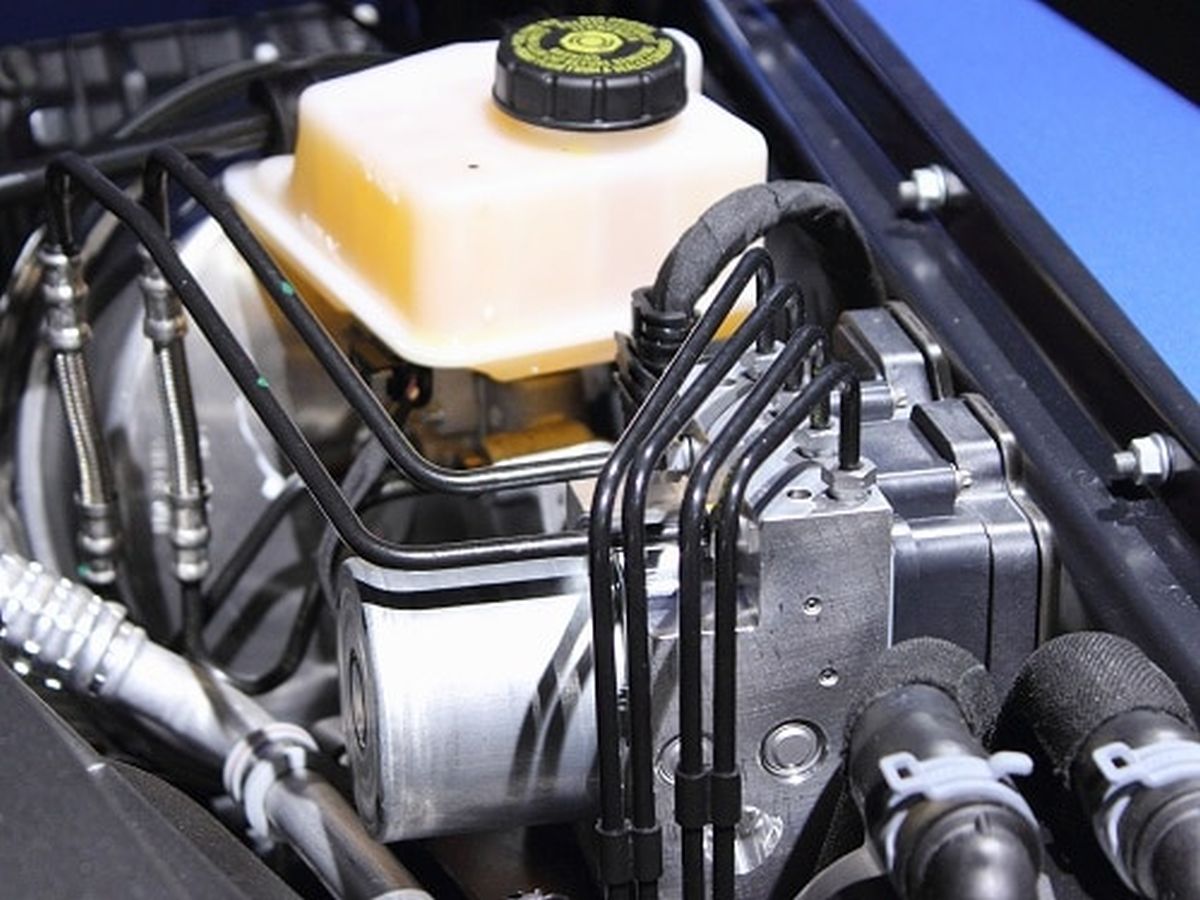
What Is the ABS Brain? ABS Control Module Failure and Symptoms
The ABS Brain, commonly known as the ABS Control Module, is one of the most important electronic components in a modern vehicle's braking system. It monitors wheel speed and other vehicle signals and determines when the Anti-lock Braking System (ABS) needs to intervene.
The term “ABS brain” is commonly used by drivers and mechanics, while manufacturers generally refer to the component as the ABS Control Module, ABS ECU, or ABS Electronic Control Unit.
Its main purpose is to prevent the wheels from locking during hard braking. When the system detects that a wheel is about to stop rotating, the ABS control module can command the hydraulic unit to reduce and restore brake pressure rapidly.
This allows the wheel to continue rotating and helps the driver maintain steering control during emergency braking.
How Does the ABS Control Module Work?
The ABS control module constantly receives information from the vehicle's sensors.
The most important inputs normally come from the wheel speed sensors. Each sensor monitors the rotational speed of its respective wheel and sends this information to the ABS module.
During normal driving, the module continuously compares these signals.
When the driver suddenly applies the brakes, the system looks for an abnormal decrease in the rotational speed of one or more wheels. If one wheel is slowing down much faster than expected, the module can determine that it may be approaching a lock-up condition.
The ABS control module then communicates with the hydraulic modulator to control brake pressure.
The process can happen many times per second.
This is why a driver may feel a rapid vibration or pulsing sensation through the brake pedal when ABS activates. That sensation is usually normal during ABS intervention and does not necessarily indicate a fault.
What Is the Relationship Between the ABS Brain and the Hydraulic Unit?
The ABS system generally consists of both an electronic control section and a hydraulic control section.
The electronic module makes the decisions based on sensor information.
The hydraulic modulator carries out those commands by controlling brake fluid pressure.
Depending on the vehicle, the ABS control module and hydraulic unit may be mounted together as a single assembly.
In other designs, the electronic control module may be separated from the hydraulic portion.
This distinction is important when diagnosing an ABS problem. A fault in the hydraulic unit does not necessarily mean the electronic ABS module is defective.
Likewise, an electronic communication or sensor fault does not automatically indicate a hydraulic problem.
ABS Control Module Failure Symptoms
An ABS control module problem can produce several different symptoms.
The symptoms depend on the type of failure. A complete module failure can behave very differently from an intermittent communication problem, a power-supply issue or a fault caused by an external sensor.
ABS Warning Light
The most common indication is an illuminated ABS warning light on the instrument cluster.
When the ABS module detects a fault that could prevent the system from operating correctly, it can store a diagnostic trouble code and illuminate the warning lamp.
The conventional braking system may still function, but the ABS function may be disabled or limited.
Traction Control Warning Light
On many modern vehicles, ABS, traction control and stability control systems are closely integrated.
Therefore, an ABS-related fault may also illuminate:
-
Traction Control warning light
-
ESC/ESP warning light
-
Stability Control warning light
Several warning lights appearing simultaneously does not necessarily mean that several unrelated components have failed.
A single ABS-related problem can cause multiple systems to be disabled because those systems share wheel-speed and vehicle-dynamics information.
Loss of ABS Function
If the ABS module detects a serious fault, it may disable ABS operation.
The vehicle can still have conventional hydraulic braking in many cases, but the wheels may no longer receive anti-lock intervention.
This becomes particularly important during emergency braking or when braking on wet, icy, snowy or otherwise slippery surfaces.
Traction Control or Stability Control Becomes Unavailable
Because modern stability systems often rely heavily on wheel-speed information and ABS hydraulic control, an ABS fault can cause traction control and electronic stability control to become unavailable.
The vehicle may display a message such as:
ABS unavailable
or
ESC/ESP fault
The exact warning depends on the manufacturer.
Speedometer Problems
In some vehicles, the ABS system contributes to vehicle-speed information.
If the ABS module or a wheel-speed sensor stops providing valid information, the speedometer or other systems that depend on vehicle-speed data may be affected.
However, this is highly vehicle-dependent. A speedometer problem should not automatically be blamed on the ABS control module.
Communication Errors
Modern vehicles contain several electronic control modules connected through a communication network, commonly using CAN communication.
The ABS module communicates with systems such as:
-
Engine control module
-
Transmission control module
-
Instrument cluster
-
Body control module
-
Steering control module
-
Airbag system
-
Stability control system
A communication problem can therefore produce multiple fault codes in different modules.
The cause may be the ABS module itself, but it could also be a battery problem, power supply issue, damaged CAN wiring, poor ground connection or another module affecting the network.
Intermittent ABS Problems
Sometimes the ABS system works normally most of the time but suddenly develops a fault.
The warning light may appear and disappear.
This can be caused by:
-
Loose electrical connections
-
Corroded terminals
-
Damaged wiring
-
Intermittent wheel-speed sensor signals
-
Battery voltage problems
-
CAN communication interruptions
-
Internal electronic faults
Intermittent faults can be more difficult to diagnose because the system may appear normal when the vehicle is stationary in a workshop.
Common Causes of ABS Control Module Failure
An ABS warning light does not automatically mean that the ABS brain itself needs to be replaced.
Several other problems can cause an ABS fault.
Faulty Wheel Speed Sensor
Wheel speed sensors are among the most important inputs used by the ABS system.
A failed sensor can produce an ABS warning light and may cause the ABS, traction control and stability control systems to become unavailable.
Possible causes include:
-
Damaged sensor
-
Broken wiring
-
Corroded connector
-
Incorrect sensor installation
-
Excessive sensor-to-reluctor gap
-
Damaged tone ring
-
Damaged magnetic encoder
-
Wheel bearing problems
The sensor should therefore be tested before replacing the ABS module.
Damaged ABS Wiring
The wiring harness connecting the wheel speed sensors and ABS module is exposed to water, dirt, vibration and road debris.
A wire can become damaged or partially broken without being visually obvious.
A problem that occurs only when the suspension moves or the vehicle is driven over rough roads may indicate an intermittent wiring issue.
Corroded ABS Connector
Water intrusion or corrosion at the ABS module connector can cause communication and sensor-related faults.
Loose or damaged terminals can also create high resistance or intermittent connections.
The connector should be inspected carefully rather than simply unplugged and reconnected.
Low Battery Voltage
ABS control modules are sensitive to electrical supply conditions.
A weak battery, poor charging system or poor electrical connection can cause multiple modules to report faults.
If several unrelated warning lights appear at the same time, checking battery voltage, charging system operation, power supply and grounds can be an important early diagnostic step.
Poor ABS Module Ground
The ABS module requires a reliable ground connection.
A corroded ground point or damaged ground wire can cause unusual and intermittent electronic behavior.
This can sometimes be mistaken for an internal ABS module failure.
Hydraulic Unit Problem
The electronic ABS module and hydraulic assembly may be integrated.
A hydraulic problem can therefore generate ABS-related diagnostic codes even when the electronic control section is functioning normally.
Possible hydraulic problems include:
-
Sticking valves
-
Internal pressure problems
-
Hydraulic leakage
-
Contaminated brake fluid
-
Pump motor problems
The exact fault should be identified before replacing the entire ABS assembly.
Internal ABS Module Failure
The electronic control module itself can eventually fail.
Possible internal problems include:
-
Damaged electronic components
-
Internal circuit failure
-
Corrosion
-
Overheating
-
Water damage
-
Internal solder or connection failures
An internal module failure should normally be diagnosed only after the external power, ground, communication, wiring and sensor circuits have been verified.
Can an ABS Module Be Repaired?
In some cases, an ABS module can be repaired or electronically rebuilt.
Specialist repair services may be able to address certain internal electronic failures.
However, not every ABS module is repairable, and the repairability depends on the specific unit and failure.
Another possibility is replacing the module with a new or used unit.
This creates another important consideration: coding and programming.
Some replacement ABS modules need to be coded or configured for the vehicle before they will operate correctly.
Simply installing another module does not always complete the repair.
How Is an ABS Control Module Diagnosed?
A proper diagnosis should begin with a professional diagnostic scan.
An ordinary OBD scan that only reads engine codes may not provide enough information. The ABS control module should be accessed directly with a diagnostic scanner capable of communicating with the vehicle's braking and stability systems.
The technician should check:
-
ABS fault codes
-
Live wheel-speed data
-
ABS module communication
-
Power supply
-
Ground connections
-
Sensor signals
-
CAN communication
-
Hydraulic pump operation
-
Brake pressure information where available
The stored fault codes should be interpreted together rather than individually.
For example, if an ABS module reports a wheel-speed sensor fault, the sensor and its wiring should be checked before concluding that the ABS brain has failed.
Why Live Wheel-Speed Data Is Important
Live data can be extremely useful when diagnosing ABS problems.
During a controlled road test, the wheel-speed values should generally correspond with one another when the vehicle is traveling straight at a steady speed.
If one wheel suddenly reports a dramatically different speed, the problem may be related to that wheel's sensor, wiring, encoder, bearing or mechanical installation.
This can help distinguish a sensor-related problem from an ABS control-module problem.
Can a Bad ABS Brain Cause the Brake Pedal to Become Hard?
Not necessarily.
A hard brake pedal can have many possible causes, including problems with the brake booster, vacuum supply, hydraulic system or other braking components.
An ABS electronic fault does not automatically mean that the brake pedal will become hard.
Likewise, a soft or spongy brake pedal should not automatically be attributed to the ABS module.
Brake pedal behavior must be diagnosed as part of the overall braking system.
Is It Safe to Drive With an ABS Control Module Fault?
This depends on the specific fault.
If only the ABS function has been disabled while conventional braking remains operational, the vehicle may still be able to stop normally under ordinary conditions.
However, the driver should understand that the anti-lock function and potentially traction/stability functions may not be available.
The situation is more serious if there is:
-
Reduced braking performance
-
Brake fluid leakage
-
A red brake warning light
-
A very soft brake pedal
-
A very hard brake pedal
-
Unusual braking behavior
-
Unexpected ABS activation
-
Loss of hydraulic pressure
In these situations, the vehicle should not be treated as safe to continue driving until the braking system has been inspected.
ABS Brain Failure Does Not Always Mean ABS Module Replacement
This is one of the most important points when diagnosing an ABS fault.
An ABS diagnostic code identifies a condition detected by the system. It does not automatically identify the component that must be replaced.
An ABS warning can be caused by a wheel speed sensor, wiring, connector, power supply, ground, CAN communication, hydraulic unit, battery voltage or the ABS control module itself.
Replacing the ABS module without testing these possibilities can result in unnecessary expense.
ABS Control Module Replacement
If testing confirms that the ABS control module has failed, replacement may be necessary.
Before installation, the replacement part should be verified for compatibility with the vehicle.
After replacement, some vehicles may require:
-
ABS module coding
-
Vehicle configuration
-
Programming
-
Calibration
-
Steering angle sensor calibration
-
Brake pressure sensor calibration
-
Hydraulic bleeding
-
ABS system initialization
The exact procedure depends on the manufacturer and vehicle.
After the repair, the ABS system should be scanned again and tested to make sure that no fault codes remain and that the wheel-speed and hydraulic systems are functioning correctly.
ABS Brain and ESP/ESC Systems
On modern vehicles, the ABS control module is often closely connected to ESP/ESC (Electronic Stability Control).
The stability-control system uses information about wheel speed, steering angle, yaw rate and vehicle movement to determine whether the vehicle is following the driver's intended path.
If necessary, the system can individually control brake pressure at specific wheels.
Therefore, an ABS module fault can sometimes disable much more than ABS.
This is why a relatively small electronic fault can result in multiple warning lights appearing simultaneously.
ABS Control Module Failure and Diagnostic Trouble Codes
Different manufacturers use different diagnostic codes and descriptions for ABS faults.
A code may indicate:
-
Wheel speed sensor failure
-
ABS pump motor problem
-
Hydraulic pressure problem
-
Valve malfunction
-
Communication failure
-
Internal control module fault
-
Power supply problem
-
Sensor signal range/performance problem
The exact code description should always be interpreted according to the specific vehicle.
A generic code definition is useful as a starting point, but the manufacturer's diagnostic procedure provides the information needed for accurate testing.
Conclusion
The ABS Brain, or ABS Control Module, is the electronic control center of the vehicle's anti-lock braking system. It receives information from wheel-speed sensors and other vehicle systems, analyzes this information and controls the hydraulic ABS system when wheel lock is detected.
An ABS control module fault can cause an ABS warning light, traction-control and stability-control warnings, loss of ABS functionality, communication errors and, in some vehicles, other unusual electronic symptoms.
However, an ABS warning does not automatically mean that the ABS brain is defective. Wheel-speed sensors, wiring, connectors, power supply, grounds, CAN communication, hydraulic components and low battery voltage can all create similar symptoms.
For this reason, the correct repair starts with diagnosis rather than parts replacement. Reading the ABS fault codes, checking live wheel-speed data, testing the electrical circuits and verifying the hydraulic system can determine whether the actual problem is the ABS control module or another component in the braking system.