TR
TR EN
EN

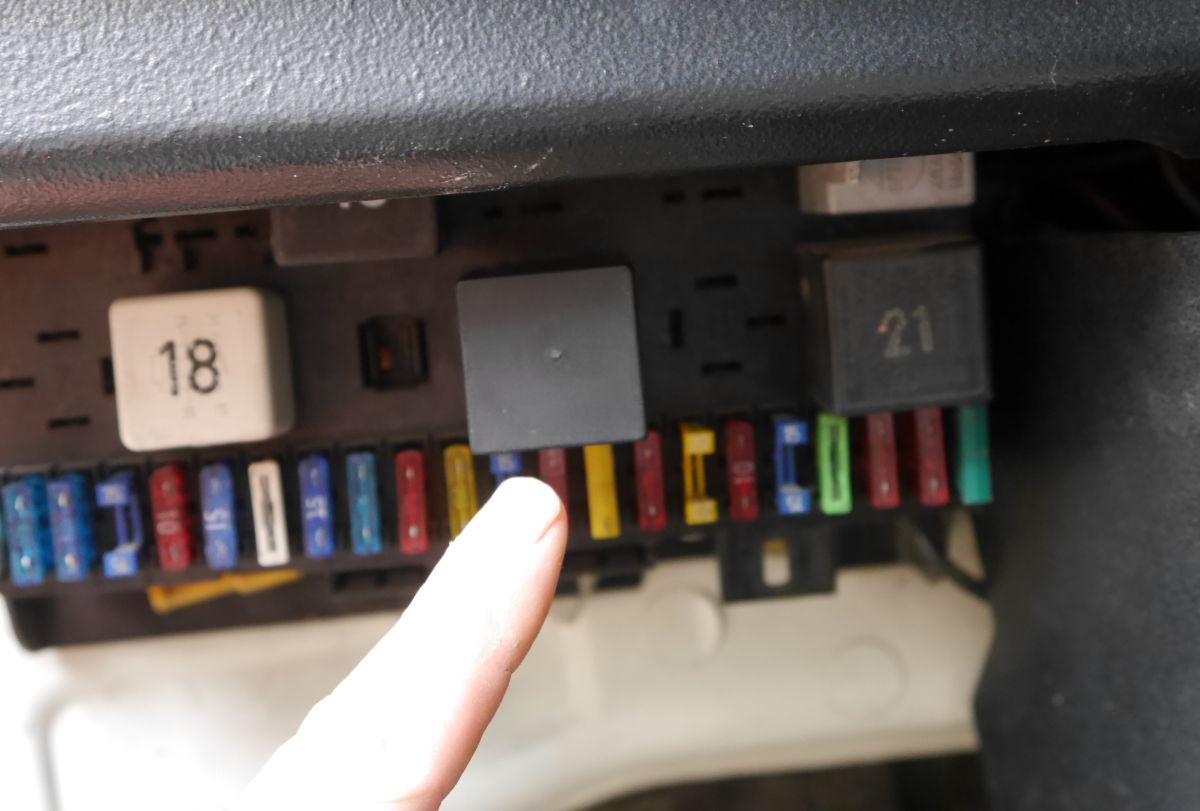
What Is an Intermittent Wiper Timer Relay? What Are the Symptoms of Failure?
The intermittent wiper timer relay is an electrical control component that allows the vehicle’s windshield wipers to operate at specific time intervals rather than running continuously.
This function is particularly useful during light or intermittent rain. Instead of keeping the wipers moving constantly across the windshield, the system activates them periodically according to a predetermined interval.
The intermittent wiper system improves driving comfort and helps prevent unnecessary wear on the wiper blades.
In older and some classic vehicles, the intermittent function may be controlled by a separate wiper intermittent relay or timer module. In modern vehicles, however, the same function is often managed by the Body Control Module (BCM), a dedicated wiper control module, or electronics integrated into the wiper motor.
What Does an Intermittent Wiper Timer Relay Do?
When the driver selects the intermittent wiper position, the wipers should not operate continuously.
The timer relay or control module determines when the wiper motor should be activated and how long the interval between wiping cycles should be.
A basic system can be summarized as:
Wiper switch → intermittent command → timer relay/module → wiper motor → intermittent wiping
Some vehicles use a fixed interval, while others allow the driver to adjust the delay using a control wheel or different intermittent settings.
How Does the Intermittent Wiper System Work?
When the wiper switch is moved to the intermittent position, the control system sends a timed command to the wiper motor.
The motor operates, moves the wiper blades across the windshield, and returns them to their designated position.
The timer then waits for the selected interval before activating the motor again.
This cycle continues as long as the intermittent function remains selected.
Modern vehicles can use a much more sophisticated system. The wiper switch may send a signal to the BCM or another electronic control module, which then controls the wiper motor.
For this reason, a modern vehicle may not have a conventional, separately replaceable intermittent wiper relay.
What Are the Symptoms of a Bad Intermittent Wiper Timer Relay?
When the timer relay or intermittent wiper control circuit fails, the most obvious problem is usually that the wipers do not operate correctly in intermittent mode.
Common symptoms include:
-
Intermittent wipers do not work
-
Wipers operate continuously
-
Wipers operate at very short intervals
-
Wipers operate at excessively long intervals
-
Wipers activate randomly
-
Wipers work intermittently
-
Wipers stop working after operating for a while
-
Delayed response when the wiper switch is operated
-
Wipers stop in the wrong position
-
Only certain wiper settings work
-
Wiper speeds operate incorrectly
-
Wipers activate unexpectedly when the ignition is switched on
However, these symptoms do not automatically mean that the timer relay is defective.
The wiper switch, motor, park circuit, fuse, wiring, BCM, and other control components can cause very similar problems.
What Does It Mean If the Intermittent Wipers Do Not Work?
Suppose the vehicle has:
-
Low-speed wipers working
-
High-speed wipers working
-
Intermittent mode not working
In this situation, the intermittent control circuit or timer relay should be investigated.
This symptom is particularly useful because it indicates that the wiper motor itself is not necessarily completely defective.
Instead, the problem may be limited to the circuit responsible for intermittent operation.
On modern vehicles, however, the BCM or another electronic module may be responsible for this function rather than a separate relay.
What If the Wipers Run Continuously?
A failed timer relay can cause the wipers to continue running in some vehicle designs.
For example, relay contacts may become stuck together, or an electronic control circuit may remain permanently active.
As a result, the wiper motor may continue receiving an operating command.
However, continuous wiper operation can also be caused by:
-
Faulty wiper switch
-
Short circuit
-
BCM failure
-
Wiper motor park circuit failure
-
Stuck relay contacts
-
Wiring short circuit
-
Water or moisture inside an electrical connector or module
The relay should therefore not be replaced without first testing the circuit.
What If the Wipers Activate Randomly?
Wipers that activate without driver input can indicate a more serious electrical or electronic problem.
If the wipers activate randomly:
-
During rain
-
After washing the vehicle
-
In humid weather
-
When driving over bumps
-
When the steering column or wiper switch is moved
the wiper switch, connectors, wiring, and control module should be inspected.
Moisture intrusion can also cause intermittent electrical problems, particularly in areas around the windshield, cowl, and dashboard.
Why Do Intermittent Wipers Operate Too Quickly?
If the wipers operate at much shorter intervals than expected, the intermittent timing circuit may be malfunctioning.
The timer may be incorrectly calculating the delay, or the electronic control circuit may be sending the wiper motor an incorrect command.
Before diagnosing a fault, however, make sure the intermittent delay adjustment has not simply been set to its shortest position.
Why Do Intermittent Wipers Operate Too Slowly?
If the wipers remain inactive for an unusually long period between cycles, the timing circuit may not be operating correctly.
If changing the intermittent setting does not significantly change the delay, the following should be investigated:
-
Wiper switch
-
Timer module
-
BCM
-
Wiring
-
Control signals
The exact diagnostic procedure depends on the vehicle’s electrical system.
What If the Wipers Work Sometimes but Not Others?
Intermittent electrical faults can be particularly difficult to diagnose.
Relay contacts can become worn and may work correctly under some conditions but fail under others.
Temperature, vibration, moisture, and electrical load can all influence an aging relay or electronic module.
Other possible causes include:
-
Loose connector
-
Corroded terminal
-
Broken wire
-
Poor ground
-
Faulty wiper switch
-
Wiper motor park switch
-
BCM connection problem
If tapping or moving a connector causes the wipers to start or stop, the wiring and connector should be carefully inspected.
Is Stopping in the Wrong Position a Timer Relay Problem?
Not necessarily.
If the wipers stop in the middle of the windshield or at an incorrect position, the wiper park circuit should be investigated.
Many wiper motors have an internal park mechanism or park switch that allows the blades to return to their designated position after the driver switches the wipers off.
A problem with this circuit can cause the wipers to:
-
Stop in the middle of the windshield
-
Stop at different positions
-
Stop immediately when switched off
-
Fail to return to the normal parked position
Therefore, an incorrect park position should not automatically be blamed on the intermittent timer relay.
Is the Intermittent Wiper Timer Relay the Same as the Wiper Motor?
No.
The wiper motor is the electric motor that physically drives the wiper mechanism.
The intermittent timer relay or module controls when the wiper motor should operate in intermittent mode.
A basic system can be represented as:
Timer relay/module → wiper motor → wiper linkage → wiper arms
If the wiper motor fails, multiple wiper functions may stop working.
If the intermittent timing circuit fails, the motor may remain perfectly functional while the intermittent function stops working.
Is a Wiper Relay the Same as an Intermittent Wiper Timer Relay?
Not always.
A conventional wiper relay may simply switch electrical power to the wiper motor.
An intermittent wiper timer module has the additional function of controlling the delay between wiping cycles.
In some vehicles, these functions are combined into a single module.
In others, the wiper motor, relay, BCM, and switch work together to provide the required functions.
For this reason, the vehicle’s wiring diagram should be checked before identifying a specific component as the cause of the problem.
What Causes an Intermittent Wiper Timer Relay to Fail?
Several problems can cause an intermittent wiper relay or timer module to fail.
Electrical wear
Mechanical relay contacts open and close repeatedly. Over time, this can cause contact wear.
Stuck contacts
Excessive current or electrical arcing can cause relay contacts to stick together.
Moisture and water
Wiper system components are often located near the windshield, cowl, or engine compartment. Water intrusion can cause corrosion and electrical problems.
Voltage fluctuations
Excessive voltage or electrical spikes from the vehicle’s charging system can damage electronic timing circuits.
Connector problems
Loose, corroded, or damaged terminals can interrupt the control signal and cause intermittent operation.
Electronic component failure
Modern timer modules can contain electronic components that deteriorate due to age, heat, vibration, and repeated electrical cycling.
How Do You Test an Intermittent Wiper Timer Relay?
The correct testing method depends on the vehicle.
The first step is to determine how the wiper system is designed and which component actually controls intermittent operation.
The following components may need to be checked:
-
Wiper fuse
-
Wiper relay
-
Relay socket
-
Wiper switch
-
Power supply
-
Ground
-
Wiper motor
-
Park circuit
-
Wiring
-
BCM or wiper control module
If the vehicle uses a conventional removable relay, the relay terminals can be tested according to the vehicle’s wiring diagram and service specifications.
It is important to remember that hearing a relay click does not prove that it is working correctly.
A relay can click normally while its internal contacts are worn, burned, or unable to carry the required current.
Can You Test the Wiper Relay With a Multimeter?
Yes.
Depending on the relay design, a multimeter can be used to check:
-
Coil resistance
-
Contact continuity
-
Supply voltage
-
Ground
-
Relay output
-
Wiring continuity
However, testing a relay outside the vehicle is not always enough.
Electronic intermittent timer modules may need to be tested while connected to the vehicle because their operation depends on input signals, power supply, ground, and communication with other modules.
Will an OBD Scanner Detect an Intermittent Wiper Relay Failure?
A conventional wiper relay usually does not have a dedicated OBD fault code.
Modern vehicles are different.
If the wiper system is controlled by the BCM or another electronic module, problems involving:
-
Wiper motor control
-
Module communication
-
Input signals
-
Electrical supply
-
CAN communication
may generate diagnostic trouble codes.
However, an intermittent wiper problem does not necessarily produce an OBD code.
The absence of a fault code does not prove that the wiper system is functioning correctly.
What Is the Difference Between a Rain Sensor and an Intermittent Wiper Timer?
A rain sensor and an intermittent wiper timer perform different functions.
A rain sensor detects moisture on the windshield and helps determine when the wipers should operate and, depending on the vehicle, how frequently they should wipe.
An intermittent wiper system operates the wipers at predetermined intervals.
In modern rain-sensing systems, the rain sensor, BCM, wiper switch, and wiper motor can all communicate with one another.
Therefore, if the automatic wiper function does not work correctly, the rain sensor should also be considered.
Can a Faulty Wiper Motor Cause Intermittent Wiper Problems?
Yes.
Although the intermittent timer may be functioning correctly, the wiper motor itself can have an electrical or mechanical problem.
A worn motor, damaged internal park switch, poor ground, or excessive mechanical resistance can cause abnormal operation.
For example, if the motor is drawing excessive current, a relay or control module may also appear to be malfunctioning.
The motor and linkage should therefore be checked when the wiper system behaves abnormally.
What If None of the Wiper Speeds Work?
If the wipers do not operate at any speed, the problem is not necessarily limited to the intermittent timer.
The following should be checked first:
-
Wiper fuse
-
Wiper motor
-
Motor power supply
-
Ground
-
Wiper switch
-
Relay
-
Wiring
-
BCM or wiper control module
If low and high speeds also fail, focusing only on the intermittent timer circuit would not be an efficient diagnostic approach.
On the other hand, if low and high speeds work normally while intermittent operation does not, the intermittent control circuit becomes a much stronger suspect.
Is It Safe to Drive With a Faulty Intermittent Wiper Timer?
A malfunctioning intermittent wiper system should not be ignored because windshield visibility is directly related to driving safety.
If the normal low- and high-speed wiper settings still work, the vehicle may remain usable under suitable conditions, but the driver must be able to maintain adequate visibility.
If the wipers do not work at all, or if they activate unexpectedly, the problem should be repaired as soon as possible.
Driving in rain without reliable windshield wipers can become extremely dangerous.
What Should You Check Before Replacing the Timer Relay?
Before replacing the relay or timer module, determine exactly what the wipers are doing.
Ask the following questions:
Does only intermittent mode fail?
Do all wiper speeds fail?
Do the wipers run continuously?
Do they stop in the wrong position?
Does the problem occur mainly during rain or humid weather?
Does changing the intermittent delay setting make any difference?
The answers can help determine whether the problem is related to the timer, switch, motor, park circuit, wiring, or control module.
Intermittent Wiper Timer Relay Failure vs. Wiper Switch Failure
The wiper switch and timer relay can produce similar symptoms, but they perform different functions.
The wiper switch sends the driver’s selected command to the wiper system.
The timer relay/module determines the timing of intermittent operation.
If the switch does not send the correct intermittent signal, the timer may never receive the command.
Therefore, replacing the timer without checking the switch can result in unnecessary parts replacement.
Can a Bad Ground Cause Intermittent Wiper Problems?
Yes.
A poor ground connection can create a wide range of unusual wiper symptoms.
Depending on the vehicle, a bad ground may cause:
-
Slow wipers
-
Intermittent operation
-
Random activation
-
Incorrect parking
-
Wiper motor failure
-
Multiple electrical problems
Corroded ground points and loose terminals should therefore be checked before replacing expensive electronic components.
Can a Blown Fuse Cause Intermittent Wipers to Stop Working?
Yes, but a blown fuse generally affects the circuit more completely rather than causing only a timing problem.
If the fuse is blown, the wiper motor or another component may be drawing excessive current.
Simply replacing the fuse without finding the reason it failed can cause the new fuse to blow again.
The wiper motor, wiring, and mechanical linkage should be inspected if a replacement fuse fails repeatedly.
Conclusion
The intermittent wiper timer relay or timer module is responsible for allowing the windshield wipers to operate at specific intervals rather than continuously.
Older vehicles may use a separate intermittent wiper relay or timer module, while modern vehicles often perform the same function through the BCM, a dedicated wiper control module, or electronics integrated into the wiper motor.
A faulty intermittent wiper control system can cause the wipers to stop working in intermittent mode, operate too frequently or too slowly, run continuously, activate randomly, or behave unpredictably.
However, these symptoms do not automatically prove that the timer relay is defective.
The wiper switch, motor, park circuit, fuse, wiring, connectors, grounds, BCM, and rain sensor may also be responsible.
One of the most useful diagnostic clues is this:
If low- and high-speed wiper operation works normally but the intermittent function does not, the intermittent timing circuit or the module responsible for that function should be investigated more closely.
A proper diagnosis should begin by identifying the vehicle’s wiper control architecture and then checking power supply, ground, input signals, output signals, and the wiper motor before replacing any components.