TR
TR EN
EN

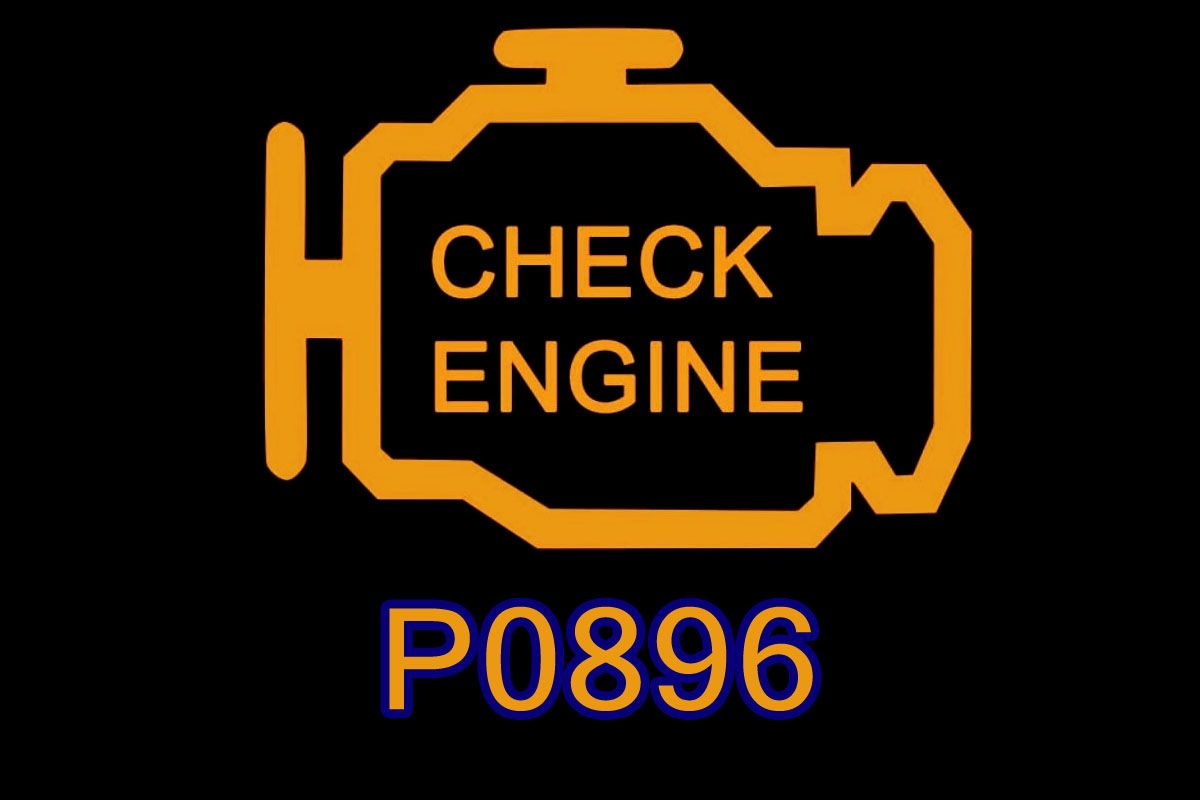
P0896 Shift Time Too Long
The P0896 trouble code indicates that the transmission control system has detected a gear shift that is taking longer than expected to complete.
In a properly operating automatic transmission, a gear change should happen within a predictable period. The transmission control module (TCM) commands one clutch or hydraulic circuit to release while another applies. Engine torque, transmission pressure, input speed, output speed, and other parameters are continuously monitored during this process.
With P0896, the expected shift does not happen quickly enough.
The transmission may eventually complete the shift, but the control module determines that the transition took longer than its programmed limit.
This is different from simply saying that the transmission is slipping. A long shift can be caused by low hydraulic pressure, a slow or sticking solenoid, valve-body problems, incorrect fluid, worn clutch components, electrical problems, or incorrect speed information.
What Does “Shift Time Too Long” Actually Mean?
Imagine an automatic transmission changing from one gear to another.
The TCM expects the old gear to disengage and the new gear to engage within a particular time window.
If the process takes substantially longer than expected, the TCM can set P0896.
The problem may feel like:
-
A delayed gear change
-
An engine RPM flare
-
A hesitation between gears
-
A soft or drawn-out shift
-
A momentary loss of acceleration
-
A harsh shift after the delay
-
A transmission that eventually enters fail-safe mode
The code therefore describes the timing of the shift, not necessarily a single failed component.
Why Does an Automatic Transmission Need to Shift Within a Specific Time?
Automatic transmissions use coordinated hydraulic and electronic control.
During a gear change, several events have to occur in the correct sequence.
Depending on the transmission, the TCM may control:
-
Shift solenoids
-
Pressure-control solenoids
-
Clutch application
-
Clutch release
-
Line pressure
-
Torque-converter operation
-
Engine torque reduction
-
Gear selection
The TCM also monitors the result.
If the expected change in input and output speed does not occur within the calculated time, the module can recognize that the shift is taking too long.
This means P0896 is fundamentally a control-versus-response problem.
What Does a Long Shift Feel Like?
A driver may notice something unusual even before the Check Engine Light appears.
For example, during a 2-3 shift, the engine may briefly rev higher than expected before the next gear finally engages.
The vehicle may feel as though it pauses between gears.
In another situation, the transmission may remain in the previous gear longer than normal and then suddenly complete the shift with a harsh engagement.
Some drivers describe this as:
“The engine revs, then the transmission catches.”
That description can be an important clue because it may indicate that the next clutch is taking too long to apply.
Common Symptoms Associated With P0896
Symptoms vary considerably depending on the transmission and the cause.
Possible symptoms include:
Delayed gear changes
The transmission takes noticeably longer than normal to move into the next gear.
RPM flare
Engine speed increases during a shift because the transmission temporarily fails to transfer torque normally.
Harsh engagement
After a delayed shift, the transmission may apply the next gear abruptly.
Hesitation
There may be a noticeable pause during acceleration.
Poor acceleration
The vehicle may not respond normally while the transmission is between gears.
Transmission warning light
Some vehicles illuminate a transmission warning indicator in addition to the Check Engine Light.
Fail-safe or limp mode
The transmission may select a limited number of gears to prevent further damage.
Transmission overheating
Repeated delayed or slipping shifts can generate additional heat.
Poor fuel economy
A transmission that does not complete shifts efficiently can increase engine RPM and reduce overall efficiency.
Low Transmission Fluid
One of the first things worth checking is transmission-fluid level.
Automatic transmissions use fluid for both lubrication and hydraulic control.
If the fluid level is too low, the transmission may have difficulty generating and maintaining the pressure required to apply internal clutches.
This can result in:
-
Delayed clutch application
-
Slow shifts
-
Slip
-
Flare
-
Harsh engagement
Low fluid is usually a symptom of another problem rather than a normal operating condition.
A leak may be responsible.
Possible leak locations include:
-
Transmission pan
-
Seals
-
Cooler lines
-
Axle seals
-
Drain plug
-
Transmission case
The correct fluid-level checking procedure must be followed for the specific transmission.
Incorrect or Degraded Transmission Fluid
Fluid condition can have a major influence on shift quality.
Transmission fluid can deteriorate because of:
-
Excessive heat
-
Age
-
Oxidation
-
Contamination
-
Clutch material
-
Incorrect fluid
-
Extended severe-duty operation
Using the wrong fluid can also affect friction characteristics and hydraulic behavior.
A fluid that meets the general description of “automatic transmission fluid” is not necessarily suitable for every transmission.
The manufacturer's exact fluid specification should be used.
A Faulty Shift Solenoid
Shift solenoids control hydraulic fluid flow inside many automatic transmissions.
When the TCM commands a gear change, the appropriate solenoids must respond correctly.
If a solenoid is:
-
Sticking
-
Contaminated
-
Electrically faulty
-
Slow to respond
-
Mechanically restricted
the required hydraulic change may happen too slowly.
The transmission can then take longer than expected to complete the shift.
This is why other solenoid-related DTCs can be very useful when P0896 is present.
Pressure-Control Solenoid Problems
Not every transmission uses exactly the same terminology or control strategy, but many modern designs use pressure-control solenoids to regulate hydraulic pressure.
If pressure is too low, a clutch may apply slowly.
If pressure is unstable, the shift may become inconsistent.
If pressure is too high, the transmission may produce harsh engagement rather than a simple delayed shift.
A pressure-control problem therefore has to be evaluated in relation to actual shift behavior.
Valve Body Problems
The valve body is responsible for routing and controlling transmission fluid through different hydraulic circuits.
Its passages and valves must move correctly to direct fluid where it is needed.
Problems can develop because of:
-
Valve wear
-
Contamination
-
Sticking valves
-
Damaged passages
-
Internal leakage
-
Debris
-
Solenoid problems
A valve that moves slowly or does not fully control its circuit can cause a clutch to apply later than expected.
This can produce P0896 without necessarily meaning that the entire transmission is mechanically destroyed.
Internal Hydraulic Leakage
A transmission can lose hydraulic pressure internally even when there is no visible external leak.
Worn seals, damaged pistons, worn valve-body bores, or internal passages can allow fluid to escape from a hydraulic circuit.
The result may be insufficient pressure reaching a clutch.
The clutch may eventually engage, but it can take too long.
This is one possible explanation when the transmission has correct fluid level and the electrical controls appear to work normally.
Worn Clutch Packs
Internal clutch wear is another possibility.
Automatic transmissions use friction plates to lock different gearsets together.
As these friction materials wear, the clutch may require more hydraulic pressure or a longer application period to hold properly.
In advanced cases, the clutch may begin to slip.
A transmission can therefore show both long shift time and slipping-related symptoms.
If P0896 appears together with a code such as P0894, the diagnostic picture can become particularly important because the two conditions may be related.
Transmission Pump Problems
The transmission pump provides the hydraulic pressure required for transmission operation.
A weak or damaged pump may fail to provide sufficient pressure, particularly under certain operating conditions.
Possible symptoms include:
-
Delayed engagement
-
Slow shifts
-
Slip
-
Harsh shifts
-
Pressure-related DTCs
-
Worse behavior when the transmission becomes hot
A pump should not be replaced simply because P0896 is present. Pressure testing and manufacturer-specific diagnostic procedures should establish whether pump output is actually abnormal.
Speed Sensor Problems
The TCM determines shift progress partly by monitoring speed information.
Depending on the transmission, it may monitor:
-
Input shaft speed
-
Intermediate shaft speed
-
Output shaft speed
-
Turbine speed
-
Vehicle speed
If a speed sensor sends an incorrect or intermittent signal, the TCM may incorrectly conclude that a shift has not completed.
This can make an electrical or sensor problem look like a hydraulic transmission problem.
For this reason, speed-related DTCs should always be considered when diagnosing P0896.
Wiring and Connector Problems
Electrical problems can prevent a solenoid or sensor from operating correctly.
Inspect the transmission harness and connectors for:
-
Corrosion
-
Water intrusion
-
Damaged wires
-
Loose terminals
-
Poor terminal tension
-
Oil contamination
-
Broken connector locks
-
Previous poor repairs
An intermittent wiring problem can be particularly difficult to diagnose because the transmission may work normally during a stationary inspection.
Heat and vibration can change the behavior of an electrical connection.
Transmission Temperature Matters
Shift behavior changes with transmission temperature.
Fluid viscosity and hydraulic characteristics are different when the transmission is cold compared with when it is fully warmed up.
If P0896 occurs only after the vehicle has been driven for a long period, this is an important clue.
A technician should determine whether the fault appears:
-
Immediately after cold start
-
During normal operating temperature
-
Only when very hot
-
During heavy traffic
-
During towing or high-load operation
A temperature-dependent problem can help distinguish between different hydraulic, electrical, and mechanical possibilities.
Adaptive Transmission Learning
Modern automatic transmissions often use adaptive strategies.
The TCM can adjust clutch pressure and shift timing based on previous operating behavior.
This allows the transmission to compensate for normal wear and manufacturing variation.
However, adaptive values can sometimes become abnormal after:
-
Transmission repairs
-
Solenoid replacement
-
Valve-body work
-
Fluid service
-
TCM replacement
-
Clutch replacement
-
Software updates
Some transmissions require a specific adaptation or relearn procedure after certain repairs.
A generic reset is not always appropriate. The manufacturer's procedure should be followed.
How P0896 Is Diagnosed
A good diagnosis should begin by determining which shift is taking too long.
The code alone may not provide enough information to identify the exact gear or clutch involved.
The technician should establish:
-
When the fault occurs
-
Which gear change is involved
-
Transmission temperature
-
Engine load
-
Vehicle speed
-
Engine RPM
-
Commanded gear
-
Actual gear
-
Input speed
-
Output speed
-
Transmission pressure where available
The driving conditions under which P0896 occurs can be just as valuable as the code itself.
Start With a Full Diagnostic Scan
Scan the engine and transmission modules and record all codes.
Do not erase the codes before recording freeze-frame and related information.
Look especially for codes involving:
-
Shift solenoids
-
Pressure-control solenoids
-
Transmission pressure
-
Input/output speed sensors
-
Gear-ratio errors
-
Transmission temperature
-
TCM communication
-
Engine torque management
P0896 may be a consequence of another fault rather than the original problem.
Check Freeze-Frame Data
Freeze-frame information can show what was happening when the fault was detected.
For example, if the code consistently appears during a particular upshift at high transmission temperature, that is very different from a fault occurring during the first shift after a cold start.
This information can prevent unnecessary parts replacement.
Monitor Live Transmission Data
A capable diagnostic scanner can provide valuable information while the vehicle is operating.
Depending on the vehicle, useful parameters may include:
-
Commanded gear
-
Actual gear
-
Input speed
-
Output speed
-
Turbine speed
-
Solenoid commands
-
Transmission fluid temperature
-
Line-pressure data
-
Clutch slip speed
-
Adaptation values
The objective is to determine whether the transmission is actually shifting slowly or whether the control module is receiving incorrect information about the shift.
Perform a Road Test
Because P0896 concerns shift timing, a road test may be essential.
The technician should attempt to reproduce the exact conditions under which the code appears.
For example:
-
Light acceleration
-
Moderate acceleration
-
Heavy acceleration
-
Cold transmission
-
Fully warmed transmission
-
Uphill driving
-
Steady cruising
The behavior should be compared with the manufacturer's expected shift pattern.
Check Hydraulic Pressure
If the evidence points toward a hydraulic problem, pressure testing may be required.
A pressure test can help determine whether the transmission is producing the hydraulic pressure needed to complete the shift.
Pressure specifications are transmission-specific.
There is no universal transmission-pressure value that can be applied to every vehicle.
Check the Solenoids
If a particular shift circuit appears to be responsible, the relevant solenoid or solenoids can be tested according to the manufacturer's procedure.
Testing may involve:
-
Electrical resistance
-
Current draw
-
Commanded operation
-
Wiring continuity
-
Short-to-ground checks
-
Short-to-power checks
-
Oscilloscope or waveform analysis
-
Hydraulic response
The exact test depends on the transmission.
A resistance measurement by itself does not always prove that a solenoid is mechanically healthy.
When Internal Damage Becomes More Likely
Internal transmission damage becomes more suspicious when there is evidence such as:
-
Persistent shift flare
-
Confirmed clutch slip
-
Burnt transmission fluid
-
Significant friction material in the fluid
-
Abnormal hydraulic pressure
-
Internal leakage
-
A specific clutch repeatedly failing to apply
-
Correct electrical commands but incorrect mechanical response
At that stage, valve-body service, internal inspection, transmission rebuilding, or replacement may become necessary depending on the findings.
Can You Drive With P0896?
Short-term driving may be possible if the transmission still operates normally, but a confirmed long-shift problem should not be ignored.
Every delayed shift can potentially create additional heat and clutch wear.
Driving should be avoided or minimized if you notice:
-
Severe RPM flare
-
Strong slipping
-
Burning transmission-fluid smell
-
Loss of drive
-
Loss of reverse
-
Severe banging during shifts
-
Transmission overheating
-
Limp mode
-
Rapidly worsening symptoms
A transmission that is still repairable through a control or hydraulic repair can become much more expensive if continued slipping damages internal clutch material.
Does P0896 Mean a Transmission Rebuild Is Necessary?
No.
P0896 can be caused by something relatively straightforward, such as an electrical connection or fluid problem, while in another vehicle it may indicate significant internal wear.
Possible repairs include:
-
Correcting transmission-fluid level
-
Repairing a fluid leak
-
Using the correct transmission fluid
-
Repairing wiring or connectors
-
Replacing a speed sensor
-
Replacing a shift solenoid
-
Repairing a pressure-control solenoid
-
Servicing the valve body
-
Performing a required adaptation procedure
-
Repairing internal hydraulic leakage
-
Replacing worn clutch components
-
Rebuilding or replacing the transmission
The correct repair depends entirely on the diagnostic evidence.
P0896 vs. P0894
These two codes can appear similar but describe different observations.
P0894 – Transmission Component Slipping
The control system detects behavior consistent with a transmission component slipping.
P0896 – Shift Time Too Long
The control system detects that a gear change is taking longer than the expected time.
They can occur together because a clutch that applies too slowly may also slip during the shift.
However, they should not automatically be treated as proof of internal clutch failure.
The Most Important Diagnostic Question
When P0896 appears, the most useful question is not simply:
“Which part should I replace?”
It is:
“What is preventing the commanded gear change from completing within the expected time?”
That question leads the diagnosis toward the actual cause.
The investigation should establish whether the problem is electrical, hydraulic, mechanical, or caused by incorrect feedback information.
A faulty solenoid, low fluid level, restricted hydraulic passage, worn clutch, weak pump, incorrect speed signal, valve-body problem, or wiring fault can all produce transmission behavior that ultimately results in a shift taking too long.
For that reason, P0896 Shift Time Too Long should be treated as a transmission-control symptom rather than a direct instruction to replace a transmission component. The shift event, fluid condition, hydraulic pressure, speed signals, solenoid operation, and internal mechanical condition should be evaluated together before an expensive repair is authorized.