TR
TR EN
EN

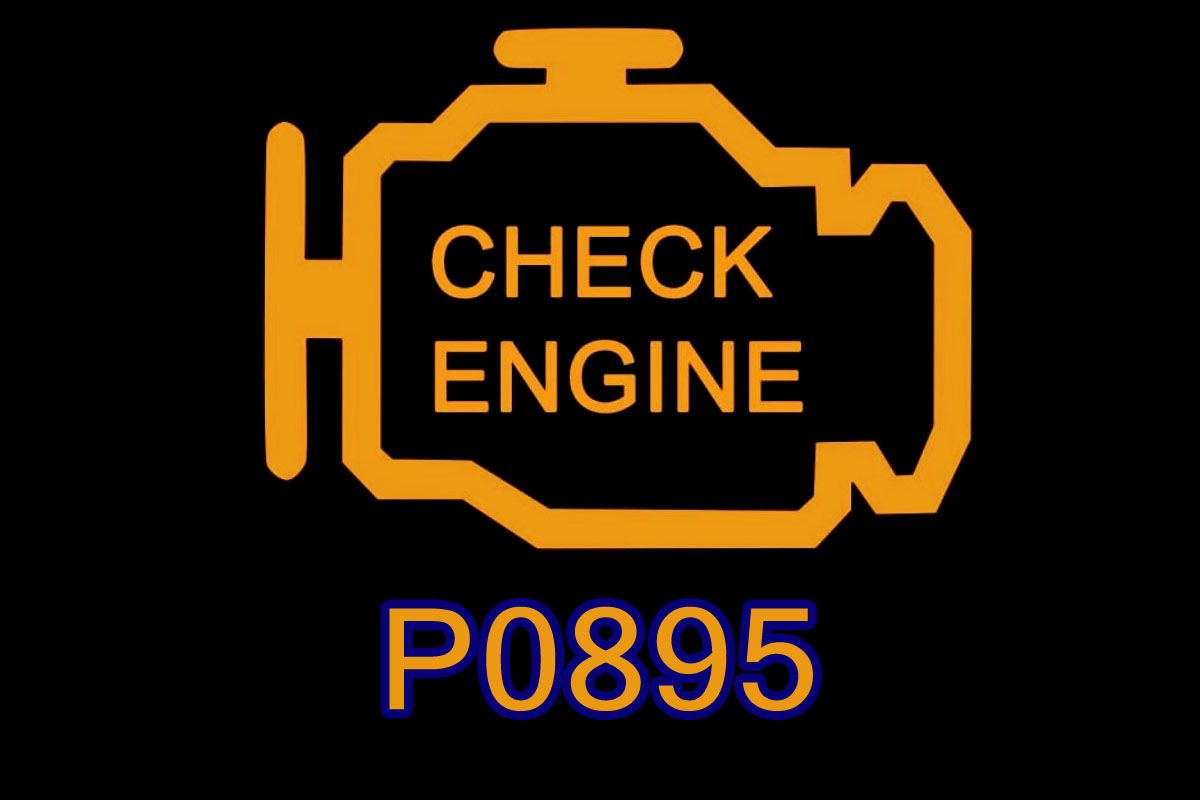
P0895 Shift Time Too Short
P0895 is a transmission-related diagnostic trouble code that means the transmission control system detected a gear shift that completed faster than the expected time.
At first glance, “shift time too short” may sound like a good thing. A fast gear change is normally desirable. However, the transmission control module (TCM) does not simply judge a shift by how quickly it happens. It expects the transition between gears to occur within a specific time and pressure profile.
If a clutch or brake element applies too quickly, if hydraulic pressure rises too aggressively, or if the TCM receives incorrect speed information, the actual shift time can fall outside the calibrated range. The result can be P0895.
Importantly, P0895 does not automatically mean that the transmission itself is mechanically damaged.
What Does “Shift Time Too Short” Actually Mean?
Inside an automatic transmission, changing gears requires a carefully controlled sequence.
The TCM may:
-
Reduce engine torque
-
Release one clutch or brake
-
Command a shift solenoid
-
Increase hydraulic pressure to another clutch
-
Monitor input and output shaft speeds
-
Determine when the new gear has fully engaged
This process normally takes a predictable amount of time.
For example, if the TCM commands a shift from second to third gear, it expects to see a particular speed transition. If the transmission reaches the target ratio significantly faster than expected, the TCM can interpret the event as an abnormally short shift.
The important point is that P0895 describes what the control system observed, not necessarily which component caused it.
Why Would a Transmission Shift Too Quickly?
A short shift time is often related to hydraulic pressure and clutch application, but there are several possible causes.
One possibility is excessive hydraulic pressure. If the pressure controlling a clutch rises too rapidly, the clutch can apply sooner than expected.
A pressure-control solenoid that is sticking or responding incorrectly can create this condition.
The valve body is another important area. A sticking spool valve, contamination, restricted passage, or abnormal hydraulic behavior can alter the timing of clutch application.
Transmission fluid also matters. The fluid must have the correct viscosity and friction characteristics for the transmission. Using the wrong fluid, severely degraded fluid, or fluid contaminated with debris can affect shift behavior.
However, the electrical and electronic side should not be overlooked.
Common Causes of P0895
Possible causes include:
-
Pressure-control solenoid malfunction
-
Shift solenoid malfunction
-
Valve body problems
-
Excessive hydraulic pressure
-
Incorrect transmission fluid
-
Contaminated or degraded transmission fluid
-
Internal hydraulic leakage or abnormal pressure behavior
-
Incorrect clutch application
-
Transmission input speed sensor problems
-
Transmission output speed sensor problems
-
Range sensor problems
-
Damaged transmission wiring
-
Poor electrical connections
-
Incorrect solenoid control
-
TCM software or calibration problems
-
Incorrect adaptive transmission values
-
Internal clutch or brake assembly problems
-
Mechanical transmission damage
The actual cause depends heavily on the transmission design.
Can a Bad Shift Solenoid Cause P0895?
Yes.
A shift or pressure-control solenoid regulates hydraulic flow and pressure. If the solenoid does not respond as commanded, the transmission may apply or release a clutch at the wrong speed.
For example, a solenoid that remains more open than expected can cause pressure to rise differently from the TCM's calibrated model. A sticking solenoid can also create inconsistent behavior from one shift to another.
But replacing a solenoid simply because P0895 is stored is not a reliable diagnostic strategy.
The solenoid should be evaluated through electrical tests, commanded operation, live data, and, where necessary, hydraulic pressure testing.
The Valve Body Is an Important Suspect
The valve body is effectively the hydraulic control center of many automatic transmissions.
It contains passages and valves that direct transmission fluid toward different clutch packs and brake elements.
If a valve sticks or moves abnormally, the hydraulic pressure can change much faster than expected.
This can produce a short shift time even though the electrical solenoid itself is functioning.
Possible valve-body-related causes include:
-
Contamination
-
Wear in valve bores
-
Sticking valves
-
Restricted passages
-
Damaged valves
-
Incorrect hydraulic pressure
-
Solenoid-to-valve-body problems
This is one reason why immediately replacing an electronic solenoid may fail to solve P0895.
Can Low Transmission Fluid Cause P0895?
It can influence transmission operation, but low fluid should not automatically be considered the explanation for P0895.
Low fluid commonly causes hydraulic problems such as delayed engagement, slipping, pressure loss, or abnormal shifting. However, transmission behavior is complex, and fluid aeration or unstable hydraulic control can produce unexpected shift timing.
The fluid level should therefore be checked correctly, according to the manufacturer's procedure.
The procedure can vary significantly between transmissions. Some transmissions require a specific fluid temperature, engine state, selector position, and leveling procedure.
Simply looking at the fluid level when the vehicle is cold is not always sufficient.
Transmission Fluid Type Is Also Important
Modern automatic transmissions are calibrated around a specific fluid specification.
Using an apparently similar fluid can alter:
-
Clutch friction
-
Solenoid response
-
Hydraulic pressure behavior
-
Shift timing
-
Torque converter operation
-
Adaptive control
If P0895 appeared after a transmission fluid service, the fluid specification and service procedure deserve particular attention.
Could a Speed Sensor Cause P0895?
Absolutely.
The TCM needs to know how quickly the transmission input and output shafts are rotating.
It uses these signals to determine whether the commanded gear has actually engaged and how quickly the shift occurred.
If an input or output speed sensor produces an incorrect or unstable signal, the TCM may calculate the shift time incorrectly.
For example, the transmission may physically perform a normal shift, but an erroneous speed signal could make the TCM believe the target ratio was reached unusually quickly.
This is why related speed-sensor codes and live data should be checked before condemning the transmission.
What Symptoms Can P0895 Produce?
The symptoms vary depending on the transmission and how severe the problem is.
Possible symptoms include:
-
Harsh gear changes
-
Very quick or abrupt shifts
-
Delayed engagement followed by a sudden shift
-
Transmission slipping
-
Unexpected downshifts
-
Incorrect gear selection
-
Transmission warning light
-
Check Engine Light
-
Limp-home mode
-
Limited available gears
-
Higher engine RPM
-
Poor acceleration
-
Abnormal shift behavior when cold
-
Abnormal shift behavior when hot
Some vehicles may store P0895 without producing an immediately obvious drivability problem.
The TCM can detect a shift-time deviation before the driver notices a significant symptom.
Why Does the TCM Care About Shift Time?
A transmission is not controlled simply by selecting “first gear,” “second gear,” or “third gear.”
The TCM continuously manages the transition between gears.
A shift that happens too quickly can produce excessive clutch engagement shock.
If the clutch applies aggressively, the result can be:
-
Harsh engagement
-
Driveline shock
-
Increased clutch stress
-
Uncomfortable shifting
-
Abnormal torque transfer
The TCM therefore compares actual transmission behavior against calibrated expectations.
P0895 means the observed shift timing crossed the manufacturer's expected threshold.
Diagnosis Should Start With the Complete Transmission Scan
One of the biggest mistakes with P0895 is looking at this code by itself.
A professional diagnosis should begin with a complete scan of the vehicle.
Look for:
-
Other transmission codes
-
Solenoid codes
-
Pressure sensor codes
-
Input speed sensor codes
-
Output speed sensor codes
-
Transmission temperature codes
-
TCM communication codes
-
Engine torque-related codes
-
Low-voltage or power supply codes
Another code stored alongside P0895 may identify the real problem.
For example, P0895 combined with a transmission speed-sensor fault should lead the diagnosis in a very different direction than P0895 alone.
Check the Freeze-Frame Data
Freeze-frame information can be extremely useful.
When available, examine:
-
Vehicle speed
-
Engine RPM
-
Transmission input speed
-
Transmission output speed
-
Commanded gear
-
Actual gear
-
Transmission fluid temperature
-
Throttle position
-
Engine load
-
Solenoid command
-
Transmission pressure information
The goal is to determine when the abnormal shift occurred.
Was it during a 1–2 shift?
A 2–3 shift?
A downshift?
Only when the transmission was cold?
Only under heavy acceleration?
These details can dramatically narrow the diagnostic path.
Check Transmission Fluid Before Disassembling Anything
Before opening the transmission or replacing expensive components, inspect the fluid.
Look for:
-
Correct fluid level
-
Correct fluid specification
-
Unusual discoloration
-
Burnt odor
-
Excessive debris
-
Metal particles
-
Evidence of contamination
The condition of the fluid can provide valuable information about what is happening inside the transmission.
However, fluid appearance alone cannot determine the exact cause of P0895.
Test the Solenoids Electrically
If a solenoid is suspected, its circuit should be tested according to the manufacturer's wiring diagram.
Depending on the transmission, this can involve:
-
Supply voltage
-
Ground
-
Control signal
-
Resistance
-
Current draw
-
PWM command
-
Connector condition
-
Harness continuity
-
Voltage drop
A resistance measurement by itself is not always enough.
A solenoid can have an apparently normal resistance value and still stick mechanically or respond incorrectly when hot.
Inspect the Transmission Harness and Connectors
Transmission wiring operates in a difficult environment.
Heat, vibration, oil contamination, water intrusion, corrosion, and mechanical movement can affect connectors and wiring.
Pay particular attention to:
-
Transmission case connectors
-
Solenoid wiring
-
Internal transmission harness
-
TCM connector
-
Grounds
-
Power supply circuits
-
Bent or pushed-back terminals
A poor terminal connection can create an intermittent control problem that is difficult to reproduce in the workshop.
Hydraulic Pressure Testing Can Separate Electrical and Mechanical Problems
If electrical testing does not explain the code, hydraulic testing may be necessary.
A technician can compare actual transmission pressure with the manufacturer's specified values under appropriate operating conditions.
This helps separate several possibilities.
If electrical commands are correct but hydraulic pressure is abnormal, attention should move toward the valve body, pressure-control system, pump, fluid circuit, or internal transmission components.
If hydraulic pressure is correct but the TCM is receiving incorrect information, the sensors and control system become more important.
Don't Confuse Commanded Shift With Actual Shift
This distinction is particularly important with P0895.
The TCM may command a shift at a particular moment, but that does not mean the mechanical transmission immediately follows the command.
The diagnostic process should therefore compare:
TCM command → solenoid response → hydraulic pressure → clutch application → input/output speed response
Looking at only one part of this chain can lead to the wrong diagnosis.
Can P0895 Mean the Transmission Needs Replacement?
Not necessarily.
A complete transmission replacement should not be the first conclusion from P0895.
The actual cause could be something relatively localized, such as:
-
A solenoid
-
A connector
-
A wiring problem
-
Incorrect fluid
-
A speed sensor
-
A valve-body problem
-
A calibration issue
-
Incorrect adaptive values
On the other hand, if testing confirms severe internal clutch damage, worn components, or major hydraulic problems, transmission repair or replacement may eventually be justified.
The code itself does not make that determination.
Adaptive Learning Can Matter
Many modern automatic transmissions use adaptive learning.
The TCM continuously adjusts pressure and timing based on observed clutch behavior.
If the transmission has recently been:
-
Rebuilt
-
Replaced
-
Serviced
-
Reprogrammed
-
Had the TCM replaced
-
Had certain components replaced
the adaptive values may need to be reset or relearned according to the manufacturer's procedure.
However, adaptation should not be used as a way to hide a mechanical or hydraulic fault.
If the transmission has a genuine pressure or clutch problem, simply resetting adaptations will not repair it.
What Happens If You Continue Driving With P0895?
The risk depends on the symptoms and the underlying cause.
If the vehicle shifts normally and P0895 is intermittent, immediate transmission failure is not guaranteed.
However, continuing to drive indefinitely without diagnosis is not ideal.
If you experience:
-
Severe shift shock
-
Slipping
-
Loss of Drive
-
Loss of Reverse
-
Transmission overheating
-
Repeated limp mode
-
Grinding or unusual mechanical noise
the vehicle should be inspected promptly.
A control problem can sometimes place additional stress on clutch packs and other transmission components.
A Practical Diagnostic Strategy
A sensible diagnostic sequence for P0895 is:
-
Scan all vehicle modules.
-
Record freeze-frame data.
-
Identify which gear change triggered the code.
-
Check transmission fluid level and specification.
-
Check transmission temperature data.
-
Examine input and output speed signals.
-
Check related solenoid and pressure codes.
-
Inspect transmission wiring and connectors.
-
Test solenoid circuits and commands.
-
Compare commanded and actual transmission behavior.
-
Perform hydraulic pressure testing when necessary.
-
Inspect the valve body if the evidence points there.
-
Evaluate internal clutch/mechanical components if hydraulic and electrical testing lead in that direction.
-
Check TCM software, adaptations, and calibration where applicable.
This sequence prevents unnecessary parts replacement.
P0895 vs. P0893
These two codes can appear in the same general diagnostic area, but they describe different observations.
P0893 – Multiple Gears Engaged indicates that the transmission control system believes more than one gear or gear element may be engaged simultaneously.
P0895 – Shift Time Too Short indicates that a gear change occurred faster than the expected calibrated time.
They can potentially share causes such as solenoid, valve-body, hydraulic, sensor, or control problems, but they should not be treated as identical faults.
The Most Important Point About P0895
P0895 is best understood as a shift-control plausibility problem, rather than a simple “bad transmission” code.
The TCM expected a certain shift duration and observed a significantly shorter event.
That observation can be caused by hydraulic pressure, solenoid operation, valve-body behavior, sensor information, transmission fluid, adaptive values, electrical problems, software, or genuine internal transmission wear.
The correct diagnosis is therefore not:
“P0895 = replace the transmission.”
It is:
“Find out why the commanded shift is completing faster than the TCM expects.”
Final Diagnosis
P0895 – Shift Time Too Short means the transmission control system detected an abnormally rapid gear-shift event.
The most important areas to investigate are:
-
Shift and pressure-control solenoids
-
Valve body and hydraulic pressure
-
Transmission fluid
-
Input/output speed sensors
-
Wiring and connectors
-
TCM commands and adaptations
-
Transmission software/calibration
-
Internal clutch and mechanical components
A proper diagnosis should follow the complete path from electrical command to hydraulic action and finally mechanical gear engagement.
Replacing a solenoid, valve body, TCM, or complete transmission without performing these checks can result in a very expensive repair that does not solve the original P0895 fault.