TR
TR EN
EN

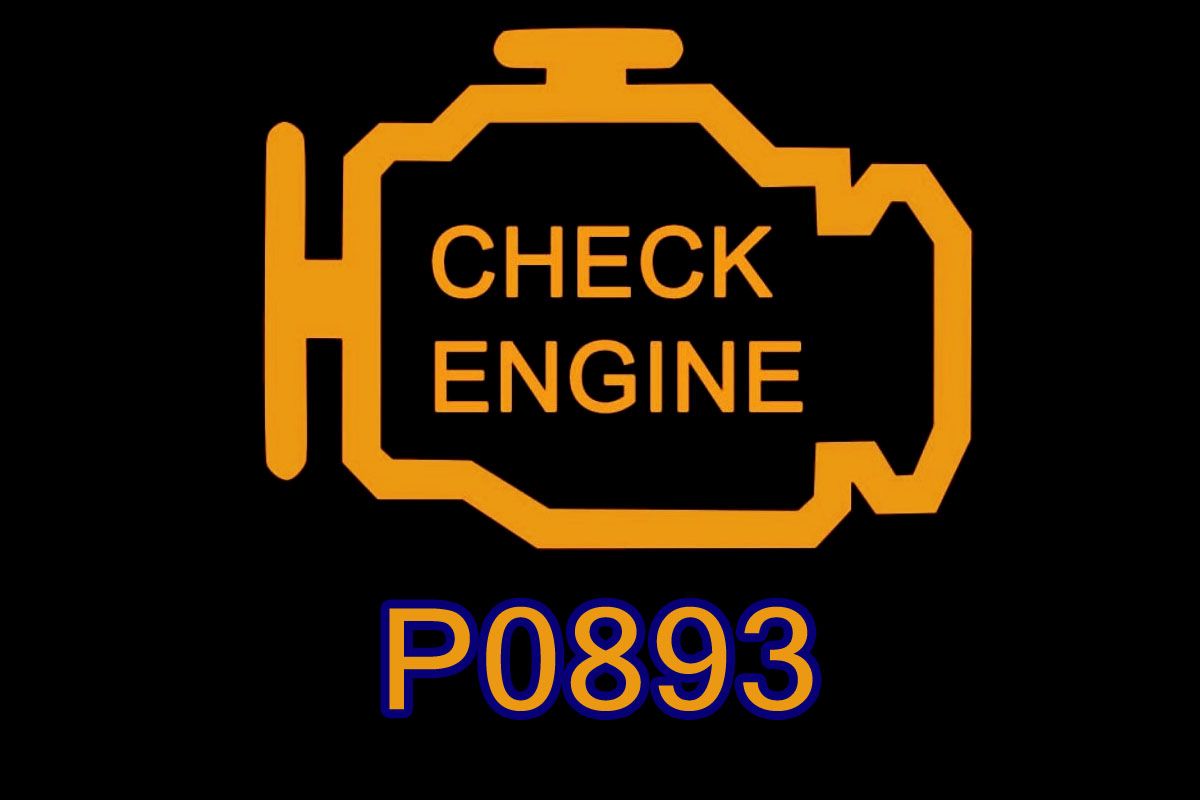
P0893 Multiple Gears Engaged
P0893 is a transmission diagnostic trouble code that indicates the transmission control system has detected a condition in which more than one gear or gear element appears to be engaged at the same time.
This is a serious transmission-control condition because an automatic transmission normally has to apply specific clutches, bands, brakes, or gear elements in a carefully controlled combination to produce the requested gear.
If the control system determines that two incompatible gear states are active simultaneously, it can set P0893 and may place the transmission into a protective mode.
However, P0893 does not automatically mean the transmission must be replaced.
The problem can originate from the hydraulic control system, shift solenoids, valve body, internal transmission components, electrical circuits, transmission speed sensors, TCM calculations, or incorrect transmission fluid conditions.
What Does “Multiple Gears Engaged” Actually Mean?
An automatic transmission uses several internal elements to create different gear ratios.
Depending on the transmission design, these can include:
-
Clutch packs
-
Brake clutches
-
Bands
-
One-way clutches
-
Planetary gearsets
-
Hydraulic valves
-
Pressure-control solenoids
For a particular gear, the transmission control system commands a specific combination of these elements.
During a shift, one element may be released while another is applied.
If the system believes that two gear states are active simultaneously when they should not be, P0893 can be stored.
This can happen because the transmission is actually applying the wrong combination of elements, or because the control system incorrectly believes that it is.
That distinction is critical.
P0893 Does Not Always Mean Two Physical Gears Are Literally Locked Together
The wording can be misleading.
The ECM/TCM does not necessarily have a mechanical sensor inside the transmission that directly tells it:
“Gear 2 and Gear 4 are physically engaged.”
Instead, the control module may infer the transmission's operating state from information such as:
-
Input shaft speed
-
Output shaft speed
-
Engine speed
-
Gear command
-
Solenoid commands
-
Pressure information
-
Transmission range position
-
Calculated gear ratio
If those values don't agree with the expected state, the TCM may determine that multiple gears appear to be engaged.
Therefore, P0893 can be caused by an electrical or control problem even when the internal gearsets are not mechanically damaged.
What Can Cause P0893?
There are several possible causes.
Common possibilities include:
-
Faulty shift solenoid
-
Sticking shift solenoid
-
Pressure-control solenoid problem
-
Valve body malfunction
-
Contaminated transmission fluid
-
Incorrect transmission fluid
-
Incorrect fluid level
-
Hydraulic pressure problem
-
Internal transmission leakage
-
Sticking valve
-
Damaged clutch pack
-
Worn clutch components
-
Damaged band where applicable
-
Faulty transmission speed sensor
-
Wiring or connector problem
-
TCM malfunction
-
Incorrect gear-position information
-
Transmission range sensor problem
-
Software or calibration problem
-
Internal mechanical damage
The exact cause depends on the transmission design.
Why Solenoids Matter
Shift solenoids control hydraulic passages inside the transmission.
The TCM can command a solenoid to:
-
Open a hydraulic passage
-
Close a passage
-
Increase pressure
-
Reduce pressure
-
Apply a clutch
-
Release a clutch
If a solenoid sticks mechanically or has an electrical fault, the transmission may not execute the commanded shift correctly.
For example, the TCM may command one clutch to release and another to apply, but a sticking valve may cause hydraulic pressure to remain where it should not.
The result can be an unexpected combination of applied transmission elements.
A Solenoid Electrical Fault Is Not the Same as a Failed Solenoid
If P0893 appears together with a solenoid circuit code, the electrical side becomes particularly important.
Check:
-
Solenoid power
-
Ground/control circuit
-
Wiring
-
Connector
-
Terminal tension
-
Short circuits
-
Open circuits
-
Solenoid command
-
Solenoid response
Do not assume the solenoid itself is defective simply because a transmission code is present.
A damaged harness can produce the same type of control problem.
The Valve Body Can Be the Real Problem
The valve body distributes hydraulic fluid to the various transmission circuits.
Its passages and valves determine which clutches receive pressure.
If a valve sticks because of:
-
Contamination
-
Wear
-
Varnish
-
Debris
-
Incorrect fluid
-
Mechanical damage
the transmission may apply or release an element at the wrong time.
This can produce symptoms that resemble an electronic shift problem.
P0893 can therefore sometimes lead the diagnosis toward the valve body rather than the transmission's main gearsets.
Transmission Fluid Should Be Checked Correctly
Fluid condition matters, but the diagnosis should not begin with:
“P0893 means low fluid.”
That is too simplistic.
Check:
-
Fluid level
-
Fluid condition
-
Fluid color where meaningful
-
Odor
-
Correct fluid specification
-
Evidence of contamination
-
Evidence of overheating
-
Metal or clutch material where appropriate
Many modern transmissions require a specific fluid temperature and procedure for checking level.
There is no universal “fill it to this mark when cold” procedure for every transmission.
Incorrect fluid level can affect hydraulic operation, but fluid level alone should not be blamed without supporting evidence.
Can Low Transmission Fluid Cause P0893?
It can contribute to abnormal transmission operation, but it is not the only possibility.
Low fluid can cause:
-
Pump aeration
-
Insufficient hydraulic pressure
-
Delayed clutch application
-
Shift problems
-
Clutch slip
-
Erratic hydraulic control
However, a low-fluid condition does not literally mean the transmission has mechanically engaged two gears.
The TCM may detect an unexpected gear ratio or shift state and then set a code.
Therefore, if the fluid is low, find out why.
Look for leaks rather than simply topping up the fluid and considering the problem solved.
Symptoms You May Experience
P0893 can produce significant drivability symptoms.
Possible symptoms include:
-
Harsh shifting
-
Delayed shifting
-
Unexpected downshift
-
Transmission slipping
-
Engine RPM flare
-
Transmission stuck in one gear
-
Multiple gears apparently available or unavailable
-
Reduced acceleration
-
Loss of reverse
-
Loss of forward gears
-
Transmission warning light
-
Check Engine Light
-
Limp mode
-
Gear selection problems
-
Transmission overheating
-
Vehicle movement that feels abnormal during shifting
Some vehicles may enter a fixed gear to protect the transmission.
Why Limp Mode May Be Activated
If the TCM believes that an incompatible gear combination is being applied, continuing normal operation could cause excessive clutch slip or mechanical stress.
The control system may therefore respond by limiting transmission operation.
Depending on the vehicle, it may:
-
Select a fixed gear
-
Disable certain shifts
-
Reduce engine torque
-
Disable automatic shifting
-
Limit vehicle speed
-
Illuminate a transmission warning
This is a protective strategy.
It does not necessarily mean the transmission has already suffered catastrophic damage.
Input and Output Speed Sensors Are Important
The TCM needs to know how fast different parts of the drivetrain are rotating.
Depending on the transmission, it may monitor:
-
Turbine/input speed
-
Intermediate shaft speed
-
Output shaft speed
-
Engine speed
From these signals, it can calculate the actual transmission ratio.
If a speed sensor produces incorrect information, the TCM can calculate an incorrect gear state.
For example, if the output speed is incorrectly reported, the calculated gear ratio may not match the commanded gear.
That can make a transmission appear to be in an impossible or unexpected state.
Therefore, sensor codes should not be ignored when diagnosing P0893.
Check for Other Transmission Codes
P0893 becomes much easier to interpret when other DTCs are available.
Look for codes involving:
-
Shift solenoids
-
Pressure-control solenoids
-
Transmission speed sensors
-
Transmission range sensors
-
Transmission fluid pressure
-
Gear-ratio errors
-
TCM communication
-
Transmission temperature
For example, P0893 combined with a specific shift-solenoid circuit code provides a much more focused diagnostic direction than P0893 alone.
Likewise, P0893 combined with multiple speed-sensor codes may indicate that the transmission controller is receiving unreliable rotational-speed information.
A Transmission Range Sensor Can Also Matter
The transmission range sensor tells the control system which position the driver has selected.
Depending on the vehicle, it may provide information for:
-
Park
-
Reverse
-
Neutral
-
Drive
-
Manual positions
-
Individual gear requests
If the range information is incorrect or inconsistent with other data, the transmission controller can become confused about the requested operating state.
Inspect:
-
Range sensor
-
Selector mechanism
-
Wiring
-
Connector
-
Adjustment
-
Live range-position data
An incorrect range signal can create symptoms that initially look like an internal transmission problem.
Wiring Problems Should Not Be Overlooked
Transmission wiring is exposed to heat, vibration, oil, and movement.
Inspect the harness for:
-
Chafing
-
Melted insulation
-
Broken wires
-
Oil contamination
-
Connector damage
-
Corroded terminals
-
Loose terminals
-
Water intrusion
-
Poor previous repairs
A transmission harness may look fine externally while having an intermittent internal conductor problem.
This becomes particularly suspicious if the fault appears:
-
When the transmission is hot
-
During acceleration
-
Over bumps
-
During a particular shift
-
After transmission service
-
After engine/transmission removal
Could a Bad TCM Cause P0893?
Yes, but it should not be the first assumption.
The TCM is responsible for deciding which transmission elements should be applied and controlling the appropriate solenoids.
If the TCM has an internal fault or incorrect software/calibration, it could potentially command an incorrect state.
However, before condemning the TCM, verify:
-
Power supply
-
Ground
-
Communication
-
Sensor inputs
-
Solenoid circuits
-
Hydraulic operation
-
Fluid condition
-
Other transmission codes
A control module should be the conclusion of a diagnosis, not the starting point.
Mechanical Transmission Damage Is Still Possible
Unlike a pure communication code, P0893 can potentially have a genuine mechanical cause.
If the transmission is mechanically unable to release an element, it may actually create an unwanted combination of applied elements.
Possible mechanical causes include:
-
Sticking clutch piston
-
Damaged clutch pack
-
Warped clutch plates
-
Internal hydraulic leakage
-
Damaged valve
-
Mechanical binding
-
Damaged planetary components
-
Band-related problems on applicable transmissions
If the electrical and hydraulic controls are operating correctly but the transmission still produces an impossible gear state, internal mechanical inspection may eventually be necessary.
P0893 and Automatic Transmissions With Electronic Control
Modern automatic transmissions are highly integrated systems.
The TCM doesn't simply “choose a gear.”
It continuously coordinates:
-
Engine torque
-
Shift solenoids
-
Pressure control
-
Clutch timing
-
Vehicle speed
-
Engine speed
-
Transmission temperature
-
Driver demand
-
Stability-control information
A problem in one input can therefore affect the entire shift strategy.
This is why a complete scan and live-data analysis are so important.
What About Dual-Clutch Transmissions?
The exact interpretation of P0893 can differ substantially between conventional automatic, dual-clutch, automated manual, and other electronically controlled transmissions.
A dual-clutch transmission, for example, has separate clutch systems and a different method of controlling gear engagement.
The generic OBD description should therefore not be interpreted as a universal mechanical diagram.
The manufacturer's transmission documentation is needed to determine which gear elements or clutch states correspond to the detected condition.
How a Technician Can Narrow It Down
A useful diagnostic strategy is to separate the problem into four areas:
Command
What gear did the TCM request?
Electrical
Did the appropriate solenoids receive the correct commands?
Hydraulic
Did the commanded hydraulic circuits actually develop the required pressure?
Mechanical
Did the transmission physically apply and release the correct elements?
This approach prevents the diagnosis from jumping directly from the code to “transmission replacement.”
Use Live Data During the Fault
If the scan tool provides transmission data, monitor:
-
Commanded gear
-
Actual gear
-
Input speed
-
Output speed
-
Engine RPM
-
Transmission temperature
-
Solenoid commands
-
Pressure commands
-
Range position
-
Clutch status where available
The objective is to identify where the expected sequence breaks down.
For example:
The TCM commands 3rd gear.
The appropriate solenoid command changes.
The expected input/output speed ratio does not appear.
The next question becomes:
Did the solenoid fail to operate, did hydraulic pressure fail to change, or did an internal clutch fail to apply correctly?
That is much more useful than simply seeing P0893 on the scanner.
A Practical Diagnostic Example
Imagine a vehicle that shifts normally when cold but begins producing P0893 after the transmission warms up.
That pattern is important.
A technician should investigate:
-
Hot fluid level
-
Fluid condition
-
Solenoid behavior when hot
-
Valve-body operation
-
Hydraulic pressure
-
Wiring expansion/heat sensitivity
-
Speed-sensor signals
-
TCM temperature-related behavior
A transmission that operates perfectly cold but fails after reaching operating temperature should not automatically be diagnosed as having completely worn-out gears.
The temperature-dependent behavior provides a diagnostic clue.
Another Important Clue: When Did the Code Appear?
Ask what happened immediately before P0893 was first stored.
Was there:
-
Transmission service?
-
Fluid replacement?
-
Valve-body work?
-
Solenoid replacement?
-
Transmission removal?
-
Battery replacement?
-
Wiring repair?
-
TCM replacement?
-
Software update?
If the fault began directly after such work, inspect the affected components first.
For example, an incorrectly installed connector or incorrect transmission fluid can create problems that look much more complicated than the original service error.
Should You Replace the Transmission?
Not based on P0893 alone.
Transmission replacement may eventually be justified if testing proves serious internal mechanical damage.
But before reaching that conclusion, investigate:
-
Fluid
-
Solenoids
-
Wiring
-
Sensors
-
Valve body
-
Hydraulic pressure
-
TCM commands
-
Gear-ratio data
-
Internal mechanical operation
A transmission is a large and expensive component. A control problem should not automatically become a transmission replacement.
Can You Continue Driving With P0893?
This code deserves more attention than a minor emissions fault.
If the transmission is actually engaging an incorrect combination of elements, continued driving can potentially increase clutch and transmission damage.
Especially concerning symptoms include:
-
Severe banging during shifts
-
Transmission slipping
-
Burning transmission-fluid smell
-
Loss of reverse
-
Loss of drive
-
Severe RPM flare
-
Transmission overheating
-
Repeated limp mode
-
Vehicle trying to move unexpectedly
-
Loud mechanical noises
If these symptoms are present, continued driving should be minimized until the transmission is properly diagnosed.
A Logical Diagnostic Procedure for P0893
A technician can approach the code in this order:
1. Perform a complete scan
Record all transmission, engine, ABS, communication, and voltage-related codes.
2. Check freeze-frame information
Determine the gear, speed, temperature, and load when the fault occurred.
3. Check transmission fluid
Verify level and specification according to the manufacturer's procedure.
4. Inspect transmission wiring
Pay attention to connectors, harness routing, corrosion, and previous repairs.
5. Check speed-sensor data
Compare input/output speeds with engine RPM and commanded gear.
6. Check range-position information
Make sure the TCM knows exactly what gear position the driver requested.
7. Check solenoid commands
Determine whether the TCM is commanding the expected shift elements.
8. Test solenoid circuits
Check power, control, wiring, and connector integrity.
9. Evaluate hydraulic pressure
Use the manufacturer's specified testing procedure where required.
10. Evaluate the valve body
Look for sticking valves, contamination, wear, or hydraulic-control problems.
11. Investigate internal mechanical failure
Only when the evidence points toward a physical transmission problem.
12. Evaluate TCM/software
Consider programming or module faults after the external systems have been verified.
Final Diagnosis
P0893 – Multiple Gears Engaged indicates that the transmission control system has detected an unexpected combination of gear states or transmission elements.
It can be caused by a genuine hydraulic or mechanical problem, but it can also result from:
-
Shift solenoids
-
Valve-body problems
-
Incorrect fluid conditions
-
Speed-sensor faults
-
Range-sensor problems
-
Wiring and connector faults
-
Hydraulic pressure problems
-
TCM control issues
-
Software or calibration problems
The most effective diagnosis is to compare commanded gear, actual gear, input/output speed, solenoid operation, hydraulic pressure, and transmission behavior.
The key principle is:
P0893 does not automatically mean that multiple physical gears are locked together, and it certainly does not automatically mean the entire transmission must be replaced. Find out whether the problem is electrical, hydraulic, control-related, or genuinely mechanical before making an expensive repair.