TR
TR EN
EN

What Causes Engine Knocking? Causes and Solutions
Engine knocking is one of the most important combustion problems that can occur in a gasoline engine. It is often noticed when the engine is under heavy load, such as during uphill driving, towing a trailer, accelerating hard, or operating at low RPM with high throttle input.
The characteristic knocking or pinging sound may be accompanied by hesitation, vibration, reduced performance, and increased engine temperature. If severe knocking continues for a long time, it can cause serious internal engine damage.
It is important to clarify one point: engine knocking, detonation, pre-ignition, and backfire are not exactly the same problem. Knocking or detonation occurs when part of the air-fuel mixture auto-ignites after the normal spark-initiated combustion process has started. Pre-ignition occurs when the mixture ignites before the spark occurs, usually because of an excessively hot spot inside the combustion chamber.
Both conditions can become dangerous when they are severe or persistent.
What Is Engine Knocking?
Under normal conditions, the spark plug ignites the compressed air-fuel mixture at the appropriate point in the combustion cycle. The flame front then travels through the combustion chamber in a controlled manner.
With detonation, a portion of the unburned mixture can spontaneously ignite because of excessive temperature and pressure. This creates very rapid pressure waves inside the cylinder.
The result is the familiar metallic pinging or knocking sound.
Light, occasional knock may be detected by the engine control system and corrected automatically. Modern engines can retard ignition timing when the knock sensor detects abnormal combustion.
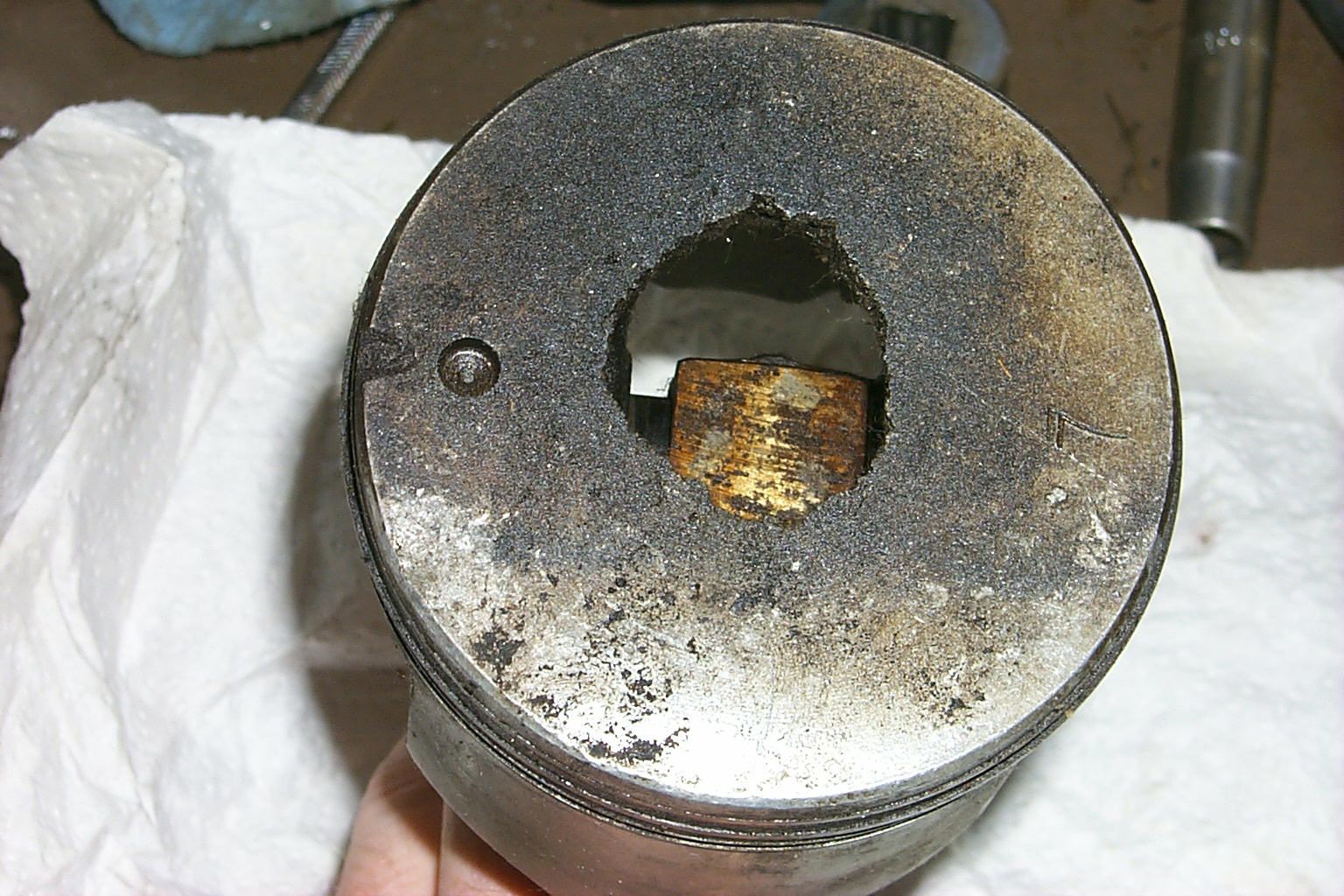
Severe or persistent knock is a different matter. Excessive cylinder pressure and temperature can damage pistons, piston rings, spark plugs, valves, head gaskets, and in extreme cases other internal engine components.
1. A Faulty or Restricted EGR System
The EGR (Exhaust Gas Recirculation) system can reduce combustion temperature by introducing a controlled amount of exhaust gas into the intake under appropriate operating conditions.
Because exhaust gas contains relatively little oxygen and acts as a diluent, it can reduce peak combustion temperatures and help reduce the tendency toward knock in operating conditions where EGR is intended to function.
If the EGR valve is stuck, restricted by carbon deposits, or unable to operate correctly, the combustion conditions may change.
However, EGR operation varies considerably between engines. Some modern gasoline engines use internal EGR strategies or other combustion-control methods rather than a conventional external EGR valve.
Solution: The EGR valve, actuator, passages, position feedback, and related control system should be inspected where applicable. Do not assume that every knocking problem is caused by EGR.
2. A Faulty Knock Sensor
The knock sensor is designed to detect the vibration characteristics associated with abnormal combustion.
When the ECU detects knock, it can normally retard ignition timing to reduce cylinder pressure and prevent further knock.
This is an important protection strategy used by many modern engines.
If the knock sensor, its wiring, connector, or signal processing system has a problem, the ECU may not respond correctly to actual knock.
Possible symptoms include:
-
Pinging during acceleration
-
Knocking under heavy load
-
Reduced engine performance
-
Increased fuel consumption
-
Check engine light
-
Ignition timing that does not respond as expected
Solution: The knock sensor should be diagnosed using the manufacturer's testing procedure. Its signal, wiring, connector, mounting, and ECU data should be checked.
It is not recommended to hit the engine block with a wrench to test the sensor. Such a test can damage components, create misleading signals, and does not replace a proper diagnostic procedure.
A scan tool capable of monitoring ignition timing, knock retard, and live engine data is much more useful.
Ignition Timing That Is Too Advanced
Ignition timing has a major influence on combustion pressure and knock resistance.
If the ignition occurs too early for the engine's current operating conditions, cylinder pressure can rise at the wrong point in the combustion cycle and increase the possibility of knock.
In older engines with conventional ignition systems, ignition timing could sometimes be adjusted mechanically.
Modern engines generally use ECU-controlled ignition timing. The ECU continuously adjusts timing according to factors such as:
-
Engine speed
-
Engine load
-
Intake air temperature
-
Coolant temperature
-
Throttle position
-
Knock sensor feedback
-
Manifold pressure
-
Fuel characteristics
Solution: If ignition timing appears abnormal, diagnose the underlying control problem rather than attempting to manually adjust timing on a modern ECU-controlled engine.
Incorrect calibration, aftermarket ECU tuning, or inappropriate modifications can also increase knock risk.
3. Excessive Carbon Deposits in the Combustion Chamber
Carbon deposits can accumulate on pistons, valves, and combustion chamber surfaces over time.
This is more likely under certain operating conditions, including extensive short-trip driving, poor combustion, oil consumption, or engines that naturally develop significant deposits.
Carbon buildup can contribute to knock in two important ways.
First, deposits can reduce the effective combustion chamber volume and increase the engine's effective compression ratio.
Second, deposits can create hot spots that encourage abnormal combustion or pre-ignition.
Solution: The appropriate cleaning method depends on the engine and the severity of the deposits.
Professional intake or combustion-chamber cleaning may sometimes help, but so-called “carbon cleaning” should not be treated as a universal solution. If deposits are severe, mechanical inspection and cleaning may be required.
4. Excessive Compression Ratio
An engine with a higher compression ratio generally has greater thermal efficiency, but increasing compression also reduces the margin against knock.
This can happen after certain engine modifications.
For example, machining the cylinder head can reduce combustion chamber volume and increase the effective compression ratio. Engine rebuilding with different pistons can also alter the compression ratio.
These modifications can be perfectly acceptable when the engine is properly designed and calibrated for them. Problems can occur when compression is increased without adjusting the engine's fuel, ignition, cooling, and calibration requirements.
Solution: If an engine has been rebuilt or modified, the actual compression ratio, piston specification, cylinder head geometry, fuel requirements, and ECU calibration should be verified.
Turbocharged engines with high cylinder pressure are particularly sensitive to incorrect calibration.
5. Fuel With Insufficient Octane Rating
Octane rating is a measure of a gasoline's resistance to knock.
A higher-octane fuel is more resistant to auto-ignition under high pressure and temperature conditions.
If an engine is designed or calibrated to operate on higher-octane fuel and lower-octane fuel is used, knock may become more noticeable, particularly under heavy load.
Modern engines may compensate by retarding ignition timing, but this does not mean that the fuel requirement can simply be ignored.
Solution: Use the minimum octane rating specified by the vehicle manufacturer.
If knocking starts immediately after refueling, poor or contaminated fuel should also be considered. In such a situation, avoiding the suspected fuel source and having the vehicle properly diagnosed is sensible.
The correct fuel grade should always be based on the manufacturer's specification rather than assuming that the most expensive fuel is automatically necessary.
6. Engine Overheating
High engine temperature can increase the risk of abnormal combustion.
An engine that operates above its intended temperature can develop conditions that make knock more likely.
Possible causes include:
-
Low coolant level
-
Cooling system leaks
-
Blocked radiator
-
Faulty cooling fan
-
Thermostat problems
-
Water pump problems
-
Air trapped in the cooling system
-
Restricted coolant passages
Solution: The cooling system should be checked if the engine is running hotter than normal.
Do not continue driving an overheating engine simply because the vehicle still runs. Excessive temperature can cause head gasket failure, cylinder head distortion, piston damage, and other serious problems.
7. Excessive Turbocharger Boost
Turbocharging increases the amount of air entering the engine. This allows the engine to produce more power, but it also increases cylinder pressure.
If boost pressure becomes higher than the engine was designed or calibrated for, knock risk can increase significantly.
Possible causes include:
-
Incorrect ECU tuning
-
Wastegate problems
-
Boost control solenoid faults
-
Variable geometry turbocharger problems
-
Faulty MAP or boost pressure sensor
-
Incorrect actuator operation
-
Intake or control system modifications
The MAP sensor provides the ECU with information about manifold pressure, but the sensor itself does not control boost. The ECU uses pressure information together with other inputs to control the turbocharger system.
Solution: Check actual boost pressure against commanded boost pressure using appropriate diagnostic equipment.
On modified turbocharged engines, ECU calibration should also be reviewed.
8. A Lean Air-Fuel Mixture
A lean mixture means that there is too much air relative to the amount of fuel.
Under certain operating conditions, a lean mixture can increase combustion temperature and make the engine more susceptible to knock.
Possible causes include:
-
Low fuel pressure
-
Weak fuel pump
-
Restricted fuel filter
-
Dirty or restricted injectors
-
Vacuum leaks
-
Intake leaks
-
Faulty MAF sensor
-
Incorrect MAP sensor readings
-
Fuel pressure regulator problems
-
Exhaust leaks affecting oxygen sensor readings
Solution: Fuel pressure, injector operation, MAF/MAP readings, oxygen sensor data, and fuel trims should be checked.
A lean-condition fault code does not automatically mean that the injectors or fuel pump need to be replaced. The actual cause should be identified through testing.
9. Intake Air Temperature That Is Too High
Hot intake air can increase the tendency toward knock because the air entering the combustion chamber is already at a higher temperature.
This is particularly important in turbocharged engines.
Problems with the intercooler, intercooler airflow, intake system, or charge-air temperature sensor can contribute to excessive intake temperatures.
Solution: Check intake air temperature under load and compare it with expected values. On turbocharged vehicles, inspect the intercooler, charge-air piping, cooling airflow, and temperature sensors.
10. Incorrect or Poor ECU Calibration
Modern engines depend heavily on ECU calibration.
The ECU controls ignition timing, fuel injection, boost pressure, throttle operation, and many other parameters.
An inappropriate ECU tune can increase the risk of knock by commanding:
-
Excessive ignition advance
-
Excessive boost
-
Insufficient fueling
-
Incorrect temperature compensation
-
Incorrect load calculations
This is particularly important on modified turbocharged engines.
Solution: If the vehicle has aftermarket software, increased boost pressure, different injectors, or other engine modifications, the ECU calibration should be reviewed by a specialist familiar with that engine.
How Serious Is Engine Knock?
The seriousness depends on the intensity, frequency, duration, and cause of the knock.
Occasional light knock may be detected and corrected by the ECU. Many modern engines are designed to continuously monitor combustion and reduce ignition advance when knock occurs.
Persistent heavy knock is much more dangerous.
Severe abnormal combustion can contribute to:
-
Piston damage
-
Broken or damaged piston rings
-
Cracked pistons
-
Damaged spark plugs
-
Valve damage
-
Head gasket damage
-
Connecting rod damage
-
Bearing damage
-
Excessive cylinder temperatures
In extreme cases, a piston can suffer severe crown damage or even develop a hole.
Knock vs. Pre-Ignition vs. Backfire
These terms are often used interchangeably, but they describe different events.
Knock or detonation: Part of the unburned mixture auto-ignites after the normal spark-initiated combustion process has begun, producing abnormal pressure waves.
Pre-ignition: The air-fuel mixture ignites before the spark plug fires. A glowing spark plug electrode, carbon deposit, overheated valve, or another hot spot can act as an ignition source.
Backfire: Combustion occurs in the intake system, usually because of an ignition or valve-timing-related problem. It is not the same thing as combustion knock inside the cylinder.
Correctly identifying the phenomenon is important because the diagnostic path can be completely different.
How to Diagnose an Engine Knocking Problem
The first step is to determine when the noise occurs.
Does it happen:
-
Only during hard acceleration?
-
Only uphill?
-
At low RPM under heavy load?
-
When the engine is hot?
-
Immediately after refueling?
-
Only with a particular fuel?
-
After ECU tuning or engine modifications?
-
During cold starts?
-
At idle?
This information can significantly narrow the possible causes.
A professional diagnosis may include checking:
-
OBD-II fault codes
-
Ignition timing
-
Knock retard
-
Knock sensor data
-
Short- and long-term fuel trims
-
Fuel pressure
-
Injector operation
-
MAF/MAP readings
-
Intake air temperature
-
Coolant temperature
-
Boost pressure
-
EGR operation
-
Spark plugs
-
Compression
-
Cooling system operation
Do Not Ignore Persistent Knocking
If the engine produces a clear metallic knocking sound under load, repeatedly continues knocking, loses power, overheats, or shows a check engine light, the problem should not be ignored.
Continuing to drive an engine with severe abnormal combustion can turn a relatively manageable fuel, sensor, cooling, or calibration problem into a major engine repair.
The most important point is that engine knocking is not caused by one specific component. Fuel octane, combustion temperature, compression ratio, ignition timing, air-fuel mixture, boost pressure, carbon deposits, cooling system condition, and knock-control operation can all influence the problem.
Finding the actual cause before replacing parts is the safest and most economical approach.