TR
TR EN
EN

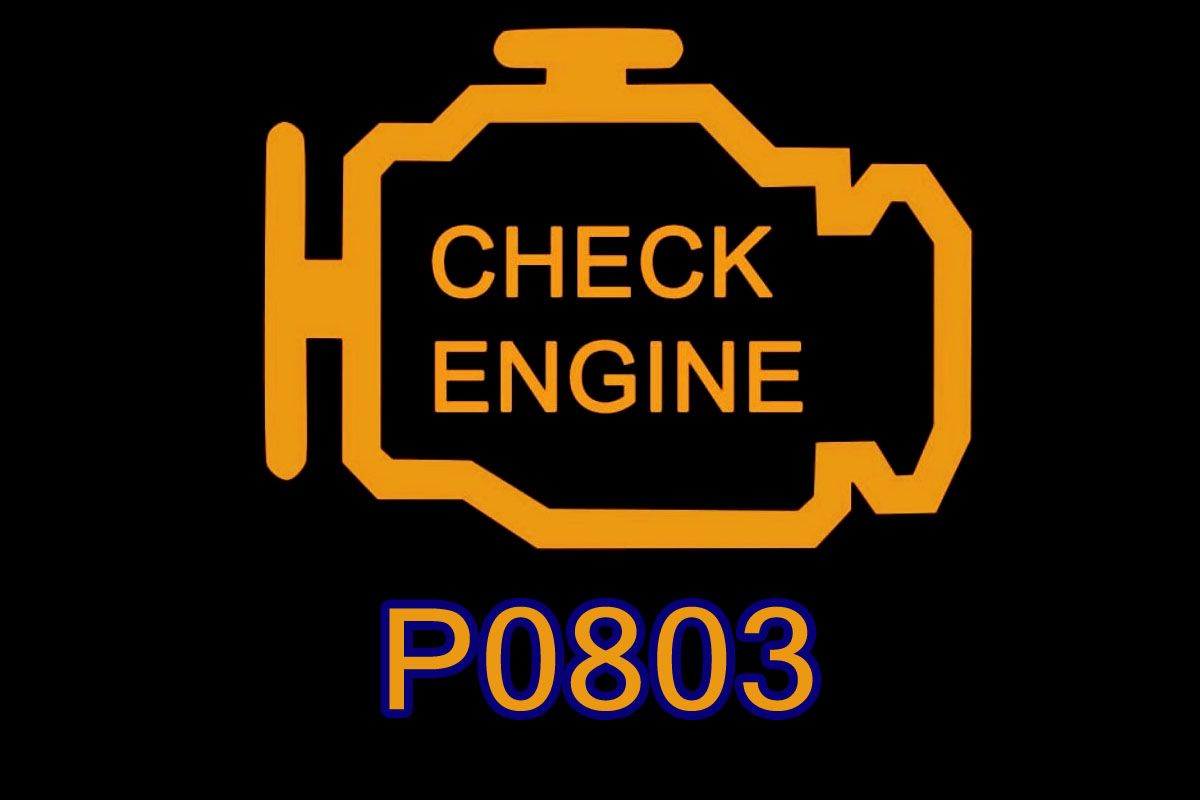
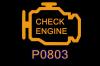
P0803 1-4 Upshift (Skip Shift) Solenoid Control Circuit Malfunction
The P0803 trouble code is an OBD-II diagnostic trouble code related to the 1-4 Upshift (Skip Shift) Solenoid Control Circuit.
P0803 – 1-4 Upshift (Skip Shift) Solenoid Control Circuit Malfunction
This code means that the transmission control module (TCM), powertrain control module (PCM), or another related control unit has detected a malfunction in the electrical circuit used to control the 1-4 skip-shift solenoid.
The system is designed to control a special shift strategy in which the transmission may be commanded to skip intermediate gears and shift directly from 1st gear to 4th gear under certain operating conditions.
P0803 does not automatically mean that the transmission itself is mechanically damaged. The problem may be in the solenoid, wiring, connector, fuse, power supply, control circuit, or transmission control module.
What Does P0803 Mean?
In a conventional manual transmission, the driver normally selects each gear manually.
However, some vehicles use an electronically controlled skip-shift system to restrict certain gear changes under specific conditions.
The basic concept is:
Transmission control system → Skip-shift solenoid → Shift mechanism → 1st-to-4th gear restriction
When the conditions are appropriate, the control system can activate the solenoid to influence the transmission's shift mechanism.
If the control module commands the solenoid but detects an electrical problem in the circuit, it may store:
P0803 – 1-4 Upshift (Skip Shift) Solenoid Control Circuit Malfunction
The exact operation differs significantly between manufacturers and transmission designs.
What Is a 1-4 Skip Shift System?
A 1-4 skip-shift system is designed to prevent certain unnecessary gear changes under specific driving conditions.
Instead of allowing:
1st → 2nd → 3rd → 4th
the system may restrict the normal shift pattern and encourage:
1st → 4th
under suitable conditions.
The purpose is generally to reduce unnecessary engine speed and improve fuel economy or emissions performance.
This system is most commonly associated with certain manual-transmission vehicles.
The exact activation conditions can include factors such as:
-
Engine temperature
-
Vehicle speed
-
Throttle position
-
Engine load
-
Engine speed
-
Transmission gear
-
Vehicle operating conditions
What Is the Skip-Shift Solenoid?
The skip-shift solenoid is an electrically controlled component that interacts with the transmission's shift mechanism.
When energized, it can influence whether a particular gear-selection path is available.
A simplified system can be represented as:
PCM/TCM → Electrical circuit → Skip-shift solenoid → Mechanical shift mechanism
The solenoid itself does not necessarily perform a complete gear change. Its purpose is to control or restrict the shift mechanism according to the transmission design.
Symptoms of P0803
Possible symptoms include:
-
Check Engine Light
-
Transmission warning light
-
Skip-shift system not operating
-
Difficulty selecting certain gears
-
Restricted gear selection
-
1st-to-4th shift occurring incorrectly
-
Gear-selection problems
-
Transmission-related warning message
-
Stored diagnostic trouble code
In some vehicles, the driver may notice very little difference in normal driving.
This is because the skip-shift system may be an auxiliary function rather than the primary mechanism responsible for shifting all gears.
Common Causes of P0803
Faulty skip-shift solenoid
The solenoid may have an internal electrical failure or mechanical problem.
Damaged wiring
The circuit may contain:
-
Broken wires
-
Chafed insulation
-
Pinched wires
-
Melted wiring
-
Corrosion
Short circuit
The control circuit may be shorted to:
-
Ground
-
Battery voltage
-
Another circuit
Open circuit
A broken wire or disconnected connector can interrupt the solenoid circuit.
Corroded connector
Moisture or contamination can interfere with the electrical connection.
Loose terminal
A loose terminal can cause an intermittent or high-resistance connection.
Blown fuse
Depending on the vehicle, the solenoid may share a power supply protected by a fuse.
Poor ground
An inadequate ground can prevent the solenoid from operating correctly.
Faulty relay
Some systems use a relay to provide power to the solenoid.
Transmission control module problem
A TCM or PCM can potentially cause the fault if it cannot correctly control the solenoid circuit.
Incorrect previous repair
Aftermarket wiring, alarm systems, remote starters, or previous transmission repairs can sometimes introduce circuit problems.
Is P0803 Serious?
P0803 is usually less serious than codes indicating an internal transmission failure, but it should still be diagnosed.
The severity depends on how the vehicle uses the skip-shift system.
If the vehicle shifts normally and only the skip-shift function is affected, the vehicle may remain driveable.
However, if P0803 occurs together with:
-
Multiple transmission codes
-
Difficulty selecting gears
-
Gear engagement problems
-
Transmission limp mode
the problem should be investigated more urgently.
Can You Drive With P0803?
In many cases, yes, temporarily.
If the transmission shifts normally and the only symptom is a warning light, the vehicle may remain operational.
However, the vehicle should still be inspected because an electrical problem can worsen or affect other transmission functions.
Avoid continuing to drive if you experience:
-
Gear-selection failure
-
Grinding during shifts
-
Transmission slipping
-
Loss of drive
-
Unexpected gear engagement
P0803 vs. P0804
These two codes are closely related.
P0803 – 1-4 Upshift (Skip Shift) Solenoid Control Circuit Malfunction
Indicates a general malfunction in the skip-shift solenoid control circuit.
P0804 – 1-4 Upshift (Skip Shift) Lamp Control Circuit Malfunction
Concerns the indicator lamp circuit associated with the skip-shift system.
Therefore:
P0803 = solenoid/control circuit
P0804 = skip-shift indicator lamp circuit
A vehicle can potentially have one code without the other.
P0803 vs. P0830
These codes concern different components.
P0803 relates to the 1-4 skip-shift solenoid control circuit.
P0830 relates to the clutch pedal switch A circuit.
Although both systems can be associated with manual transmissions, they perform different functions.
How to Diagnose P0803
A proper diagnosis should begin with the electrical circuit, rather than assuming that the transmission has an internal mechanical failure.
1. Scan all control modules
Check for additional codes involving:
-
Skip-shift system
-
Clutch switch
-
Transmission
-
Gear selection
-
Vehicle speed
-
Engine control
-
Communication
-
System voltage
Additional codes may identify the underlying problem.
2. Check the freeze-frame data
Record the operating conditions when P0803 was stored.
Look at:
-
Engine RPM
-
Vehicle speed
-
Engine load
-
Throttle position
-
Engine temperature
-
Gear position
-
Battery voltage
This can help determine whether the code occurred during a specific operating condition.
3. Locate the skip-shift solenoid
Use the vehicle's wiring diagram and service information to identify the exact solenoid and connector.
Do not assume that every vehicle uses the same location or circuit design.
4. Inspect the solenoid connector
Check for:
-
Corrosion
-
Water intrusion
-
Bent pins
-
Loose terminals
-
Broken locking tabs
-
Oil contamination
5. Inspect the wiring
Follow the harness from the solenoid to the control module.
Look for:
-
Broken wires
-
Chafing
-
Pinched wires
-
Melted insulation
-
Corrosion
-
Previous repairs
6. Check the fuse
If the solenoid receives power through a fuse, verify that the fuse is intact.
If a fuse is blown, do not simply replace it repeatedly.
A blown fuse may indicate a short circuit that needs to be identified.
7. Check the power supply
Using the manufacturer's wiring diagram, verify that the solenoid receives the correct voltage.
The exact voltage and testing conditions depend on the vehicle.
8. Check the control circuit
Test the circuit between the solenoid and PCM/TCM.
Look for:
-
Open circuit
-
Short to ground
-
Short to power
-
Excessive resistance
9. Test solenoid resistance
Measure the solenoid's resistance and compare it with the manufacturer's specification.
An extremely high resistance may indicate an open coil.
An extremely low resistance may indicate a shorted coil.
Do not use generic resistance values because solenoids differ between applications.
10. Activate the solenoid
If supported by the diagnostic equipment, use an actuator test to command the skip-shift solenoid.
Listen or feel for the solenoid operating.
A lack of response can indicate:
-
Failed solenoid
-
Wiring problem
-
Power problem
-
Ground problem
-
Mechanical problem
11. Check mechanical operation
The solenoid may be electrically functional but mechanically stuck.
Inspect the associated shift mechanism if required.
12. Check the clutch and transmission switches
Because skip-shift operation can depend on vehicle and transmission status, verify that related inputs are functioning correctly.
13. Check vehicle-speed information
Some skip-shift systems use vehicle-speed information to determine when the system should operate.
A speed-sensor or communication problem can therefore affect skip-shift operation.
14. Check PCM/TCM operation
If the circuit, solenoid, power supply and mechanical system are all functioning correctly, investigate the control module and software.
Can a Bad Skip-Shift Solenoid Cause P0803?
Yes.
An internally damaged solenoid can produce an open or shorted circuit.
It can also become mechanically stuck and fail to respond to commands.
Can Wiring Cause P0803?
Yes.
Wiring is one of the first things that should be inspected.
A damaged wire can interrupt the control signal or power supply.
Common problems include:
-
Broken wires
-
Chafing
-
Corrosion
-
Short circuits
-
High resistance
Can a Blown Fuse Cause P0803?
Yes, depending on the vehicle.
If the skip-shift solenoid shares a fused power supply, a blown fuse can prevent it from operating.
However, the reason for the blown fuse should also be identified.
Can P0803 Cause Transmission Damage?
Usually, P0803 by itself does not indicate that internal transmission damage has occurred.
If the vehicle continues to shift normally and only the skip-shift function is affected, the mechanical transmission may be completely healthy.
However, the situation is different if other transmission codes or symptoms are present.
Can P0803 Cause Gear-Shifting Problems?
It can, depending on the system.
A fault in the skip-shift solenoid can interfere with the intended shift restriction.
However, because the system is generally associated with a specific shift strategy, it does not necessarily mean that every gear will stop working.
Can P0803 Affect Fuel Economy?
Potentially.
If the skip-shift system is designed to improve fuel economy by encouraging a higher gear, a malfunction may prevent the intended strategy from operating.
The actual effect on fuel consumption depends on the vehicle and driving conditions.
Can P0803 Cause a No-Start Condition?
Usually not by itself.
The skip-shift solenoid is generally not the primary component responsible for starter authorization.
A no-start condition should therefore prompt investigation of other systems and any additional diagnostic codes.
Common Diagnostic Mistakes With P0803
Replacing the transmission
P0803 is primarily an electrical control-circuit code.
Replacing the solenoid without testing the wiring
A damaged wire or connector can create the same fault.
Ignoring the fuse
A power-supply problem can prevent the solenoid from operating.
Ignoring related input signals
The skip-shift system may depend on information from other sensors and switches.
Replacing the PCM/TCM too quickly
The control module should be considered only after the circuit and solenoid have been properly tested.
What Is the Correct Repair for P0803?
The correct repair depends on the confirmed cause.
Possible repairs include:
-
Replacing the 1-4 skip-shift solenoid
-
Repairing damaged wiring
-
Repairing an open circuit
-
Repairing a short circuit
-
Repairing connector terminals
-
Cleaning corrosion
-
Repairing water intrusion
-
Replacing a blown fuse after correcting the underlying problem
-
Repairing a faulty relay
-
Repairing the solenoid's power supply
-
Repairing the solenoid ground
-
Repairing the associated mechanical mechanism
-
Updating PCM/TCM software
-
Replacing the control module only when confirmed defective
How to Test the Vehicle After Repair
After repairing P0803, verify:
-
Skip-shift solenoid receives the correct power
-
Control signal is correct
-
Solenoid operates when commanded
-
Wiring has no excessive resistance
-
Connectors are secure
-
Skip-shift function operates correctly
-
Normal gear selection remains available
-
No new transmission symptoms appear
-
Check Engine Light remains off
-
P0803 does not return
A road test should be performed according to the manufacturer's diagnostic procedure.
Frequently Asked Questions About P0803
What does P0803 mean?
P0803 means the control module has detected a malfunction in the 1-4 Upshift (Skip Shift) Solenoid Control Circuit.
What is a skip-shift system?
It is a system that can restrict certain gear changes and encourage a 1st-to-4th gear shift under specific operating conditions.
Does P0803 mean the transmission is bad?
No. The problem is often electrical and may involve the solenoid, wiring, connector, fuse or power supply.
Can a bad skip-shift solenoid cause P0803?
Yes.
Can wiring cause P0803?
Yes. Open circuits, shorts, corrosion and high resistance can all cause the code.
Can I drive with P0803?
Often, yes, if the vehicle shifts normally. However, the fault should still be diagnosed.
Does P0803 mean the clutch is bad?
No. P0803 concerns the skip-shift solenoid control circuit, not the clutch itself.
Can P0803 cause a no-start condition?
Usually not by itself.
Can P0803 damage the transmission?
The code itself does not necessarily indicate internal transmission damage, especially if all normal gears continue to operate correctly.
Final Thoughts on P0803
P0803 – 1-4 Upshift (Skip Shift) Solenoid Control Circuit Malfunction indicates a problem with the electrical circuit used to control the transmission's 1-4 skip-shift solenoid.
The system is designed to influence gear selection under specific conditions, often allowing or encouraging a 1st-to-4th gear shift rather than a conventional 1st-to-2nd-to-3rd-to-4th sequence.
The most important areas to inspect are the:
Skip-shift solenoid → Wiring → Connector → Fuse → Power supply → Ground → Control circuit → PCM/TCM
A faulty solenoid is possible, but wiring and connector problems should be ruled out before replacing components.
Most importantly, P0803 does not automatically mean that the transmission needs repair or replacement. In many cases, the actual cause can be an electrical problem such as a broken wire, corroded connector, blown fuse, poor power supply, or defective skip-shift solenoid.