TR
TR EN
EN


What Is Horsepower? What Are HP, PS, BHP, and kW?
Horsepower is one of the most commonly used measurements for describing an engine's power output. When comparing cars, motorcycles, commercial vehicles, or even electric vehicles, horsepower is often the first specification people look at.
However, terms such as HP, PS, BHP, and kW are not always identical. Although they are closely related, they can represent different power standards or measurement methods.
Understanding these differences is especially important when comparing vehicles from different countries or manufacturers.
What Is Horsepower?
Horsepower is a unit used to express power, meaning the rate at which an engine can perform work.
The term horsepower originated from the work of Scottish engineer James Watt, who developed the concept while comparing the output of steam engines with the working capability of horses.
Today, horsepower is primarily used to describe the power produced by engines and electric motors.
For example, if a vehicle is advertised as producing 150 horsepower, this indicates the engine's power output according to the particular horsepower standard being used.
Horsepower should not be confused with torque.
Horsepower describes how quickly work can be performed, while torque describes rotational force.
This is why two engines with similar horsepower can have very different torque characteristics and driving behavior.
What Does HP Mean?
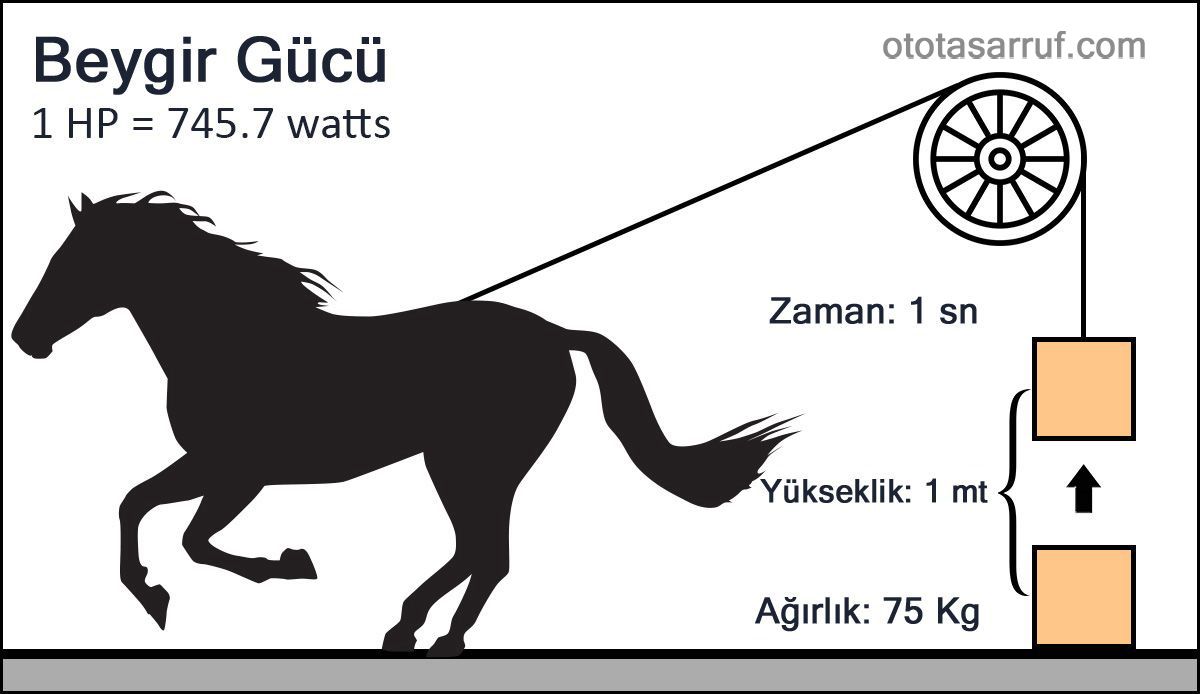
HP generally refers to horsepower, but the exact value can depend on which horsepower standard is being used.
The most commonly referenced mechanical horsepower is approximately:
1 HP = 745.7 watts
or:
1 HP ≈ 0.746 kW
This is commonly known as mechanical horsepower or imperial horsepower.
In the automotive world, however, the term HP is sometimes used loosely to describe PS or BHP. This can create confusion when comparing specifications.
Therefore, simply seeing "HP" is not always enough to determine exactly which measurement standard was used.
What Is PS?
PS stands for the German term Pferdestärke, meaning "horsepower."
PS is based on the metric horsepower standard and is commonly used in Europe and many other countries.
One metric horsepower is approximately:
1 PS = 735.5 watts
or:
1 PS ≈ 0.7355 kW
This means PS is slightly smaller than mechanical HP.
As a result:
1 HP ≈ 1.014 PS
and:
1 PS ≈ 0.986 HP
The difference is relatively small, which is why HP and PS are often treated as though they are interchangeable in everyday automotive discussions.
Technically, however, they are different units.
What Is BHP?
BHP means Brake Horsepower.
The word "brake" refers to the way engine power was traditionally measured using a dynamometer or brake-type testing device.
BHP represents the engine's power output measured at the engine's crankshaft or another specified output point, depending on the test configuration.
Unlike an indicated power calculation based on combustion pressure, brake horsepower is based on actual measured mechanical output.
This makes BHP particularly useful for evaluating the usable mechanical power produced by an engine.
HP vs BHP
HP and BHP are often used almost interchangeably in automotive specifications, but there is an important distinction.
HP is a unit of power.
BHP describes power measured using a brake dynamometer methodology.
In many modern vehicle specifications, the numerical difference between HP and BHP may be small or effectively absent depending on the standard and terminology used by the manufacturer.
The important point is that the measurement method and location matter.
An engine's power can also be measured at different points:
-
At the crankshaft
-
At the transmission output
-
At the wheels
These measurements will not necessarily produce the same number.
What Is kW?
kW stands for kilowatt and is the SI unit used to measure power.
Unlike horsepower, the kilowatt is part of the International System of Units.
One kilowatt equals:
1 kW = 1,000 watts
Because kW is a standardized SI unit, it provides a convenient way to compare power internationally.
Electric motors are particularly commonly rated in kW, although electric vehicles may also advertise their power in horsepower.
How Are HP, PS, BHP, and kW Related?
The approximate conversions are:
-
1 mechanical HP = 0.746 kW
-
1 PS = 0.7355 kW
-
1 kW = 1.341 HP
-
1 kW = 1.360 PS
For practical vehicle comparisons, these differences are usually small enough that rounding can make the numbers appear almost identical.
For example, a vehicle producing 110 kW has approximately:
148 HP
or approximately:
150 PS
This is why the same vehicle may be advertised with slightly different horsepower figures in different markets.
Why Does the Same Car Sometimes Have Different Horsepower Figures?
A vehicle may be listed with different power figures depending on the market or manufacturer documentation.
For example, one specification sheet may state:
150 PS
while another may state:
148 HP
and another may list:
110 kW
These figures can describe essentially the same power output.
The difference does not necessarily mean that the engine has been modified.
It may simply be the result of converting the same power value between different units.
Measurement standards can also affect the published figure.
What Is the Difference Between Engine Power and Wheel Horsepower?
Another important distinction is where the power is measured.
Engine power is generally measured at the engine's crankshaft.
Wheel horsepower is measured at the driven wheels using a chassis dynamometer.
The wheel figure is normally lower because some power is lost between the engine and the wheels.
These losses occur through components such as:
-
Transmission
-
Differential
-
Driveshafts
-
CV joints
-
Bearings
-
Tires
For example, an engine might produce 200 HP at the crankshaft but deliver less power to the wheels.
The exact loss depends on the vehicle and drivetrain.
A front-wheel-drive, rear-wheel-drive, and all-wheel-drive vehicle can therefore show different drivetrain losses even when their engines produce the same crankshaft power.
What Is the Difference Between Horsepower and Torque?
Horsepower and torque are closely related but measure different characteristics.
Torque is rotational force.
It determines how strongly the engine can turn the drivetrain.
Power describes how quickly that work can be performed.
The relationship between torque and power depends on engine speed.
This is why an engine can produce substantial torque at low RPM but reach its maximum horsepower at a much higher RPM.
For everyday driving, torque characteristics can strongly influence how responsive a vehicle feels.
For acceleration at higher speeds, gearing and power output become increasingly important.
Does More Horsepower Always Mean a Faster Car?
Not necessarily.
Horsepower is important, but vehicle performance depends on several factors.
These include:
-
Vehicle weight
-
Gear ratios
-
Transmission type
-
Torque curve
-
Aerodynamic drag
-
Tire grip
-
Drivetrain layout
-
Traction
-
Engine response
-
Turbocharger characteristics
-
Electric motor characteristics
A lighter vehicle with less power can sometimes accelerate faster than a heavier vehicle with more horsepower.
This is why power-to-weight ratio is an important performance measurement.
What Is Power-to-Weight Ratio?
Power-to-weight ratio compares the vehicle's power with its weight.
For example, imagine two cars:
Car A:
-
200 HP
-
2,000 kg
Car B:
-
180 HP
-
1,200 kg
Although Car A has more horsepower, Car B has a much higher power-to-weight ratio.
This can give the lighter vehicle a significant performance advantage.
Power-to-weight ratio is particularly useful when comparing sports cars, motorcycles, performance vehicles, and modified vehicles.
Does Horsepower Determine Top Speed?
Horsepower has a major influence on top speed, but it does not determine it by itself.
As vehicle speed increases, aerodynamic resistance increases significantly.
At high speeds, the engine needs to produce enough power to overcome:
-
Air resistance
-
Rolling resistance
-
Mechanical losses
-
Grade resistance
A vehicle with substantially more horsepower can generally overcome aerodynamic drag at a higher speed, assuming gearing and other limitations do not intervene.
However, electronic speed limiters, transmission gearing, tire ratings, and aerodynamic design can prevent a high-power vehicle from reaching its theoretical maximum speed.
Does Horsepower Determine Acceleration?
Horsepower is important for acceleration, but it is not the only factor.
During acceleration, the transmission must keep the engine within an effective operating range while the tires maintain sufficient grip.
At low speeds, traction and torque delivery can be particularly important.
At higher speeds, available power becomes increasingly significant because aerodynamic resistance rises rapidly.
This is one reason why vehicle acceleration cannot be predicted accurately from horsepower alone.
Naturally Aspirated vs Turbocharged Engines
Horsepower also depends on how an engine produces its power.
A naturally aspirated engine relies on atmospheric pressure to fill the cylinders.
A turbocharged engine uses exhaust gases to drive a turbine, which compresses incoming air and allows the engine to burn more fuel under controlled conditions.
Turbocharging can produce substantially more power from a given engine displacement.
For example, a modern 1.5-liter turbocharged engine may produce similar power to an older naturally aspirated engine with considerably larger displacement.
However, the two engines may have very different torque curves and throttle characteristics.
How Is Horsepower Measured?
Engine power is commonly measured using a dynamometer.
The engine is operated under controlled conditions while the dynamometer measures the mechanical output.
The testing process can account for:
-
Engine speed
-
Torque
-
Atmospheric pressure
-
Intake temperature
-
Humidity
-
Correction factors
-
Fuel and engine operating conditions
The measured torque and engine speed are then used to determine power.
For chassis dynamometer testing, the entire vehicle is placed on rollers and the power delivered to the wheels is measured.
Why Can Dyno Results Differ From Factory Numbers?
It is normal for independent dynamometer results to differ from the manufacturer's published figure.
Possible reasons include:
-
Different dynamometer types
-
Different correction standards
-
Atmospheric conditions
-
Tire pressure
-
Tire temperature
-
Drivetrain temperature
-
Fuel quality
-
Engine temperature
-
Test methodology
-
Measurement location
A chassis dyno also measures power after drivetrain losses, whereas manufacturer specifications may refer to crankshaft power.
Therefore, comparing two dyno results is meaningful only when the testing conditions and measurement standards are reasonably comparable.
Horsepower in Electric Vehicles
Electric vehicles also produce power, even though they do not use an internal combustion engine.
Their electric motors are commonly rated in kW, but manufacturers and automotive media may also provide horsepower figures.
For example, an electric motor rated at 100 kW produces approximately 134 HP.
Electric motors also have different torque characteristics from internal combustion engines.
They can produce very high torque from very low rotational speeds, which contributes to the strong initial acceleration experienced in many electric vehicles.
Why Do Electric Vehicles Sometimes Have Different Peak and Continuous Power?
Electric motors can produce high peak power for a limited period.
Battery temperature, motor temperature, inverter capacity, and thermal management can affect how long maximum output can be maintained.
Therefore, an electric vehicle may have a high peak power rating but a lower continuous power capability.
This is different from simply looking at one horsepower number on a specification sheet.
Is 100 HP Enough for a Car?
There is no universal horsepower figure that is considered sufficient for every vehicle.
A 100 HP engine can be perfectly adequate in a small, lightweight city car.
The same output may feel inadequate in a large SUV or heavily loaded vehicle.
Driving conditions also matter.
A vehicle used mainly in urban traffic has different power requirements from one regularly driven on highways, mountainous roads, or while towing.
Why Does a Car With the Same Horsepower Feel Faster or Slower?
Two cars with the same horsepower can feel completely different.
One may have:
-
Higher low-RPM torque
-
A faster-shifting transmission
-
Lower weight
-
Shorter gearing
-
Better traction
-
Faster throttle response
Another may have:
-
Higher peak RPM
-
A narrow power band
-
Longer gearing
-
Greater weight
-
Slower transmission response
As a result, the horsepower figure alone cannot describe the complete driving experience.
Which Is More Important: HP, PS, BHP, or kW?
These are primarily different ways of expressing power.
The most important thing when comparing vehicles is to make sure you are comparing equivalent measurements.
For international comparisons, kW is particularly useful because it is an SI unit.
For European automotive specifications, PS is also very common.
In English-language automotive specifications, HP and BHP are widely encountered.
The key is not to assume that the number is directly comparable without checking the unit and measurement standard.
A Simple Example
Suppose a manufacturer specifies an engine at 110 kW.
This corresponds approximately to:
-
110 kW
-
148 HP
-
150 PS
The numbers are different because the units are different, not necessarily because the engine produces different amounts of power.
The same principle applies when comparing specifications from different countries.
Final Thoughts
Horsepower is a useful way to describe vehicle performance, but it is only one part of the picture.
HP, PS, BHP, and kW all describe power, but they are not exactly the same unit or measurement convention.
The main differences can be summarized simply:
-
HP: Horsepower, commonly referring to mechanical horsepower.
-
PS: Metric horsepower, widely used in European vehicle specifications.
-
BHP: Brake horsepower, referring to measured mechanical power using a brake dynamometer.
-
kW: Kilowatt, the SI unit of power.
When comparing vehicles, it is important to look beyond the headline horsepower figure. Engine torque, vehicle weight, gearing, drivetrain efficiency, traction, and the shape of the power curve can all have a major effect on how a vehicle actually performs.