TR
TR EN
EN

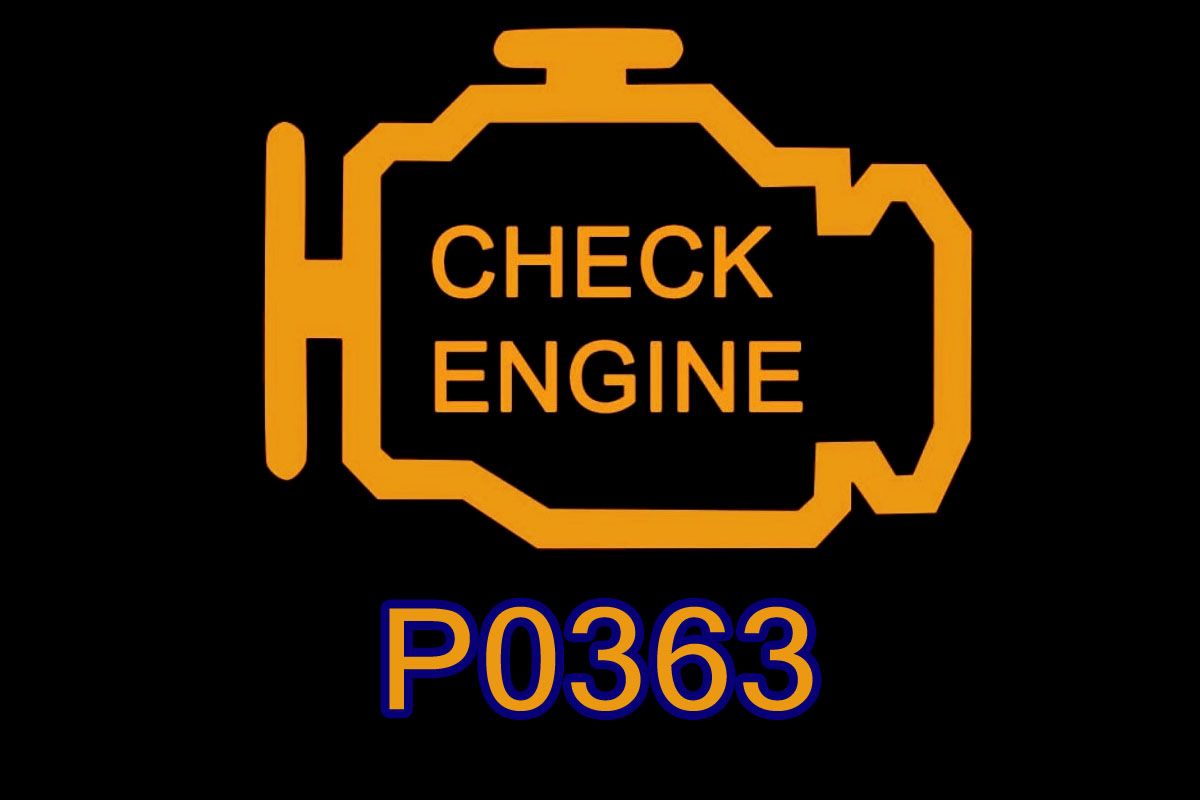
P0363 Misfire Detected – Fueling Disabled
The P0363 diagnostic trouble code means that the engine control module (ECM/PCM) has detected an engine misfire and has disabled fuel injection to one or more cylinders as a protective measure.
This code is slightly different from a conventional cylinder-specific misfire code. The important part is “Fueling Disabled.”
When the ECM determines that a misfire is severe enough to potentially damage the catalytic converter, it may temporarily stop injecting fuel into the affected cylinder or cylinders. This prevents unburned fuel from entering the exhaust and overheating the catalytic converter.
Therefore, P0363 is often a secondary or companion code rather than the original cause of the problem.
What Does P0363 Mean?
In simple terms, the ECM has detected:
Misfire → potential catalytic-converter damage → fuel injection disabled to protect the exhaust system.
The control module monitors crankshaft speed fluctuations to detect misfires. When combustion fails in a cylinder, the crankshaft can briefly slow down.
If the ECM detects a sufficiently severe or persistent misfire, it can shut off fuel to the affected cylinder.
P0363 is therefore an important warning that the engine is not combusting the air-fuel mixture correctly.
Why Does the ECM Disable Fuel?
A misfiring cylinder can send a large amount of unburned fuel into the exhaust.
That fuel can enter the catalytic converter and burn there.
This can cause extremely high catalytic-converter temperatures and potentially damage:
-
Catalytic converter substrate
-
Oxygen sensors
-
Exhaust components
Fuel shutoff is therefore a protective strategy.
The ECM essentially decides that continuing to inject fuel into a severely misfiring cylinder is more dangerous than temporarily disabling that cylinder.
P0363 Is Usually Not the Root Cause
This is one of the most important points when diagnosing this code.
P0363 tells you that:
A misfire was detected and fueling was disabled.
It does not tell you why the misfire occurred.
The underlying cause could be:
-
Faulty spark plug
-
Ignition coil problem
-
Fuel injector problem
-
Low fuel pressure
-
Vacuum leak
-
Intake leak
-
Incorrect air-fuel mixture
-
Low compression
-
Valve problem
-
Camshaft/crankshaft synchronization problem
-
EGR problem
-
Sensor problem
-
Wiring fault
-
Engine mechanical failure
Therefore, replacing a component simply because P0363 is stored can easily result in an incorrect repair.
Symptoms of P0363
Because P0363 is associated with an active or severe misfire, the vehicle can show noticeable symptoms.
Possible symptoms include:
-
Check Engine Light
-
Flashing Check Engine Light
-
Rough idle
-
Engine shaking
-
Strong hesitation
-
Poor acceleration
-
Reduced engine power
-
Engine vibration
-
Stalling
-
Difficult starting
-
Poor fuel economy
-
Engine running on fewer cylinders
-
Strong exhaust smell
-
Reduced throttle response
-
Limp-home operation
A flashing Check Engine Light is particularly important because it can indicate a severe misfire capable of damaging the catalytic converter.
Can P0363 Cause the Engine to Run on Fewer Cylinders?
Yes.
If the ECM disables fuel to a severely misfiring cylinder, that cylinder effectively stops contributing normal power.
For example, on a four-cylinder engine, if fuel is disabled to one cylinder, the engine may effectively operate on three cylinders.
The driver may notice:
-
Significant vibration
-
Poor acceleration
-
Uneven idle
-
Reduced power
-
Increased engine noise or harshness
The exact behavior depends on the engine and the number of cylinders affected.
Common Causes of P0363
Faulty Spark Plug
A worn, fouled, damaged, or incorrectly gapped spark plug can prevent proper combustion.
Possible problems include:
-
Excessive electrode wear
-
Incorrect gap
-
Carbon fouling
-
Oil fouling
-
Fuel fouling
-
Cracked ceramic insulator
Spark plugs should be inspected before assuming that the ignition coil or fuel system is defective.
Faulty Ignition Coil
A weak or failing ignition coil can cause an intermittent or continuous misfire.
Coils can sometimes work normally at idle but fail under load because cylinder pressure increases and the ignition system needs more voltage to produce a spark.
This can make the problem particularly noticeable during:
-
Hard acceleration
-
High RPM
-
Uphill driving
-
Heavy engine load
Fuel Injector Problem
A restricted, stuck, leaking, or electrically defective injector can cause an individual cylinder to misfire.
Potential injector problems include:
-
Blocked injector nozzle
-
Injector coil failure
-
Poor electrical connection
-
Wiring problem
-
Injector stuck closed
-
Injector stuck open
If fuel injection has been disabled by the ECM, the technician should determine whether the original misfire was caused by the injector or by another problem.
Low Fuel Pressure
Insufficient fuel pressure can cause a lean mixture and misfire.
Possible causes include:
-
Weak fuel pump
-
Restricted fuel filter
-
Fuel-pressure regulator problem
-
Electrical supply problem
-
Fuel-system restriction
A fuel-pressure measurement can help determine whether the engine is receiving sufficient fuel.
Vacuum or Intake Leak
Unmetered air entering the intake system can create a lean air-fuel mixture.
Potential leak points include:
-
Intake manifold gasket
-
Vacuum hoses
-
PCV system
-
Throttle-body gasket
-
Brake-booster hose
-
Intake ducting
A vacuum leak can sometimes affect one cylinder more severely than others.
Low Compression
A cylinder that cannot produce sufficient compression may not burn the mixture correctly.
Possible mechanical causes include:
-
Burned valve
-
Damaged piston
-
Worn piston rings
-
Head-gasket failure
-
Valve-seat problem
-
Camshaft timing problem
Compression testing and, when necessary, leak-down testing can help identify mechanical problems.
Ignition Problems vs Fuel Problems
One of the most efficient ways to diagnose a misfire is to determine whether the affected cylinder has:
Spark + fuel + compression + correct timing.
If one of these fundamental requirements is missing, the cylinder cannot produce normal combustion.
For an ignition-related misfire, attention should be directed toward:
-
Spark plug
-
Ignition coil
-
Coil wiring
-
Coil power supply
-
Coil ground/control
For a fuel-related misfire:
-
Injector
-
Injector wiring
-
Fuel pressure
-
Fuel supply
For a mechanical misfire:
-
Compression
-
Valves
-
Timing chain/belt
-
Camshaft timing
-
Cylinder-head condition
Check for Other Misfire Codes
P0363 should always be considered together with other stored codes.
You may also find codes such as:
-
P0300 – Random/Multiple Cylinder Misfire Detected
-
P0301 – Cylinder 1 Misfire Detected
-
P0302 – Cylinder 2 Misfire Detected
-
P0303 – Cylinder 3 Misfire Detected
-
P0304 – Cylinder 4 Misfire Detected
And so on for other cylinders.
If a cylinder-specific P030X code is present together with P0363, that cylinder should normally be investigated first.
P0363 and P030X Together
Suppose the scanner shows:
P0302 – Cylinder 2 Misfire Detected
and
P0363 – Misfire Detected – Fueling Disabled
In that situation, P0302 provides the more specific information about where the misfire occurred.
The diagnostic process should concentrate on Cylinder 2.
The P0363 code explains that the ECM responded to the misfire by disabling fueling as a protective measure.
This distinction can save considerable diagnostic time.
How to Diagnose P0363
A systematic approach is essential.
1. Do not clear the codes immediately
Before clearing anything, record:
-
Stored codes
-
Pending codes
-
Freeze-frame data
-
Misfire counters
-
Engine RPM
-
Engine temperature
-
Fuel trims
-
Engine load
Clearing the codes can erase valuable information about when and under what conditions the misfire occurred.
2. Identify the Misfiring Cylinder
Look for P0301, P0302, P0303, P0304, etc.
If no cylinder-specific code is present, use the scan tool's live misfire counters if available.
This can reveal which cylinder is contributing to the problem.
3. Inspect the Spark Plug
Remove and inspect the spark plug from the affected cylinder.
Look for:
-
Heavy carbon deposits
-
Wet fuel
-
Oil contamination
-
Abnormal electrode wear
-
Cracked insulator
-
Incorrect gap
The appearance of the spark plug can provide clues about the cause of the misfire.
4. Test the Ignition Coil
If the engine uses individual coil-on-plug ignition, a useful diagnostic method is to compare the suspect coil with a known-good cylinder where appropriate.
If the misfire moves to another cylinder after swapping coils, the coil becomes a strong suspect.
However, this type of component swapping should be performed carefully and interpreted alongside other diagnostic information.
5. Check the Injector
If ignition components appear normal, investigate the fuel injector.
Check:
-
Injector electrical resistance where applicable
-
Injector power supply
-
Injector control signal
-
Connector condition
-
Injector operation
-
Fuel pressure
An injector that is electrically functional may still be mechanically restricted.
6. Check Fuel Pressure
If multiple cylinders are misfiring or fuel-related symptoms are present, fuel pressure becomes particularly important.
Check the pressure against the manufacturer's specification.
A weak fuel pump or fuel-system restriction can create widespread misfires rather than a single-cylinder problem.
7. Check Compression
If ignition and fuel systems appear normal, mechanical testing becomes important.
A compression test can identify a cylinder that is substantially weaker than the others.
If compression is abnormal, a leak-down test can help determine where the pressure is escaping.
8. Check Engine Timing
Camshaft and crankshaft synchronization should be considered when misfires cannot be explained by ignition, fuel, or compression problems.
Potential causes include:
-
Stretched timing chain
-
Jumped timing
-
Incorrect timing installation
-
Damaged timing components
-
Variable valve timing problems
This becomes even more important if camshaft or crankshaft position codes are also present.
Could P0363 Be Related to Camshaft Position Codes?
Yes.
If P0363 appears together with codes such as P0365, P0367, P0368, or P0369, the camshaft position system deserves attention.
A camshaft position problem can affect:
-
Injection timing
-
Ignition timing
-
Engine synchronization
-
VVT operation
-
Misfire detection
However, the presence of both codes does not automatically mean that the camshaft sensor caused the misfire.
The actual signal, synchronization, and mechanical timing should be checked.
Could a Vacuum Leak Cause P0363?
Yes.
A vacuum leak can create a lean air-fuel mixture and cause combustion instability.
Depending on the location of the leak, one cylinder may be affected more strongly than the others.
Common areas to inspect include:
-
Intake manifold
-
Vacuum hoses
-
PCV system
-
Brake-booster hose
-
Throttle-body area
-
Intake ducting
Fuel-trim data can provide additional clues when diagnosing suspected air leaks.
Could Low Compression Cause P0363?
Yes.
A cylinder needs adequate compression for efficient combustion.
If compression is significantly lower than the other cylinders, possible causes include:
-
Burned valve
-
Valve-seat damage
-
Worn piston rings
-
Damaged piston
-
Head-gasket problem
-
Incorrect valve timing
In such cases, changing spark plugs or ignition coils will not solve the underlying problem.
Why the Check Engine Light May Flash
A flashing Check Engine Light is generally a warning that the engine is experiencing a sufficiently severe misfire that continued operation could damage the catalytic converter.
With P0363, this is particularly relevant because the ECM has already responded by disabling fuel to protect the exhaust system.
If the Check Engine Light is flashing and the engine is shaking or running very poorly, continued driving should be avoided until the cause is diagnosed.
Is It Safe to Drive With P0363?
Generally, caution is recommended.
If the Check Engine Light is flashing, the engine is shaking badly, or there is significant power loss, the vehicle should not be driven unnecessarily.
Continued severe misfire can cause expensive catalytic-converter damage.
If the light is steady and the engine runs normally, a short trip for diagnosis may be possible, but the underlying misfire should still be investigated promptly.
A Practical Diagnostic Sequence
A good diagnostic path is:
P0363 → scan all codes → identify the misfiring cylinder → check freeze-frame → inspect spark plug → test ignition coil → check injector → verify fuel pressure → check intake/vacuum leaks → perform compression test → check cam/crank synchronization → investigate VVT → inspect mechanical timing if necessary → repair the root cause → clear codes → road test → confirm that the misfire and P0363 do not return.
The key is to diagnose why the cylinder misfired, rather than treating P0363 itself as the failed component.
Final Thoughts
P0363 – Misfire Detected – Fueling Disabled indicates that the ECM/PCM detected a significant engine misfire and responded by disabling fuel injection as a protective strategy.
The code itself usually does not identify the original cause.
The real fault may be an ignition problem, fuel injector problem, fuel-pressure issue, vacuum leak, compression problem, camshaft/crankshaft synchronization issue, VVT problem, or another engine-management fault.
If a P030X cylinder-specific misfire code is stored at the same time, that code can provide the most useful starting point. The affected cylinder should then be tested systematically for spark, fuel, compression, and correct timing.
The most important point is simple: P0363 is often the ECM's response to a serious misfire, not the root cause of the misfire itself.