TR
TR EN
EN

What Is a Direct Injection Engine? How Do GDI, TSI, and FSI Engines Work?
Direct injection engines have become increasingly common in modern gasoline-powered vehicles. Unlike traditional port fuel injection systems, direct injection engines spray fuel directly into the combustion chamber instead of injecting it into the intake manifold.
Technologies such as GDI, TSI, and FSI use this basic principle, although each manufacturer has developed its own system, terminology, and engine-control strategies.
Direct injection can improve fuel efficiency, throttle response, emissions, and engine performance. However, it also introduces some specific technical challenges, particularly carbon buildup and high-pressure fuel system problems.
What Is Direct Fuel Injection?
In a conventional port fuel injection engine, fuel is injected into the intake port, usually close to the intake valve. The incoming air and fuel are then drawn into the combustion chamber when the intake valve opens.
A direct injection engine works differently.
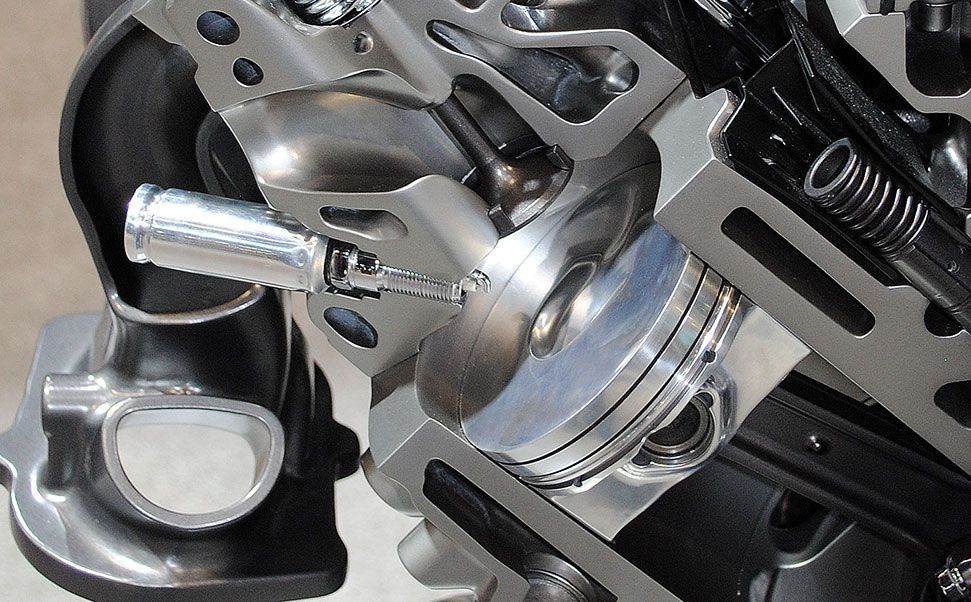
The injector is installed directly in the cylinder head and sprays fuel inside the combustion chamber. The ECU determines the exact amount and timing of fuel according to engine speed, load, throttle position, temperature, air mass, and other sensor inputs.
This allows the engine control system to have much more precise control over the combustion process.
The main components of a gasoline direct injection system typically include:
-
High-pressure fuel pump
-
Fuel rail
-
Direct fuel injectors
-
Low-pressure fuel pump
-
Engine control unit (ECU)
-
Pressure sensors
-
Throttle body
-
Intake and exhaust valves
-
Oxygen and air-fuel sensors
-
Crankshaft and camshaft position sensors
The high-pressure fuel pump raises fuel pressure significantly above the pressure used in conventional port injection systems.
How Does a Direct Injection Engine Work?
The basic operating process can be explained in several stages.
Fuel is first delivered from the fuel tank to the engine by the low-pressure fuel pump. The fuel then reaches the high-pressure pump, which increases the pressure to the level required by the direct injection system.
The pressurized fuel enters the fuel rail and is distributed to the injectors.
When the correct injection point is reached, the ECU activates the injector. Fuel is sprayed directly into the combustion chamber, where it mixes with the incoming air.
The ignition system then produces a spark at the appropriate moment. The compressed air-fuel mixture burns, producing the pressure that pushes the piston downward.
The crankshaft converts this piston movement into rotational power.
genui{"learning_viz":{"type_id":"TORQUE","locale_override":"en-US"}}
The injection timing and quantity can be changed continuously according to operating conditions. This is one of the major advantages of direct injection technology.
What Does GDI Mean?
GDI stands for Gasoline Direct Injection.
The term is commonly associated with gasoline engines that inject fuel directly into the combustion chamber.
GDI is not necessarily a single engine design. Different manufacturers can use different GDI systems with different injector locations, fuel pressures, combustion strategies, turbochargers, and valve timing systems.
The basic principle remains the same: gasoline is injected directly into the cylinder rather than into the intake port.
GDI engines can use different injection strategies depending on engine load.
During light-load operation, the engine may use a relatively small amount of fuel. Under heavier loads, the ECU can increase injection quantity and adjust injection timing to provide the power required by the driver.
What Does TSI Mean?
TSI is a Volkswagen Group term commonly associated with Turbocharged Stratified Injection.
Modern TSI engines generally combine:
-
Gasoline direct injection
-
Turbocharging
-
Electronic engine management
-
Variable valve timing on many applications
-
High-pressure fuel injection
The combination of turbocharging and direct injection allows a relatively small engine to produce substantial power and torque.
The turbocharger forces additional air into the engine. Because more air is available for combustion, the ECU can inject additional fuel while maintaining the correct air-fuel ratio.
This allows a small-displacement TSI engine to produce performance that would traditionally require a larger naturally aspirated engine.
What Does FSI Mean?
FSI stands for Fuel Stratified Injection.
The term is particularly associated with Volkswagen Group gasoline direct injection engines.
FSI technology was developed to improve fuel efficiency and combustion control by injecting fuel directly into the combustion chamber.
Depending on the engine design and operating conditions, the system can adjust the timing and amount of fuel injection to control how the air-fuel mixture is formed inside the cylinder.
Some FSI engines are naturally aspirated, while later Volkswagen Group engines combined direct injection with turbocharging and became known under the TSI name.
Therefore, FSI and TSI should not be considered completely separate injection technologies. They are manufacturer-specific names associated with different generations and configurations of gasoline direct injection engines.
What Is the Difference Between GDI, TSI, and FSI?
The most important point is that these terms do not represent three completely different fuel injection principles.
All three are associated with gasoline engines using direct fuel injection.
GDI is a general term meaning Gasoline Direct Injection.
FSI is a Volkswagen Group terminology historically used for Fuel Stratified Injection engines.
TSI is a Volkswagen Group terminology associated with turbocharged gasoline direct injection engines.
The exact hardware and operating strategy can vary considerably between engine generations.
For example, two engines both described as GDI can have different injector designs, fuel pressures, combustion chambers, turbocharging systems, and emission-control systems.
Therefore, the engine code and manufacturer specifications are more useful than the abbreviation alone when diagnosing or servicing a specific engine.
Why Do Direct Injection Engines Use High Fuel Pressure?
Fuel must be injected directly into a combustion chamber that is already under pressure.
For the injector to deliver the required amount of fuel in a very short period, the fuel pressure must be significantly higher than the pressure inside the cylinder during the injection event.
The high-pressure fuel pump therefore plays a critical role.
The general fuel path is:
Fuel tank → Low-pressure pump → High-pressure pump → Fuel rail → Direct injectors → Combustion chamber
The ECU constantly monitors fuel pressure and adjusts the system according to engine operating conditions.
A problem with the high-pressure pump, fuel pressure regulator, pressure sensor, fuel rail, or injector can therefore cause serious engine performance problems.
Why Are Direct Injection Engines More Efficient?
One of the biggest advantages of direct injection is precise control over fuel delivery.
The ECU can control:
-
When fuel is injected
-
How much fuel is injected
-
How many injection events occur
-
Injection pressure
-
Air-fuel mixture formation
This allows the engine to adapt combustion to different operating conditions.
During low-load operation, the engine may operate with a leaner combustion strategy in certain designs. During acceleration or high load, the system can increase fuel delivery to produce more power.
Direct injection also allows the fuel to be injected later in the combustion cycle than is possible with conventional port injection.
Does Direct Injection Increase Engine Power?
Direct injection itself does not automatically make an engine more powerful.
However, it gives engineers greater control over combustion, which can be used to improve performance.
When direct injection is combined with turbocharging, the benefits become particularly significant.
A turbocharger increases the amount of air entering the cylinders. Direct injection allows fuel to be delivered precisely according to the amount of air available.
This combination can produce high torque and power from relatively small engines.
This is one reason why modern turbocharged engines can provide strong performance while maintaining relatively small engine displacement.
Why Do Direct Injection Engines Have Carbon Buildup?
Carbon buildup is one of the most commonly discussed problems associated with gasoline direct injection engines.
In a conventional port injection engine, fuel is sprayed into the intake port. The fuel can come into contact with the back of the intake valve.
In a direct injection engine, fuel is injected directly into the combustion chamber. Therefore, gasoline does not normally wash over the back of the intake valves.
Over time, oil vapors from the crankcase ventilation system and exhaust gas recirculation can contribute to deposits forming on the intake valves.
This can cause:
-
Rough idle
-
Reduced engine performance
-
Poor throttle response
-
Misfires
-
Reduced fuel economy
-
Difficult starting
-
Increased air restriction
The severity of carbon buildup depends on the engine design, driving conditions, oil consumption, crankcase ventilation system, fuel quality, and maintenance.
What Are the Symptoms of a Direct Injection Problem?
A direct injection system failure can produce a wide range of symptoms.
Common signs include:
-
Hard starting
-
Extended cranking
-
Rough idle
-
Engine misfires
-
Loss of power
-
Poor acceleration
-
Increased fuel consumption
-
Check engine light
-
Engine hesitation
-
Poor cold-start performance
-
Stalling
-
Unusual fuel pressure readings
The exact symptoms depend on which component has failed.
For example, a leaking injector can produce symptoms very different from a weak high-pressure fuel pump.
What Happens When a Direct Fuel Injector Fails?
Direct fuel injectors operate under demanding conditions. They must accurately meter fuel while exposed to high temperatures and combustion pressure.
An injector can develop several types of problems.
If an injector becomes restricted, it may not deliver enough fuel. This can cause a lean mixture and misfire.
If an injector leaks or remains open for too long, excessive fuel can enter the combustion chamber. This can produce a rich mixture, rough running, increased emissions, and potentially fuel dilution of the engine oil.
An electrically faulty injector may stop responding correctly to ECU commands.
Possible symptoms include:
-
Misfire on one cylinder
-
Rough idle
-
Poor acceleration
-
Increased fuel consumption
-
Difficult starting
-
Fuel smell
-
Check engine light
Injector diagnosis should normally include electrical testing, fuel-pressure evaluation, scan-tool data, and, when necessary, specialized injector testing.
What Happens If the High-Pressure Fuel Pump Fails?
The high-pressure fuel pump is essential for maintaining the pressure required by the direct injection system.
If the pump cannot generate sufficient pressure, the engine may experience fuel starvation, especially under high load.
Possible symptoms include:
-
Difficult starting
-
Loss of power during acceleration
-
Hesitation
-
Engine misfire
-
Reduced performance at high RPM
-
Stalling
-
Check engine light
-
Low fuel rail pressure
A weak high-pressure pump can sometimes allow the engine to operate normally at idle but fail to maintain the required pressure during hard acceleration.
This is why fuel pressure should be evaluated under different operating conditions rather than checking only the pressure at idle.
Are GDI, TSI, and FSI Engines Reliable?
A direct injection engine can be very reliable when properly maintained.
However, the system contains more components and operates at higher pressures than a conventional port injection system.
Long-term reliability depends on:
-
Engine design
-
Oil quality
-
Correct oil change intervals
-
Fuel quality
-
Injector condition
-
High-pressure fuel system condition
-
Cooling system condition
-
Turbocharger condition
-
Driving conditions
-
Maintenance history
Some engines have known problems with carbon deposits, timing chains, high-pressure fuel pumps, injectors, turbochargers, or crankcase ventilation systems.
This does not mean that every GDI, TSI, or FSI engine will experience these problems. The specific engine family and generation are much more important than the abbreviation itself.
What Is the Difference Between Direct Injection and Port Injection?
The main difference is the location of the fuel injector.
In a port injection system, the injector sprays fuel into the intake port, usually near the intake valve.
In a direct injection system, the injector sprays fuel directly into the combustion chamber.
Port injection generally operates at lower fuel pressure and has a simpler fuel system.
Direct injection provides more precise combustion control and can improve efficiency and performance, but the system is more complex and can be more expensive to repair.
Some modern engines combine both systems. These are known as dual-injection or combined-injection engines.
Can Direct Injection Engines Use Regular Gasoline?
Yes, but the required fuel grade depends on the specific engine.
Many direct injection engines are designed to operate on standard unleaded gasoline, while some high-compression or high-performance turbocharged engines may require or strongly recommend higher-octane fuel.
The correct fuel specification should always be taken from the vehicle manufacturer's documentation.
Using a fuel with an octane rating below the manufacturer's requirement can increase the risk of knock and cause the ECU to retard ignition timing.
How Should a GDI, TSI, or FSI Engine Be Maintained?
Maintenance is particularly important because direct injection systems operate under high pressure and tight tolerances.
Engine oil should be changed according to the manufacturer's recommended specification and interval. Using the correct oil specification is especially important in turbocharged direct injection engines.
The following should also be monitored:
-
Engine oil level and condition
-
Air filter
-
Fuel filter where applicable
-
Spark plugs
-
Ignition coils
-
Fuel pressure
-
Injectors
-
Intake system
-
PCV/crankcase ventilation system
-
Turbocharger system
-
Cooling system
If the engine develops rough running, repeated misfires, hard starting, or a loss of power, continuing to drive without diagnosis can turn a relatively simple problem into a more expensive repair.
Why Are GDI and TSI Engines So Common Today?
Manufacturers have increasingly adopted direct injection because it provides engineers with greater control over combustion.
When combined with turbocharging, variable valve timing, sophisticated engine management, and modern emission-control systems, direct injection makes it possible to achieve a useful balance between:
-
Power
-
Torque
-
Fuel economy
-
Emissions
-
Engine size
This is why terms such as GDI, TSI, FSI, EcoBoost, TGDI, and similar manufacturer-specific names are now common in modern gasoline engines.
Although the names differ, the underlying concept is often similar: precisely controlled gasoline injection directly into the combustion chamber.
Direct Injection Technology in Modern Engines
GDI, TSI, and FSI engines represent different applications and naming conventions within the broader development of gasoline direct injection technology.
Their biggest advantages come from precise fuel metering and improved control over combustion. Turbocharged versions can also deliver high torque and power from relatively small engine sizes.
At the same time, direct injection systems require careful maintenance because high-pressure pumps, injectors, intake deposits, turbochargers, and related components can be expensive when problems develop.
Understanding the difference between the terminology and the actual injection system makes it much easier to understand how these engines work and why their maintenance requirements can differ from older port-injected engines.