TR
TR EN
EN

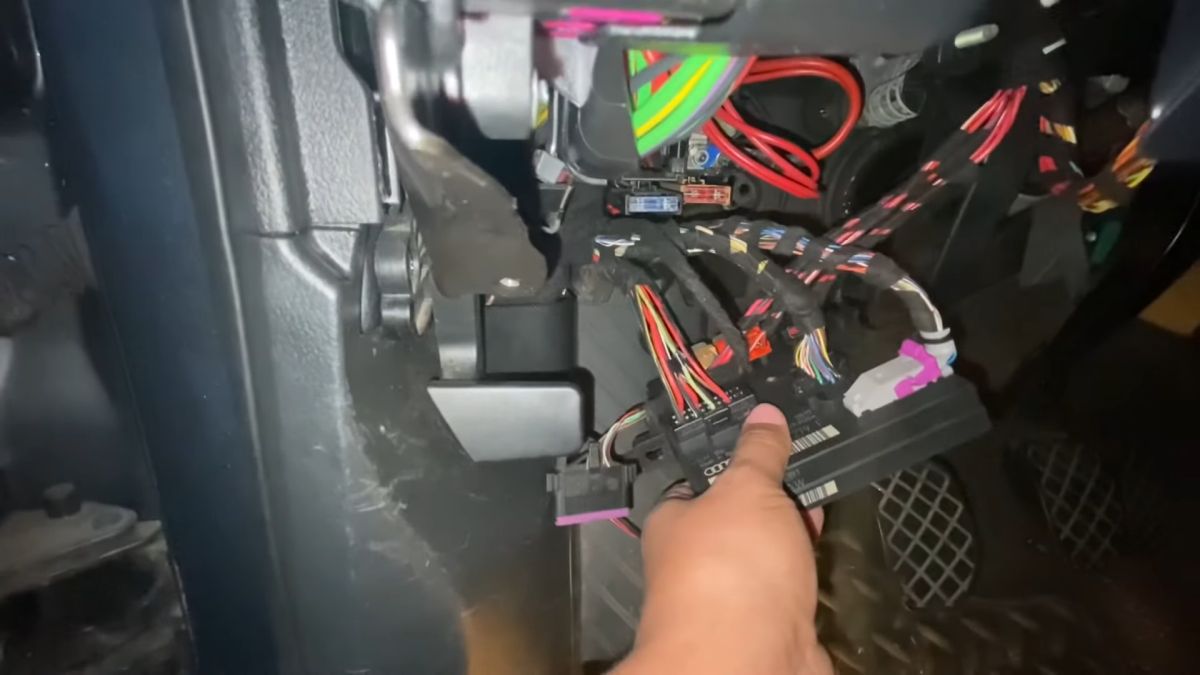
What Is a Body Control Module (BCM)? Symptoms of BCM Failure
Modern vehicles contain dozens of electronic control units that communicate with each other to manage everything from engine operation to lighting, security, comfort, and communication systems.
One of these important electronic units is the Body Control Module (BCM).
The BCM is responsible for controlling and coordinating many of the vehicle's body and convenience functions. Depending on the vehicle manufacturer and model, it may control systems such as central locking, power windows, interior lighting, exterior lights, windshield wipers, alarm functions, and communication with other control modules.
When the BCM develops a problem, the symptoms can sometimes be confusing. Several unrelated electrical systems may begin malfunctioning at the same time, or a problem may appear intermittently and then disappear.
However, an important point should be understood from the beginning:
A BCM-related symptom does not automatically mean that the BCM itself is defective.
Low battery voltage, blown fuses, poor grounds, damaged wiring, water intrusion, communication problems, faulty switches, and other electronic modules can produce symptoms that look very similar to a BCM failure.
What Does the Body Control Module Do?
The Body Control Module is essentially a central electronic controller for many of the vehicle's body-related functions.
The exact responsibilities vary between manufacturers. Some vehicles use one BCM to control a large number of systems, while others divide these functions between several different modules.
Depending on the vehicle, the BCM may control or communicate with:
-
Central locking
-
Door locks
-
Power windows
-
Interior lighting
-
Headlights
-
Parking lights
-
Turn signals
-
Hazard warning lights
-
Windshield wipers
-
Windshield washer system
-
Horn
-
Alarm system
-
Trunk release
-
Hood and door status
-
Keyless entry
-
Remote key functions
-
Vehicle security systems
-
Immobilizer-related functions
-
Instrument cluster communication
-
HVAC-related functions
-
Other body electronics
The BCM therefore acts as an important communication and control center rather than simply being another fuse box.
How Does a BCM Work?
The BCM receives information from switches, sensors, other control modules, and communication networks.
For example, when the driver opens a door, a door switch or latch sensor sends information to the BCM. The BCM can then turn on the interior lights, inform the instrument cluster that a door is open, and modify the vehicle's security status.
When the driver activates the turn signal, the BCM may receive the request from the steering-column switch and control the appropriate lights.
Modern BCMs do not necessarily use a separate conventional wire for every function. They frequently communicate with other electronic modules through vehicle communication networks such as CAN bus.
This means a BCM can appear to be malfunctioning even when the module itself is perfectly healthy.
A damaged CAN wire, poor connector, weak power supply, or another faulty module can interrupt communication and create BCM-related symptoms.
Common Symptoms of a Bad BCM
BCM failure symptoms vary considerably depending on the vehicle.
Some failures affect only one function, while others can cause several electrical systems to malfunction simultaneously.
Common symptoms include:
-
Central locking problems
-
Power window failure
-
Interior lights not working
-
Exterior lighting problems
-
Turn signals behaving incorrectly
-
Windshield wipers operating intermittently
-
Alarm triggering randomly
-
Remote key problems
-
Trunk or hood release problems
-
Electrical accessories operating intermittently
-
Multiple warning lights
-
Communication fault codes
-
Security or immobilizer problems
-
Vehicle starting problems in some models
-
Battery drain
-
Electrical functions working without command
The combination of symptoms is often more useful for diagnosis than any individual symptom.
Central Locking Stops Working
One of the common symptoms associated with BCM-related problems is abnormal central locking operation.
The vehicle may:
-
Refuse to lock
-
Refuse to unlock
-
Lock but not unlock
-
Unlock but not lock
-
Lock and unlock intermittently
-
Lock itself unexpectedly
-
Respond differently to the remote and interior switch
The BCM may be involved, but the problem can also be caused by a faulty door-lock actuator, door switch, remote key, fuse, wiring, or low battery voltage.
Therefore, replacing the BCM simply because the central locking system does not work is not a reliable diagnostic procedure.
Power Windows Stop Working
Power windows are another system that can be affected by BCM or body electronics problems.
Depending on the vehicle architecture, the BCM may control the window system directly or communicate with individual door modules.
A faulty system may cause:
-
One window to stop working
-
Several windows to stop working
-
Windows to work intermittently
-
Automatic window functions to stop working
-
Windows to operate in the wrong direction
-
Windows to stop responding after battery replacement
A window motor or switch failure usually affects a specific window. If several windows and other unrelated electrical systems fail at the same time, the BCM, power supply, network communication, or shared wiring deserves closer attention.
Interior Lights Behave Abnormally
The BCM commonly controls interior lighting logic.
A BCM-related problem can cause interior lights to:
-
Stay on
-
Fail to turn on
-
Turn on unexpectedly
-
Turn off too quickly
-
Remain illuminated after the doors are closed
-
Operate intermittently
However, a defective door switch or latch sensor can create exactly the same symptoms.
If the vehicle believes that a door is still open, the BCM may intentionally keep the interior lights on.
Headlights and Exterior Lighting Problems
Depending on the vehicle, the BCM may control or manage several exterior lighting functions.
Possible symptoms include:
-
Headlights not operating correctly
-
Parking lights remaining on
-
Turn signals not working
-
Hazard lights malfunctioning
-
Brake-light control problems on some designs
-
Lights turning on without command
-
Lights switching off unexpectedly
-
One or more lighting functions working intermittently
Before blaming the BCM, technicians should inspect bulbs or LED modules, fuses, connectors, switches, wiring, grounds, and relevant control modules.
A single failed lamp usually does not indicate a BCM failure.
Windshield Wipers Operate Incorrectly
The BCM can also be involved in windshield wiper control.
A BCM-related problem may cause the wipers to:
-
Stop working
-
Work only at certain speeds
-
Operate intermittently
-
Turn on unexpectedly
-
Continue running after the switch is turned off
-
Fail to respond to the wiper control switch
But the wiper motor, switch, relay, wiring, fuse, rain sensor, and other control electronics can produce similar symptoms.
Car Alarm Goes Off Randomly
Random alarm activation can sometimes be associated with BCM problems, especially when the BCM is integrated with the vehicle security system.
However, false alarms are often caused by much simpler problems.
Possible causes include:
-
Weak battery
-
Voltage fluctuations
-
Hood switch
-
Door latch or door switch
-
Trunk switch
-
Interior motion sensor
-
Shock sensor
-
Tilt sensor
-
Water intrusion
-
Damaged wiring
-
Aftermarket alarm equipment
-
Faulty alarm siren
-
BCM malfunction
If the alarm activates at random times, the vehicle's security or body control module may contain information about which input triggered the alarm.
Remote Key or Keyless Entry Problems
A BCM can communicate with the remote keyless-entry system.
A BCM-related problem may cause the remote to:
-
Lock the vehicle but not unlock it
-
Unlock but not lock
-
Stop responding
-
Work intermittently
-
Lose synchronization
-
Fail after a battery-related event
However, the remote key battery itself should be checked first.
The receiver, antenna, vehicle battery, security system, and key synchronization can also be responsible.
Multiple Electrical Systems Fail at the Same Time
This is one of the most important clues when diagnosing a possible BCM problem.
Imagine a vehicle suddenly develops the following problems:
-
Central locking stops working.
-
Interior lights stop responding.
-
Power windows stop working.
-
Turn signals behave incorrectly.
-
The remote key does not work.
These systems may appear unrelated, but they can share the BCM or its power and communication network.
When several unrelated body functions fail simultaneously, the diagnostic approach should move beyond individual components and examine common power supplies, grounds, network communication, and BCM operation.
The Vehicle May Not Start
A BCM problem can prevent a vehicle from starting on certain models.
This is usually related to communication between the BCM, immobilizer/security system, engine control module, and vehicle key.
If the BCM cannot communicate correctly with the relevant security systems, the engine control module may not authorize engine starting.
Possible symptoms include:
-
Security warning light
-
Key not recognized
-
No-start condition
-
Remote key problems
-
Immobilizer-related fault codes
-
Communication errors between control modules
But a no-start condition should never automatically be diagnosed as a BCM failure.
The battery, starter, engine ECU, immobilizer system, key, CAN network, fuses, and grounds must also be checked.
Multiple Warning Lights Can Appear
A BCM communication problem can sometimes cause several warning lights to appear simultaneously.
The driver may suddenly see warnings related to:
-
ABS
-
ESP
-
Airbag
-
Steering
-
Security
-
Electrical system
-
Transmission
-
Engine control
This can be particularly confusing because the vehicle may appear to have several unrelated failures.
In reality, one low-voltage event or communication problem can cause multiple modules to report faults.
Low Battery Voltage Can Look Like BCM Failure
One of the most important diagnostic points is battery voltage.
Modern control modules are sensitive to voltage instability.
A weak battery can cause a significant voltage drop during engine cranking. This can cause electronic modules to reset or temporarily lose communication.
The result can include:
-
Multiple warning lights
-
Central locking problems
-
Window problems
-
Remote key problems
-
Communication codes
-
Security warnings
-
Instrument cluster abnormalities
-
Intermittent electrical faults
For this reason, battery and charging-system testing should be performed before replacing a BCM.
What Causes BCM Failure?
Several different problems can damage or disable a BCM.
Water and Moisture Intrusion
Water is one of the most serious threats to vehicle electronics.
Depending on the vehicle design, the BCM may be installed:
-
Under the dashboard
-
Near the fuse box
-
Near the driver's footwell
-
Behind interior trim
-
Near the center console
-
In another protected body area
A blocked drain, leaking windshield, damaged door seal, sunroof drain problem, or another water leak can allow moisture to reach the module or its connectors.
Water contamination can cause:
-
Corrosion
-
Short circuits
-
Communication problems
-
Intermittent operation
-
Permanent electronic damage
If a BCM appears to be defective after heavy rain or vehicle washing, water intrusion should be investigated carefully.
Poor Ground Connections
A control module needs a stable electrical ground.
A loose, corroded, or damaged ground connection can cause symptoms that look like internal BCM failure.
Ground connections should therefore be tested rather than judged only by visual inspection.
Damaged Wiring
Wiring problems are another common source of body-electrical faults.
Wires can become damaged because of:
-
Repeated movement
-
Previous repairs
-
Water contamination
-
Corrosion
-
Rodent damage
-
Accidental modifications
-
Short circuits
-
Physical damage
Door wiring is particularly vulnerable because the wiring harness between the door and body repeatedly bends as the door opens and closes.
Blown Fuses
A blown fuse can make a BCM-controlled system appear completely dead.
The BCM itself may be functioning normally while a fuse has interrupted its power supply or the supply to a specific output circuit.
If a fuse has blown repeatedly, however, the underlying electrical problem must be found.
Simply replacing the fuse again is not a proper repair.
Voltage Spikes and Incorrect Jump Starting
Electrical modules can be damaged by abnormal voltage conditions.
Incorrect battery connection, reverse polarity, improper jump-starting, or a charging-system failure can expose electronic modules to damaging voltage conditions.
This is one reason correct procedures should always be followed when replacing a battery or jump-starting a vehicle.
Short Circuits
A short circuit in a BCM-controlled circuit can damage an output driver or other electronic components inside the module.
For example, a shorted lighting circuit may damage the BCM output responsible for controlling that circuit.
If the BCM is replaced without repairing the short circuit, the replacement module may suffer the same failure.
CAN Bus Communication Problems
Modern vehicles use communication networks to allow different control modules to exchange information.
The BCM may communicate with:
-
Engine Control Module
-
Transmission Control Module
-
ABS/ESP Module
-
Airbag Module
-
Instrument Cluster
-
Steering Module
-
Door Modules
-
HVAC Module
-
Security Systems
A CAN bus fault can prevent these modules from communicating correctly.
This can result in numerous communication-related diagnostic trouble codes.
BCM Communication Codes Do Not Always Mean BCM Failure
This is an extremely important diagnostic principle.
For example, a vehicle may store a code indicating Lost Communication With Body Control Module.
That does not necessarily mean the BCM itself is defective.
The actual problem could be:
-
BCM power supply
-
BCM ground
-
CAN-H wiring
-
CAN-L wiring
-
Corroded connector
-
Low battery voltage
-
Another module interfering with the CAN network
-
Water intrusion
-
Internal BCM failure
The code identifies a communication problem, not necessarily the failed component.
How Is a BCM Diagnosed?
A proper BCM diagnosis should be systematic.
The first step is usually to check the vehicle's battery and charging system.
After that, technicians can inspect:
-
BCM fuses
-
BCM power supplies
-
Ground connections
-
BCM connectors
-
Wiring harnesses
-
CAN bus wiring
-
Water intrusion
-
Relevant switches and sensors
-
Related control modules
A diagnostic scan should ideally include all available vehicle modules, not just the engine ECU.
A basic generic OBD scanner may not have access to body-control functions.
A professional diagnostic tool may be able to communicate with the BCM and display:
-
Stored fault codes
-
Live data
-
Switch states
-
Door status
-
Lighting commands
-
Security information
-
Communication status
-
Output tests
-
Configuration information
Can a BCM Be Repaired?
Sometimes.
Electronic repair may be possible if the failure involves repairable components such as:
-
Damaged output drivers
-
Power supply components
-
Relays
-
Corroded connections
-
Certain electronic components
However, not every BCM can or should be repaired.
Severe water damage, extensive corrosion, processor failure, or major circuit-board damage may make replacement the better option.
The cause of the failure should always be identified before installing another module.
Does a Replacement BCM Need Programming?
In many modern vehicles, yes.
A replacement BCM may require:
-
Configuration
-
Coding
-
Software programming
-
Vehicle-specific setup
-
Immobilizer synchronization
-
Key programming
-
Security authorization
-
Adaptation
A used BCM that physically fits the vehicle may not work correctly simply because its connectors and housing are identical.
The part number, hardware version, software configuration, and vehicle equipment configuration may all matter.
Can a Used BCM Be Installed?
A used BCM can sometimes be used, but compatibility must be confirmed.
Depending on the manufacturer, the module may need to be:
-
Reprogrammed
-
Reset
-
Cloned
-
Coded
-
Matched to the vehicle
-
Synchronized with the immobilizer
Some manufacturers have specific procedures for replacing body control modules.
Therefore, buying a used BCM solely because it has the same appearance is risky.
BCM Failure vs Fuse Failure
It is important to distinguish between a BCM failure and a simple fuse problem.
If one electrical function stops working, the individual circuit should be checked first.
If several unrelated functions fail simultaneously, technicians should look for a common cause.
A common power supply, fuse, ground, communication network, or BCM can affect multiple systems at once.
This is why understanding the vehicle's electrical architecture is important when diagnosing BCM problems.
BCM Failure vs Battery Failure
A weak battery can produce symptoms that are surprisingly similar to BCM failure.
A vehicle with a weak battery may suddenly display:
-
Multiple warning lights
-
Remote key problems
-
Central locking problems
-
Electrical accessories that stop working
-
Communication fault codes
-
Security warnings
-
Intermittent module failures
If these symptoms appeared after the vehicle became difficult to start or after a battery replacement, the battery and charging system deserve particular attention.
Can a BCM Cause Battery Drain?
Yes, in some situations.
The BCM normally manages sleep and wake-up functions for various vehicle systems.
If the BCM or a related module fails to enter sleep mode, some electrical circuits may remain active after the vehicle is parked.
This can result in excessive parasitic current draw and eventually discharge the battery.
However, a battery drain does not automatically mean that the BCM is responsible.
Another control module, aftermarket accessory, relay, lighting circuit, or wiring problem may be keeping the vehicle awake.
Can Water Damage a BCM?
Yes.
Water intrusion can cause some of the most difficult BCM faults because corrosion does not always produce an immediate failure.
A vehicle may initially work normally and then develop intermittent electrical problems days or weeks later.
Signs that water may be involved include:
-
Electrical problems after rain
-
Problems after washing the vehicle
-
Green or white corrosion on connectors
-
Moisture around the BCM
-
Wet carpet or trim
-
Multiple intermittent electrical faults
-
Communication codes
-
Random alarm activation
If water is found, drying the module alone is not necessarily enough. The source of the water must also be repaired.
Is a BCM Failure Dangerous?
It depends on which functions are affected.
If the BCM problem affects lighting, turn signals, windshield wipers, security systems, or other safety-related functions, the vehicle may not be safe to drive.
Particular attention should be given to:
-
Headlight failure
-
Brake-light problems
-
Turn-signal failure
-
Wiper failure
-
Severe electrical instability
-
Burning electrical smell
-
Smoke
-
Melted wiring
-
Water entering electrical components
A vehicle with serious electrical abnormalities should be inspected before continued use.
How to Prevent BCM Problems
Not every BCM failure can be prevented, but several practices can reduce the risk.
Keep the vehicle's battery and charging system in good condition.
Use the correct procedure when disconnecting or replacing the battery.
Never reverse battery polarity.
Use proper jump-starting procedures.
Repair water leaks as soon as they are discovered.
Keep drains clear where applicable.
Avoid exposing interior electronic modules to unnecessary moisture.
When installing aftermarket accessories, use proper wiring and protection instead of making uncontrolled connections to BCM circuits.
If an electrical fuse repeatedly blows, investigate the cause instead of repeatedly replacing the fuse.
Final Thoughts on Body Control Module Problems
The Body Control Module (BCM) is one of the most important electronic control units in a modern vehicle. Although it does not normally control the engine's combustion process, it can be responsible for a large number of body, comfort, security, lighting, and communication functions.
A failing BCM can cause symptoms ranging from central locking problems and malfunctioning windows to random alarms, lighting problems, communication errors, battery drain, and even starting problems on vehicles where the BCM is involved in immobilizer communication.
However, BCM diagnosis should never be based on symptoms alone.
A BCM-related fault code does not automatically mean that the BCM needs to be replaced.
Battery voltage, charging-system performance, fuses, grounds, connectors, wiring, water intrusion, CAN bus communication, switches, sensors, and other control modules should be checked first.
Only after these possibilities have been properly eliminated should the BCM itself be considered the primary source of the problem.
When replacement is necessary, the new or used module may also require coding, programming, configuration, and security synchronization before the vehicle can operate correctly.