TR
TR EN
EN

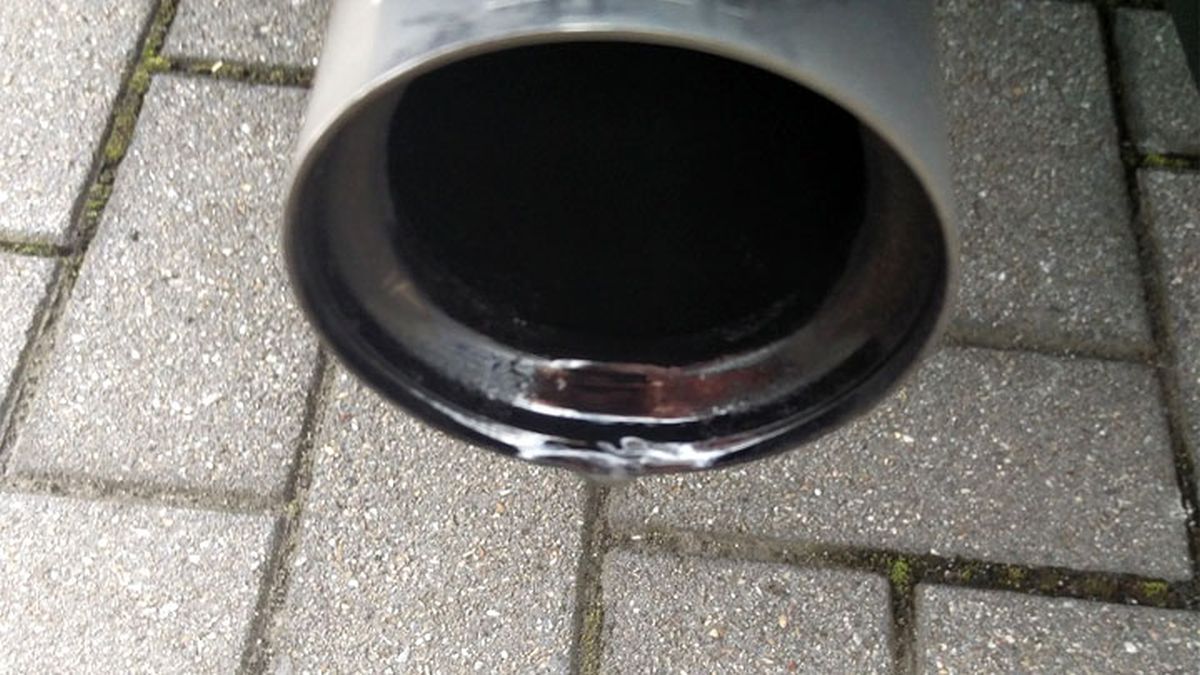
Causes of Oil Dripping From the Exhaust
Oil coming from a vehicle's exhaust is not a normal condition. If you notice oily liquid dripping from the tailpipe, it is important to determine whether the liquid is actually engine oil or simply water mixed with soot and exhaust deposits.
A small amount of clear water dripping from the exhaust can be completely normal, especially when the engine is cold. Combustion naturally produces water vapor, which can condense inside the exhaust system.
However, thick, dark, oily liquid accompanied by blue smoke, excessive oil consumption, or a strong burnt-oil smell can indicate an engine or turbocharger problem.
The cause can range from relatively simple issues to serious internal engine damage.
Is the Liquid Really Engine Oil?
Before diagnosing an engine problem, the liquid should be identified correctly.
Exhaust condensation can collect soot and carbon inside the exhaust system. When the engine is started, this mixture can come out as dark droplets and may look like oil.
Water condensation is more likely when:
-
The liquid is mostly clear.
-
It appears mainly during cold starts.
-
It disappears after the exhaust becomes hot.
-
There is no significant oil consumption.
-
There is no persistent blue smoke.
Actual oil contamination is more suspicious when:
-
The liquid feels noticeably oily.
-
It leaves a greasy residue.
-
The engine is consuming oil.
-
Blue or blue-gray smoke comes from the exhaust.
-
The exhaust has a strong burnt-oil smell.
-
Spark plugs become oily or heavily fouled.
-
The turbocharger is showing signs of oil leakage.
A simple visual inspection can provide clues, but it should not be used as the only diagnostic method.
Blue Smoke Is One of the Most Important Clues
If oil is reaching the combustion chamber and being burned, the exhaust may produce blue or blue-gray smoke.
The timing of the smoke can provide valuable diagnostic information.
Blue smoke immediately after starting can point toward oil entering the combustion chamber while the engine is sitting.
Blue smoke after prolonged idling may be associated with valve stem seals, valve guides, or other oil-control problems.
Blue smoke during acceleration can indicate piston-ring or cylinder-related problems, although turbocharger oil leakage can produce similar symptoms on turbocharged engines.
Blue smoke during deceleration followed by acceleration can also provide clues about valve-side oil leakage.
The exact behavior matters more than simply saying that "the car smokes."
Worn Piston Rings
One of the more serious causes of oil reaching the exhaust is excessive wear of the piston rings.
Piston rings help seal the combustion chamber and control the amount of oil remaining on the cylinder walls.
When oil-control rings or compression rings become worn, damaged, stuck, or contaminated with deposits, excessive oil can enter the combustion chamber.
The engine may then burn oil.
Typical symptoms can include:
-
Blue exhaust smoke
-
Increasing oil consumption
-
Low compression
-
Poor engine performance
-
Spark-plug fouling on gasoline engines
-
Increased crankcase pressure
-
Oil entering the combustion process
Severe ring problems can eventually cause major engine damage.
Stuck or Damaged Oil Control Rings
The piston does not have only one type of ring.
The oil control ring has an important role in regulating the amount of oil left on the cylinder wall.
If the oil control ring becomes stuck because of carbon deposits, the engine may start consuming significant amounts of oil even though the compression rings are not severely worn.
This can happen in engines that have experienced:
-
Long oil-change intervals
-
Incorrect engine oil
-
Excessive carbon deposits
-
Overheating
-
Poor maintenance
-
Extended operation under severe conditions
In some engines, oil consumption caused by stuck rings can be substantial without immediately causing extremely low compression.
Valve Stem Seals Can Allow Oil Into the Engine
Valve stem seals control the amount of lubricating oil that reaches the valve stem and guide area.
When these seals become hardened, cracked, worn, or damaged, oil can enter the combustion chamber.
A common pattern is blue smoke:
-
Immediately after startup
-
After the engine has been idling
-
After a long period of deceleration
-
When accelerating after an extended idle period
Valve stem seal problems can sometimes be confused with piston-ring wear.
The difference can often be determined through additional testing and by analyzing when the smoke occurs.
Worn Valve Guides
Valve guides keep the valves correctly aligned as they move inside the cylinder head.
Excessive guide-to-stem clearance can allow more oil to enter the combustion chamber.
When combined with worn valve stem seals, the problem can become more pronounced.
Possible symptoms include:
-
Oil consumption
-
Blue smoke
-
Misfires
-
Poor compression in some cases
-
Oil-fouled spark plugs
-
Increased combustion-chamber deposits
The actual valve guide clearance should be compared with the manufacturer's specification before deciding whether the cylinder head requires repair.
Turbocharger Oil Leakage
Turbocharger problems are another important cause, especially on turbocharged gasoline and diesel engines.
A turbocharger relies on engine oil for lubrication and cooling. If the turbocharger's bearing system or sealing arrangement develops a problem, oil can enter areas where it should not.
On the compressor side, oil can enter the intake system and eventually reach the engine.
On the turbine side, oil can enter the exhaust system directly.
A turbocharger-related oil problem may produce:
-
Blue smoke
-
Increased oil consumption
-
Oil in charge pipes
-
Oil accumulation in the intercooler
-
Reduced boost
-
Turbocharger noise
-
Poor acceleration
-
Exhaust-side oil contamination
A small oily film inside a turbocharged engine's intake system can sometimes be normal because of crankcase ventilation and oil vapor.
However, large quantities of liquid oil are not normal and should be investigated.
Diesel Engines Require Special Attention
Oil entering the intake system of a diesel engine can be particularly dangerous.
In severe cases, a diesel engine can begin burning engine oil as an uncontrolled fuel source. This condition is known as diesel runaway.
The engine may suddenly accelerate without the driver pressing the accelerator and may continue running even after the ignition is switched off.
A failed turbocharger is one possible cause.
If a diesel vehicle suddenly develops:
-
Uncontrolled high RPM
-
Heavy blue or gray smoke
-
Rapid oil consumption
-
Large amounts of oil in the intake system
the vehicle should not simply be restarted after the event.
A runaway engine can suffer severe mechanical damage from overspeed.
Excessive Engine Oil Level
Overfilling the engine with oil can also create problems.
When the oil level is significantly above the manufacturer's specified range, the crankshaft can contact the oil in some engine designs and cause aeration or increased oil mist.
Excess oil can also increase crankcase pressure and contribute to oil being drawn into the intake through the crankcase ventilation system.
The result can be increased oil consumption and smoke.
Therefore, always check the engine oil level correctly and compare it with the manufacturer's specified range.
PCV System Problems
The Positive Crankcase Ventilation (PCV) system removes crankcase gases and controls how those gases are routed back into the engine.
If the PCV valve or ventilation system becomes blocked, damaged, or stuck, crankcase pressure can change significantly.
This can cause:
-
Increased oil consumption
-
Oil entering the intake
-
Oil leaks from engine seals
-
Unstable idle
-
Increased crankcase pressure
-
Smoke from the exhaust in some cases
A faulty PCV system can sometimes look like a much more serious engine problem.
It should therefore be checked before dismantling the engine.
Excessive Crankcase Pressure
Engine blow-by naturally occurs to some degree because a small amount of combustion gas passes the piston rings.
The crankcase ventilation system is designed to manage these gases.
If blow-by becomes excessive because of worn piston rings, cylinder wear, or other internal engine problems, crankcase pressure can increase.
High crankcase pressure can force oil through seals and ventilation pathways.
Possible signs include:
-
Oil leaks
-
Oil consumption
-
Oil in the intake
-
Blue smoke
-
Increased pressure from the crankcase
-
Poor engine performance
A crankcase pressure test can help determine whether excessive pressure is present.
Oil Entering the Exhaust Through a Damaged Engine
In severe cases, engine oil can reach the exhaust because of major internal engine damage.
Possible causes include:
-
Broken piston rings
-
Damaged pistons
-
Cylinder-wall damage
-
Severe valve problems
-
Cracked components
-
Serious overheating
-
Major lubrication failure
These failures usually produce additional symptoms rather than only a few drops of liquid from the exhaust.
You may also notice:
-
Heavy smoke
-
Major oil consumption
-
Misfires
-
Loss of compression
-
Poor engine performance
-
Unusual engine noise
-
Difficult starting
At this point, further driving can increase the damage.
Can a Head Gasket Cause Oil From the Exhaust?
A head-gasket failure can allow fluids to move between areas that should remain separated.
However, oil dripping directly from the tailpipe is not a typical standalone symptom of a head-gasket failure.
A failed head gasket more commonly produces symptoms such as:
-
Coolant loss
-
White exhaust smoke
-
Coolant contamination
-
Overheating
-
Combustion gases entering the cooling system
-
Oil contamination by coolant
If coolant enters the combustion chamber, the exhaust may produce persistent white steam rather than typical blue oil smoke.
Therefore, the color and nature of the exhaust are important clues.
Why Does Water Come Out of the Exhaust?
This is one of the most common reasons people mistakenly think their car is leaking oil through the exhaust.
During combustion, hydrocarbons react with oxygen and produce carbon dioxide and water.
When the exhaust system is cold, water vapor can condense into liquid water.
The result can be visible droplets coming from the tailpipe.
This is especially common during:
-
Cold mornings
-
Short trips
-
High humidity
-
Cold weather
-
Frequent short-distance driving
A healthy vehicle can therefore produce a surprising amount of water from its exhaust.
If the droplets are clear and disappear once the exhaust system reaches operating temperature, there may be no problem at all.
Black Liquid From the Exhaust
Black liquid does not automatically mean engine oil.
Exhaust systems accumulate carbon and soot over time.
When condensation mixes with these deposits, the liquid can become dark or black.
This is particularly common with engines that produce more soot.
The important question is whether the liquid is actually greasy and whether other symptoms are present.
A black watery residue is very different from thick oily fluid accompanied by blue smoke and significant oil loss.
Can Rich Fuel Mixture Cause Oil-Like Exhaust Liquid?
An excessively rich fuel mixture can increase soot production and fuel contamination in the exhaust.
Unburned fuel can also enter the exhaust when combustion is incomplete.
This may produce a strong fuel smell and dark exhaust deposits.
A rich mixture can be caused by:
-
Faulty fuel injectors
-
Incorrect sensor readings
-
Excessive fuel pressure
-
MAF or MAP sensor problems
-
Oxygen sensor problems
-
Coolant temperature sensor problems
-
Ignition faults
-
EVAP system problems
A rich mixture does not normally mean that engine oil is being discharged through the tailpipe, but it can make the exhaust residue look oily or unusually dark.
Misfires Can Damage the Exhaust System
A misfiring engine can send unburned fuel into the exhaust.
This is particularly dangerous for vehicles equipped with catalytic converters.
Repeated misfires can cause excessive heat in the exhaust system and damage the catalytic converter.
Misfires can result from:
-
Faulty spark plugs
-
Ignition coils
-
Fuel injectors
-
Low compression
-
Valve problems
-
Incorrect fuel mixture
-
Sensor problems
If exhaust liquid is accompanied by a rough-running engine or a flashing check-engine light, the problem should be investigated promptly.
How to Determine Whether the Exhaust Is Really Contaminated With Oil
A proper diagnosis should not be based solely on looking at the tailpipe.
Start by checking the engine oil level.
If the oil level is dropping noticeably between services, investigate oil consumption.
Then observe the exhaust.
Pay attention to:
-
Smoke color
-
Smoke quantity
-
When the smoke appears
-
Engine temperature
-
Oil consumption
-
Coolant consumption
-
Engine performance
-
Exhaust smell
Also inspect the intake system on turbocharged engines.
Oil inside the intercooler or charge pipes can provide important evidence of a turbocharger or crankcase-ventilation problem, although some oil film can be normal.
Compression and Leak-Down Testing
If piston rings, cylinder wear, valves, or other internal engine problems are suspected, compression testing can provide useful information.
A leak-down test can provide even more detailed information because it helps identify where compression is escaping.
Depending on where air is heard during the test, technicians may be able to identify problems involving:
-
Piston rings
-
Intake valves
-
Exhaust valves
-
Head gasket
-
Cylinder sealing
These tests should be interpreted according to the engine manufacturer's specifications.
Check the Turbocharger
On turbocharged engines, the turbocharger should be inspected if there is significant oil consumption or blue smoke.
The technician may check:
-
Turbo shaft condition
-
Compressor wheel
-
Turbine area
-
Oil supply and drain lines
-
Intake pipes
-
Intercooler
-
Charge-air system
-
Boost pressure
The presence of some oil mist in the intake does not automatically mean the turbocharger has failed.
The amount of oil, shaft condition, smoke behavior, and other evidence must be considered together.
Check the PCV System
The crankcase ventilation system should also be inspected.
A blocked or malfunctioning PCV system can increase crankcase pressure and push oil into the intake.
The diagnosis may include:
-
PCV valve inspection
-
Ventilation hose inspection
-
Crankcase pressure measurement
-
Intake inspection
-
Oil separator inspection where equipped
Correcting a ventilation problem can sometimes resolve oil consumption without requiring major engine repairs.
When Is Oil Dripping From the Exhaust Serious?
A few drops of watery residue during a cold start are usually not cause for concern.
The situation becomes much more serious when several symptoms appear together.
Pay particular attention to:
-
Thick oily liquid
-
Persistent blue smoke
-
Rapid oil consumption
-
Low engine oil level
-
Turbocharger noise
-
Loss of power
-
Heavy crankcase pressure
-
Engine misfires
-
Oil inside the intake or intercooler
-
Severe exhaust smoke
-
Uncontrolled diesel RPM
These symptoms warrant prompt inspection.
Should You Continue Driving?
If the only symptom is a small amount of clear water from the exhaust during a cold start, normal driving is generally not an issue.
But if you have confirmed oil contamination together with blue smoke or rapidly falling oil level, continued driving can be risky.
Low engine oil level can cause lubrication failure.
If oil is entering the combustion chamber, continued operation can damage:
-
Catalytic converter
-
Turbocharger
-
Spark plugs
-
Oxygen sensors
-
Pistons
-
Cylinder walls
-
Bearings
-
Other engine components
A diesel showing signs of runaway is an emergency situation and should not be treated as a normal oil-consumption problem.
Final Thoughts
Oil-like liquid coming from an exhaust pipe does not automatically mean that the engine is severely damaged. In many cases, what looks like oil is actually condensed water mixed with soot and exhaust deposits.
The situation becomes more concerning when the liquid is genuinely greasy and is accompanied by blue smoke, oil consumption, poor engine performance, or turbocharger symptoms.
Possible causes include worn or stuck piston rings, valve stem seals, excessive valve-guide clearance, PCV problems, excessive crankcase pressure, turbocharger oil leakage, or serious internal engine damage.
The correct diagnosis depends heavily on the engine type and the exact symptoms.
Instead of immediately replacing engine components, the most effective approach is to check the oil level and condition, observe the exhaust smoke, inspect the crankcase ventilation system, examine the turbocharger on turbocharged engines, and perform compression or leak-down testing when internal engine wear is suspected.
Most importantly, do not confuse normal exhaust condensation with engine oil leakage. Understanding the difference can prevent unnecessary repairs while also helping identify serious engine problems before they become much more expensive.