TR
TR EN
EN

Why Does Gasoline Get Into Engine Oil?
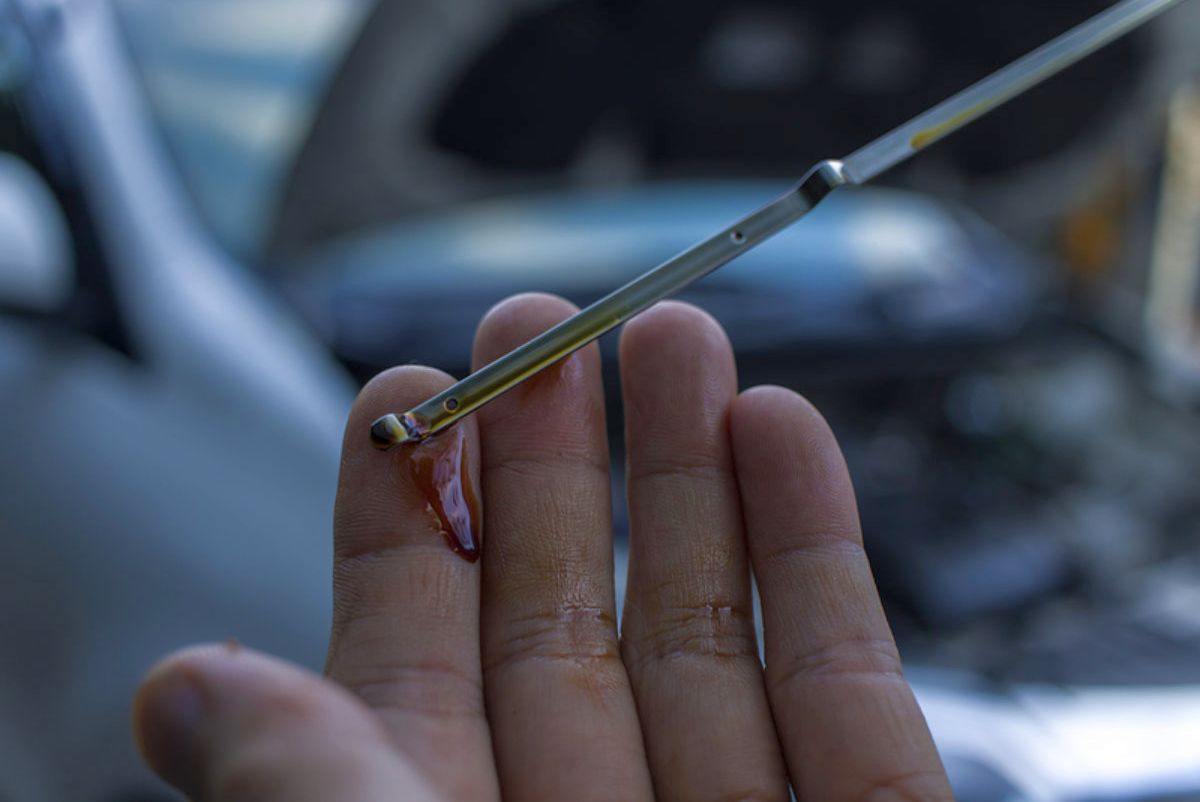
Gasoline in engine oil is a serious problem that should not be ignored. Engine oil is designed to lubricate bearings, pistons, cylinder walls, camshafts, timing components, and other moving parts. When gasoline enters the crankcase and mixes with the oil, it can reduce the oil's viscosity and weaken its ability to protect the engine.
In mild cases, fuel contamination may cause increased oil consumption, unusual oil level changes, or a noticeable gasoline smell from the dipstick. In severe cases, the diluted oil can lead to accelerated bearing, piston, camshaft, and timing-component wear.
The important question is not simply why the oil smells like gasoline, but how the fuel is getting into the crankcase and whether the engine has already been affected.
What Happens When Gasoline Mixes With Engine Oil?
Engine oil needs to maintain an appropriate viscosity and lubrication film under different temperatures and loads.
Gasoline is much thinner and behaves very differently from engine oil.
When gasoline enters the crankcase, it can dilute the lubricant. This may result in:
-
Reduced oil viscosity
-
Weaker lubrication
-
Lower oil-film strength
-
Increased friction
-
Accelerated bearing wear
-
Increased piston and cylinder wear
-
Timing-chain and tensioner problems
-
Increased oil consumption
-
Possible low oil-pressure problems
-
Increased engine noise
The severity depends on how much fuel has entered the oil and how long the vehicle has been operated in that condition.
How Can You Tell If Gasoline Is Mixed With the Oil?
One of the first clues can be the smell.
If you remove the dipstick and the engine oil has a strong gasoline odor, fuel contamination should be considered.
Other warning signs can include:
-
Engine oil level unexpectedly increasing
-
Oil becoming unusually thin
-
Strong fuel smell from the crankcase
-
Rough running
-
Hard starting
-
Misfires
-
Poor fuel economy
-
Check engine light
-
Excessive exhaust emissions
-
Oil-pressure problems
-
Engine running excessively rich
However, smell alone does not determine the severity of fuel dilution.
The amount of gasoline in the oil should ideally be confirmed through appropriate testing.
Why Does Gasoline Enter the Engine Oil?
Gasoline can reach the crankcase when fuel enters the combustion chamber but does not burn completely.
Some of that fuel can pass between the piston rings and cylinder wall during the combustion process.
This is often referred to as fuel wash or blow-by-related fuel dilution.
Under normal operation, a small amount of fuel contamination can occur, particularly during certain operating conditions. The engine's crankcase ventilation system and normal oil service help manage small amounts.
The problem occurs when fuel contamination becomes excessive.
Common causes include:
-
Leaking fuel injectors
-
Excessive fuel enrichment
-
Repeated short trips
-
Failed thermostat or coolant-temperature sensor
-
Misfires
-
Poor combustion
-
Excessive idling
-
High-pressure fuel-system problems
-
Faulty fuel-pressure regulation
-
Certain direct-injection operating conditions
-
Piston-ring or cylinder problems
A Leaking Fuel Injector Can Dilute Engine Oil
A leaking injector is one of the most important causes to investigate.
A fuel injector is supposed to deliver a controlled quantity of fuel at the correct time.
If an injector does not close properly, it can continue leaking fuel after the injection event has ended.
Depending on the fuel system and severity of the leak, excess fuel can enter the combustion chamber.
Some of that fuel may eventually pass the piston rings and reach the crankcase.
Possible symptoms include:
-
Strong gasoline smell
-
Hard starting
-
Rough idle
-
Misfire
-
Increased fuel consumption
-
Black or sooty exhaust
-
Rich mixture codes
-
Rising engine-oil level
A severely leaking injector can cause significant fuel dilution in a relatively short period.
Can a Stuck-Open Injector Put Gasoline Into the Oil?
Yes.
An injector that remains open or leaks excessively can deliver far more fuel than the engine requires.
The excess fuel may not burn completely.
Some can remain on the cylinder walls and migrate past the piston rings into the crankcase.
In severe cases, the engine may also become difficult to start because one or more cylinders are heavily flooded.
A stuck-open injector should be treated as an urgent fuel-system problem.
Can Direct Injection Cause Fuel Dilution?
Yes.
Gasoline direct-injection engines can experience fuel dilution under certain conditions.
GDI injectors spray fuel directly into the combustion chamber, and the injection strategy can vary considerably depending on engine temperature, load, RPM, and operating mode.
During cold starts and some other conditions, the engine may use additional fuel.
Some of this fuel can reach the cylinder walls and pass the piston rings.
This does not mean that all GDI engines have a fuel-dilution problem. The amount depends on engine design, calibration, operating conditions, oil specification, and maintenance.
Why Is Fuel Dilution More Common During Cold Starts?
A cold engine does not vaporize gasoline as efficiently as a fully warmed engine.
The ECU may therefore command additional fuel during cold starting and warm-up.
Some of that fuel can condense on relatively cold cylinder surfaces.
A portion can then migrate past the piston rings.
As the engine reaches operating temperature, fuel vaporization and combustion become more efficient, reducing this effect.
This is one reason frequent cold starts and very short trips can contribute to fuel dilution.
Can Short Trips Cause Gasoline to Enter the Oil?
Yes.
Frequent short-distance driving can increase fuel contamination.
For example, a vehicle that is repeatedly driven only a few kilometers may:
-
Start from cold.
-
Enrich the mixture during warm-up.
-
Be switched off before reaching full operating temperature.
-
Repeat the same process again later.
The engine may therefore accumulate small amounts of fuel in the oil without getting enough time at operating temperature to evaporate or otherwise reduce the contamination.
This is particularly relevant to vehicles used primarily for short urban trips.
Can Excessive Idling Cause Fuel Dilution?
It can contribute.
Long periods of idling can create conditions in which combustion is less efficient than during normal driving.
If the engine is cold or operating under conditions that require enrichment, fuel contamination can increase.
Vehicles used for extended idling should therefore follow an appropriate maintenance schedule and use the oil specification recommended by the manufacturer.
Can Engine Misfire Cause Gasoline to Enter the Oil?
Yes.
A misfiring cylinder may receive fuel that does not burn properly.
Possible causes include:
-
Worn or fouled spark plugs
-
Faulty ignition coils
-
Injector problems
-
Incorrect fuel delivery
-
Compression problems
-
Sensor faults
-
Air-fuel mixture problems
Unburned fuel can reach the cylinder walls and migrate into the crankcase.
This is why a persistent misfire should not be ignored simply because the engine continues to run.
Can a Rich Fuel Mixture Cause Gasoline in Engine Oil?
Yes.
A rich mixture means that the engine is receiving more fuel than necessary for the current operating condition.
Temporary enrichment can be completely normal during:
-
Cold starting
-
Heavy acceleration
-
High engine load
The problem is excessive or persistent enrichment.
Possible causes include:
-
Faulty MAF sensor
-
Incorrect MAP sensor readings
-
Faulty coolant-temperature sensor
-
Oxygen or air-fuel sensor problems
-
Fuel-pressure problems
-
Leaking injectors
-
EVAP system faults
-
ECU or wiring problems
-
Ignition problems
A rich mixture can increase the amount of unburned fuel available to enter the crankcase.
Can a Faulty Coolant Temperature Sensor Cause Fuel to Enter the Oil?
Yes.
The ECU uses coolant-temperature information to determine how much fuel the engine needs.
If the sensor incorrectly reports that the engine is colder than it actually is, the ECU may continue enriching the mixture.
This can result in:
-
Increased fuel consumption
-
Rough running
-
Poor emissions
-
Difficult warm-up behavior
-
Excessive fuel delivery
-
Fuel dilution of engine oil
A thermostat that remains open or causes the engine to run too cool can produce similar effects by preventing the engine from reaching its intended operating temperature.
Can a Bad Thermostat Cause Gasoline in Engine Oil?
Indirectly, yes.
A thermostat stuck open can cause the engine to operate below its intended temperature.
The ECU may continue using warm-up strategies longer than it should.
If the engine is frequently operated below normal temperature, fuel evaporation from the oil may also be reduced.
The thermostat is therefore worth checking when fuel dilution occurs together with an engine that runs unusually cool.
Can a Faulty Fuel Pressure Regulator Cause Gasoline in the Oil?
It can.
If fuel pressure is significantly higher than intended, the injectors may deliver more fuel than expected.
Depending on the fuel-system design, excessive pressure can contribute to:
-
Rich operation
-
Poor fuel economy
-
Difficult starting
-
Misfires
-
Increased fuel dilution
Modern vehicles may use electronic fuel-pressure control rather than a traditional vacuum-operated regulator, so the exact diagnostic approach depends on the engine.
High-Pressure Fuel Pump Problems
Gasoline direct-injection engines use a high-pressure fuel pump to generate the pressure required for direct injection.
A problem with fuel-pressure control can affect injection quantity and mixture formation.
However, not every high-pressure fuel-pump fault causes fuel to enter the oil.
The actual fuel-pressure data should be compared with the manufacturer's specified or commanded values.
Can a Faulty EVAP System Cause Gasoline to Enter the Oil?
The EVAP system controls fuel vapors from the fuel tank.
A faulty purge valve can allow excessive fuel vapor into the intake under conditions where it should not.
A stuck-open purge valve can cause:
-
Hard starting
-
Rough idle
-
Rich mixture
-
Stalling
-
Fuel-trim abnormalities
Under certain conditions, this can contribute indirectly to fuel dilution.
However, an EVAP fault should not automatically be blamed for gasoline in the oil without checking the actual fuel trims and operating conditions.
Can Worn Piston Rings Cause Fuel to Enter Engine Oil?
Yes, but the relationship is slightly different.
Piston rings are designed to control combustion gases and oil while maintaining the necessary seal between the piston and cylinder.
If the rings or cylinder walls are significantly worn, more combustion gases and unburned fuel can pass into the crankcase.
This can increase fuel contamination and crankcase blow-by.
Possible accompanying symptoms include:
-
Excessive oil consumption
-
Blue exhaust smoke
-
Low compression
-
High crankcase pressure
-
Heavy blow-by
-
Reduced engine performance
However, fuel dilution does not automatically mean the piston rings are worn.
Fuel-system and operating-condition problems are often easier and more appropriate to investigate first.
Can Cylinder Wall Fuel Wash Damage the Engine?
Yes.
Excessive fuel reaching the cylinder walls can remove or dilute the oil film that normally lubricates the piston and cylinder interface.
This is called fuel wash.
When lubrication is reduced, friction and wear can increase.
In severe cases, this can contribute to:
-
Piston-skirt wear
-
Cylinder-wall wear
-
Ring wear
-
Loss of compression
-
Increased blow-by
-
Increased oil consumption
The longer the engine operates under severe fuel-dilution conditions, the greater the potential for damage.
Can Gasoline in Oil Cause Low Oil Pressure?
It can.
Engine oil pressure depends partly on oil viscosity and the clearances within the lubrication system.
If gasoline significantly reduces oil viscosity, the oil may become too thin to maintain the intended pressure, particularly when the engine is fully warm.
This can be especially noticeable at idle.
Low oil pressure can threaten:
-
Main bearings
-
Connecting-rod bearings
-
Camshaft bearings
-
Hydraulic valve components
-
Variable valve timing systems
-
Turbocharger bearings
A low oil-pressure warning should therefore never be ignored.
Can Gasoline in Engine Oil Damage Bearings?
Yes.
Bearings depend on a stable oil film to separate their surfaces from the crankshaft or other rotating components.
Fuel-diluted oil can have reduced viscosity and reduced load-carrying capability.
Under high load or high temperature, this can accelerate bearing wear.
Possible consequences include:
-
Bearing clearance changes
-
Knocking noises
-
Low oil pressure
-
Metallic debris
-
Crankshaft damage
-
Connecting-rod bearing failure
Severe fuel dilution can therefore become an expensive engine-repair problem.
Can Gasoline Make Engine Oil Level Rise?
Yes.
This is one of the most important warning signs.
Normally, the engine consumes a small amount of oil over time or maintains a relatively stable oil level between services.
If the dipstick level unexpectedly rises, fuel entering the crankcase is one possible explanation.
Other possibilities should also be considered, including:
-
Coolant contamination
-
Incorrect oil filling
-
Measurement differences
-
Fuel dilution
If the oil level is significantly above the maximum mark and smells strongly of gasoline, the engine should be inspected promptly.
Why Is the Oil Level Increasing Instead of Decreasing?
This can be confusing because many drivers associate engine problems with low oil.
However, an increasing oil level can mean that another fluid is entering the crankcase.
If gasoline enters the engine oil, the total volume inside the sump increases.
The dipstick may therefore show a higher level even though the engine has not gained any actual lubricating oil.
This is not a good thing.
The increased level can coexist with reduced lubrication quality.
What Does Fuel-Diluted Engine Oil Look Like?
Appearance alone is not a reliable diagnostic method.
Fuel-diluted oil may appear thinner than expected, but color is not a dependable way to determine gasoline contamination.
Used engine oil can naturally become dark.
The smell, oil-level change, operating symptoms, fuel consumption, and laboratory analysis are more useful.
Can You Test Engine Oil for Gasoline?
Yes.
Laboratory oil analysis can identify fuel dilution and provide a much more reliable measurement than smell alone.
An oil analysis can also provide information about:
-
Viscosity
-
Fuel dilution
-
Wear metals
-
Contaminants
-
Coolant contamination
-
Oil degradation
This can be particularly useful when the source of fuel contamination is difficult to determine.
Can a Gasoline Smell From the Dipstick Be Normal?
A very faint fuel odor does not necessarily mean that the engine has a serious problem.
Small amounts of fuel contamination can occur under normal operating conditions, particularly during cold starts and short trips.
A strong gasoline smell combined with a rising oil level or very thin oil, however, should not be dismissed.
The severity matters.
Can Gasoline in the Oil Damage a Turbocharger?
Yes.
Turbocharger bearings depend on proper oil flow and lubrication.
If the oil becomes excessively diluted, the lubrication film can become weaker.
This can increase wear in the turbocharger bearing system.
Possible consequences include:
-
Turbocharger shaft wear
-
Oil leakage
-
Increased shaft play
-
Turbo noise
-
Reduced boost
-
Premature turbocharger failure
A turbocharged engine with significant fuel dilution therefore deserves prompt attention.
Can Gasoline in Engine Oil Cause Timing Chain Problems?
It can contribute to timing-system wear.
Modern engines may use hydraulic timing-chain tensioners and variable valve timing systems that depend on correct oil pressure and oil properties.
Fuel-diluted oil can reduce the lubricant's ability to maintain the required hydraulic and lubricating performance.
Possible symptoms can include:
-
Timing-chain noise
-
Rattling during startup
-
Variable valve timing faults
-
Increased chain and guide wear
Again, this does not mean that every timing-chain problem is caused by fuel dilution.
Does Changing the Oil Fix the Problem?
Changing the oil is necessary if significant fuel contamination has occurred, but an oil change alone does not solve the underlying problem.
For example:
If a fuel injector is leaking and you simply replace the engine oil, the new oil can become contaminated again.
The correct approach is:
Find the source of the fuel → repair the fault → replace the contaminated oil and filter.
If the engine has experienced severe fuel dilution, additional inspection may be necessary to determine whether lubrication-related damage has occurred.
Should You Drive a Car With Gasoline in the Oil?
If there is strong evidence of significant fuel dilution, unnecessary driving should be avoided.
This is particularly important when:
-
Oil level is above the maximum mark
-
Oil smells strongly of gasoline
-
Oil appears unusually thin
-
Engine has a misfire
-
Oil-pressure warning is illuminated
-
Engine is making unusual noises
-
Fuel consumption has suddenly increased
Continuing to operate the engine with severely diluted oil can turn a relatively simple fuel-system repair into a major engine repair.
What Should Be Checked First?
A logical diagnostic process can prevent unnecessary parts replacement.
Start with the engine oil
Check the level and smell. If the level has risen unexpectedly, document how much.
Scan for diagnostic trouble codes
Look for:
-
Rich-mixture codes
-
Misfire codes
-
Fuel-pressure codes
-
Injector-related faults
-
Oxygen or air-fuel sensor codes
-
EVAP-related codes
Check fuel trims
Negative fuel trims can support an excessively rich condition, although the data must be interpreted according to operating conditions.
Check coolant temperature
Verify that the engine reaches and maintains its normal operating temperature.
Inspect the injectors
Injector leak-down or balance testing can help identify abnormal fuel delivery.
Check fuel pressure
Compare actual pressure with the manufacturer's specified or commanded values.
Check ignition and combustion
A misfiring cylinder can contribute significantly to fuel dilution.
Check the EVAP system
A stuck-open purge valve can create an overly rich condition.
Check compression when appropriate
If fuel-system and control-system checks do not explain the problem, mechanical condition should be investigated.
What Is the Most Common Cause?
There is no single cause that applies to every engine.
However, the most important areas to investigate are:
-
Leaking or faulty fuel injectors
-
Persistent rich operation
-
Repeated short trips
-
Cold-start fuel enrichment
-
Misfires
-
Incorrect coolant-temperature information
-
Thermostat problems
-
Fuel-pressure faults
-
High-pressure fuel-system problems
-
EVAP purge problems
-
Mechanical wear in severe cases
The engine's fuel system and operating conditions should be investigated before assuming major internal engine damage.
How Can Fuel Dilution Be Prevented?
Some fuel dilution is difficult to avoid completely, particularly during cold operation.
However, excessive contamination can often be reduced through proper maintenance.
Useful measures include:
-
Repairing misfires promptly
-
Replacing faulty injectors
-
Maintaining the correct thermostat
-
Using the correct engine oil specification
-
Avoiding unnecessary prolonged idling
-
Allowing the engine to reach normal operating temperature
-
Following the manufacturer's oil-change intervals
-
Addressing rich-mixture fault codes
-
Maintaining the fuel system
-
Avoiding repeated extremely short trips when practical
Vehicles that are used primarily for short journeys may require particular attention to oil condition.
What About Hybrid Engines?
Fuel dilution can also occur in hybrid vehicles.
In some hybrids, the gasoline engine may start and stop frequently and may spend significant time operating at relatively low temperature.
This can create conditions favorable to fuel contamination of the oil.
The maintenance strategy for a hybrid should therefore follow the manufacturer's specified oil-change and operating recommendations rather than assuming that frequent engine stop-start operation eliminates the issue.
Final Thoughts
Gasoline getting into engine oil is a problem that ranges from relatively minor fuel dilution caused by short trips and cold starts to serious contamination caused by leaking injectors, persistent rich operation, misfires, or fuel-system faults.
The most important warning signs are a strong gasoline smell from the oil, an unexpectedly rising oil level, unusually thin oil, increased fuel consumption, rough running, and persistent misfires.
Fuel contamination reduces the oil's ability to protect the engine. If the dilution becomes severe, it can contribute to accelerated wear of bearings, piston rings, cylinder walls, camshafts, timing components, and turbocharger bearings.
An oil change is important, but it should not be considered the complete repair. The reason gasoline entered the crankcase must be found and corrected first.
If the oil level has risen significantly or the oil smells strongly of gasoline, continuing to drive the vehicle can increase the risk of expensive engine damage. A proper diagnosis of the injectors, fuel pressure, mixture control, ignition system, coolant temperature, EVAP system, and—when necessary—the mechanical condition of the engine is the safest approach.