TR
TR EN
EN

What Is Engine Oil Pressure? What Causes High Oil Pressure?
Engine oil pressure is one of the most important indicators of an engine's lubrication system. The engine oil does much more than simply lubricate moving components. It also helps carry away heat, reduce friction, clean internal surfaces, protect components against corrosion, and operate certain hydraulic systems such as variable valve timing and hydraulic timing-chain tensioners.
For the lubrication system to work correctly, the engine needs an appropriate amount of oil pressure.
If oil pressure is too low, critical components may not receive sufficient lubrication. If oil pressure is excessively high, it can indicate a restriction, incorrect oil viscosity, a faulty pressure-control system, or another problem within the lubrication circuit.
It is therefore important to understand that high oil pressure is not necessarily a sign of a healthy engine.
What Is Engine Oil Pressure?
Engine oil pressure is the pressure generated as the oil pump circulates engine oil through the lubrication system while the oil encounters resistance through bearings, passages, filters, and other components.
The oil pump creates flow, while the resistance within the lubrication system contributes to the pressure that is measured.
Oil pressure can vary considerably depending on:
-
Engine RPM
-
Oil temperature
-
Oil viscosity
-
Engine design
-
Bearing clearances
-
Oil pump condition
-
Oil pressure regulator operation
-
Oil filter condition
For this reason, there is no single oil pressure value that is correct for every engine.
An engine may have relatively high oil pressure when cold and lower pressure after the oil reaches operating temperature. This can be completely normal.
How Does the Engine Oil System Work?
The lubrication cycle generally begins in the oil pan, where engine oil is stored.
The oil pump draws oil from the oil pan through a pickup tube and strainer. The pump then sends pressurized oil through the lubrication system.
Depending on the engine design, oil may pass through:
-
The oil filter
-
Main oil galleries
-
Main crankshaft bearings
-
Connecting rod bearings
-
Camshaft bearings
-
Valve-train components
-
Turbocharger bearings
-
Variable valve timing components
-
Hydraulic timing-chain tensioners
-
Other oil-dependent mechanisms
After lubricating the components, the oil drains back into the oil pan and the cycle begins again.
What Is Normal Engine Oil Pressure?
There is no universal oil pressure specification for all engines.
The correct value depends on the manufacturer's design and should be checked against the specifications for the specific engine.
Oil pressure is also affected by temperature and RPM.
A cold engine can show significantly higher pressure because cold oil is more viscous.
As the engine warms up, the oil becomes thinner and pressure normally decreases.
At higher engine speeds, the oil pump generally moves more oil and pressure may increase until the pressure-control system limits it.
Therefore, seeing high oil pressure immediately after a cold start does not automatically mean there is a problem.
What Causes High Engine Oil Pressure?
High oil pressure can have several causes.
Some of the most common include:
-
Incorrectly specified engine oil
-
Oil that is too thick
-
Faulty oil pressure relief valve
-
Stuck oil pressure regulator
-
Restricted oil passage
-
Blocked or restricted oil filter
-
Incorrect oil filter
-
Oil pump problems
-
Excessive engine oil level
-
Cold operating conditions
-
Sludge or internal deposits
-
Faulty oil pressure sensor
-
Wiring or electrical problems
-
Incorrect pressure measurement
The correct diagnosis depends on whether the high pressure is real or simply being reported incorrectly by a sensor or gauge.
Oil That Is Too Thick
Using engine oil with a viscosity that is significantly higher than specified can increase oil pressure, especially when the engine is cold.
For example, an engine designed for a relatively low-viscosity oil may produce higher-than-expected pressure if a substantially thicker oil is installed.
Thicker oil does not automatically provide better engine protection.
Modern engines are designed around specific oil flow characteristics, clearances, temperatures, and lubrication requirements.
Using the manufacturer's specified oil grade and performance standard is therefore important.
Cold Engine Oil
High oil pressure during a cold start can be completely normal.
Cold engine oil is thicker and does not flow as easily through the lubrication passages.
As the engine reaches operating temperature, the oil becomes less viscous and pressure normally falls.
The important question is whether the pressure decreases to the manufacturer's specified range as the engine warms up.
If oil pressure remains excessively high even after the engine reaches normal operating temperature, further diagnosis may be necessary.
Faulty Oil Pressure Relief Valve
The oil pump can generate more pressure than the engine needs under certain operating conditions.
A pressure relief or regulating valve is therefore used to control maximum oil pressure.
If this valve becomes stuck closed or cannot regulate pressure correctly, oil pressure can rise above the expected level.
Possible causes include:
-
Dirt
-
Sludge
-
Mechanical wear
-
Spring failure
-
Incorrect assembly
-
Deposits
-
Component damage
A malfunctioning pressure-control valve can produce unusually high oil pressure, especially at higher engine speeds.
Restricted Oil Passage
Oil passages inside an engine are designed to deliver oil to specific components.
If a passage becomes restricted by sludge, varnish, debris, or another contaminant, oil flow can be affected.
A restriction can produce abnormal pressure readings in certain areas of the lubrication system.
However, the relationship between a blockage and overall oil pressure is not always straightforward.
A restriction may increase pressure before the blockage while reducing oil supply beyond it.
This is why simply seeing high pressure at one measurement point does not necessarily mean every engine component is receiving excessive oil.
Sludge and Deposits
Engine oil that has been neglected can degrade and form sludge or varnish.
Possible contributors include:
-
Extended oil-change intervals
-
Excessive engine heat
-
Poor-quality oil
-
Incorrect oil specification
-
Fuel contamination
-
Coolant contamination
-
Severe operating conditions
Sludge can restrict oil passages and interfere with pressure-control components.
A dirty lubrication system can therefore produce complicated oil pressure symptoms.
Blocked or Incorrect Oil Filter
The oil filter removes contaminants from engine oil.
If the filter becomes heavily restricted, oil flow can be affected.
Many oil filters also incorporate a bypass valve so that the engine can continue receiving oil if the filter becomes excessively restricted.
The exact design varies by engine and filter.
An incorrect filter with an unsuitable bypass-valve specification can potentially affect lubrication behavior.
For this reason, using the correct oil filter for the engine is important.
Oil Pump Problems
The oil pump is responsible for generating oil flow, but a problem with the pump can produce unusual pressure behavior.
A worn pump more commonly causes low oil pressure, but pressure problems can also occur if there is a malfunction in the pump's pressure-control mechanism.
Some modern oil pumps use variable-displacement designs that actively control oil flow according to engine operating conditions.
A problem with the pump or its control system can therefore produce abnormal pressure.
Excessive Engine Oil Level
Too much engine oil can create several lubrication problems.
An excessive oil level can allow the crankshaft and other rotating components to contact or aerate the oil.
This can lead to oil foaming and reduced lubrication quality.
In some situations, an incorrect oil level can also contribute to abnormal pressure or crankcase ventilation problems.
However, an excessively high oil level is not a simple or universal explanation for high oil pressure. It should be treated as one possible contributor rather than the automatic diagnosis.
The oil level should always be checked according to the manufacturer's specified procedure.
Faulty Oil Pressure Sensor
Sometimes the engine oil pressure is actually normal, but the sensor reports an incorrect value.
A faulty oil pressure sensor can cause:
-
High oil pressure readings
-
Low oil pressure readings
-
Fluctuating readings
-
Oil pressure warning lights
-
Incorrect dashboard information
-
Stored diagnostic trouble codes
This is why the sensor should not automatically be replaced based solely on a dashboard reading.
Actual oil pressure should be verified with an appropriate mechanical pressure gauge when a genuine pressure problem is suspected.
Electrical or Wiring Problems
Modern vehicles may use electronic oil pressure sensors that communicate pressure information to the engine control system.
A damaged wire, poor connector, corrosion, short circuit, or ground problem can produce an incorrect signal.
A scan tool may show an abnormal oil pressure value even though actual mechanical pressure is normal.
Electrical diagnosis is therefore important when the reported pressure does not match mechanical measurements.
Can High Oil Pressure Damage an Engine?
Yes.
Although high oil pressure may initially appear less dangerous than low oil pressure, excessive pressure can still create problems.
Potential consequences include:
-
Oil filter damage
-
Oil seal leakage
-
Gasket leakage
-
Excessive stress on lubrication components
-
Incorrect operation of hydraulic systems
-
Increased oil temperature
-
Abnormal oil flow
-
Damage to pressure-control components
The actual risk depends on how high the pressure is, how long it remains high, and the specific engine design.
Extremely high pressure should not be ignored.
High Oil Pressure vs. Low Oil Pressure
These two conditions are not simply opposites in terms of diagnosis.
Low oil pressure can indicate:
-
Low oil level
-
Oil leakage
-
Worn bearings
-
Excessive bearing clearance
-
Worn oil pump
-
Restricted pickup
-
Incorrect oil
-
Excessive oil temperature
High oil pressure can indicate:
-
Excessively thick oil
-
Cold oil
-
Restricted oil flow
-
Pressure-control valve problems
-
Oil filter problems
-
Sludge
-
Pump control problems
-
Incorrect sensor readings
Both conditions require proper diagnosis because both can indicate lubrication-system problems.
Why Is Oil Pressure Higher at High RPM?
Oil pump speed generally increases with engine speed.
As RPM rises, the pump can move more oil through the lubrication system.
This can cause oil pressure to increase.
However, the lubrication system normally has a pressure-control mechanism that prevents pressure from increasing indefinitely.
If pressure continues rising beyond the manufacturer's specified range, the pressure-control system may not be functioning correctly, or another restriction may exist.
Why Is Oil Pressure High When the Engine Is Cold?
This is often normal.
Cold oil has higher viscosity and encounters greater resistance as it flows through the engine.
As the oil warms up, its viscosity decreases and oil pressure generally drops.
The important consideration is whether the pressure returns to the correct range after warm-up.
If the pressure remains unusually high when the engine is fully warm, the system should be investigated.
Can the Oil Filter Cause High Oil Pressure?
A heavily restricted oil filter can affect oil flow and pressure.
However, many engines are designed with an oil filter bypass mechanism to maintain oil supply if the filter becomes excessively restricted.
Therefore, a blocked filter does not always produce a straightforward high-pressure condition.
An incorrect filter, a faulty bypass valve, or a filter that does not meet the engine manufacturer's specification can create abnormal lubrication behavior.
Using the correct filter is therefore essential.
What Are the Symptoms of High Oil Pressure?
High oil pressure does not always produce obvious symptoms.
Depending on the vehicle, possible signs include:
-
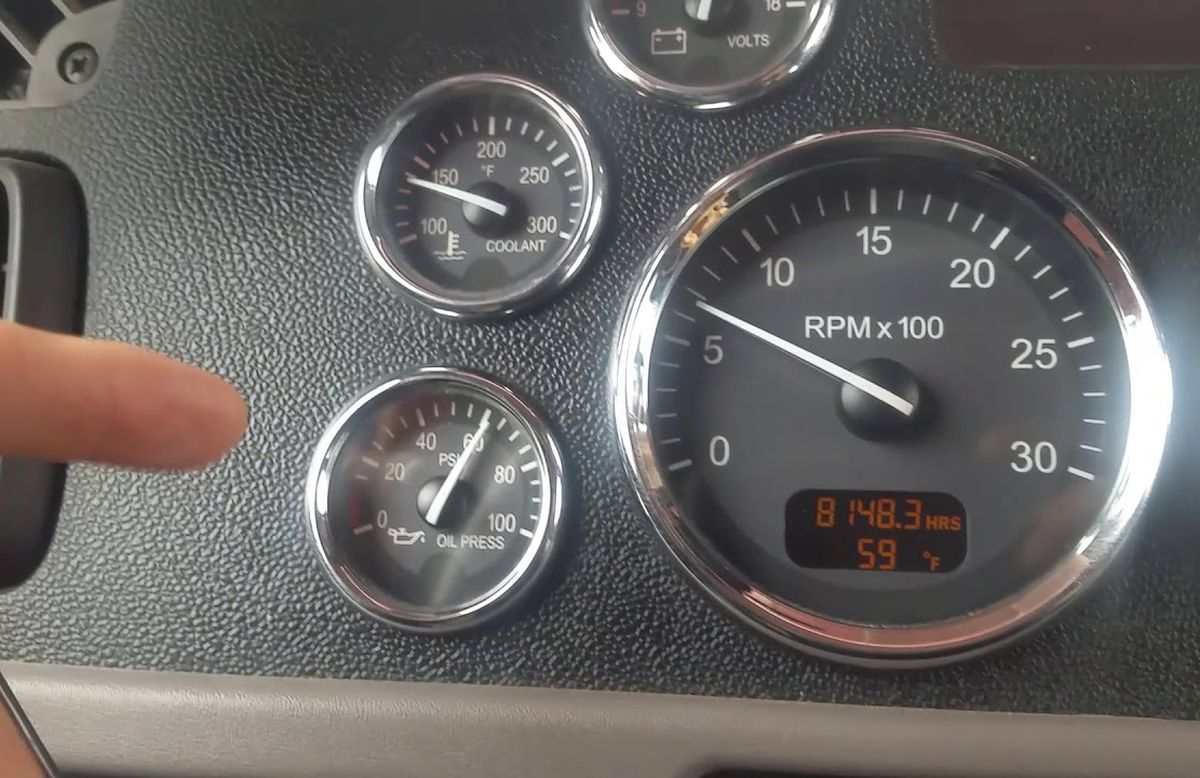
High reading on an oil pressure gauge
-
Oil pressure warning or diagnostic message
-
Oil leaks
-
Oil filter leakage
-
Oil seal leakage
-
Increased oil consumption
-
Abnormal hydraulic-system operation
-
Diagnostic trouble codes
-
Unusual engine behavior
In some vehicles, there may be no noticeable symptoms until a component is damaged.
Can High Oil Pressure Cause an Oil Leak?
It can contribute to leakage if the pressure becomes excessively high or if a pressure-control problem causes abnormal pressure in parts of the lubrication system.
However, most oil leaks are caused by damaged seals, gaskets, loose components, worn seals, excessive crankcase pressure, or other mechanical problems.
An oil leak should therefore not automatically be blamed on high oil pressure.
If oil pressure is genuinely excessive and an oil leak develops at the same time, both conditions should be investigated.
How Is High Oil Pressure Diagnosed?
The first and most important step is to determine whether the pressure is actually high.
A technician may compare the vehicle's reported oil pressure with a direct mechanical measurement.
The diagnostic process can include:
-
Checking engine oil level
-
Confirming the correct oil viscosity
-
Confirming the correct oil specification
-
Checking oil temperature
-
Measuring actual oil pressure
-
Comparing pressure at idle and higher RPM
-
Inspecting the oil filter
-
Checking the pressure relief valve
-
Inspecting the oil pump
-
Looking for sludge or restricted passages
-
Checking the oil pressure sensor
-
Testing wiring and connectors
-
Scanning for diagnostic trouble codes
Oil pressure should be evaluated at specified engine temperatures and RPMs rather than judged from one measurement alone.
What Should You Do If the Oil Pressure Is Too High?
If an oil pressure gauge shows an unusually high value or the vehicle displays an oil pressure-related warning, the condition should be investigated.
Start with simple checks:
Check the oil level.
Make sure the engine is neither underfilled nor significantly overfilled.
Verify the oil specification.
Confirm that the correct viscosity and performance standard were used.
Check whether the engine is cold or fully warm.
Cold-start pressure can naturally be much higher.
Verify the pressure mechanically.
If the dashboard or scan tool indicates abnormal pressure, actual pressure should be confirmed with an appropriate test instrument.
Inspect the pressure-control system.
If mechanical pressure is genuinely excessive, the relief valve, oil pump, filter, and lubrication passages should be investigated.
Is High Oil Pressure Better for the Engine?
No.
A common misconception is that higher oil pressure automatically means better lubrication.
The engine is designed to operate within a specific lubrication range.
The goal is not maximum pressure. The goal is adequate oil flow and pressure under all operating conditions.
Excessive pressure can indicate a problem, while insufficient pressure can prevent critical components from receiving adequate lubrication.
Correct oil pressure is therefore much more important than simply having a high oil pressure reading.
Final Thoughts
Engine oil pressure is essential for maintaining reliable lubrication, but higher oil pressure is not necessarily better.
High oil pressure can be caused by cold, highly viscous oil, incorrect oil viscosity, restricted oil passages, a faulty pressure relief valve, oil filter problems, sludge, oil pump control issues, or an inaccurate oil pressure sensor.
One of the most important diagnostic principles is to determine whether the pressure is genuinely high or whether the vehicle is simply reporting an incorrect value.
If high oil pressure is confirmed, the lubrication system should be inspected rather than assuming that the engine is receiving better protection.
Using the correct engine oil and filter, maintaining appropriate oil-change intervals, keeping the oil level within specification, and responding quickly to abnormal oil pressure readings can help protect the engine from expensive lubrication-system damage.