TR
TR EN
EN

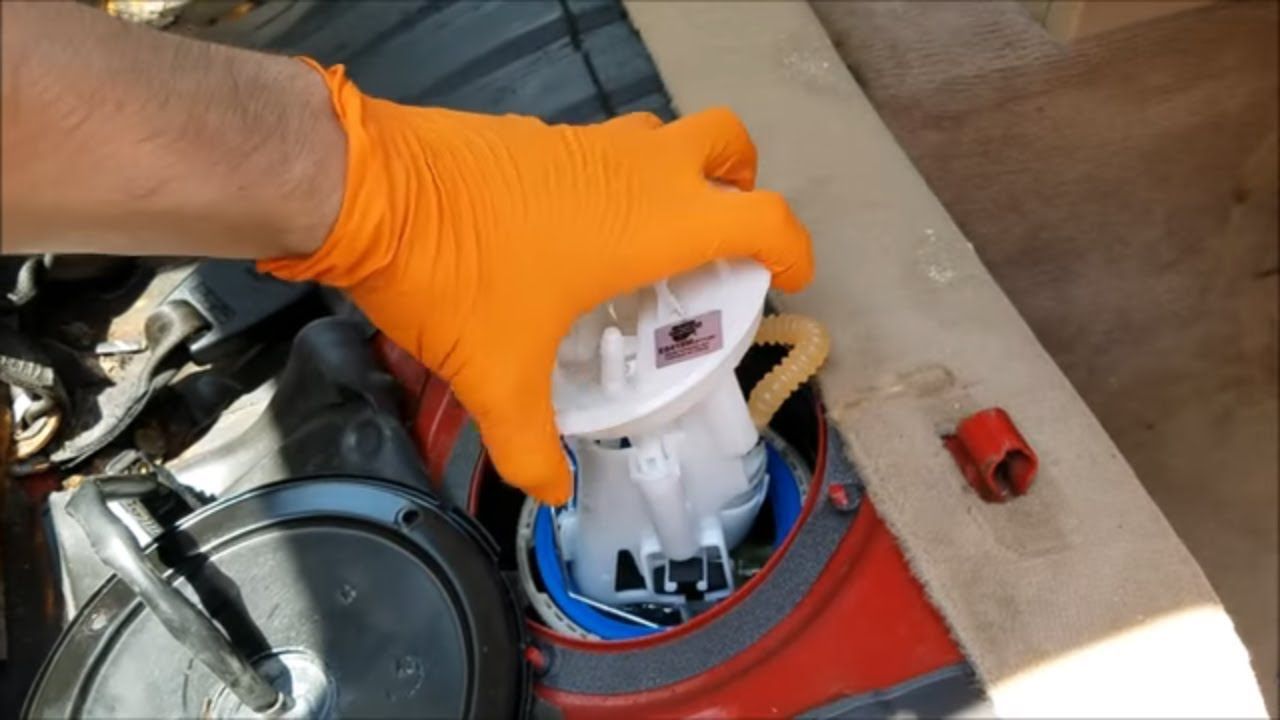
What Is an Electric Fuel Pump? What Are the Symptoms of Electric Fuel Pump Failure?
An electric fuel pump is one of the most important components of a modern vehicle's fuel system. Its primary job is to deliver fuel from the fuel tank to the engine at the pressure and flow rate required by the fuel system.
Most modern gasoline vehicles use an electric fuel pump located inside the fuel tank. Diesel vehicles and some gasoline engines can also use additional high-pressure pumps, depending on the fuel-injection system.
When the ignition is switched on, the fuel pump may briefly operate to build fuel pressure before the engine starts. Once the engine is running, the fuel pump continuously supplies fuel according to the engine's demand.
A properly functioning fuel pump is essential for stable engine operation. If the pump becomes weak or fails completely, the engine may become difficult to start, lose power, stall, or fail to start at all.
How Does an Electric Fuel Pump Work?
The electric fuel pump is powered by the vehicle's electrical system.
When the ignition is switched on, the engine control system typically activates the fuel-pump circuit through a relay or electronic control module. The pump begins operating and creates fuel pressure in the fuel system.
Depending on the vehicle, the system may include:
-
Fuel pump
-
Fuel tank
-
Fuel filter or strainer
-
Fuel pressure regulator
-
Fuel pressure sensor
-
Fuel lines
-
Fuel pump relay or control module
-
Fuel injectors
-
Engine control module
The pump draws fuel from the tank and pushes it toward the engine.
In many modern vehicles, the fuel pump is controlled according to engine load and fuel demand. Some vehicles use a fuel pump control module that varies pump speed rather than operating the pump at one constant speed.
Where Is the Electric Fuel Pump Located?
In most modern passenger cars, the electric fuel pump is installed inside the fuel tank.
The pump is usually part of a larger fuel-pump module that can contain:
-
Electric pump motor
-
Fuel level sensor
-
Fuel filter or strainer
-
Pressure regulator
-
Electrical connections
-
Fuel pickup components
Installing the pump inside the fuel tank allows the surrounding fuel to help cool the electric motor.
Some vehicles use an external fuel pump, while certain direct-injection engines have an additional high-pressure fuel pump mounted on or near the engine.
This distinction is important because a vehicle can have more than one fuel pump.
What Does an Electric Fuel Pump Do?
The electric fuel pump has several important functions.
Creates fuel pressure
The pump generates the pressure required by the vehicle's fuel-injection system.
Maintains fuel flow
The engine needs a continuous supply of fuel. The pump must provide sufficient flow even when engine load increases.
Supports engine starting
The pump builds fuel pressure before or during engine cranking. If pressure does not reach the required level, starting can become difficult.
Responds to engine demand
On some vehicles, the pump's speed is electronically controlled according to fuel demand.
During light-load operation, the system may require less fuel flow. During heavy acceleration, the demand can increase significantly.
What Are the Symptoms of a Failing Electric Fuel Pump?
A failing fuel pump does not always stop working suddenly.
In many cases, the pump becomes progressively weaker before it fails completely.
Common symptoms include:
-
Difficult starting
-
Extended cranking
-
Engine stalling
-
Loss of power
-
Hesitation during acceleration
-
Engine misfires
-
Rough running
-
Poor fuel economy
-
Engine surging
-
Fuel pressure problems
-
A whining sound from the fuel tank
-
Check Engine Light
-
No-start condition
The exact symptoms depend on whether the pump is completely dead or simply unable to maintain adequate pressure and flow.
1. Difficult Starting
One of the earliest signs of a weak fuel pump can be difficult starting.
The engine may crank normally but take longer than usual to start.
You may notice that the problem is worse after the vehicle has been parked for several hours or overnight.
A weak pump may require more time to build the necessary fuel pressure.
However, difficult starting does not automatically mean the fuel pump is defective.
Other possible causes include:
-
Weak battery
-
Faulty starter
-
Fuel-pressure regulator
-
Leaking fuel injector
-
Crankshaft position sensor
-
Camshaft position sensor
-
Ignition problem
-
Fuel-pressure leak
-
Faulty fuel-pump relay
A fuel-pressure test can help distinguish between these possibilities.
2. Engine Stalling
A failing fuel pump can cause the engine to stall while driving.
If the pump cannot maintain sufficient fuel pressure, the engine may suddenly lose the fuel supply it needs to continue running.
Stalling can be particularly noticeable when:
-
Accelerating
-
Driving uphill
-
Carrying a heavy load
-
Driving at high engine speed
-
Operating the vehicle with a low fuel level
A weak pump may work adequately at low demand but fail to provide enough fuel when the engine requires more.
3. Loss of Power During Acceleration
A vehicle with a weak fuel pump may feel normal during gentle driving but lose power during hard acceleration.
This happens because fuel demand increases significantly when the throttle is opened and engine load rises.
If the pump cannot provide enough fuel, fuel pressure may fall.
The driver may experience:
-
Poor acceleration
-
Hesitation
-
Engine bogging
-
Surging
-
Reduced top speed
-
Misfires under load
This symptom is especially useful when diagnosing an intermittent fuel-pump problem.
4. Whining Noise From the Fuel Tank
An electric fuel pump normally produces some operating noise, but a loud or unusual whining sound can be a warning sign.
A worn pump motor may become increasingly noisy as its internal components deteriorate.
However, a noisy fuel pump does not automatically mean that it is about to fail.
Low fuel level, fuel contamination, a restricted fuel filter or strainer, and other fuel-system problems can also increase pump noise.
If the pump suddenly becomes much louder than it was previously, it should be investigated.
5. Engine Misfires
Insufficient fuel pressure can cause the engine to run lean.
If the engine does not receive enough fuel, combustion can become unstable, particularly under load.
This may produce:
-
Rough idle
-
Misfires
-
Hesitation
-
Engine vibration
-
Check Engine Light
-
P0300 or cylinder-specific misfire codes
However, misfire codes do not directly identify the fuel pump.
Ignition coils, spark plugs, injectors, vacuum leaks, compression problems, and other components can produce similar symptoms.
6. Check Engine Light
A weak fuel pump can sometimes cause the Check Engine Light to illuminate.
Depending on the vehicle, diagnostic trouble codes may relate to:
-
Fuel pressure
-
Fuel-system performance
-
Lean mixture
-
Fuel pressure sensor
-
Fuel pump control
-
Engine misfire
A diagnostic scan should therefore be combined with actual fuel-pressure measurements.
A fault code alone should not be used as the reason to replace the fuel pump.
7. Poor Fuel Economy
A failing fuel pump does not necessarily cause higher fuel consumption.
However, fuel-system problems can sometimes cause the engine to operate inefficiently.
If poor fuel economy occurs together with hesitation, rough running, fuel-pressure problems, or an illuminated Check Engine Light, the fuel system should be inspected.
Other causes such as tire pressure, thermostat problems, oxygen sensors, injectors, air filters, brakes, and driving conditions should also be considered.
8. Engine Will Not Start
A completely failed fuel pump can result in a crank-no-start condition.
The starter may turn the engine normally, but the engine will not run because adequate fuel pressure is not available.
Before replacing the pump, check the complete fuel-pump circuit.
A no-start condition can also be caused by:
-
Blown fuse
-
Faulty fuel-pump relay
-
Damaged wiring
-
Poor electrical connection
-
Faulty immobilizer system
-
Crankshaft position sensor
-
Ignition failure
-
Fuel-pressure regulator
-
Faulty fuel pump control module
Therefore, “the engine does not start” by itself is not sufficient evidence that the pump has failed.
Can a Fuel Pump Fail Intermittently?
Yes.
An intermittent fuel-pump failure can be particularly difficult to diagnose.
A worn electric motor may operate normally when cold but stop working after it becomes hot.
The vehicle may then stall and restart after the pump cools down.
Another possibility is an electrical connection that becomes unreliable because of:
-
Corrosion
-
Loose terminals
-
Damaged wiring
-
Poor ground connection
-
Relay problems
-
Connector overheating
For intermittent problems, testing the pump while the fault is actually occurring can be much more useful than replacing parts based only on symptoms.
What Causes an Electric Fuel Pump to Fail?
Several factors can contribute to fuel-pump failure.
Normal wear
The electric motor contains moving components that eventually wear.
Driving with very little fuel
The fuel surrounding an in-tank pump helps cool it. Frequently operating with a very low fuel level can increase pump temperature and may contribute to premature wear.
This does not mean that occasionally driving with a low fuel level will immediately damage the pump.
Fuel contamination
Water, dirt, rust, or other contaminants can damage the pump and restrict the fuel filter or strainer.
Restricted fuel filter
A clogged filter or strainer can force the pump to work harder and reduce fuel flow.
Electrical problems
Low voltage, poor grounds, corroded connectors, damaged wiring, or a faulty relay can cause the pump to operate incorrectly.
In such cases, replacing the pump alone may not solve the problem.
Does a Low Fuel Level Damage the Fuel Pump?
A commonly repeated claim is that a vehicle should never be driven below half a tank because the fuel pump will otherwise fail.
This is an exaggeration.
The fuel surrounding an in-tank pump does help with cooling, so frequently operating the vehicle with very little fuel can increase thermal stress, especially in hot conditions.
However, a normal vehicle does not require a half-full tank at all times.
Keeping a reasonable amount of fuel in the tank is simply a sensible way to reduce the chance of running out of fuel and minimize unnecessary heat exposure.
How Is an Electric Fuel Pump Diagnosed?
The most reliable way to diagnose a suspected fuel-pump problem is to test both the electrical circuit and the fuel system.
A technician may perform the following checks:
Listen for pump operation
When the ignition is switched on, many vehicles briefly activate the pump. A technician can listen for the pump's initial operation.
However, some vehicles use different activation strategies, so the absence of an audible sound does not automatically prove pump failure.
Check the fuse and relay
A blown fuse or faulty relay can prevent the pump from operating.
Measure voltage at the pump
If the pump is not working, the voltage supplied to the pump should be checked.
If correct voltage reaches the pump but the pump does not operate, the pump itself may be defective.
If voltage is missing, the problem may be somewhere else in the circuit.
Measure fuel pressure
This is one of the most important tests.
Fuel pressure should be measured against the manufacturer's specification.
A pump that produces acceptable pressure at idle but loses pressure under load may still be defective or restricted.
Check fuel volume
Pressure alone does not always tell the complete story.
A pump may produce adequate pressure under one condition but fail to deliver sufficient volume.
Check electrical current
Pump current draw can provide useful information about motor condition and mechanical resistance.
An unusually high or low current draw can indicate a problem, depending on the vehicle and pump design.
Fuel Pressure vs. Fuel Pump: What Is the Difference?
Fuel pressure and fuel-pump condition are related but not identical.
A low fuel-pressure reading can be caused by:
-
Weak fuel pump
-
Clogged fuel filter
-
Restricted fuel strainer
-
Faulty pressure regulator
-
Fuel leak
-
Faulty fuel-pressure sensor
-
Wiring problem
-
Fuel-pump control problem
This is why replacing the fuel pump immediately after finding low pressure is not always the correct repair.
The complete system should be tested.
Can an Electric Fuel Pump Be Repaired?
In most passenger vehicles, replacing the pump or the complete fuel-pump module is generally more practical than rebuilding the electric motor itself.
Some vehicles allow the pump motor to be replaced separately from the complete module.
Others require replacement of the entire assembly.
Before choosing the repair, determine whether the problem is actually the pump, because replacing a fuel-pump module will not fix a wiring, relay, control-module, pressure-regulator, or sensor problem.
How Long Does an Electric Fuel Pump Last?
There is no universal replacement interval for an electric fuel pump.
Unlike engine oil or spark plugs, fuel pumps are generally replaced when they show signs of failure or fail diagnostic testing.
A properly maintained fuel pump can last well over 150,000–200,000 km, and some can operate considerably longer.
However, lifespan varies according to vehicle design, fuel quality, climate, fuel-system design, and operating conditions.
It is therefore not correct to say that every fuel pump must be replaced at a specific mileage.
Can You Drive With a Bad Fuel Pump?
If a fuel pump is clearly failing, continuing to drive the vehicle is not recommended.
A weak pump can cause unpredictable power loss or stalling.
A vehicle that suddenly loses power in traffic or on a highway can create a serious safety hazard.
If the vehicle exhibits repeated stalling, severe hesitation, or obvious fuel-pressure problems, it is safer to diagnose the vehicle before continuing to drive it.
Final Verdict
The electric fuel pump is a critical part of the modern fuel-injection system. It must provide the correct fuel pressure and fuel volume for the engine to operate properly.
The most common warning signs of a failing fuel pump include:
-
Difficult starting
-
Extended cranking
-
Engine stalling
-
Loss of power
-
Hesitation during acceleration
-
Misfires under load
-
Unusual fuel-pump noise
-
Fuel-pressure problems
-
Check Engine Light
-
Complete no-start condition
However, these symptoms can also be caused by other fuel-system, electrical, ignition, or engine problems.
For this reason, the best approach is not to replace the fuel pump based solely on symptoms. Checking the fuse, relay, wiring, pump voltage, fuel pressure, fuel volume, and pump current can help identify the actual cause.
A properly diagnosed fuel-pump problem is usually much easier and less expensive to repair than repeatedly replacing unrelated components.