TR
TR EN
EN

Brake Disc Resurfacing (Machining) and Replacement: When Should Brake Discs Be Changed?
Brake discs are one of the most important components of a vehicle’s braking system. Together with the brake pads, caliper, and hydraulic system, they convert the vehicle’s kinetic energy into heat and slow the vehicle down.
Over time, brake discs can develop grooves, uneven wear, corrosion, heat spots, thickness variations, or lateral runout. When this happens, one of the questions frequently asked by drivers and mechanics is:
Should the brake disc be replaced, or can it be resurfaced by machining?
Brake disc resurfacing, sometimes called brake disc turning or machining, can correct certain surface problems. However, it is not appropriate for every worn or damaged disc. The remaining disc thickness, manufacturer specifications, structural condition, and cause of the problem must all be considered.
What Is Brake Disc Resurfacing?
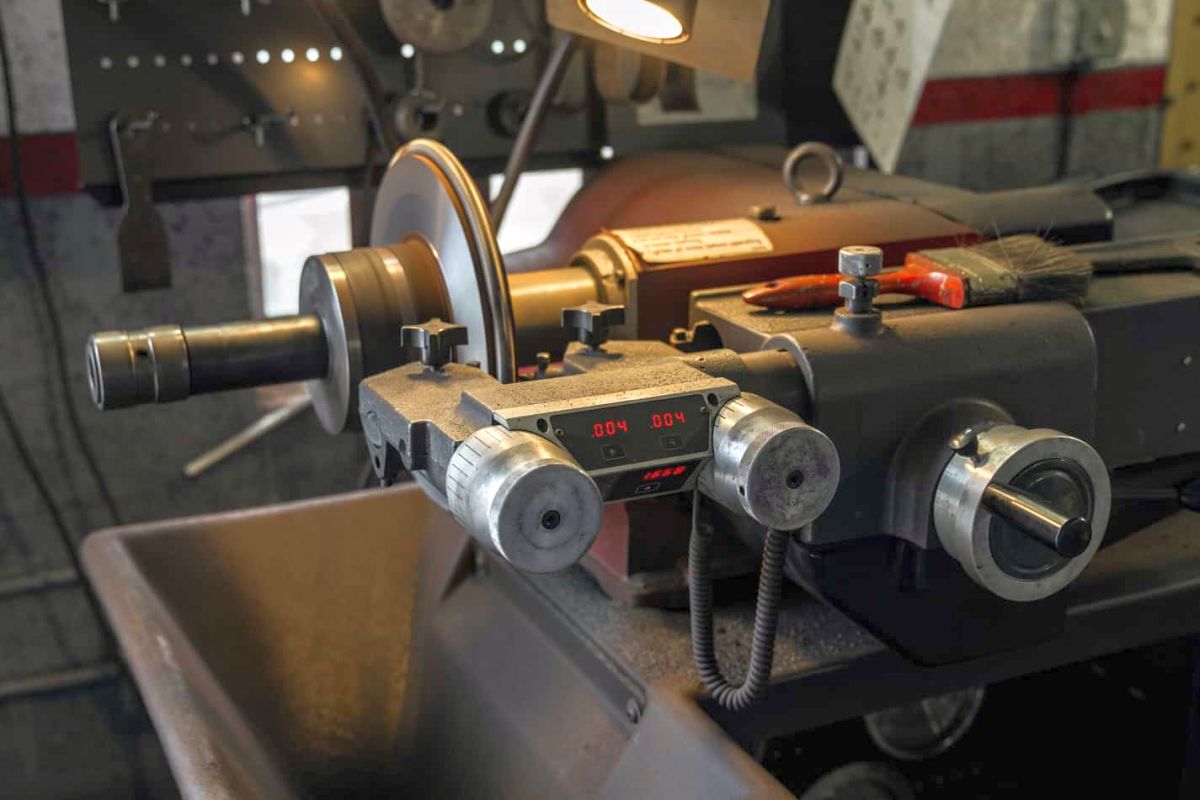
Brake disc resurfacing is the process of machining the friction surfaces of a brake rotor to remove a very small amount of material and restore a smoother, more uniform braking surface.
The disc is mounted on a specialized brake lathe or machining equipment. The cutting tools remove a controlled amount of material from the disc surface so that both sides become more uniform.
The purpose is not simply to make the disc look shiny.
A properly resurfaced brake disc should have:
-
A flat and uniform friction surface
-
Correct parallelism between the two friction faces
-
Reduced surface irregularities
-
Reduced thickness variation
-
A suitable surface finish for the new or existing brake pads
The amount of material removed should be kept within the manufacturer's specifications.
Why Are Brake Discs Resurfaced?
A brake disc may still have sufficient thickness and structural integrity but develop surface problems that affect braking performance.
Common reasons for resurfacing include:
Uneven friction surface
Repeated braking can create an uneven contact surface between the disc and pad.
Grooves
Brake pads can create circumferential grooves in the disc. Minor grooves may sometimes be corrected through machining.
Disc thickness variation
Uneven thickness can cause changes in braking force as the disc rotates. This can produce pedal pulsation or steering-wheel vibration during braking.
Surface deposits
In some cases, uneven transfer of brake pad material onto the rotor can create friction variations. What appears to be a "warped" disc is not always actually a physically bent or warped rotor.
Light corrosion
A vehicle that has been parked for a long period may develop rust on the disc surface. If the corrosion is relatively superficial and sufficient material remains, resurfacing may sometimes restore the friction surface.
Is Brake Disc Warping the Same as Disc Thickness Variation?
Not necessarily.
Drivers often describe any brake vibration as a "warped brake disc," but several different conditions can produce similar symptoms.
Brake vibration may result from:
-
Disc thickness variation
-
Excessive lateral runout
-
Uneven pad deposits
-
Hub or wheel mounting problems
-
Excessive wheel-bearing play
-
Caliper problems
-
Suspension looseness
-
Incorrect wheel installation
-
Actual thermal distortion or structural damage
This distinction is important because machining the disc will not permanently solve a problem if the underlying cause remains.
For example, if a brake caliper is sticking and overheating one part of the rotor, resurfacing the disc without repairing the caliper may only provide a temporary improvement.
What Symptoms Can Indicate a Brake Disc Problem?
A worn or damaged brake disc can produce several different symptoms.
Steering wheel vibration during braking
If the front brakes are affected, vibration may be felt through the steering wheel, particularly during braking from higher speeds.
Brake pedal pulsation
The brake pedal may move or pulse slightly as the disc rotates.
Vehicle vibration
Severe disc thickness variation or runout can cause noticeable vibration throughout the vehicle.
Uneven braking
The vehicle may not slow down smoothly.
Grinding or scraping noises
Severe surface damage, worn brake pads, or contamination can produce abnormal sounds.
Visible grooves
Deep grooves on the disc friction surface can indicate significant wear.
Blue or dark heat spots
Discoloration can indicate excessive heat, although the appearance alone does not determine whether a disc must be replaced.
A pronounced outer lip
As the friction surfaces wear, an unworn ridge can develop around the outer edge of the disc.
Can Every Brake Disc Be Resurfaced?
No.
This is one of the most important points about brake disc machining.
A disc should only be resurfaced if it will remain above the manufacturer's minimum allowable thickness after machining.
Brake discs have a specified minimum thickness, often marked on the disc itself as MIN TH, MINIMUM TH, or a similar designation.
If machining would reduce the rotor below this specification, the disc must be replaced.
A disc can sometimes look perfectly usable but already be too thin to machine safely.
What Is the Minimum Brake Disc Thickness?
There is no universal minimum thickness that applies to every vehicle.
The correct value depends on:
-
Vehicle make and model
-
Brake system
-
Front or rear axle
-
Disc design
-
Engine and vehicle weight
-
Manufacturer specifications
The minimum thickness is not the same as the thickness of a brand-new disc.
For example, a new rotor may have substantial material available for wear, but the manufacturer may specify a much lower minimum thickness. Once that limit is reached, the rotor should be replaced.
A mechanic should measure the disc with an appropriate micrometer rather than judging thickness by eye.
Why Is Measuring the Disc So Important?
A brake disc may have enough material for continued use but not enough material for resurfacing.
This is why the decision should follow a measurement-based inspection:
Current disc thickness → amount of material to be removed → final thickness
If the calculated final thickness would be below the manufacturer's minimum specification, machining is not an option.
The correct repair is replacement.
When Should Brake Discs Be Replaced?
Brake discs should be replaced when they are worn beyond their service limit or when their physical condition makes resurfacing unsafe or ineffective.
Common replacement situations include:
Disc is below minimum thickness
This is one of the clearest reasons for replacement.
Deep grooves
Very deep grooves may require removing too much material to restore the surface.
Severe corrosion or pitting
If rust has deeply damaged the friction surface, resurfacing may not provide a safe or durable result.
Cracks
A cracked brake disc should not be machined and reused.
It should be replaced.
Severe heat damage
Extreme overheating can cause structural or friction-surface problems that make replacement the safer choice.
Excessive runout that cannot be corrected
If machining cannot bring the disc within the manufacturer's allowable runout specification, replacement may be necessary.
Significant thickness variation
If correcting the thickness variation would make the disc too thin, replacement is required.
Damaged mounting surface
A disc with serious damage around the mounting area may not run correctly even after machining.
Repeated resurfacing
A rotor that has already been machined multiple times may have insufficient remaining material for another machining operation.
Does a Brake Disc Need to Be Changed Every Time the Pads Are Replaced?
No.
Brake discs do not automatically need replacement every time brake pads are changed.
If the discs are:
-
Above minimum thickness
-
Within runout specifications
-
Free from cracks
-
Not severely corroded
-
Not excessively grooved
-
Structurally sound
-
Suitable for continued service
they may be reused.
However, the condition of the rotor should always be checked when replacing pads.
Installing new pads on badly worn or damaged discs can lead to poor bedding, noise, vibration, uneven wear, and reduced braking performance.
Should Brake Discs Always Be Resurfaced When Installing New Pads?
Not necessarily.
Modern brake systems and brake rotor designs have made this question more complicated than simply saying "always machine the discs" or "never machine them."
If the rotor surface is in good condition and meets specifications, machining may not be necessary.
If the disc has significant surface irregularities, thickness variation, or other correctable problems, resurfacing may be appropriate.
The important question is not whether resurfacing is traditionally performed with every pad replacement.
The important question is:
Is the rotor still within specification and does its surface condition allow proper pad contact?
What Happens If New Brake Pads Are Installed on Bad Discs?
New brake pads cannot compensate for a severely damaged brake disc.
If the rotor has major grooves or thickness variation, the new pads may initially contact only part of the surface.
This can result in:
-
Uneven pad bedding
-
Reduced braking efficiency
-
Brake noise
-
Vibration
-
Uneven pad wear
-
Longer bedding-in time
-
Localized overheating
In some situations, the new pads may gradually conform to the old rotor surface, but this should not be relied upon when the rotor is outside specification.
Can Brake Disc Machining Fix Brake Vibration?
Sometimes, but not always.
If the vibration is caused by correctable disc thickness variation or surface irregularity, proper machining may eliminate the problem.
However, brake vibration can originate elsewhere.
Possible causes include:
-
Wheel hub runout
-
Disc runout
-
Wheel bearing problems
-
Loose suspension components
-
Sticking caliper
-
Uneven pad deposits
-
Incorrect wheel installation
-
Tire or wheel problems
Therefore, simply machining the disc without identifying the cause may lead to the vibration returning.
Why Does Brake Disc Runout Matter?
Lateral runout means that the disc does not rotate perfectly within the intended plane.
A small amount may be acceptable, but excessive runout can cause the brake pads to move in and out as the rotor rotates.
Over time, this movement can contribute to disc thickness variation.
Runout can be influenced not only by the rotor itself but also by the surface between the rotor and wheel hub.
Rust, dirt, corrosion, or debris trapped between these surfaces can prevent the disc from sitting correctly.
This is why cleaning the hub mounting surface is an important part of brake service.
Can a Dirty Wheel Hub Cause a Brake Disc Problem?
Yes.
A layer of rust or debris between the wheel hub and brake disc can prevent the rotor from mounting correctly.
This can create excessive runout even when the disc itself is relatively new.
When replacing or servicing brake discs, the hub mounting surface should therefore be cleaned properly.
The wheel mounting surface and wheel bolts or nuts should also be installed according to the manufacturer's torque specifications.
Does Brake Disc Resurfacing Remove a Lot of Material?
Proper resurfacing should remove only the minimum amount of material necessary to correct the friction surfaces.
However, the exact amount depends on the equipment, disc condition, and machining method.
Removing excessive material is undesirable because it reduces the rotor's remaining thermal mass.
A thinner rotor generally has less capacity to absorb and dissipate heat.
This is particularly important during:
-
Repeated hard braking
-
Mountain driving
-
Towing
-
Heavy vehicle use
-
High-speed braking
The minimum thickness specification exists for a reason.
Why Is Brake Disc Thickness Important for Heat Management?
A brake disc converts kinetic energy into heat.
During braking, the rotor must absorb and dissipate a considerable amount of thermal energy.
A disc with sufficient thickness has greater thermal mass and can generally tolerate heat cycles better than a disc that has been worn down close to its service limit.
An excessively thin disc can become more susceptible to overheating and thermal stress.
This is one reason why machining a rotor simply to make it "look new" is not a good repair strategy.
What Is the Difference Between Brake Disc Resurfacing and Brake Disc Replacement?
Resurfacing removes a small amount of material from the existing rotor.
Replacement removes the old rotor and installs a new one.
Resurfacing may be appropriate when the disc has minor correctable surface problems and sufficient material remains.
Replacement is the appropriate solution when the rotor is:
-
Below minimum thickness
-
Cracked
-
Severely damaged
-
Heavily corroded
-
Structurally compromised
-
Too thin to machine
-
Outside specifications after machining
The decision should be based on the manufacturer's specifications rather than simply the mechanic's preference.
Is It Better to Machine or Replace Brake Discs?
There is no universal answer.
A good-quality rotor with adequate remaining thickness may be a reasonable candidate for resurfacing.
However, on a heavily worn rotor, machining may not be economical or technically appropriate.
Replacement is generally the better choice when the disc is close to its minimum thickness or has significant physical damage.
Another factor is rotor quality. A properly manufactured replacement disc that meets the vehicle manufacturer's specifications may provide a better long-term solution than repeatedly machining an old rotor.
What Happens If a Brake Disc Is Too Thin?
A rotor that is below its minimum allowable thickness should not continue in service simply because it still appears to stop the vehicle.
Possible consequences include:
-
Increased overheating risk
-
Reduced thermal capacity
-
Greater susceptibility to distortion
-
Poor braking consistency
-
Increased risk of structural failure in severe conditions
The minimum thickness is a safety limit, not merely a recommendation for appearance or maintenance.
Should Brake Discs Be Replaced in Pairs?
Brake discs are normally replaced as an axle set.
For example, if one front rotor requires replacement, the other front rotor should normally be replaced at the same time, provided the vehicle manufacturer or brake system requirements do not specify otherwise.
This helps maintain similar braking characteristics from left to right.
The same principle generally applies to the rear axle.
Brake pads are also normally replaced as an axle set.
Replacing only one rotor or one pad on an axle can create differences in braking performance between the two sides.
Can Only One Brake Disc Be Replaced?
Technically, a single rotor can sometimes be replaced, but this is generally not the preferred repair approach when the other rotor on the same axle has significant wear.
A major difference in rotor condition from side to side can affect braking balance.
For this reason, brake components are commonly serviced in pairs on the same axle.
The exact procedure should follow the vehicle and brake-component manufacturer's recommendations.
What About Brake Discs With Rust?
Some surface rust is completely normal.
Brake discs are exposed to moisture, and an untreated cast-iron rotor can develop surface corrosion after rain or after a vehicle sits for several days.
Light surface rust often disappears after normal braking.
The problem is deep corrosion and pitting.
If corrosion has created deep pits or significantly damaged the friction surface, the rotor should be inspected carefully to determine whether it can safely be machined or needs replacement.
A car that sits unused for long periods is particularly vulnerable to brake-disc corrosion.
Why Do Brake Discs Turn Blue?
Blue or dark-colored areas on a brake rotor usually indicate significant heat exposure.
This can occur after:
-
Repeated hard braking
-
Driving downhill while braking continuously
-
A sticking brake caliper
-
A seized brake pad
-
Incorrect brake component installation
-
Heavy vehicle loads
A blue rotor is not automatically proof that the disc must be replaced, but it is a warning that the braking system should be inspected.
The underlying source of excessive heat must also be identified.
Otherwise, a new or resurfaced disc can suffer the same problem again.
Can a Sticking Brake Caliper Damage a New Brake Disc?
Absolutely.
A sticking caliper can keep the brake pad partially engaged with the rotor even when the driver is not pressing the brake pedal.
This creates continuous friction and heat.
The result may include:
-
Overheated rotor
-
Uneven pad wear
-
Blue discoloration
-
Brake smell
-
Premature disc wear
-
Brake drag
-
Reduced fuel economy
-
Vehicle pulling
-
Brake vibration
If a rotor is replaced without fixing the sticking caliper, the new disc can quickly become damaged.
How Is a Brake Disc Properly Inspected?
A proper inspection should involve more than looking at the disc.
A technician may check:
Visual condition
Look for cracks, deep grooves, corrosion, heat spots, and abnormal wear.
Disc thickness
Measure the rotor at appropriate points with a micrometer.
Lateral runout
Measure how much the rotor moves sideways while rotating.
Thickness variation
Check whether the rotor thickness remains sufficiently uniform around its friction surface.
Hub condition
Inspect the hub mounting surface for rust, dirt, or deformation.
Caliper operation
Check whether the caliper piston and guide pins operate correctly.
Brake pads
Inspect pad thickness, wear pattern, contamination, and condition.
Wheel bearing
Check for excessive play that could contribute to rotor movement.
This complete inspection is much more reliable than deciding based solely on visible grooves.
How Long Do Brake Discs Last?
There is no universal mileage interval for brake discs.
Their service life depends heavily on:
-
Driving style
-
Vehicle weight
-
Brake system design
-
Traffic conditions
-
Terrain
-
Automatic or manual transmission
-
Towing
-
Frequent heavy braking
-
Brake pad compound
-
Corrosion
-
Caliper condition
A vehicle driven mostly on highways may consume brake discs much more slowly than a vehicle used for constant stop-and-go city driving.
Therefore, brake discs should be replaced according to condition and specification rather than an arbitrary mileage number.
Does Aggressive Driving Wear Brake Discs Faster?
Yes.
Every time the brakes are applied, kinetic energy is converted into heat.
Repeated high-energy braking generates more heat and increases the thermal load placed on the discs and pads.
Frequent hard braking can therefore accelerate:
-
Disc wear
-
Pad wear
-
Heat-related damage
-
Surface deposits
-
Brake fluid degradation
-
Caliper problems
Smooth and anticipatory driving can significantly reduce brake-system wear.
What Should Be Done When Changing Brake Pads?
When installing new pads, the technician should inspect the entire brake system rather than simply removing the old pads and installing new ones.
A proper service may include:
-
Inspecting disc thickness
-
Checking disc runout when necessary
-
Checking pad condition
-
Inspecting caliper slide pins
-
Checking caliper piston operation
-
Cleaning appropriate mounting surfaces
-
Checking brake hoses
-
Inspecting for leaks
-
Checking brake fluid condition
-
Correctly tightening wheel fasteners
-
Performing proper pad bedding
If the rotor is within specification and in good condition, replacement or machining may not be necessary.
What Is Brake Pad Bedding?
Brake pad bedding is the controlled process of establishing an appropriate contact surface between the new pads and brake discs.
Correct bedding helps the pad material transfer evenly to the rotor surface.
During this period, extremely aggressive braking should generally be avoided unless necessary for safety.
The exact bedding procedure can vary according to the pad manufacturer and vehicle.
Improper bedding can contribute to uneven deposits and braking vibration.
Can Poor-Quality Brake Pads Damage Brake Discs?
Brake pad material has a significant influence on rotor wear and surface condition.
An unsuitable or poor-quality pad can contribute to:
-
Excessive disc wear
-
Noise
-
Uneven deposits
-
Poor braking feel
-
Overheating
-
Abnormal wear patterns
Brake pads should be selected according to the vehicle's specifications and intended use.
The cheapest component is not necessarily the most economical choice when considering the complete brake system.
Should You Machine Brand-New Brake Discs?
Normally, no.
A new brake disc manufactured to the correct specification should already have an appropriate friction surface.
Machining a new rotor unnecessarily removes material and can potentially introduce problems if the machining process or setup is incorrect.
If a new disc appears defective, the first step should be to verify the part, installation, mounting surfaces, and runout rather than automatically machining it.
What Is the Correct Decision: Resurface or Replace?
A practical approach is:
Resurface the disc when:
-
It has sufficient remaining thickness.
-
The surface problem is correctable.
-
There are no cracks.
-
Corrosion is not excessive.
-
Runout or thickness variation can be corrected.
-
The final machined thickness remains above the manufacturer's minimum.
-
The rotor remains structurally sound.
Replace the disc when:
-
It is below minimum thickness.
-
It would be below minimum thickness after machining.
-
It has cracks.
-
It has severe corrosion or pitting.
-
It has serious heat damage.
-
It has significant structural damage.
-
The surface cannot be restored within specifications.
-
It has already been machined excessively.
Why You Should Not Decide Based Only on Appearance
A brake rotor can look acceptable and still have a problem.
Likewise, a rotor can have visible surface marks that do not necessarily require replacement.
Measurements are much more important than appearance.
The technician should compare the rotor's condition with the vehicle manufacturer's specifications and determine whether the rotor can safely remain in service.
Final Thoughts
Brake disc resurfacing is not simply a cosmetic process. It is a precision machining operation intended to restore the friction surface of a brake rotor when the rotor is otherwise suitable for continued use.
The most important factor is remaining disc thickness.
If a brake disc has sufficient material and only has correctable surface problems, resurfacing may be a sensible repair. But if the rotor is below its minimum thickness, cracked, severely corroded, structurally damaged, or would fall below the minimum specification after machining, replacement is the correct solution.
It is also important to remember that brake vibration does not automatically mean the disc needs machining. Caliper problems, hub runout, wheel-bearing play, suspension components, uneven pad deposits, and installation problems can produce similar symptoms.
For this reason, the best brake repair is not simply "machine the disc" or "replace the disc."
The correct approach is to measure the rotor, identify the actual problem, check the manufacturer's specifications, and then choose the repair that keeps the entire braking system within safe operating limits.