TR
TR EN
EN


8 Reasons Why Your Car Smells Like Something Is Burning
If you smell something burning in or around your car, it usually means that something is overheating, burning, or experiencing excessive friction. The important question is where the smell is coming from and what is causing it.
There are several possible reasons for a burning smell, and some of them can be serious. Identifying the source as quickly as possible can help prevent expensive repairs and, in some cases, a potential fire.
Here are the most common causes of a burning smell coming from your car:
1. Burning Electrical Components and Wiring
One of the most serious causes of a burning smell is overheating electrical components or wiring.
Electrical circuits can generate significant heat, especially when excessive current flows through a circuit. A short circuit, damaged wire, loose connection, or overloaded electrical component can cause localized overheating.
When wiring becomes excessively hot, the insulation and surrounding plastic components can melt or burn. This can produce a distinctive burning plastic or electrical smell inside the vehicle.
This is a potentially dangerous problem because overheated wiring can damage other electrical components and, in severe cases, create a fire risk.
Possible causes include:
-
Short circuits
-
Damaged wiring insulation
-
Loose electrical connections
-
Overloaded circuits
-
Faulty relays
-
Failing electrical motors
-
Corroded connectors
-
Incorrect aftermarket electrical installations
If you notice a strong burning electrical smell, especially together with smoke, flickering lights, electrical malfunctions, or blown fuses, the vehicle should be inspected promptly.
2. Overheating Air Conditioning Compressor
If you notice a burning smell shortly after switching on the air conditioning, the A/C compressor or its drive system could be responsible.
On many vehicles, the A/C compressor is driven by the engine's accessory drive system. If the compressor develops an internal mechanical problem, it may become difficult to rotate.
A partially seized compressor can place excessive load on the belt and pulley system. This can cause the belt to slip against the pulley and generate substantial heat.
The resulting smell is often similar to burning rubber.
In more severe cases, internal compressor damage can cause abnormal friction and overheating.
Possible causes include:
-
A failing A/C compressor
-
Compressor bearing failure
-
A seized compressor
-
A damaged compressor clutch
-
Accessory belt slipping
-
Incorrect belt tension
-
A seized pulley
If the burning smell appears specifically when the air conditioning is switched on, the compressor, clutch, pulley, and accessory belt system should be inspected.
3. Sticking Brake Pads or a Brake That Is Not Releasing
Overheated brakes are another common source of a burning smell.
A brake caliper that does not release correctly can keep the brake pad in constant contact with the brake disc. The resulting friction generates excessive heat.
Possible causes include:
-
A sticking caliper piston
-
Seized caliper guide pins
-
A damaged brake hose
-
Incorrectly installed brake pads
-
Parking brake not fully releasing
-
Mechanical brake system problems
The problem can also be caused by driving habits.
Some inexperienced drivers unintentionally keep their foot slightly on the brake pedal while driving. This creates continuous friction and can quickly overheat the brake components.
Another common mistake is continuously pressing the brake pedal while descending a long or steep hill.
Repeated braking without allowing the brakes to cool can cause the brake fluid to overheat and potentially boil, resulting in reduced braking performance or brake fade.
When descending a long hill, the vehicle should generally be kept in an appropriate lower gear so that engine braking helps control the vehicle's speed, reducing the load on the brakes.
This is particularly important for heavy vehicles and when driving on long, steep descents.
If you notice a strong burning smell after braking, one wheel is significantly hotter than the others, or the vehicle pulls to one side, the braking system should be inspected immediately.
4. Broken, Slipping, or Seized Belts
Another common source of a burning smell is a damaged, slipping, or seized accessory belt.
A slipping belt can generate substantial friction against a pulley and produce a smell similar to burning rubber.
Possible causes include:
-
A worn accessory belt
-
Incorrect belt tension
-
A seized pulley
-
A failing alternator
-
A seized A/C compressor
-
A damaged tensioner
-
A failing idler pulley
If an accessory belt breaks, the consequences depend on the engine design.
Some engines use an accessory belt to drive the water pump. If that belt breaks and the water pump stops circulating coolant, the engine can overheat very quickly.
However, not every engine uses a belt-driven water pump. Some vehicles use an electric water pump or a pump driven by the timing belt or timing chain.
Therefore, a broken accessory belt does not automatically mean that the water pump has stopped working.
A broken belt can also disable other important systems, such as the alternator, depending on the vehicle's design.
5. Engine Oil, Coolant, or Other Fluid Leaks
Vehicles use several different fluids to operate and protect their mechanical systems.
These can include:
-
Engine oil
-
Transmission fluid
-
Engine coolant
-
Power steering fluid on hydraulic systems
-
Brake fluid
-
Differential oil
-
Other vehicle-specific fluids
If a seal, gasket, hose, or component develops a leak, the fluid may reach a hot engine or exhaust component.
When oil or another fluid contacts a sufficiently hot surface, it can produce a strong burning smell.
For example, engine oil leaking onto a hot exhaust manifold can create smoke and a distinctive burnt-oil smell.
The important issue is not only the smell itself but also the fluid level and source of the leak.
Low engine oil can cause severe engine damage because internal components may no longer receive adequate lubrication.
Low coolant can result in overheating.
Low brake fluid can indicate a brake system leak and potentially lead to reduced braking performance.
Hydraulic power steering systems can also be affected by low fluid, although many modern vehicles use electric power steering and do not have hydraulic steering fluid.
A burning smell accompanied by visible fluid leakage should therefore be investigated without delay.
6. Burning Clutch
A burning clutch is a common source of a strong burning smell in vehicles equipped with manual transmissions.
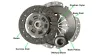
The clutch allows the engine and transmission to be connected and disconnected so that the driver can change gears smoothly.
When the clutch is partially engaged, the clutch disc can slip against the flywheel and pressure plate.
This creates friction and generates a significant amount of heat.
One of the most common situations that causes this is holding the vehicle on a hill using the clutch instead of the brake.
Keeping the clutch partially engaged for too long can cause severe clutch disc overheating and produce a strong burning smell.
This is particularly common among inexperienced manual-transmission drivers.
Other possible causes include:
-
Worn clutch disc
-
Weak pressure plate
-
Incorrect clutch adjustment on applicable systems
-
Excessive clutch slipping
-
Oil contamination
-
Heavy loads
-
Frequent stop-and-go driving
-
Repeated hill starts
If the burning smell is accompanied by an increase in engine RPM without a corresponding increase in vehicle speed, the clutch may be slipping.
A severely worn or slipping clutch should be inspected because continued operation can cause additional damage to the flywheel and other clutch components.
7. Foreign Objects Inside the HVAC Air Intake
If you smell something burning when you turn on the heater or ventilation system, a foreign object inside the HVAC air intake or blower area could be responsible.
Leaves, plastic, paper, or other debris can enter the air intake system and become trapped near the blower motor or heater components.
If the object comes into contact with a hot component, it can overheat or melt and produce a burning smell inside the cabin.
A blocked or heavily contaminated cabin air filter can also affect airflow and may contribute to unusual odors, although it is not normally a direct source of burning.
Possible sources include:
-
Leaves
-
Plastic material
-
Paper
-
Debris
-
Foreign objects
-
Damaged blower motor components
If the smell appears only when the ventilation system is operating, the HVAC air intake, cabin air filter, blower motor, and heater area should be inspected.
8. Old or Degraded Engine or Transmission Oil
Regularly changing engine oil and transmission fluid is an important part of vehicle maintenance.
Engine oil gradually becomes contaminated as it circulates through the engine. It can accumulate combustion by-products, fuel contamination, moisture, and microscopic wear particles.
Over time, oil can also lose some of its protective properties.
When oil is severely degraded, the engine may not receive the same level of lubrication and protection as it does with the correct fresh oil.
This can increase friction and wear between moving components.
However, old engine oil itself does not normally produce a burning smell simply because it is old. A burning-oil smell usually indicates that oil is reaching a sufficiently hot external surface or that the engine is consuming excessive oil.
Possible causes include:
-
Oil leaking onto hot exhaust components
-
Excessive oil consumption
-
Turbocharger oil leakage
-
Worn engine seals
-
Excessive engine temperature
-
Incorrect oil level
-
Internal engine wear
Transmission fluid can also produce a strong burnt smell if the transmission has been operating under excessive heat or if the fluid has deteriorated significantly.
A burnt-smelling transmission fluid should not simply be replaced without investigating why the fluid overheated.
Why Should You Never Ignore a Burning Smell?
A burning smell is not something that should be treated as a normal characteristic of a vehicle.
The severity depends on the source.
A temporary smell after hard braking may simply indicate overheated brake components, while a persistent electrical burning smell could indicate a much more serious electrical fault.
Likewise, a burning rubber smell may indicate a slipping accessory belt, while a burning-oil smell could indicate an oil leak onto a hot exhaust component.
If the smell is accompanied by:
-
Smoke
-
Warning lights
-
Loss of braking performance
-
Loss of engine power
-
Abnormal engine temperature
-
Electrical failures
-
Unusual noises
-
Fluid leaks
-
Burning plastic smell
the vehicle should be inspected as soon as possible.
If visible smoke or signs of fire are present, stop the vehicle safely and follow appropriate emergency procedures rather than continuing to drive.
Final Thoughts
A burning smell coming from a car can have many different causes. Some are relatively minor, while others can create a serious safety risk.
The most common sources include overheated brakes, slipping accessory belts, electrical wiring problems, A/C compressor problems, fluid leaks, clutch overheating, HVAC debris, and problems associated with engine or transmission fluids.
The location and timing of the smell are extremely useful diagnostic clues.
If the smell appears when braking, inspect the brake system. If it appears when the A/C is switched on, investigate the compressor and accessory drive. If it comes through the ventilation system, inspect the HVAC intake and blower area. If it smells like burning oil, look for leaks around hot engine and exhaust components.
Most importantly, do not simply mask a burning smell with air fresheners or assume that it will disappear on its own. Finding and repairing the source early can prevent a small problem from becoming an expensive repair—or, in the case of an electrical or severely overheated component, a serious safety hazard.