TR
TR EN
EN

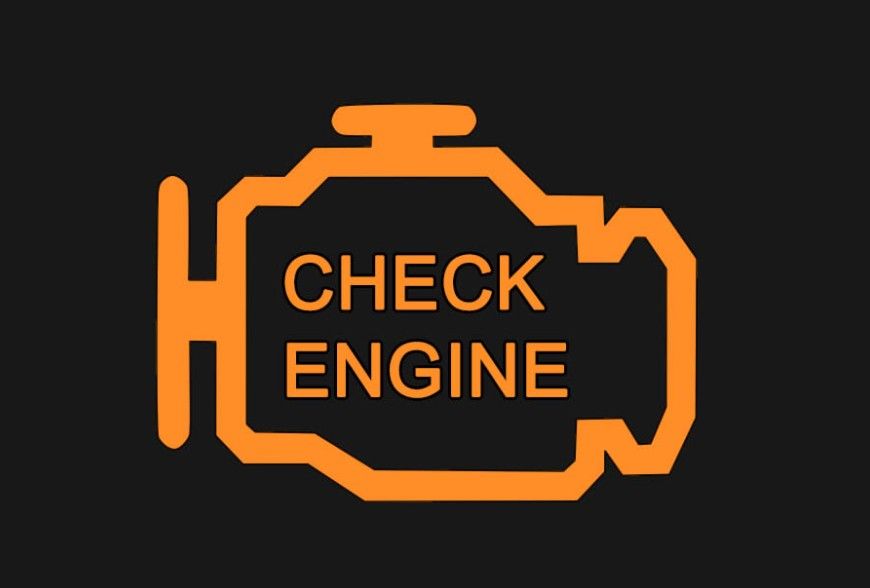
Why Does the Check Engine Light Come On?
It is a situation that can happen to almost any driver. You get into your car, start the engine, select a gear, and drive away while listening to some music. Then you notice the instrument cluster and realize with concern that the Check Engine light is still illuminated.
What does this light mean? Why did it come on? Does it indicate a serious engine problem, or could it be something relatively simple?
The Check Engine light is part of the vehicle's engine management and emissions diagnostic system. The system continuously monitors numerous parameters, including sensor signals, fuel and ignition operation, emissions-related systems, and various electrical circuits.
A detected abnormal value does not necessarily cause the warning light to illuminate immediately. Depending on the diagnostic strategy, the vehicle may first determine whether the condition is temporary or whether it can be confirmed again during subsequent driving cycles. If the fault meets the conditions defined in the manufacturer's diagnostic software, a Diagnostic Trouble Code (DTC) may be stored and the Check Engine light may be activated.
When drivers see the Check Engine light, they often assume that the engine has suffered major damage. There is no need to panic immediately. A steady Check Engine light does not automatically mean that the engine is about to fail.
However, the way the vehicle behaves is important.
If the light is steady, the engine is running normally, and there are no other warning signs such as overheating, low oil pressure, severe loss of power, unusual noises, smoke, or strong fuel smells, it may be possible to drive carefully to a suitable repair facility and have the vehicle diagnosed.
A flashing Check Engine light is more serious. It can indicate an active misfire severe enough to potentially damage the catalytic converter. In this situation, continued driving should be avoided as much as possible, especially if the engine is shaking, losing power, or running very roughly.
Other warning lights can also change the situation. For example, an oil-pressure warning, overheating warning, or another critical warning should not simply be ignored.
What Causes the Check Engine Light to Come On?
The Check Engine light can be triggered by hundreds of different conditions.
The system can monitor components and systems such as:
-
Oxygen sensors
-
Airflow and pressure sensors
-
Throttle position and throttle control
-
Fuel injectors
-
Fuel pressure
-
Ignition system
-
EVAP system
-
EGR system
-
Catalytic converter efficiency
-
Turbocharger and boost-control systems
-
Crankshaft and camshaft position sensors
-
Engine coolant temperature
-
Intake air temperature
-
Emissions-control components
-
Wiring and electrical circuits
-
Communication between control modules
A problem does not necessarily mean that the named component in the fault code is defective.
This is one of the most important things to understand about OBD-II diagnostics.
A DTC normally tells you what condition the vehicle's control system detected and where the diagnostic system believes the problem is located. It does not automatically tell you which part should be replaced.
Why Should You Read the Fault Code Before Replacing Parts?
Suppose the Check Engine light comes on and the scan tool reports P0130, which is associated with an oxygen-sensor circuit.
It would be a mistake to immediately replace the oxygen sensor.
The actual cause could be:
-
A faulty oxygen sensor
-
Damaged wiring
-
A loose connector
-
Corrosion inside the connector
-
A power or ground problem
-
An exhaust leak affecting the sensor reading
-
A reference-voltage problem
-
An engine-management issue
-
A problem with another component affecting the sensor signal
The correct approach is to use the code as the starting point for diagnosis.
The technician should inspect the relevant wiring and connectors, check live data, verify electrical signals, and perform additional tests before deciding whether the sensor itself has failed.
P0301 Does Not Automatically Mean the Ignition Coil Is Bad
The same principle applies to misfire codes.
For example, P0301 indicates a misfire detected on cylinder 1.
The possible causes can include:
-
Worn or damaged spark plug
-
Faulty ignition coil
-
Damaged ignition wiring on systems that use plug wires
-
Faulty fuel injector
-
Low fuel pressure
-
Vacuum or intake-air leak
-
Low compression
-
Valve problems
-
Head-gasket problems
-
Incorrect ignition timing
-
Mechanical engine damage
A cylinder misfire is therefore a diagnostic condition, not a direct instruction to replace one particular component.
A good diagnosis normally starts by determining whether the problem is related to spark, fuel, air, compression, or engine control.
Why Is P0300 Sometimes Difficult to Diagnose?
P0300 indicates random or multiple-cylinder misfires.
This can be considerably more difficult to diagnose than a misfire isolated to one cylinder.
Possible causes include:
-
Vacuum leaks
-
Unmetered air
-
Fuel-pressure problems
-
Dirty or defective injectors
-
Ignition-coil problems
-
Spark-plug problems
-
Wiring faults
-
MAF or MAP sensor problems
-
EGR-related issues
-
Incorrect fuel mixture
-
Low engine compression
-
Valve problems
-
Mechanical engine faults
Because the misfire is not consistently isolated to one cylinder, the technician may need to examine fuel trims, ignition data, misfire counters, sensor readings, fuel pressure, and compression.
This is why replacing random components can become expensive without solving the problem.
Can the Check Engine Light Come On Because of a Software Problem?
Yes, although this should not be assumed without evidence.
Vehicle control modules use software to interpret sensor signals and determine whether a fault condition exists. Manufacturers sometimes release updated calibration software to address known diagnostic problems, false fault detections, drivability issues, or improved emissions control.
In some cases, a vehicle may repeatedly set a particular DTC even though the mechanical component is functioning correctly.
However, software updates should only be considered after confirming that the vehicle matches a known manufacturer-specific condition or service procedure.
The correct solution may sometimes involve updating or reprogramming the PCM/ECM, but this should not be used as a substitute for basic electrical and mechanical diagnosis.
What Should You Do When the Check Engine Light Comes On?
The first step is to determine whether the light is steady or flashing.
A flashing light combined with severe misfire, shaking, or loss of power requires more urgent attention.
If the light is steady and the vehicle is operating normally, the next step is to scan the vehicle and retrieve the stored DTCs.
The diagnostic process should generally include:
-
Reading stored and pending codes
-
Checking freeze-frame data
-
Looking at live sensor data
-
Inspecting wiring and connectors
-
Checking power and grounds
-
Testing the relevant component
-
Checking for related mechanical problems
-
Checking technical service information when appropriate
Pending codes are particularly useful because they can indicate a condition that has been detected but has not yet met all the criteria required to turn on the warning light.
What Is Freeze-Frame Data?
Freeze-frame data records operating conditions from around the time a fault was detected.
Depending on the vehicle, this information can include:
-
Engine RPM
-
Vehicle speed
-
Coolant temperature
-
Engine load
-
Fuel trims
-
Intake pressure
-
Airflow
-
Throttle position
-
Fuel-system status
This information can help determine the conditions under which the fault occurred.
For example, a problem that only appears during high engine load requires a different diagnostic approach from one that occurs only during cold starts or at idle.
Can a Loose Fuel Cap Cause the Check Engine Light?
Yes.
On many vehicles, the fuel tank and EVAP system are monitored for leaks.
A loose, incorrectly installed, or damaged fuel filler cap can sometimes cause an EVAP-related fault code.
However, not every EVAP fault is caused by the fuel cap.
Other possible causes include:
-
Cracked EVAP hoses
-
Faulty purge valve
-
Faulty vent valve
-
Leaking fuel-tank components
-
Damaged charcoal canister
-
Wiring problems
-
EVAP pressure sensor problems
Therefore, even a simple-looking EVAP code may require additional testing.
What Are Some Common Problems That Trigger the Check Engine Light?
The list of possible causes is extensive, but some problems occur frequently.
Oxygen sensor problems
Oxygen sensors provide information used by the engine-control system to manage the air-fuel mixture and monitor catalytic-converter performance.
Spark plugs and ignition components
Worn spark plugs, defective ignition coils, or ignition wiring problems can cause misfires and trigger the warning light.
Vacuum and intake leaks
A damaged hose, intake-manifold gasket, PCV component, or other air leak can introduce unmetered air and affect engine operation.
Fuel injector problems
A clogged, leaking, electrically defective, or mechanically stuck injector can cause poor combustion and misfire.
EGR problems
A contaminated or malfunctioning EGR system can cause drivability problems and trigger emissions-related DTCs, depending on the vehicle.
Throttle-control problems
Electronic throttle systems monitor throttle position and motor operation. Problems with the throttle body, accelerator-pedal sensors, wiring, connectors, or control circuits can trigger various throttle-related codes.
MAF or MAP sensor problems
Incorrect airflow or manifold-pressure information can affect fuel delivery and engine control.
EVAP system faults
Leaks or defective valves in the evaporative-emissions system can illuminate the Check Engine light even when the vehicle appears to drive normally.
Does a Check Engine Light Always Mean a Serious Engine Problem?
No.
The Check Engine light can be triggered by something as relatively minor as an EVAP leak, but it can also indicate serious problems such as severe misfire, overheating-related damage, fuel-system faults, or major engine-management problems.
The warning light itself does not tell you the severity of the problem.
The combination of:
-
DTCs
-
Symptoms
-
Freeze-frame data
-
Live data
-
Warning-light behavior
-
Vehicle operating conditions
-
Diagnostic test results
provides the information needed to determine how serious the situation actually is.
Can You Continue Driving With the Check Engine Light On?
It depends on the circumstances.
If the light is steady and the vehicle is operating normally, there may not be an immediate risk of catastrophic engine damage. Nevertheless, the fault should be diagnosed rather than ignored indefinitely.
If the engine is misfiring, overheating, losing significant power, producing unusual smoke, making abnormal noises, or showing a flashing Check Engine light, continuing to drive can make the problem considerably worse.
A severe misfire, for example, can send unburned fuel into the exhaust system and overheat the catalytic converter.
How Are Check Engine Codes Cleared?
A diagnostic scan tool can usually be used to clear stored DTCs.
However, clearing a code is not the same thing as repairing the problem.
If the underlying fault remains, the control module will usually detect the condition again when the required diagnostic criteria are met.
For this reason, fault codes should ideally be recorded before they are cleared.
Freeze-frame information should also be saved when possible because it can be valuable for diagnosis.
After the repair, the vehicle can be driven through the appropriate operating conditions to determine whether the fault returns.
Why Does the Check Engine Light Sometimes Turn Off by Itself?
Some emissions-related faults are monitored continuously, while others require specific driving conditions before the diagnostic system can confirm the problem.
If the condition does not reoccur for a certain number of drive cycles, the warning light may turn off automatically.
The exact number of cycles and conditions varies by manufacturer, system, and fault type.
Even after the light turns off, the vehicle may retain diagnostic information in memory for a period of time.
This is why a vehicle can have no Check Engine light currently illuminated while still having stored or pending diagnostic information.
Should You Disconnect the Battery to Clear the Check Engine Light?
Disconnecting the battery is generally not the preferred method for clearing OBD-II faults.
It may erase diagnostic information, but it can also reset learned values and other vehicle settings.
Depending on the vehicle, this may affect:
-
Idle and fuel-trim learning
-
Transmission adaptive values
-
Radio settings
-
Clock and memory settings
-
Window initialization
-
Steering-angle calibration
-
Other electronic adaptations
Some vehicles may also require additional procedures after battery power has been disconnected.
A proper scan tool is therefore normally the better method for clearing DTCs after the diagnostic information has been recorded.
What Happens If You Ignore the Check Engine Light?
Ignoring a Check Engine light can sometimes be harmless for a short period, but it is impossible to know that simply from the warning light.
A small EVAP problem may remain relatively minor for some time.
A developing misfire, fuel-system problem, overheating condition, or sensor/control problem can become much more expensive if ignored.
Even an emissions-related fault can affect fuel economy, drivability, catalytic-converter life, or the vehicle's ability to pass an emissions inspection where applicable.
The safest approach is to diagnose the cause rather than simply trying to turn the light off.
The Most Important Point About the Check Engine Light
The Check Engine light is not a diagnosis by itself. It is a warning that the vehicle's control system has detected a condition that requires attention.
The most important step is therefore not to guess which part needs replacing, but to read the DTC, examine the conditions under which it occurred, and follow a logical diagnostic process.
A fault code can narrow the search considerably, but the actual cause may be a sensor, wiring, connector, power supply, ground, vacuum leak, fuel problem, mechanical fault, software issue, or another component affecting the monitored system.
In other words, the code tells you where to start looking—not necessarily what part to replace.