TR
TR EN
EN

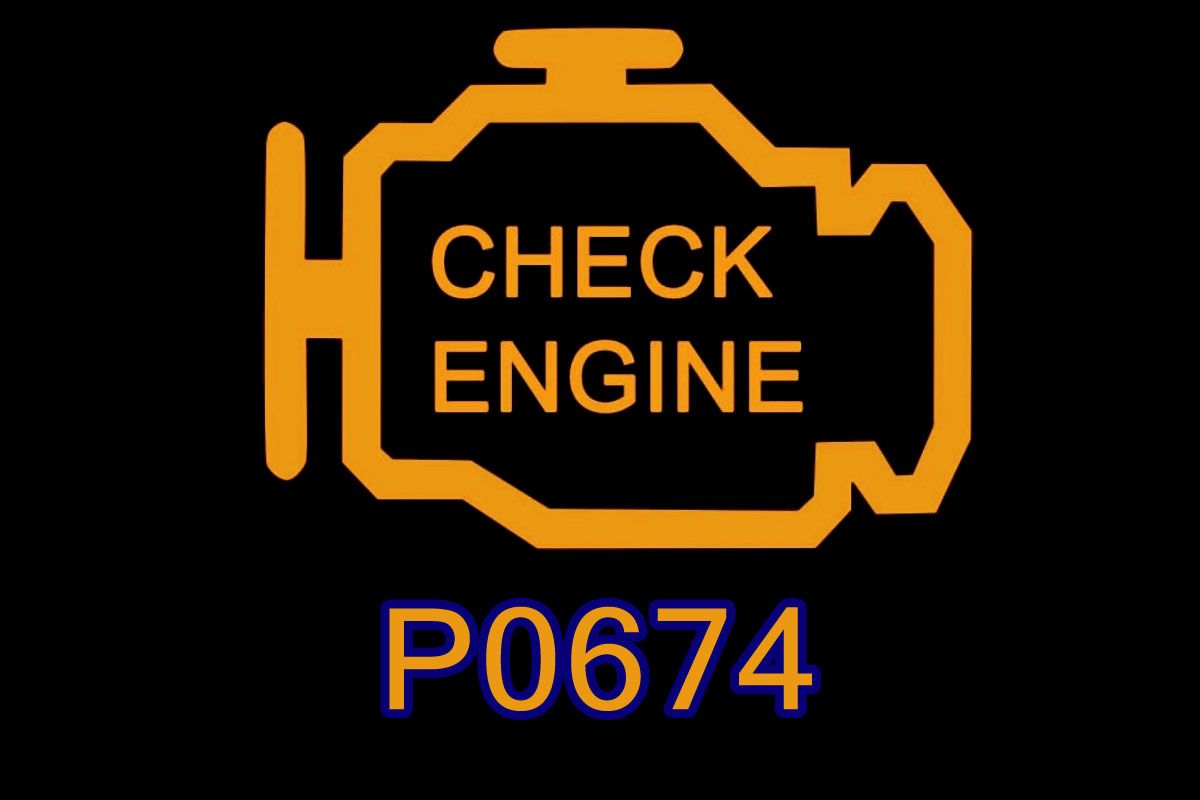
P0674 Cylinder 4 Glow Plug Circuit
The P0674 trouble code is a generic OBD-II diagnostic trouble code related to the glow plug circuit for Cylinder 4 in a diesel engine.
P0674 – Cylinder 4 Glow Plug Circuit
This code means that the engine control module (ECM/PCM) has detected an electrical problem in the glow plug circuit associated with Cylinder 4.
The glow plug helps heat the combustion chamber during cold starting. If the ECM detects that the Cylinder 4 glow plug circuit has an electrical condition outside its expected range, it stores P0674.
It is important to note that P0674 does not automatically mean the Cylinder 4 glow plug is defective. The actual problem may be the glow plug, wiring, connector, fuse, relay, glow plug control module, power supply, ground or ECM/PCM control circuit.
What Does P0674 Mean?
P0674 can be understood as:
P = Powertrain
0 = Generic OBD-II code
6 = Computer output/control-related fault
7 = Glow plug circuit designation
4 = Cylinder 4
The key description is:
Cylinder 4 Glow Plug Circuit
In simple terms:
The engine computer has detected an electrical fault in the circuit responsible for controlling the glow plug on Cylinder 4.
What Is a Glow Plug?
A glow plug is an electrically heated component used in diesel engines.
Unlike a gasoline spark plug, it does not normally create a spark. Instead, its heating element becomes extremely hot and helps increase the temperature inside the combustion chamber.
This additional heat helps diesel fuel ignite more reliably when the engine is cold.
Depending on the engine, glow plugs may also remain active after the engine starts to improve combustion during the warm-up period.
Why Are Glow Plugs Important?
A diesel engine relies on compression to generate the heat necessary for combustion.
When the engine is cold, however, the available compression heat may not be sufficient for immediate and stable combustion.
Glow plugs help by:
-
Heating the combustion chamber
-
Improving cold starts
-
Reducing cranking time
-
Improving initial combustion
-
Reducing white or gray smoke
-
Reducing cold-start emissions
-
Improving engine smoothness during warm-up
A defective glow plug is therefore usually more noticeable when the engine is cold.
What Is Cylinder 4?
Cylinder 4 refers to the fourth cylinder according to the engine manufacturer's cylinder-numbering system.
The physical location of Cylinder 4 is not universal.
Different engine manufacturers use different cylinder numbering arrangements, so the correct location should be confirmed using the manufacturer's service information before testing or replacing the glow plug.
Symptoms of P0674
Possible symptoms include:
-
Check Engine Light
-
Glow plug warning light
-
Hard cold starting
-
Longer cranking
-
Rough idle immediately after startup
-
White or gray exhaust smoke
-
Cold-start hesitation
-
Uneven combustion during warm-up
-
Increased emissions
-
Increased fuel consumption during repeated cold starts
In warmer weather, a vehicle with P0674 may start and drive almost normally.
Can P0674 Cause a No-Start?
It can, depending on the engine and outside temperature.
Many modern diesel engines can start with one defective glow plug under moderate conditions.
However, when temperatures are very low, glow plug operation becomes more important.
If several glow plugs are defective or there is a common glow plug control or power problem, the engine may become very difficult to start or may fail to start.
Is P0674 Serious?
P0674 should be diagnosed and repaired, although it is not always an immediate emergency.
A single defective glow plug may have little effect once the engine is fully warm.
However, leaving the problem unresolved can lead to:
-
Difficult cold starts
-
Increased exhaust smoke
-
Poor cold combustion
-
Increased emissions
-
Additional battery load
-
Additional starter load
The problem should ideally be repaired before cold weather arrives.
Common Causes of P0674
Failed Cylinder 4 glow plug
The glow plug may have an open circuit, excessive resistance or internal electrical damage.
Damaged glow plug wiring
The wire between the Cylinder 4 glow plug and its controller may be broken, shorted or damaged.
Loose connector
A loose terminal can interrupt the electrical connection.
Corroded connector
Corrosion can increase resistance and reduce current flow.
Faulty glow plug control module
Modern diesel engines often use an electronic controller to manage individual glow plugs.
Faulty glow plug relay
Some systems use a conventional relay instead of an electronic controller.
Blown fuse
A blown fuse can interrupt power to the glow plug system.
Poor ground
A poor electrical ground can interfere with the glow plug system.
Damaged engine wiring harness
Heat, vibration, oil and moisture can damage glow plug wiring.
Low system voltage
Battery or charging-system problems can affect glow plug performance.
ECM/PCM control problem
The ECM/PCM may directly control the glow plug circuit or communicate with a separate glow plug controller.
Can a Bad Glow Plug Cause P0674?
Yes.
A defective Cylinder 4 glow plug is one of the first things that should be tested.
Possible glow plug failures include:
-
Open internal heating element
-
Excessive resistance
-
Internal electrical damage
-
Age-related failure
-
Thermal damage
However, testing the complete circuit is important before replacing the glow plug.
Can a Bad Glow Plug Control Module Cause P0674?
Yes.
The glow plug controller may fail to supply or control the Cylinder 4 circuit correctly.
If several cylinder-specific glow plug codes appear together, a common controller, power supply, ground or wiring problem should be considered.
Can a Bad Glow Plug Relay Cause P0674?
Yes, if the vehicle uses a conventional glow plug relay.
A relay that does not switch correctly can prevent the glow plug from receiving the required electrical supply.
Modern vehicles may instead use an electronic glow plug control module.
Can a Blown Fuse Cause P0674?
Yes.
If the glow plug system loses its power supply because of a blown fuse, the ECM may detect a circuit problem.
If the fuse blows again after replacement, the underlying short circuit or electrical fault must be diagnosed.
Can Wiring Cause P0674?
Yes.
Wiring should always be inspected when diagnosing a circuit-related glow plug code.
Look for:
-
Broken wires
-
Chafed insulation
-
Melted wiring
-
Corroded terminals
-
Loose connectors
-
Oil contamination
-
Water intrusion
-
Poor previous repairs
The glow plug harness is exposed to high engine temperatures, so heat-related damage is particularly important.
Can a Weak Battery Cause P0674?
Potentially, yes.
Glow plugs can draw a substantial amount of current.
A weak battery may cause low voltage during cold starting and reduce the effectiveness of the glow plug system.
However, a weak battery does not necessarily mean that the Cylinder 4 circuit itself is faulty.
If multiple glow plug codes are present, test the battery and charging system as part of the diagnosis.
Can a Bad Alternator Cause P0674?
Potentially, indirectly.
An alternator with insufficient or unstable output can affect overall system voltage.
Check:
-
Battery condition
-
Charging voltage
-
Alternator output
-
Voltage stability
before replacing a glow plug controller or ECM.
Can P0674 Cause White Smoke?
Yes, potentially.
If Cylinder 4 does not receive adequate preheating during a cold start, fuel may not burn completely.
This can produce temporary white or gray exhaust smoke.
If smoke continues after the engine reaches operating temperature, other causes should be investigated, such as:
-
Fuel injector problems
-
Low compression
-
Incorrect injection timing
-
Coolant entering the combustion chamber
Can P0674 Cause Rough Running?
Yes, especially immediately after a cold start.
Insufficient heating in Cylinder 4 can contribute to incomplete combustion.
The engine may:
-
Shake
-
Run unevenly
-
Produce smoke
-
Hesitate
-
Improve as it warms
How to Diagnose P0674
A systematic diagnostic procedure helps prevent unnecessary parts replacement.
1. Scan all diagnostic codes
Look for other codes involving:
-
Glow plugs
-
Glow plug control module
-
Battery voltage
-
Engine coolant temperature
-
Fuel injection
-
Misfire or combustion
-
ECM/PCM communication
If several glow plug codes are present, investigate common components.
2. Identify Cylinder 4
Confirm the physical location of Cylinder 4 using manufacturer-specific service information.
3. Inspect the Cylinder 4 glow plug
Look for:
-
Physical damage
-
Corrosion
-
Carbon deposits
-
Damaged terminal
-
Signs of overheating
4. Inspect the connector
Check for:
-
Loose terminals
-
Corrosion
-
Bent terminals
-
Broken locking mechanism
-
Oil contamination
-
Water intrusion
5. Test glow plug resistance
Measure the Cylinder 4 glow plug according to manufacturer specifications.
Compare it with the other glow plugs where appropriate.
A defective glow plug may show:
-
Open circuit
-
Excessively high resistance
-
A substantially different reading from the other glow plugs
Glow plugs can have very low resistance, so accurate test equipment and the manufacturer's specifications are important.
6. Check the power supply
Determine whether the Cylinder 4 glow plug receives the correct electrical supply when the glow system is activated.
Do not assume that every modern glow plug receives a constant battery-voltage supply.
Some systems use electronically controlled or variable voltage.
7. Check current draw
Current testing can help determine whether the glow plug is operating correctly.
An abnormal current pattern may indicate:
-
Open glow plug
-
High-resistance connection
-
Short circuit
-
Controller problem
8. Test the glow plug controller
If equipped, check:
-
Power supply
-
Ground
-
Command signals
-
Cylinder 4 output
-
Communication
9. Test the glow plug relay
On relay-controlled systems, verify:
-
Coil operation
-
Contact operation
-
Power supply
-
Output voltage
10. Check the fuse
Inspect the relevant glow plug fuse or fuses.
If a fuse repeatedly blows, find the underlying electrical fault.
11. Inspect the wiring harness
Trace the Cylinder 4 circuit from the glow plug to the controller.
Pay particular attention to wiring near:
-
Exhaust components
-
Turbocharger
-
Cylinder head
-
High-temperature surfaces
-
Harness brackets
12. Check grounds
Inspect relevant engine, chassis and controller grounds.
13. Check engine temperature data
The ECM uses engine temperature information to determine glow plug activation.
An incorrect coolant-temperature reading can affect glow plug operation.
14. Check ECM/PCM control
If the glow plug, wiring, controller, power supply and grounds are confirmed good, investigate the ECM/PCM control circuit.
How to Test a Glow Plug
The exact procedure depends on the vehicle and engine.
A basic diagnostic approach is to compare the Cylinder 4 glow plug with other glow plugs of the same specification.
Possible tests include:
-
Resistance
-
Power supply
-
Current draw
-
Physical inspection
Do not automatically apply direct battery voltage to a glow plug.
Some modern glow plugs are designed for specific voltage levels and electronic control strategies. Incorrect voltage can damage them.
Why Comparing Glow Plugs Can Help
If the engine uses identical glow plugs, comparing their electrical characteristics can help identify an abnormal unit.
For example, if the other glow plugs have similar readings but Cylinder 4 shows an open circuit or a significantly different measurement, Cylinder 4 becomes a strong suspect.
Nevertheless, manufacturer specifications should always take priority over simple comparison.
Can P0674 Affect Fuel Economy?
Potentially, especially during cold operation.
A single failed glow plug generally has little effect on fuel consumption once the engine is fully warmed up.
However, repeated difficult starting and incomplete cold combustion can increase fuel consumption and emissions.
Can P0674 Damage the Engine?
A basic glow plug circuit fault does not normally cause immediate catastrophic engine damage.
The more common consequences are:
-
Difficult starting
-
Increased smoke
-
Poor cold combustion
-
Increased emissions
-
Additional starter and battery load
A glow plug that has physically broken or suffered mechanical damage is a separate issue and can potentially create more serious problems.
Can the Coolant Temperature Sensor Cause P0674?
It can influence glow plug operation, but it is not normally the first suspect for a cylinder-specific glow plug circuit code.
The ECM uses coolant temperature to determine when and how long to activate the glow plugs.
If the temperature signal is incorrect, glow plug activation may be inappropriate.
However, when P0674 is stored, the actual Cylinder 4 electrical circuit should still be tested.
Can P0674 Return After Clearing the Code?
Yes.
If the underlying fault remains, the ECM can detect it again during a subsequent glow-plug activation cycle.
Clearing the code only removes the stored diagnostic information. It does not repair the fault.
Should You Replace Only the Cylinder 4 Glow Plug?
If testing confirms that the Cylinder 4 glow plug has failed and the rest of the circuit is working correctly, replacing that glow plug may resolve P0674.
However, if all glow plugs are old and have similar mileage, replacing them as a set may be considered.
The decision depends on:
-
Manufacturer recommendations
-
Vehicle mileage
-
Engine design
-
Glow plug condition
-
Service history
Common Diagnostic Mistakes With P0674
Replacing the glow plug without testing the circuit
The wiring or controller may actually be defective.
Assuming the location of Cylinder 4
Cylinder numbering varies between engines.
Ignoring the glow plug controller
Modern diesel systems may use sophisticated individual-cylinder control.
Installing the wrong glow plug
Glow plugs can differ in:
-
Voltage
-
Resistance
-
Heating characteristics
-
Length
-
Thread size
Applying direct battery voltage without checking specifications
This can damage certain modern glow plugs.
Ignoring wiring damage
Heat and vibration can damage the glow plug harness.
Testing only resistance
Resistance testing is useful but does not necessarily prove complete glow plug performance.
Replacing the ECM immediately
The glow plug, wiring, fuse, relay/controller, power supply and grounds should be tested first.
What Is the Correct Repair for P0674?
The correct repair depends on the confirmed cause.
Possible repairs include:
-
Replacing the Cylinder 4 glow plug
-
Repairing the glow plug wiring
-
Repairing or replacing the connector
-
Replacing a faulty glow plug relay
-
Replacing the glow plug control module
-
Repairing a blown fuse or power supply
-
Repairing poor ground connections
-
Repairing damaged engine wiring
-
Correcting an ECM/PCM control signal
-
Updating ECM software where applicable
-
Replacing the ECM/PCM only when its control circuit is confirmed defective
How to Test the Vehicle After Repair
After completing the repair, verify:
-
Cylinder 4 glow plug operation
-
Glow plug controller operation
-
Power supply
-
Ground connections
-
Current draw
-
Engine coolant temperature data
-
Cold-start performance
-
Exhaust smoke
-
Diagnostic trouble codes
Clear the code and perform several cold-start cycles.
The engine should start normally, run smoothly during warm-up and P0674 should not return.
Frequently Asked Questions About P0674
What does P0674 mean?
P0674 means the ECM/PCM has detected an electrical problem in the Cylinder 4 glow plug circuit.
Does P0674 mean the glow plug is bad?
Not necessarily. The wiring, connector, fuse, relay, glow plug controller or ECM/PCM control circuit can also cause the code.
Can P0674 cause hard starting?
Yes, especially in cold weather.
Can P0674 cause a no-start?
It can, particularly in extremely cold conditions or when multiple glow plugs are defective.
Can P0674 cause white smoke?
Yes. Insufficient glow-plug heating can contribute to incomplete combustion and temporary white or gray smoke during cold startup.
Can P0674 cause rough running?
Yes, particularly immediately after a cold start.
Can a bad glow plug controller cause P0674?
Yes.
Can a blown fuse cause P0674?
Yes, if the fuse interrupts power to the glow plug system.
Can wiring cause P0674?
Yes.
Can a weak battery cause P0674?
A weak battery can contribute to poor glow-plug performance and difficult starting, although it does not necessarily mean that the Cylinder 4 circuit itself is defective.
Can I drive with P0674?
If the engine starts and operates normally, the vehicle may remain driveable, but the problem should be repaired. Cold-weather starting may become significantly more difficult.
Should I replace all glow plugs?
Not automatically. Test the glow plugs individually and follow the manufacturer's recommendations.
Should I replace the ECM/PCM for P0674?
No. The glow plug, wiring, fuse, relay or glow plug control module should be tested before considering an ECM/PCM problem.
Final Thoughts on P0674
P0674 – Cylinder 4 Glow Plug Circuit indicates that the ECM/PCM has detected an electrical problem associated with the glow plug circuit for Cylinder 4.
The main areas to investigate are:
-
Cylinder 4 glow plug
-
Glow plug connector
-
Wiring harness
-
Glow plug relay
-
Glow plug control module
-
Fuse
-
Power supply
-
Ground connections
-
ECM/PCM control circuit
A logical diagnostic sequence is:
Scan All Codes → Identify Cylinder 4 → Inspect Glow Plug and Connector → Test Glow Plug → Check Power Supply → Check Current Draw → Test Glow Plug Controller/Relay → Inspect Wiring → Check Fuse and Grounds → Verify Temperature Data → Test ECM/PCM Control
The key point is that P0674 is a circuit fault, not simply a "bad glow plug" code. Testing the complete Cylinder 4 circuit is the best way to identify the actual cause and avoid unnecessary parts replacement.