TR
TR EN
EN

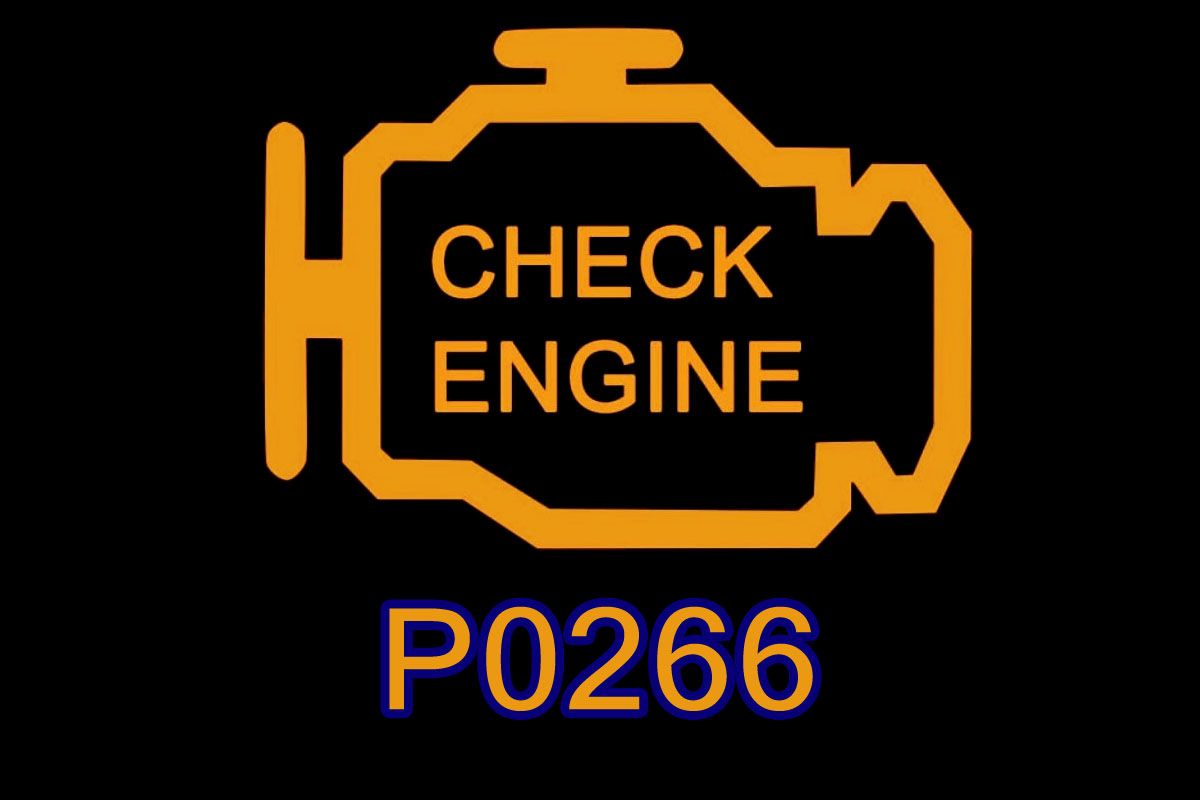
P0266 Cylinder 2 Contribution / Balance Fault
P0266 is a generic OBD-II diagnostic trouble code indicating that the engine control module (ECM/PCM) has determined that cylinder 2 is not contributing the expected amount of power compared with the other cylinders.
This is a cylinder performance or balance code, not a direct diagnosis of a faulty fuel injector.
The injector is certainly one possible cause, but P0266 can also be caused by an ignition problem, incorrect fuel delivery, low compression, valve-train problems, air leakage, incorrect engine timing, or other mechanical conditions.
What Does “Contribution / Balance” Mean?
Each cylinder should contribute a relatively similar amount of torque to the crankshaft when the engine is operating under comparable conditions.
The ECM can monitor small changes in crankshaft speed through the crankshaft position sensor. When a cylinder produces less combustion force than expected, the resulting change in crankshaft acceleration can be detected.
If cylinder 2 consistently falls outside the expected contribution range, the ECM may store P0266.
In simple terms:
P0266 means cylinder 2 is not contributing to engine operation as expected.
It does not tell you exactly why.
Does P0266 Mean the Injector Is Bad?
Not necessarily.
Because this code belongs to the cylinder contribution/balance group, the injector is only one possible source.
For example, cylinder 2 could have:
-
A restricted injector
-
Incorrect injector delivery
-
A weak ignition coil
-
A worn spark plug
-
Low compression
-
A leaking valve
-
A valve-train problem
-
An intake leak
-
A timing problem
The ECM only knows that the cylinder's contribution is abnormal. It does not necessarily know which component caused that condition.
This distinction prevents a common diagnostic mistake: replacing the cylinder 2 injector without first determining why the cylinder is weak.
Common Causes of P0266
Potential causes include:
-
Faulty fuel injector
-
Restricted or contaminated injector
-
Incorrect injector fuel delivery
-
Injector wiring or connector problem
-
Low fuel pressure
-
Insufficient fuel volume
-
Faulty spark plug on a gasoline engine
-
Weak ignition coil
-
Ignition wiring problem
-
Low cylinder compression
-
Burned or leaking valve
-
Damaged valve seat
-
Worn piston rings
-
Damaged piston
-
Valve-train fault
-
Camshaft or timing problem
-
Variable valve timing problem
-
Intake leak near cylinder 2
-
Air/fuel mixture problem
-
Engine mechanical damage
-
ECM control problem
The correct diagnostic path depends on the engine type and the symptoms accompanying the code.
Start With All DTCs
The first step should be a complete scan of the vehicle for stored and pending trouble codes.
P0266 becomes much easier to interpret when other codes are considered.
For example, if P0302 – Cylinder 2 Misfire Detected is also stored, there is strong evidence that cylinder 2 is experiencing a combustion problem.
If an injector circuit code is present, the injector's electrical control should be investigated.
If camshaft or crankshaft correlation codes are present, engine synchronization may need attention.
If several cylinders show contribution faults at the same time, look for a common fuel, air, ignition, timing, or engine-management problem rather than immediately replacing several individual components.
Check When the Problem Occurs
Freeze-frame data can provide valuable clues.
Pay attention to:
-
Engine RPM
-
Engine load
-
Coolant temperature
-
Vehicle speed
-
Fuel trims
-
Throttle position
-
Intake airflow or pressure
-
Fuel pressure, where available
A contribution problem that occurs only during acceleration is different from one that is present continuously at idle.
For example, if cylinder 2 performs normally at idle but becomes weak under heavy load, an ignition system that breaks down under high cylinder pressure or inadequate fuel delivery may deserve particular attention.
Check Cylinder 2 Fuel Delivery
If the engine uses conventional fuel injectors, inspect the cylinder 2 injector and its electrical connection.
Check for:
-
Loose connector terminals
-
Corrosion
-
Damaged wiring
-
Poor terminal tension
-
Oil or water contamination
-
Broken wires
-
Harness damage
Then verify that the injector is receiving the correct electrical command.
Depending on the vehicle, useful tests can include:
-
Injector electrical testing
-
Injector waveform analysis
-
Injector balance testing
-
Flow testing
-
Cylinder cut-out testing
-
Injector correction data on applicable diesel systems
A resistance measurement alone is not enough to establish that an injector is healthy.
An injector may have normal electrical resistance but still be restricted or mechanically defective.
An Injector Swap Can Help
Where the engine and injector system allow it, swapping the cylinder 2 injector with another compatible cylinder can be a useful diagnostic test.
If the contribution problem follows the injector, the injector becomes a strong suspect.
However, this should not be performed blindly on modern systems.
Some diesel injectors require individual coding or calibration, and some injectors cannot simply be exchanged between cylinders without following the manufacturer's procedure.
Gasoline Engines: Check the Ignition System
On a gasoline engine, ignition should be investigated early.
Cylinder 2's spark plug should be inspected for:
-
Excessive wear
-
Incorrect gap
-
Carbon deposits
-
Fuel fouling
-
Oil contamination
-
Abnormal deposits
The ignition coil can also be tested.
If the vehicle uses interchangeable coils, moving the cylinder 2 coil to another cylinder can provide a useful diagnostic clue.
If the misfire or contribution problem moves with the coil, the coil becomes a strong suspect.
Why a Coil Can Work at Idle but Fail Under Load
An ignition coil does not necessarily fail under every operating condition.
During heavy acceleration, cylinder pressure increases and the ignition system has to generate enough voltage to produce a reliable spark.
A weak coil, damaged boot, or insulation problem may therefore produce:
-
Normal idle operation
-
Normal light-load driving
-
Rough running during acceleration
-
Cylinder-specific misfire under heavy load
This is why checking only whether the engine starts and idles smoothly can miss an ignition fault.
Check Compression
If fuel and ignition systems appear normal, compression testing becomes an important next step.
Compare cylinder 2's compression with the other cylinders.
A significantly lower reading can indicate an internal mechanical problem such as:
-
Burned valve
-
Bent valve
-
Valve-seat problem
-
Worn piston rings
-
Damaged piston
-
Cylinder-wall wear
-
Head-gasket leakage
The manufacturer's compression-testing procedure and specifications should be followed.
The comparison between cylinders is often particularly useful because the absolute acceptable pressure varies considerably between engines.
Use a Leak-Down Test if Compression Is Low
If cylinder 2 has low compression, a leak-down test can help identify where the pressure is escaping.
Air escaping through the intake system can indicate an intake-valve sealing problem.
Air escaping through the exhaust system can point toward an exhaust-valve problem.
Air entering the crankcase can indicate piston, piston-ring, or cylinder-wall leakage.
Bubbles or pressure entering the cooling system can suggest a possible head-gasket or cylinder-head problem.
This can turn a general P0266 diagnosis into a much more specific mechanical diagnosis.
Valve-Train Problems Can Reduce Cylinder Contribution
Cylinder 2 may also produce insufficient power if its valves are not opening or closing correctly.
Possible causes include:
-
Worn camshaft lobe
-
Damaged rocker arm
-
Faulty hydraulic lifter
-
Incorrect valve clearance
-
Sticking valve
-
Broken valve spring
-
Variable valve timing problem
These faults can sometimes be difficult to detect through basic electronic testing.
If fuel, ignition, and compression results do not explain the problem, the valve-train should be inspected.
What About Engine Timing?
Incorrect camshaft timing can reduce cylinder contribution.
Possible causes include:
-
Stretched timing chain
-
Incorrectly installed timing components
-
Damaged timing component
-
VVT actuator problem
-
Oil-pressure-related VVT issue
However, do not automatically blame timing because P0266 is present.
If only cylinder 2 is showing a contribution problem, a cylinder-specific issue is generally more likely initially.
If several cylinders are affected or cam/crank synchronization codes are also present, overall engine timing becomes much more relevant.
Can an Intake Leak Cause P0266?
Yes.
An intake leak close to the runner supplying cylinder 2 can affect that cylinder more strongly than the others.
This may produce:
-
Rough idle
-
Lean mixture
-
Cylinder-specific misfire
-
Poor cylinder contribution
A smoke test can help identify external intake leaks.
Fuel-trim information can also provide useful clues, but fuel trims must be interpreted in the context of the engine's operating conditions rather than treated as proof of a particular fault.
Diesel Engine Considerations
On a diesel engine, the diagnostic process is somewhat different because there is no conventional spark ignition system.
Important areas include:
-
Injector correction values
-
Injector flow
-
Injector return/leak-off
-
Rail pressure
-
Fuel-pressure stability
-
Injector wiring
-
Compression
-
Valve-train operation
-
EGR operation
-
Turbocharger and air supply
-
Engine timing
A diesel injector can have acceptable electrical characteristics while still delivering fuel incorrectly.
Where supported by the vehicle, cylinder balance and injector correction data can provide valuable information.
How Serious Is P0266?
The seriousness depends on how much cylinder 2 is underperforming.
A minor contribution imbalance may cause little noticeable drivability trouble.
A severe problem can cause:
-
Rough idle
-
Engine vibration
-
Poor acceleration
-
Loss of power
-
Increased fuel consumption
-
Difficult starting
-
Increased emissions
-
Misfire-related problems
If a gasoline engine has a severe misfire and the check engine light is flashing, continued driving should be minimized because unburned fuel can overheat and damage the catalytic converter.
P0266 vs P0265 and P0267
These codes are related to cylinder 2 but describe different conditions.
P0265 – Cylinder 2 Injector Circuit High
This indicates an abnormally high electrical condition in the cylinder 2 injector circuit.
P0266 – Cylinder 2 Contribution / Balance Fault
This indicates that cylinder 2 is not contributing the expected amount of power compared with the other cylinders.
P0267 – Cylinder 3 Injector Circuit Low
This moves the injector-circuit diagnosis to cylinder 3 and describes a low electrical condition.
The important distinction is between P0265 and P0266.
P0265 is primarily an electrical injector-circuit diagnosis.
P0266 is primarily a cylinder performance/contribution diagnosis.
A Practical Diagnostic Order for P0266
A sensible diagnostic approach is:
-
Scan all stored and pending DTCs.
-
Examine freeze-frame data.
-
Confirm the physical location of cylinder 2 using manufacturer service information.
-
Check misfire counters and cylinder contribution data if available.
-
Inspect the cylinder 2 injector and connector.
-
Verify injector operation and fuel delivery.
-
On gasoline engines, inspect the spark plug and ignition coil.
-
Compare cylinder 2 with another cylinder where appropriate.
-
Check fuel pressure and fuel delivery if indicated.
-
Perform a compression test.
-
Perform a leak-down test if compression is abnormal.
-
Inspect the valve-train if mechanical evidence points in that direction.
-
Investigate cam timing and VVT when supported by the evidence.
-
Verify ECM control only after the injector, ignition, fuel, and mechanical systems have been properly evaluated.
Final Diagnosis
P0266 – Cylinder 2 Contribution / Balance Fault means that the ECM has detected that cylinder 2 is not producing the expected contribution to engine power compared with the other cylinders.
It is not an automatic injector failure code.
The injector may be restricted or malfunctioning, but the same code can result from a weak ignition system, insufficient fuel delivery, intake problems, low compression, valve leakage, valve-train problems, or incorrect engine timing.
The most effective diagnosis is therefore to treat P0266 as a “weak cylinder” warning and systematically determine whether the problem is fuel, ignition, air, compression, valve-train, timing, or electronic control. Only after those possibilities have been separated should a specific component be replaced.