TR
TR EN
EN

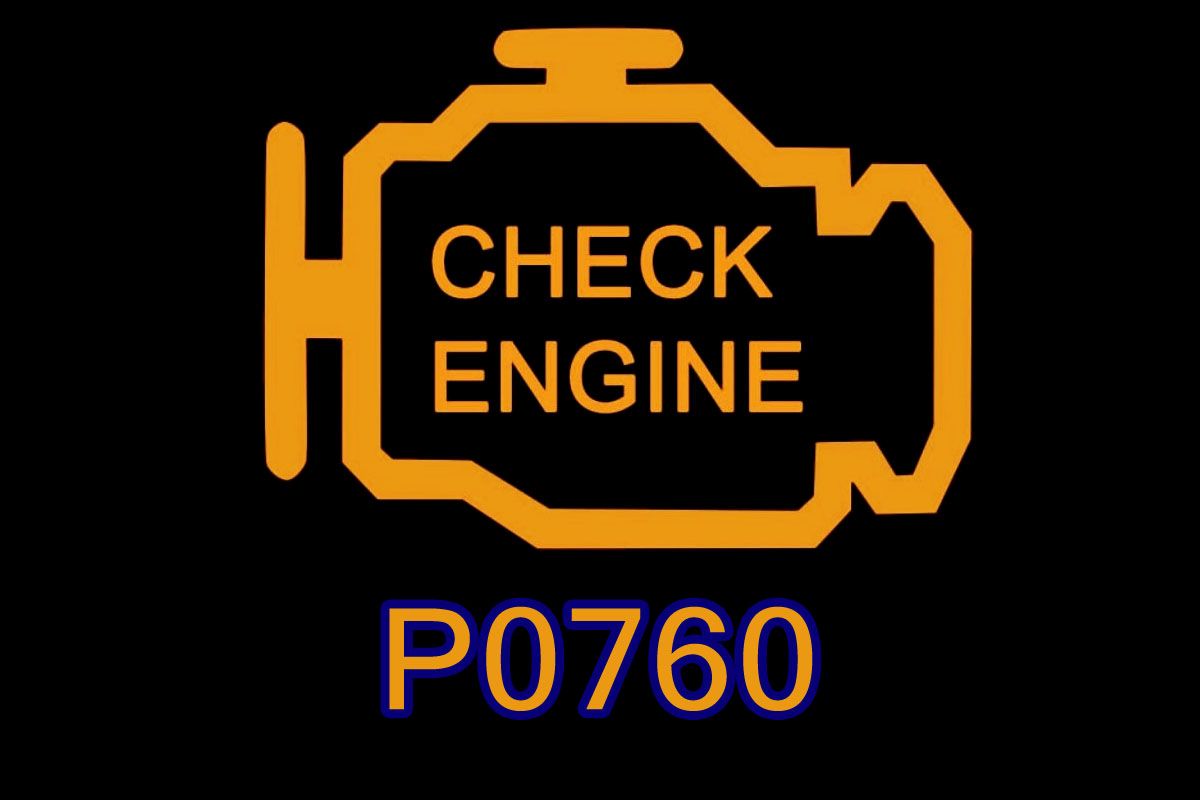
P0760 Shift Solenoid "C" Malfunction
The P0760 trouble code is an OBD-II diagnostic trouble code related to Shift Solenoid "C" in an automatic transmission.
P0760 – Shift Solenoid "C" Malfunction
This code means that the Transmission Control Module (TCM) has detected a general malfunction involving Shift Solenoid "C" or the hydraulic circuit controlled by that solenoid.
Unlike more specific codes such as:
-
P0761 – Shift Solenoid "C" Performance / Stuck Off
-
P0762 – Shift Solenoid "C" Stuck On
-
P0763 – Shift Solenoid "C" Electrical
-
P0764 – Shift Solenoid "C" Intermittent
P0760 is a broader diagnostic code. It tells the technician that the transmission system has identified a problem associated with Solenoid "C", but it does not immediately define whether the fault is electrical, mechanical or hydraulic.
Possible causes include a failed solenoid, wiring problems, poor electrical connections, contaminated transmission fluid, valve-body issues, low hydraulic pressure, internal transmission faults or, in rare cases, a defective TCM.
What Does P0760 Mean?
Automatic transmissions use several electronically controlled solenoids to direct transmission fluid through hydraulic passages.
The TCM determines when each solenoid should operate based on information such as:
-
Vehicle speed
-
Engine load
-
Throttle position
-
Engine RPM
-
Transmission temperature
-
Selected gear
-
Input shaft speed
-
Output shaft speed
The control sequence is generally:
TCM → Shift Solenoid "C" → Hydraulic Circuit → Clutch / Brake Application → Gear Change
If the TCM detects that the expected gear ratio, hydraulic response or solenoid operation does not match its calculations, it may store:
P0760 – Shift Solenoid "C" Malfunction
The code indicates a problem in the control system but does not automatically identify the exact component that has failed.
What Is Shift Solenoid "C"?
Shift Solenoid "C" is an electrically operated valve located inside the transmission.
When energized, the solenoid redirects hydraulic fluid through specific passages.
Depending on the transmission design, Solenoid "C" may affect:
-
Gear changes
-
Clutch engagement
-
Brake application
-
Shift timing
-
Hydraulic pressure
-
Certain gear combinations
There is no universal assignment for Solenoid "C".
The exact function varies between manufacturers and transmission models.
For this reason, manufacturer service information is important when diagnosing P0760.
Symptoms of P0760
The symptoms depend on the vehicle and the hydraulic circuit controlled by Solenoid "C".
Common symptoms include:
-
Check Engine Light
-
Transmission warning light
-
Harsh shifting
-
Delayed shifting
-
Erratic gear changes
-
Failure to shift
-
Missing gears
-
Unexpected downshifting
-
Transmission slipping
-
Shift flare
-
Delayed Drive engagement
-
Delayed Reverse engagement
-
Limp mode
-
Reduced acceleration
-
Poor fuel economy
-
Increased transmission temperature
Some vehicles may continue operating relatively normally, while others immediately enter fail-safe mode.
What Does P0760 Feel Like While Driving?
Harsh shifts
Incorrect hydraulic pressure can make gear changes feel unusually hard.
Delayed shifts
The transmission may hesitate before changing gears.
Missing gears
Certain gears may become unavailable.
Engine RPM flare
Engine speed may rise unexpectedly during a shift.
Transmission slipping
The transmission may fail to fully engage a clutch.
Limp mode
The vehicle may become limited to one or two gears.
Common Causes of P0760
Faulty Shift Solenoid "C"
The solenoid may fail electrically or mechanically.
Open circuit
A broken wire can interrupt control of the solenoid.
Short circuit
Damaged wiring may create abnormal electrical conditions.
Corroded connector
Poor electrical contact can affect operation.
Loose terminal
A connector may not maintain reliable contact.
Internal transmission harness problem
The internal wiring may be damaged.
Contaminated transmission fluid
Debris can interfere with solenoid or valve-body operation.
Low transmission fluid
Insufficient fluid can affect hydraulic pressure.
Incorrect transmission fluid
Wrong fluid can change hydraulic characteristics.
Valve-body problem
Worn or sticking valves can disrupt fluid flow.
Hydraulic leakage
Internal leakage can prevent proper pressure control.
Low line pressure
Pressure problems can affect shifting quality.
Mechanical transmission damage
Internal clutch or brake wear can contribute to abnormal operation.
TCM software issue
Outdated calibration can occasionally contribute to shift problems.
TCM failure
A defective control module is possible but less common.
Is P0760 Serious?
P0760 can be serious depending on the cause.
If the issue involves incorrect clutch application, slipping or hydraulic pressure loss, continued driving may increase transmission wear.
Potential consequences include:
-
Clutch damage
-
Overheating
-
Increased wear
-
Additional fault codes
-
Limp mode
However, P0760 does not automatically mean the transmission requires replacement.
The problem may be limited to:
-
A solenoid
-
Wiring
-
A connector
-
Transmission fluid
-
The valve body
Can You Drive With P0760?
If the vehicle shifts normally and there are no severe symptoms, a short drive to a repair facility may be possible.
Continued driving should be avoided if you experience:
-
Severe slipping
-
Violent shifting
-
Loss of gears
-
Overheating
-
Strong burnt-fluid smell
-
Persistent limp mode
A slipping transmission can quickly generate excessive heat and accelerate internal wear.
P0760 vs. P0761
P0761 – Shift Solenoid "C" Performance / Stuck Off
The system believes Solenoid "C" is not performing correctly or is remaining OFF.
P0760 – Shift Solenoid "C" Malfunction
A more general problem involving Solenoid "C".
P0760 vs. P0762
P0762 – Shift Solenoid "C" Stuck On
The solenoid remains active when it should be OFF.
P0760 – Shift Solenoid "C" Malfunction
The code does not specify the exact operating condition.
P0760 vs. P0763
P0763 – Shift Solenoid "C" Electrical
The problem specifically concerns the electrical circuit.
P0760 – Shift Solenoid "C" Malfunction
The issue may be electrical, hydraulic or mechanical.
P0760 vs. P0764
P0764 – Shift Solenoid "C" Intermittent
The fault appears only occasionally.
P0760 – Shift Solenoid "C" Malfunction
The system has detected a general abnormality.
Where Is Shift Solenoid "C"?
The location depends on the transmission design.
It may be:
-
Mounted in the valve body
-
Located under the transmission pan
-
Integrated into a solenoid pack
-
Installed inside a mechatronic unit
Access may require:
-
Removing the transmission pan
-
Removing the valve body
-
Removing a solenoid assembly
How to Diagnose P0760
Because P0760 is a general code, diagnosis should be systematic.
1. Scan for all diagnostic codes
Retrieve:
-
Current codes
-
Stored codes
-
Pending codes
-
Freeze-frame data
Additional transmission codes often provide valuable information.
2. Analyze freeze-frame information
Check:
-
Vehicle speed
-
Engine load
-
Gear position
-
Transmission temperature
-
Engine RPM
-
Battery voltage
This can help determine under what conditions the fault occurred.
3. Check transmission-fluid condition
Inspect:
-
Fluid level
-
Fluid color
-
Burnt smell
-
Metal particles
-
Clutch material contamination
Contaminated fluid can affect solenoids and hydraulic circuits.
4. Inspect electrical connectors
Look for:
-
Corrosion
-
Bent terminals
-
Loose pins
-
Water intrusion
-
Fluid contamination
5. Inspect wiring
Check for:
-
Broken wires
-
Chafing
-
Heat damage
-
Short circuits
-
Poor repairs
6. Test Solenoid "C" resistance
Measure resistance according to manufacturer specifications.
Abnormal readings can indicate:
-
Open circuit
-
Short circuit
-
Internal solenoid failure
7. Check solenoid operation
A scan tool can command the solenoid ON and OFF.
Observe whether the transmission responds correctly.
8. Inspect internal transmission wiring
Some transmissions contain internal harnesses that can fail.
9. Inspect the valve body
Look for:
-
Sticking valves
-
Worn bores
-
Debris
-
Hydraulic leakage
10. Check hydraulic pressure
Pressure testing can help identify internal hydraulic problems.
11. Evaluate the TCM
Only after other components have been tested should the TCM become a primary suspect.
Can a Bad Solenoid Cause P0760?
Yes.
An electrical or mechanical solenoid failure can cause this code.
Can Wiring Cause P0760?
Yes.
Broken, shorted or corroded wiring can interfere with control of Solenoid "C".
Can a Bad Connector Cause P0760?
Yes.
Poor terminal contact can affect electrical signals.
Can Dirty Transmission Fluid Cause P0760?
Yes.
Contamination can affect both the solenoid and the valve body.
Can Low Transmission Fluid Cause P0760?
Yes.
Low fluid can reduce hydraulic pressure and create shift problems.
Can Incorrect Transmission Fluid Cause P0760?
Yes.
Automatic transmissions are designed for specific fluid characteristics.
Incorrect fluid can affect pressure and shift quality.
Can a Bad Valve Body Cause P0760?
Yes.
Valve-body problems are a common cause of transmission-control issues.
Can a Bad TCM Cause P0760?
Yes, but it is less common.
The TCM should only be considered after electrical and hydraulic components have been checked.
Can P0760 Cause Harsh Shifting?
Yes.
Incorrect hydraulic pressure can create harsh shifts.
Can P0760 Cause Transmission Slipping?
Yes.
If clutch pressure is affected, slipping may occur.
Can P0760 Cause Limp Mode?
Yes.
The transmission may enter fail-safe operation.
Can P0760 Cause Overheating?
Yes.
Clutch slip and hydraulic problems can increase heat.
Can P0760 Damage the Transmission?
It can if the underlying problem causes slipping or excessive heat.
Early diagnosis is important.
Common Diagnostic Mistakes With P0760
-
Replacing the solenoid without testing the circuit
-
Ignoring transmission-fluid condition
-
Overlooking valve-body problems
-
Replacing the TCM too early
-
Assuming the transmission needs rebuilding immediately
-
Ignoring related transmission codes
What Is the Correct Repair for P0760?
Possible repairs include:
-
Replacing Shift Solenoid "C"
-
Repairing wiring
-
Repairing connectors
-
Cleaning corrosion
-
Replacing internal harnesses
-
Servicing the valve body
-
Correcting fluid level
-
Replacing contaminated fluid
-
Repairing hydraulic leaks
-
Updating TCM software
-
Reprogramming or replacing the TCM
-
Repairing internal transmission damage where necessary
Frequently Asked Questions About P0760
What does P0760 mean?
P0760 indicates a general malfunction involving Shift Solenoid "C" or the hydraulic circuit controlled by that solenoid.
Does P0760 mean the solenoid is bad?
Not always. Wiring, fluid problems, valve-body faults and hydraulic issues can also trigger the code.
Can dirty fluid cause P0760?
Yes.
Can low fluid cause P0760?
Yes.
Can wiring cause P0760?
Yes.
Can P0760 cause limp mode?
Yes.
Can P0760 cause slipping?
Yes.
Can I drive with P0760?
Short distances may be possible if the transmission operates normally, but severe symptoms require immediate diagnosis.
Does P0760 mean the transmission must be replaced?
No. Many P0760 cases are caused by repairable electrical or hydraulic issues.
Final Thoughts on P0760
P0760 – Shift Solenoid "C" Malfunction is a broad transmission code indicating that the TCM has detected abnormal operation involving Shift Solenoid "C".
Because this code can involve electrical, hydraulic or mechanical causes, diagnosis should follow a logical process:
Scan Tool → Freeze-Frame Data → Fluid Inspection → Wiring → Connector → Solenoid → Internal Harness → Valve Body → Hydraulic Pressure → TCM
A proper diagnosis often reveals a repairable issue such as a faulty solenoid, damaged wiring or contaminated fluid, making it important to avoid replacing major transmission components before the exact cause has been confirmed.