TR
TR EN
EN

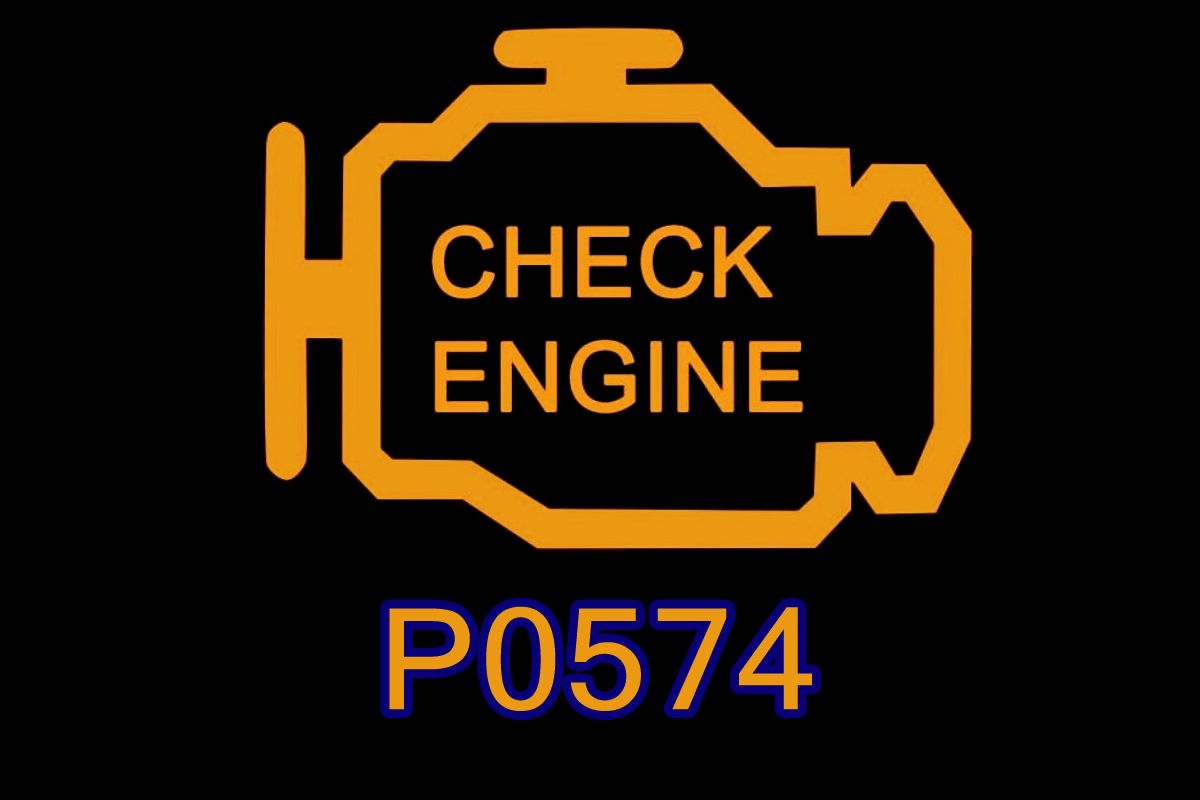
P0574 Cruise Control System – Vehicle Speed Too High
When P0574 is stored, the vehicle's control module has determined that the vehicle speed has exceeded the limit at which the cruise control system is allowed to operate.
Unlike many nearby P05xx codes, P0574 is not primarily an electrical circuit fault. It is related to the operating condition of the cruise control system and the vehicle speed being detected by the control module.
The important question is therefore not simply why the vehicle was traveling fast. The system needs to determine whether the vehicle really exceeded the permitted cruise-control speed, whether the speed signal was incorrect, or whether another problem caused the control module to interpret the situation incorrectly.
What Does P0574 Actually Mean?
Cruise control is designed to maintain a selected speed, but it also operates within certain safety and operating limits.
If the control module detects that the vehicle is traveling above its programmed or permitted cruise-control speed, it can disable cruise control and store P0574.
The exact threshold is manufacturer-dependent. There is no single universal speed at which every vehicle will set this code.
This means P0574 should not automatically be interpreted as:
“The driver was definitely driving too fast.”
The control module is responding to the vehicle-speed information available to it.
If that information is wrong, P0574 can potentially appear even when the actual vehicle speed is normal.
Why Is Vehicle Speed Important to Cruise Control?
Cruise control depends heavily on accurate vehicle-speed information.
The control module needs to know how fast the vehicle is actually traveling so that it can compare that speed with the driver's selected cruise speed.
For example, if the driver sets cruise control at 100 km/h, the system continuously monitors vehicle speed and adjusts the throttle or other control mechanisms to keep the vehicle close to the target.
If the module suddenly sees a vehicle speed that is much higher than the expected operating range, it can decide that cruise control should not remain active.
This is a safety feature.
Cruise control should never continue applying throttle when the system believes that the vehicle has already exceeded the permitted operating speed.
Does P0574 Mean the Speedometer Is Wrong?
Not necessarily.
The vehicle-speed information used by the engine or cruise-control module may come from wheel-speed sensors, the transmission, ABS/ESC module, or another vehicle-speed source depending on the vehicle's architecture.
The dashboard speedometer is therefore not always the only source of speed information involved in the diagnosis.
A problem with a wheel-speed sensor, ABS system, transmission speed sensor, wiring, or communication between modules can potentially affect the speed information used by cruise control.
This is why checking for other stored fault codes is particularly important with P0574.
What Can Cause P0574?
There are several possible explanations.
The simplest possibility is that the vehicle genuinely exceeded the cruise control system's permitted speed range.
However, if the code appears unexpectedly, other possibilities need to be considered.
A faulty or inaccurate vehicle-speed signal can cause the control module to believe that the vehicle is traveling faster than it actually is.
Depending on the vehicle, this could involve:
-
Wheel-speed sensor problems
-
Vehicle-speed sensor problems
-
Transmission speed-sensor faults
-
ABS/ESC system problems
-
Damaged speed-sensor wiring
-
Poor electrical connections
-
Incorrect tire size or significantly different tire circumference
-
Communication problems between control modules
-
Incorrect vehicle-speed data
-
Cruise-control module or PCM software/calibration issues
The correct possibilities depend heavily on how that particular vehicle calculates and distributes vehicle speed.
Tire Size Can Also Matter
Tire size is not normally the first thing you would suspect when P0574 appears, but it can become relevant if the vehicle has non-standard wheels or tires.
The control modules calculate vehicle speed based on rotational speed and programmed parameters.
Changing tire diameter significantly changes the relationship between wheel rotation and actual road speed.
A vehicle equipped with substantially different tire dimensions from those specified by the manufacturer can therefore produce unusual speed calculations or other ABS/ESC-related behavior.
This does not mean that every tire-size change will cause P0574, but it is worth considering when the vehicle has been modified.
What Symptoms Can Appear?
The most obvious symptom is that cruise control becomes unavailable or disengages.
You may also notice:
-
Cruise control refuses to activate
-
Cruise control suddenly disengages
-
Check Engine Light illuminates
-
Cruise control warning appears
-
Vehicle-speed information behaves abnormally
-
Speedometer fluctuations
-
ABS or traction-control warning lights
-
Other vehicle-speed-related fault codes
If P0574 is caused simply by the vehicle exceeding the cruise-control operating limit, there may be no noticeable drivability problem at all.
If the underlying problem is an inaccurate speed signal, however, other symptoms may appear.
The Most Important Diagnostic Question
When diagnosing P0574, one of the first questions should be:
Was the vehicle actually traveling faster than the cruise-control system's permitted operating range when the code was stored?
If the answer is yes, the code may have been triggered as intended.
But if the code appeared during ordinary driving, especially at moderate speeds, then the speed signal needs to be investigated.
This distinction can save a lot of unnecessary parts replacement.
Check the Freeze-Frame Data
If the scan tool provides freeze-frame information, look at the conditions recorded when P0574 was stored.
Useful information can include:
-
Vehicle speed
-
Engine RPM
-
Throttle position
-
Brake switch status
-
Cruise control status
-
Wheel speeds
-
Transmission gear
-
Battery voltage
-
Other related parameters
If the freeze-frame data shows an unusually high vehicle speed, you can determine whether the code was logically triggered by the operating condition.
If the recorded speed is obviously inconsistent with the actual driving conditions, the speed-information system becomes much more suspicious.
Compare the Speed Signals
Modern vehicles may have several modules that know the vehicle's speed.
For example, the ABS/ESC module may calculate wheel speed from individual wheel-speed sensors, while the PCM receives vehicle-speed information from another module over the vehicle communication network.
If the scan tool allows access to live data, compare the available speed values.
If one wheel reports a significantly different speed from the others, that can point toward a wheel-speed sensor, tone ring, bearing, wiring, or related issue.
If the wheel speeds appear normal but the PCM receives an incorrect vehicle-speed value, the problem may be further upstream in the communication or signal-processing system.
Don't Immediately Replace a Speed Sensor
A speed-related code does not automatically mean the speed sensor is defective.
A sensor can report incorrect information because of:
-
Damaged wiring
-
Corroded connector
-
Excessive sensor-to-reluctor gap
-
Damaged tone ring
-
Wheel-bearing problems
-
Metal contamination
-
Incorrect installation
-
Mechanical damage
For wheel-speed sensors in particular, the physical condition of the tone ring or encoder is just as important as the sensor itself.
Replacing the sensor without checking these areas can result in the same problem returning.
Check the Brake and Cruise Control Inputs
The cruise control system also needs reliable information from other inputs.
The brake switch is especially important because pressing the brake should immediately cancel cruise control.
If the vehicle has multiple cruise-control-related codes at the same time, the brake switch, accelerator/throttle position, and other inputs should be checked alongside the speed signal.
A fault in one system can sometimes cause the cruise control module to disable itself and store additional codes.
Could P0574 Be a Software Problem?
In some vehicles, control-module software or calibration can influence how cruise control responds to vehicle speed.
If all sensors and wiring test correctly, but the code repeatedly returns under conditions that do not make sense, manufacturer-specific technical service information should be checked.
There may be a known software update or revised calibration for the relevant control module.
This is another reason why replacing hardware should not always be the first response to P0574.
Can You Drive With P0574?
In many cases, the vehicle can still be driven normally.
The main effect is usually the loss or disabling of cruise control.
However, if P0574 is accompanied by ABS, ESC, transmission, speed-sensor, or other vehicle-speed-related warning lights, the situation deserves more attention.
Accurate vehicle-speed information is important for several systems, not just cruise control.
If the speedometer is behaving abnormally or multiple stability-control warnings are present, the vehicle should be diagnosed before relying on systems that depend on accurate speed information.
P0574 vs. P0575 and Nearby Codes
P0574 belongs to a group of cruise-control codes, but it describes a very different type of problem from the input-circuit codes.
P0574 – Cruise Control System – Vehicle Speed Too High
P0575 – Cruise Control Input Circuit
P0576 – Cruise Control Input Circuit Low
P0577 – Cruise Control Input Circuit High
P0578 – Cruise Control Multi-Function Input "A" Circuit Malfunction
P0579 – Cruise Control Multi-Function Input "A" Circuit Range/Performance
The distinction is important.
P0576 and P0577 are concerned with the electrical condition of an input circuit, whereas P0574 is concerned with the vehicle-speed condition detected by the cruise-control system.
The Right Way to Approach P0574
P0574 should first be treated as a vehicle-speed plausibility and cruise-control operating-condition problem, rather than immediately as a failed cruise-control component.
If the vehicle really exceeded the cruise-control speed limit, the code may simply reflect a condition the system was designed to detect.
If it appeared unexpectedly, the next step is to determine whether the control module received an incorrect speed signal.
That means checking the freeze-frame data, looking at live vehicle-speed information, comparing wheel-speed readings where available, checking ABS/ESC and transmission-related codes, and inspecting the relevant sensors and wiring.
The key is to establish whether the vehicle was actually traveling too fast or the control module only thought it was. Once that distinction is made, diagnosing P0574 becomes considerably easier.