TR
TR EN
EN

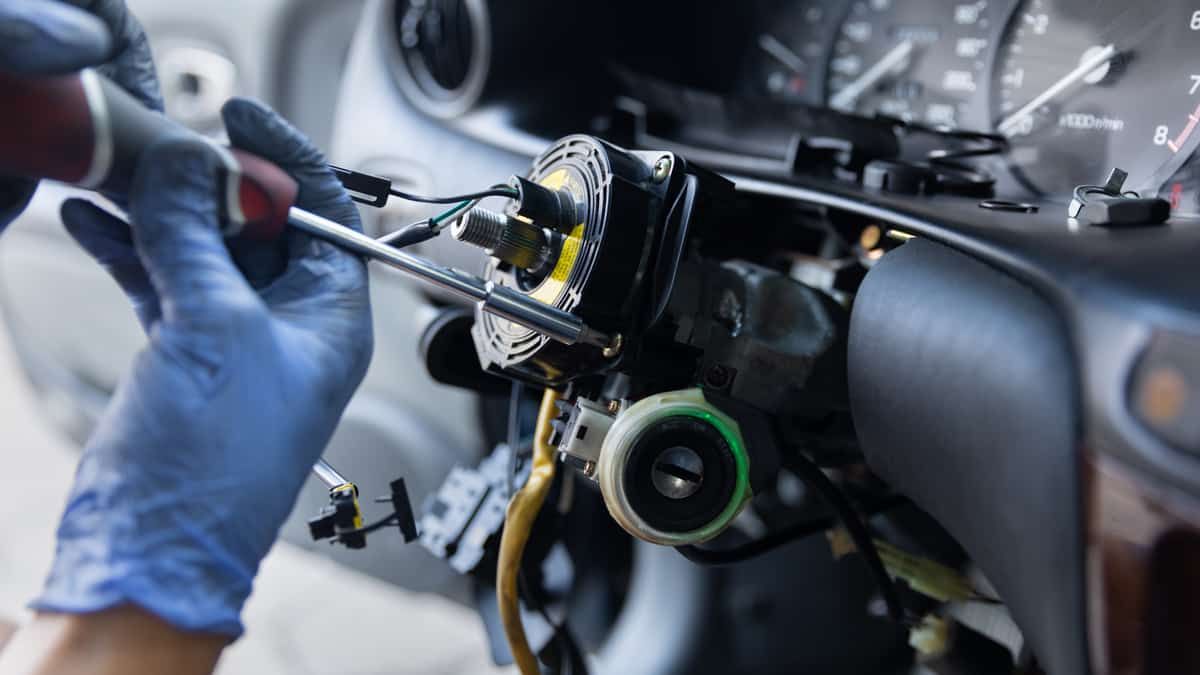
What Is a Steering Wheel Clock Spring? What Are the Symptoms of Clock Spring Failure?
The steering wheel clock spring is a small but extremely important component located behind the steering wheel. It allows electrical connections between the steering wheel and the vehicle's electrical systems to remain connected while the steering wheel is continuously rotated left and right.
The component is especially important in vehicles equipped with a driver airbag, horn, steering-wheel-mounted audio controls, cruise control buttons, paddle shifters, or other steering-wheel controls.
When the clock spring fails, some steering-wheel functions may stop working. In more serious cases, it can also cause an airbag warning light and affect the electrical connection of the driver's airbag.
What Is a Steering Wheel Clock Spring?
A steering wheel clock spring, also known as a spiral cable or steering wheel coil, is a flexible electrical connection installed between the stationary steering column and the rotating steering wheel.
The steering wheel may rotate several turns from one side to the other. Normal electrical wiring cannot simply be connected directly between the steering wheel and the vehicle because conventional wires would twist and eventually break.
The clock spring solves this problem.
Inside the housing is a long, flexible ribbon cable wound into a spiral. As the steering wheel turns, the ribbon cable winds and unwinds inside the housing while maintaining electrical continuity.
This allows electrical signals to pass between the steering wheel and the vehicle without conventional wires becoming twisted.
Where Is the Clock Spring Located?
The clock spring is normally mounted directly behind the steering wheel, around the steering column.
Its exact design varies between vehicles, but the typical arrangement is:
-
Steering wheel
-
Driver airbag module
-
Steering wheel controls
-
Clock spring
-
Steering column
-
Steering column control modules and wiring
Because the clock spring is located behind the steering wheel, accessing it usually requires removal of the airbag and steering wheel.
This means clock spring replacement should be performed carefully because the driver's airbag is located in the same area.
What Does the Clock Spring Do?
The primary function of the clock spring is to maintain electrical connections while the steering wheel rotates.
Depending on the vehicle, the clock spring may carry electrical circuits for:
-
Driver airbag
-
Horn
-
Steering wheel audio controls
-
Cruise control buttons
-
Telephone controls
-
Instrument cluster controls
-
Paddle shifters
-
Steering wheel heating
-
Other steering-wheel-mounted electrical functions
Not every vehicle routes all of these systems through the clock spring. The exact functions depend on the vehicle's electrical architecture.
How Does a Clock Spring Work?
The clock spring contains a flat ribbon cable wound inside a plastic housing.
When the steering wheel turns in one direction, the ribbon cable winds further. When the steering wheel turns in the opposite direction, it unwinds.
The housing itself remains stationary with the steering column while the internal rotating section follows the steering wheel.
This allows the electrical circuits to remain connected even though the steering wheel can rotate continuously within its normal steering range.
A properly centered clock spring is particularly important.
If the steering wheel or clock spring is removed and the clock spring is installed in the wrong rotational position, the ribbon cable may reach its mechanical limit when the steering wheel is turned fully in one direction. This can damage the ribbon cable.
Why Is the Clock Spring Important for the Airbag?
One of the most important circuits passing through many clock springs is the driver's airbag circuit.
The airbag module is mounted directly in the steering wheel, while the airbag control module and associated wiring are connected to the vehicle.
The clock spring provides the electrical connection between them while allowing the steering wheel to rotate.
If this circuit becomes open or develops excessive resistance, the vehicle may detect an airbag system fault and illuminate the airbag warning light.
This is why a clock spring problem should not be treated as simply a horn or steering-wheel-control problem.
Common Symptoms of a Bad Clock Spring
A failing clock spring can produce several different symptoms. The exact symptoms depend on which internal circuit has been damaged.
Some failures affect only one steering-wheel function, while others can disable several systems simultaneously.
Airbag Warning Light
One of the most common symptoms is an illuminated airbag or SRS warning light.
If the ribbon cable inside the clock spring breaks, the electrical connection to the driver's airbag may become interrupted.
The airbag control module can detect this condition and store a diagnostic trouble code.
However, an airbag warning light does not automatically mean the clock spring is defective.
Other problems can produce similar symptoms, including:
-
Damaged airbag wiring
-
Loose connectors
-
Faulty airbag module
-
Low system voltage
-
SRS control module problems
-
Connector resistance
-
Other electrical faults
A proper diagnostic scan is therefore important.
Horn Stops Working
A failed clock spring can also cause the horn to stop working.
The horn button is located on the steering wheel, while the horn relay and horn circuit are located elsewhere in the vehicle.
The electrical connection between the steering wheel button and the vehicle may pass through the clock spring.
If that circuit inside the clock spring becomes open, pressing the horn button may produce no response.
However, a failed horn fuse, relay, horn unit, wiring, or switch can cause the same symptom.
Steering Wheel Controls Stop Working
If the steering wheel has audio, telephone, cruise control, or other buttons, a clock spring problem may cause some or all of them to stop functioning.
For example, you may notice that:
-
Volume buttons do not work
-
Audio track buttons stop responding
-
Cruise control buttons become inactive
-
Telephone buttons stop working
-
Paddle shifters do not respond
-
Other steering-wheel controls become intermittent
If several steering-wheel-mounted electrical functions fail at the same time, the clock spring becomes an important diagnostic possibility.
Steering Wheel Controls Work Intermittently
A clock spring does not always fail completely.
The ribbon cable can develop an intermittent electrical connection as it becomes damaged or worn.
In this situation, a steering-wheel button may work when the steering wheel is in one position but stop working when the wheel is turned.
For example, the horn might work when the steering wheel is straight but fail when the wheel is turned.
This behavior can be particularly useful during diagnosis because the fault may change according to steering-wheel position.
Airbag Light Comes and Goes
An intermittent ribbon cable connection can also cause the airbag warning light to appear and disappear.
The SRS control module continuously monitors important circuits. If the electrical connection is interrupted temporarily, a fault may be stored.
Even if the warning light later goes out, the fault should not be ignored.
An intermittent airbag circuit can represent a genuine safety-system problem.
Cruise Control or Steering-Wheel Buttons Stop Working
In some vehicles, several steering-wheel functions share electrical pathways through the clock spring.
If the clock spring develops an internal circuit failure, cruise control buttons or other controls may stop working.
The failure may affect only one circuit, however, so it is possible for the horn to continue working while the cruise control buttons do not.
This depends on the internal design of the particular clock spring.
Paddle Shifters May Stop Working
Vehicles with steering-wheel-mounted paddle shifters may also experience paddle-related problems when the relevant clock spring circuit fails.
You might notice that:
-
One paddle stops responding
-
Both paddles stop responding
-
Gear selection becomes intermittent
-
Paddle commands work only at certain steering angles
Again, this symptom is not exclusive to the clock spring. Wiring, switches, steering-column modules, or transmission-control systems can also cause similar problems.
Steering Wheel Heating May Stop Working
Some vehicles route steering-wheel heating circuits through the clock spring.
If the corresponding circuit becomes damaged, the steering wheel may no longer heat even though the rest of the system appears normal.
Because heated steering wheels can require relatively high current compared with simple button circuits, the internal design of the clock spring and its connectors varies considerably between vehicles.
Clicking or Scraping Noise From Behind the Steering Wheel
A damaged or incorrectly positioned clock spring can sometimes produce unusual sounds when the steering wheel is rotated.
Possible noises include:
-
Clicking
-
Scraping
-
Rubbing
-
Ticking
-
Plastic-on-plastic contact
However, noise alone does not prove that the clock spring has failed.
Steering-column components, trim panels, switches, bearings, or other components can also create noises behind the steering wheel.
Does a Bad Clock Spring Affect Steering?
Normally, the clock spring itself does not control the mechanical steering system.
It is an electrical component.
Therefore, a clock spring failure generally does not cause:
-
Heavy steering
-
Steering wheel play
-
Poor wheel alignment
-
Mechanical steering looseness
-
Loss of steering assistance
If the steering becomes physically difficult to turn, the problem should not automatically be attributed to the clock spring.
The steering system, electric power steering system, hydraulic power steering system, steering rack, suspension, or other mechanical components should be investigated separately.
What Causes Clock Spring Failure?
Clock springs can fail for several reasons.
Normal Wear
The ribbon cable repeatedly winds and unwinds every time the steering wheel is turned.
Over many years and thousands of steering cycles, the flexible cable and its internal connections can wear.
This is one of the most common reasons for eventual failure.
Incorrect Installation
Incorrect installation can cause premature failure.
The clock spring must generally be installed in its specified centered position.
If it is installed too far clockwise or counterclockwise, the ribbon cable may reach the end of its travel when the steering wheel is turned.
This can stretch or tear the ribbon cable.
Steering Wheel Removal
A clock spring can be damaged during steering wheel removal or installation.
Improper handling, forcing the component, rotating it while disconnected, or installing the steering wheel in an incorrect position can create problems.
This is particularly important after steering-wheel or steering-column work.
Previous Steering or Suspension Repairs
Certain repairs require the steering wheel to be removed or the steering system to be disturbed.
If the clock spring was not correctly centered afterward, it may eventually fail.
A clock spring problem appearing immediately after steering-wheel-related work deserves particular attention.
Physical Damage
The plastic housing, internal mechanism, connectors, or ribbon cable can be physically damaged.
Impact, improper handling, contamination, or excessive rotational force can contribute to failure.
Electrical Connector Problems
Sometimes the clock spring itself is not the problem.
A loose connector, damaged terminal, corrosion, poor electrical contact, or damaged wiring can create symptoms that look like a clock spring failure.
This is why replacing the clock spring without testing the circuits can lead to unnecessary expense.
How Is a Clock Spring Diagnosed?
Proper diagnosis should begin with a complete scan of the relevant vehicle modules.
The technician may check:
-
SRS/airbag fault codes
-
Steering-column module codes
-
Body control module codes
-
Steering wheel control-related codes
-
Communication faults
-
Live data where supported
The stored fault code can provide valuable information about the affected circuit.
Check Which Functions Have Failed
The next step is to determine exactly what has stopped working.
For example:
If only the horn has stopped working, the clock spring is one possibility, but the horn circuit should also be checked.
If the airbag warning light, horn, steering-wheel controls, and cruise control all fail together, the clock spring becomes a much stronger suspect.
Check the Clock Spring Position
If recent steering-wheel or steering-column work has been performed, the clock spring's centered position should be checked according to the manufacturer's procedure.
Do not simply rotate the clock spring randomly to find its center.
Many clock springs have a specific centering procedure or locking mechanism.
Check Wiring and Connectors
The connectors associated with the clock spring should be inspected for:
-
Loose terminals
-
Corrosion
-
Broken locking tabs
-
Damaged wires
-
Poor contact
-
Physical damage
The airbag connector should be handled according to the vehicle manufacturer's safety procedure.
Electrical Testing
Depending on the circuit and manufacturer's diagnostic procedure, electrical tests can help determine whether the circuit is open or has excessive resistance.
However, airbag circuits require special care.
A technician should follow the manufacturer's SRS testing procedures and use appropriate equipment. Improper probing or testing of an airbag circuit can create a serious safety hazard.
Can a Clock Spring Be Repaired?
In most cases, replacing the complete clock spring assembly is the preferred repair.
Although the internal ribbon cable may technically be repairable in some situations, opening and repairing an airbag-related clock spring can compromise reliability.
A properly specified replacement assembly is generally the safer solution.
The replacement part must be correct for the vehicle and equipment level because different versions may have different numbers of electrical circuits and different steering-wheel functions.
What Happens If You Continue Driving With a Bad Clock Spring?
The consequences depend on which circuit has failed.
If only a steering-wheel control circuit has failed, the vehicle may continue to operate normally from a basic driving perspective.
However, if the driver's airbag circuit is affected, the problem is much more serious.
An SRS warning light can indicate that the airbag system has detected a fault, and the driver's airbag may not operate as intended in a collision.
For this reason, an airbag-related clock spring fault should be diagnosed and repaired as soon as possible.
Is It Safe to Replace a Clock Spring Yourself?
Clock spring replacement involves working around the driver's airbag.
For this reason, it is not a component that should be treated like an ordinary switch or electrical connector.
The correct procedure varies by vehicle and may include:
-
Disabling the SRS system according to manufacturer instructions
-
Waiting the specified period
-
Removing the airbag module correctly
-
Disconnecting the required connectors
-
Removing the steering wheel
-
Centering or locking the clock spring
-
Installing the replacement component
-
Correctly aligning the steering wheel
-
Performing required calibration or initialization
-
Scanning the vehicle for SRS faults
If you are not familiar with automotive airbag systems, professional repair is strongly recommended.
Can a Clock Spring Cause an Airbag Light?
Yes.
A broken or electrically open clock spring circuit can cause the SRS system to detect a problem with the driver's airbag circuit.
The vehicle may store a fault code related to:
-
Open circuit
-
High resistance
-
Intermittent connection
-
Driver airbag circuit
-
Steering-wheel electrical connection
But an airbag warning light alone cannot confirm clock spring failure.
The diagnostic code and circuit testing are needed to identify the actual cause.
Can a Bad Clock Spring Cause a Horn Failure?
Yes.
If the horn switch circuit passes through the clock spring, an internal break can prevent the horn signal from reaching the rest of the vehicle.
However, the horn itself, fuse, relay, wiring, body control module, or horn switch may also be responsible.
The clock spring should therefore be tested rather than replaced based solely on a non-functioning horn.
Clock Spring vs. Steering Angle Sensor
The clock spring and steering angle sensor are different components, although they may be integrated into the same steering-column assembly on some vehicles.
The clock spring provides electrical connections between the stationary and rotating parts of the steering system.
The steering angle sensor measures steering-wheel or steering-column rotation and provides position information to systems such as:
-
Electronic Stability Control
-
Traction control
-
Electric power steering
-
Driver assistance systems
Some vehicles combine the two components into a single assembly.
Therefore, the exact configuration must be checked for the specific vehicle.
Can a Clock Spring Cause ABS or ESP Problems?
A clock spring itself does not normally control ABS operation.
However, if the steering angle sensor is integrated with the clock spring assembly and that sensor loses communication or its calibration becomes invalid, systems such as ESC or traction control may display warning lights.
Possible symptoms can include:
-
ABS warning light
-
ESC/ESP warning light
-
Traction control warning
-
Steering warning
-
Steering angle-related fault codes
This is why multiple warning lights appearing after steering-wheel or clock-spring work may require steering angle sensor calibration.
Steering Angle Sensor Calibration After Clock Spring Replacement
Some vehicles require steering angle sensor calibration after clock spring replacement.
This may be necessary because the steering angle sensor needs to know the straight-ahead reference position.
Depending on the vehicle, calibration may require:
-
A diagnostic scan tool
-
Correct steering wheel alignment
-
Straight-ahead wheel position
-
A calibration or relearn procedure
-
Clearing related fault codes
Not every vehicle requires the same procedure, so the manufacturer's service information should be followed.
How Long Does a Clock Spring Last?
There is no universal replacement interval for a clock spring.
It is generally replaced when it develops a fault rather than at a predetermined mileage.
Service life can depend on:
-
Vehicle age
-
Number of steering cycles
-
Clock spring design
-
Installation quality
-
Previous steering-wheel repairs
-
Physical damage
-
Manufacturing quality
A vehicle can operate for many years without clock spring problems, while another may experience a failure much earlier.
Important Signs That Point Toward a Clock Spring Problem
A combination of symptoms is more useful than any single symptom.
A clock spring should be considered when you have several of the following at the same time:
-
Airbag warning light
-
Horn not working
-
Steering-wheel buttons not working
-
Cruise control buttons not responding
-
Paddle shifters not working
-
Steering-wheel heating failure
-
Intermittent steering-wheel controls
-
Symptoms that change when the steering wheel is turned
-
Clicking or rubbing from behind the steering wheel
-
SRS fault codes related to the driver's airbag circuit
The strongest clue is often the combination of an airbag warning with multiple steering-wheel electrical functions failing simultaneously.
Final Thoughts
The steering wheel clock spring is a relatively small component, but it provides a critical electrical connection between the rotating steering wheel and the stationary steering column.
It can carry circuits for the driver's airbag, horn, steering-wheel controls, cruise control, paddle shifters, steering-wheel heating, and other equipment depending on the vehicle.
A faulty clock spring can therefore cause a wide range of electrical symptoms. The most recognizable signs include an airbag warning light, a non-functioning horn, steering-wheel buttons that stop responding, intermittent controls, and faults that change with steering-wheel position.
However, these symptoms can also be caused by wiring, connectors, switches, steering-column modules, steering angle sensors, or other electrical components.
For that reason, the correct approach is to scan the vehicle, identify the affected circuits, inspect the connectors and wiring, verify the clock spring's position, and perform the appropriate electrical tests before replacing the part.
Because the clock spring is closely associated with the driver's airbag, replacement should be carried out using the correct vehicle-specific safety and installation procedures. A correctly centered and properly installed clock spring is essential for reliable operation and to prevent damage to the internal ribbon cable.