TR
TR EN
EN

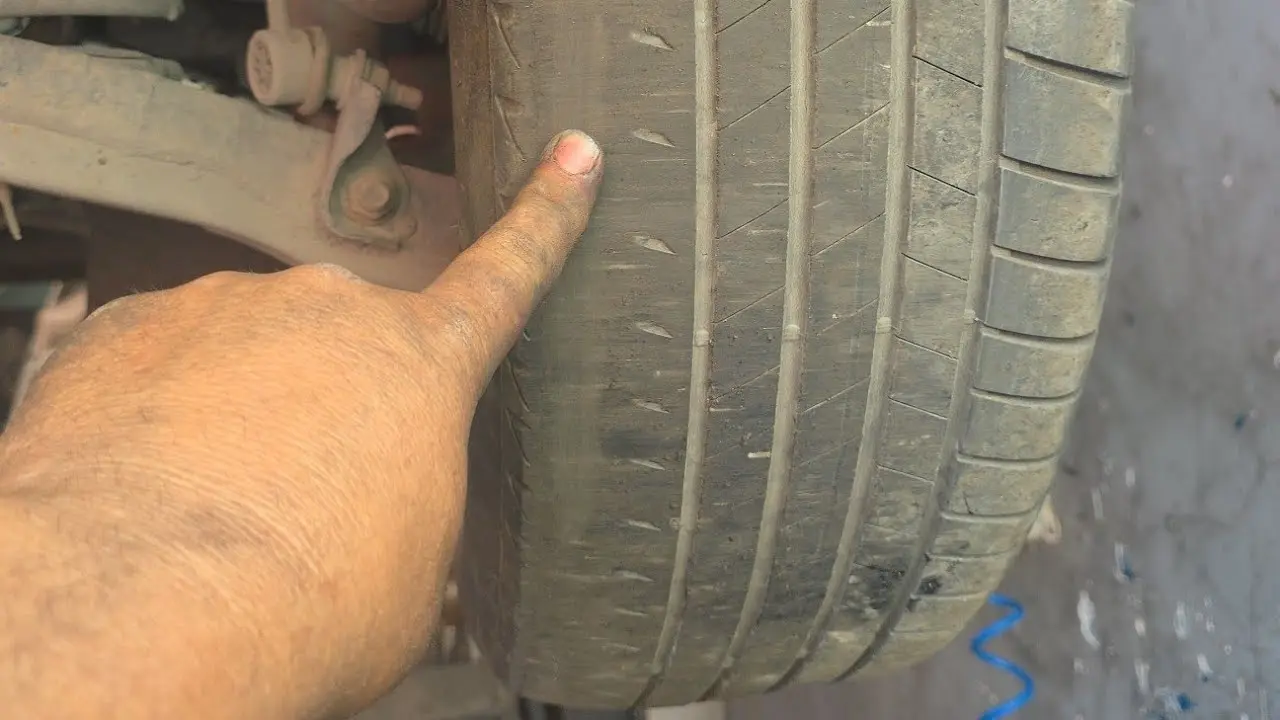
Why Does Tire Wear Occur? What Are the Symptoms?
Tire wear is a natural result of driving, but the way a tire wears can reveal important information about the vehicle. Tires that wear evenly usually indicate that the suspension, steering, wheel alignment, tire pressure, and driving conditions are working together properly. Uneven or accelerated wear, however, can point to an underlying mechanical or maintenance problem.
Ignoring abnormal tire wear can reduce grip, increase braking distance, increase fuel consumption, and in severe cases create a serious safety risk.
What Causes Tire Wear?
Several different factors can cause tires to wear faster than expected. Sometimes the problem is as simple as incorrect tire pressure, while in other cases the cause may be related to wheel alignment or worn suspension components.
Incorrect tire pressure
Tire pressure is one of the most common causes of abnormal tire wear.
When a tire is underinflated, its shoulders tend to carry more of the load. This can cause the outer edges of the tread to wear faster than the center.
Overinflation has the opposite effect. The center of the tread can become more heavily loaded, resulting in faster wear in the middle of the tire.
Incorrect pressure also affects handling, braking, fuel consumption, and tire temperature.
Incorrect wheel alignment
Wheel alignment problems are another major cause of uneven tire wear.
The main alignment angles include camber, toe, and caster. Among these, incorrect toe and camber are particularly noticeable when diagnosing abnormal tire wear.
For example, if the toe setting is incorrect, the tire may be forced to scrub across the road instead of rolling straight. This can produce rapid and irregular tread wear.
Camber problems can cause one side of the tread to wear considerably faster than the other.
If a tire begins wearing on one edge shortly after installation, checking the alignment should be one of the first diagnostic steps.
Worn Suspension or Steering Components
A vehicle can have correct wheel alignment while parked on an alignment machine but still develop abnormal tire wear if suspension or steering components are worn.
Components such as:
-
Control arm bushings
-
Ball joints
-
Tie rod ends
-
Wheel bearings
-
Shock absorbers
-
Strut mounts
-
Suspension arms
can affect the way the wheel maintains contact with the road.
Excessive play in these components can allow the wheel angle to change while driving, especially during braking, acceleration, or cornering.
This can produce irregular tread patterns and make the vehicle feel unstable.
Worn or Weak Shock Absorbers
Shock absorbers play an important role in keeping the tire firmly in contact with the road.
When a shock absorber is worn, the wheel can bounce excessively after passing over bumps. This may produce a distinctive uneven wear pattern sometimes described as cupping or scalloping.
A tire with this type of wear may also become noticeably noisier while driving.
If the tire is replaced without repairing the worn suspension component, the new tire may eventually develop the same problem.
Aggressive Driving and Hard Cornering
Driving style also has a significant effect on tire life.
Frequent hard acceleration, heavy braking, high-speed cornering, and sudden steering movements place additional stress on the tread.
Performance-oriented driving can naturally consume tires faster than normal daily driving.
This does not necessarily indicate a mechanical fault, but unusually aggressive driving can make an existing alignment or suspension problem much more noticeable.
Road Conditions
Poor road surfaces can accelerate tire wear.
Potholes, broken asphalt, sharp road edges, and uneven surfaces can damage both tires and suspension components.
A severe impact can even change the wheel alignment suddenly. In some cases, the driver may not notice the alignment problem immediately, but uneven tire wear will appear later.
This is one reason why a vehicle that has suffered a strong pothole impact should be inspected even if the tire does not appear visibly damaged.
Incorrect Tire Rotation
Front and rear tires do not always wear at the same rate.
On many front-wheel-drive vehicles, the front tires perform the steering, braking, and most of the driving work. As a result, they may wear faster than the rear tires.
Regular tire rotation, when permitted by the tire and vehicle manufacturer, can help distribute wear more evenly.
However, tires with different sizes or directional/asymmetric designs may have specific rotation restrictions. Rotation should therefore always follow the tire manufacturer's and vehicle manufacturer's recommendations.
Tire Age
Tire wear is not determined only by tread depth.
Rubber compounds become harder and can lose some of their original flexibility as a tire ages. Environmental conditions, storage, sunlight, temperature, and usage all influence aging.
An old tire can therefore become less reliable even if it still appears to have usable tread depth.
The tire's production date should be considered together with its physical condition, tread depth, cracks, deformation, and overall performance.
What Are the Symptoms of Abnormal Tire Wear?
The most obvious symptom is a tread pattern that does not look uniform.
Some common warning signs include:
Wear on both outer edges
This can be associated with underinflation, although other factors should also be considered.
Wear mainly in the center
This can occur when tire pressure is too high.
Wear on only one side
This often points toward an alignment or suspension geometry problem, particularly incorrect camber or toe.
Sawtooth or feathered tread
A feathered tread pattern can be associated with incorrect toe alignment. When you run your hand across the tread, the blocks may feel smoother in one direction and sharper in the other.
Cupping or scalloping
Repeated high and low spots around the tread can be related to worn shock absorbers, suspension problems, wheel imbalance, or other issues that prevent the tire from maintaining consistent road contact.
Vibration through the steering wheel
Tire imbalance, wheel deformation, tire damage, or suspension problems can cause vibration. If vibration appears together with abnormal tread wear, the tire and wheel assembly should be inspected.
Increased road noise
Abnormal tread wear can make a tire significantly louder, particularly at certain speeds.
Vehicle pulling to one side
If the car consistently moves toward the left or right when driving on a reasonably flat road, possible causes include alignment problems, tire pressure differences, tire condition, brake drag, or suspension issues.
Why Is Uneven Tire Wear Dangerous?
Uneven wear reduces the tire's ability to provide consistent contact with the road.
A heavily worn section can have significantly less grip than the rest of the tread. This becomes especially important on wet roads, where tread depth and tread condition influence the tire's ability to evacuate water.
Abnormal wear can also affect braking stability and steering response.
In addition, when one tire has significantly different tread depth from the others, the vehicle may behave differently during emergency maneuvers or sudden braking.
For vehicles equipped with all-wheel drive, differences in tire circumference can also be particularly important because the drivetrain may be sensitive to differences between the tires.
How Can Tire Wear Be Prevented?
Preventing abnormal tire wear is mainly a matter of regular inspection and maintenance.
Check tire pressures regularly and use the pressure recommended by the vehicle manufacturer. The correct value is often found on the driver's door-frame label, fuel-filler flap, or owner's manual.
Wheel alignment should be checked when:
-
The vehicle pulls to one side
-
The steering wheel is no longer centered
-
A tire begins wearing on one edge
-
The vehicle has suffered a significant pothole or impact
-
Suspension or steering components have been replaced
Tires should also be inspected for cuts, cracks, bulges, irregular tread patterns, and excessive wear.
Suspension and steering components should not be ignored when abnormal wear is found. Simply replacing the tire may temporarily solve the visible problem while the actual cause remains.
Does Tire Wear Always Mean the Tire Is Bad?
Not necessarily.
A worn tire may be the result of a vehicle-related problem rather than a defective tire.
For example, replacing a tire that has worn heavily on its inner edge without checking wheel alignment can lead to the same problem with the new tire.
Likewise, replacing cupped tires without checking shock absorbers or suspension components may only postpone the problem.
The wear pattern itself can therefore be considered a diagnostic clue.
When Should a Tire Be Replaced?
A tire should be replaced when its tread reaches the applicable legal or manufacturer limit, but tread depth is not the only consideration.
Replacement may also be necessary if the tire has:
-
Serious cracks
-
Sidewall damage
-
Bulges
-
Cuts
-
Structural deformation
-
Severe uneven wear
-
Signs of internal damage
-
Significant age-related deterioration
If there is any doubt about the structural condition of a tire, it should be inspected by a qualified tire professional rather than judged only by its appearance.
Tire Wear Can Tell You More Than You Think
Tire wear is not simply a sign that a tire has been used for a long time. The location and pattern of the wear can provide valuable clues about tire pressure, wheel alignment, suspension condition, driving style, and road conditions.
For this reason, abnormal wear should not be treated as a problem that can be solved simply by installing a new set of tires. The wear pattern should first be examined and the underlying cause identified.
A properly inflated tire, correct wheel alignment, healthy suspension, and regular inspections are the basic combination needed to achieve long tire life and, more importantly, maintain reliable grip and safe handling.