TR
TR EN
EN

Reasons Why Your Car Won’t Start
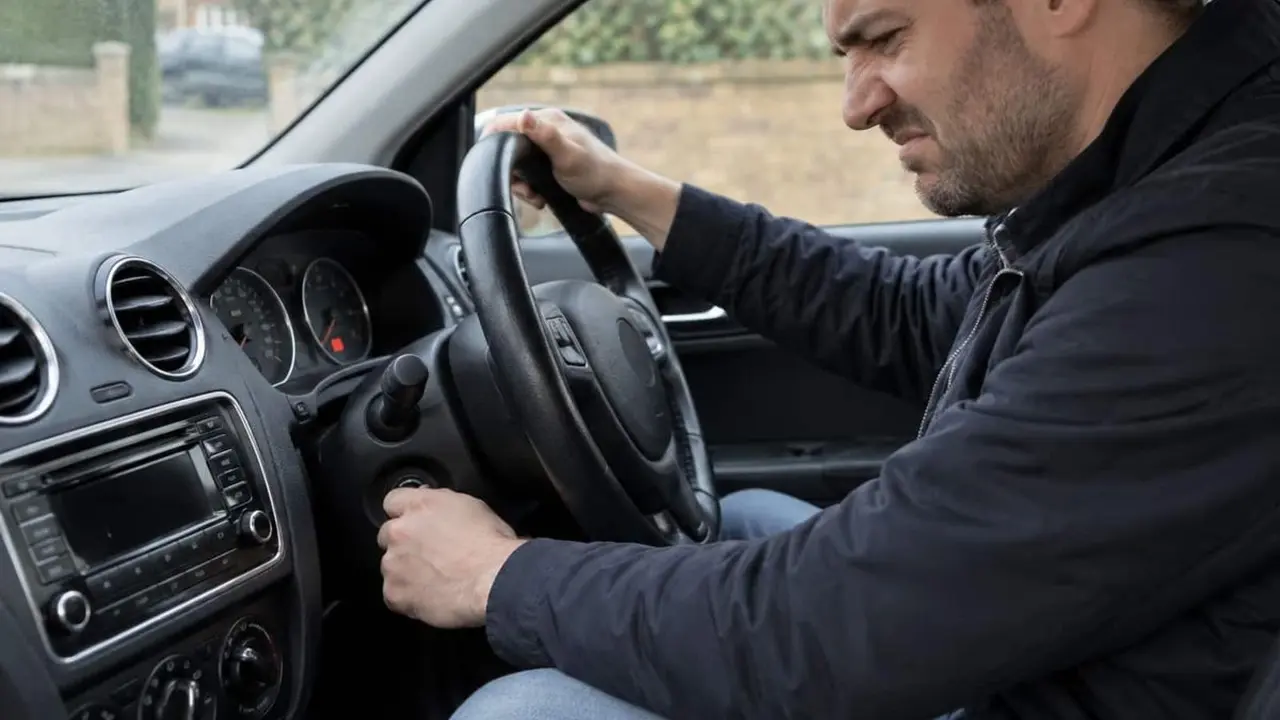
You turn the key or press the Start button, but the engine refuses to start. Sometimes you hear only a single click. Sometimes the starter motor turns the engine normally, but the engine never actually starts. In other cases, the engine starts for a few seconds and then stalls.
Although all of these situations may sound like the same problem, they can have completely different causes.
A dead battery is one of the first things most drivers think about, but a car that will not start can have many other causes. The starter motor, alternator, fuel pump, fuel filter, spark plugs, crankshaft position sensor, immobilizer, fuses, wiring, and even the engine's timing system can prevent a vehicle from starting.
For that reason, saying "the car won't start" is not really a diagnosis. The first thing to determine is whether the starter motor is actually turning the engine.
First, Determine Whether the Engine Is Cranking
This is one of the most important first steps when diagnosing a no-start condition.
If you turn the key or press the Start button and the engine does not turn at all, the problem is more likely to be related to the battery, starter circuit, electrical system, or starting authorization.
If the starter motor turns the engine normally but the engine does not start, the investigation needs to move toward the fuel system, ignition system, engine sensors, ECU control, or mechanical timing.
In simple terms:
Starter does not turn the engine: Check the battery, starter motor, cables, fuses, ignition/start system, immobilizer, and transmission or clutch safety system.
Starter turns the engine but it does not start: Check fuel, ignition, sensors, ECU control, immobilizer, and engine timing.
Engine starts but immediately stalls: Check fuel delivery, air-fuel mixture, immobilizer, sensors, and electronic engine management.
This simple distinction can prevent a lot of unnecessary parts replacement.
1. The Battery May Be Dead or Weak
One of the most common reasons a car will not start is a weak or discharged battery. Typical signs include rapid clicking when attempting to start the vehicle, dim dashboard lights, or electrical systems that become noticeably weaker when the starter is engaged.
The battery may be completely discharged, or it may simply be too weak to deliver the high current required by the starter motor.
Possible causes include:
-
An aging battery
-
Headlights or other electrical equipment being left on
-
Long periods without using the vehicle
-
Frequent short trips
-
Charging-system problems
-
Excessive parasitic electrical drain
A battery showing a normal resting voltage does not necessarily mean that it is healthy. It may still be unable to provide sufficient current during cranking.
For this reason, a proper battery test under load or with an electronic battery tester is more useful than relying on a single voltage measurement.
2. The Alternator May Not Be Charging the Battery
Sometimes a driver replaces the battery, only to experience the same problem again a few days or weeks later.
In that situation, the new battery should not automatically be blamed.
The charging system needs to be checked.
The alternator supplies electrical power while the engine is running and helps recharge the battery. If the alternator or voltage regulator has a problem, the battery may not receive sufficient charge.
Possible signs of a charging-system problem include:
-
Battery warning light
-
Weak or fluctuating headlights
-
Electrical irregularities
-
Repeatedly discharged battery
-
Unusual noises from the charging system
-
A new battery becoming discharged again
If a new battery quickly becomes flat, checking the alternator and charging system is essential.
3. The Starter Motor May Be Faulty
If the battery is in good condition but the starter motor does not turn the engine, the starter motor becomes an important suspect.
The starter motor provides the initial mechanical rotation needed to start the engine. If it does not operate, the engine cannot start even if the fuel and ignition systems are working perfectly.
Common symptoms include:
-
A single clicking sound
-
No sound at all
-
Dashboard electronics working normally but the engine not turning
-
Intermittent starting problems
-
Weak or inconsistent cranking
However, a clicking sound does not automatically mean that the starter motor itself has failed.
The battery, battery terminals, ground connection, starter relay, and starter cable should also be checked.
4. The Battery Terminals or Ground Connection May Be Bad
Sometimes the battery itself is fine, but the electrical connections are not.
Loose or corroded battery terminals can create high resistance and prevent sufficient current from reaching the starter.
This becomes particularly important during starting because the starter motor requires a very high amount of current.
The engine ground strap is also important.
A poor ground connection caused by:
-
Corrosion
-
A loose connection
-
A damaged cable
-
Excessive electrical resistance
can prevent the starting system from operating correctly.
In some cases, the dashboard may appear completely normal, but system voltage drops dramatically as soon as the driver attempts to start the engine.
5. The Ignition Switch or Start System May Be Faulty
Traditional vehicles use an ignition switch to control various electrical circuits, including the starting system.
The key may physically turn while the electrical contacts inside the switch have a problem.
Possible symptoms include:
-
The ignition working intermittently
-
Dashboard failing to turn on
-
Some electrical systems not activating
-
Difficulty turning the key
-
No response when attempting to start
Modern vehicles with push-button starting have more complex systems.
The Start button, brake or clutch switch, electronic steering lock, key detection system, and related control modules may all play a role in starting authorization.
6. The Immobilizer or Key May Be Preventing the Engine From Starting
Modern vehicles use immobilizer systems to ensure that only an authorized key can start the engine.
If the vehicle does not recognize the key, it may prevent the engine from starting.
Pay attention to warnings such as:
-
"Key not detected"
-
Immobilizer warning
-
Key symbol
-
Lock symbol
A weak battery inside a key fob can also cause key-detection problems on some vehicles.
Many vehicles have an emergency procedure that allows the key to be detected even when its internal battery is weak. The exact procedure varies between manufacturers and models.
7. The Transmission May Not Be in the Correct Position
Automatic transmissions generally require the selector to be in Park (P) or Neutral (N) before the engine can be started.
If the transmission range sensor or neutral safety switch has a problem, the vehicle may not recognize that the transmission is in the correct position.
Check whether the gear position shown on the dashboard matches the actual selector position.
On some vehicles, a car that refuses to start in Park may start in Neutral. This can point toward a problem with the transmission-position detection system.
Manual-transmission vehicles may use a clutch-pedal switch to provide a similar starting authorization.
8. A Fuse May Be Blown
Fuses protect electrical circuits from excessive current.
If a fuse supplying an important engine-control circuit blows, the vehicle may not start.
Possible circuits include:
-
ECU power supply
-
Fuel pump
-
Ignition system
-
Starter circuit
-
Engine-management systems
However, replacing a blown fuse is not always the solution.
If the fuse blew because of a short circuit or excessive current, the replacement fuse may blow again.
The underlying cause should therefore be identified rather than repeatedly replacing the fuse.
9. The Vehicle May Simply Be Out of Fuel
Sometimes drivers look for complicated electronic or mechanical problems while overlooking the simplest possibility.
The fuel gauge may be inaccurate, or the vehicle may have been driven for a long time with a very low fuel level.
If the tank is empty, the starter motor can continue turning the engine normally, but combustion cannot take place.
Before the engine completely runs out of fuel, the vehicle may experience:
-
Hesitation
-
Loss of power
-
Poor throttle response
-
Engine surging
-
Stalling
A fuel gauge should not always be assumed to be perfectly accurate.
10. The Fuel Pump May Have Failed
The fuel pump supplies fuel to the engine.
If the pump does not operate, the starter may turn the engine normally while the engine receives insufficient or no fuel.
On many gasoline vehicles, the fuel pump runs briefly when the ignition is switched on. A faint humming sound may sometimes be heard from the fuel tank area.
However, not hearing the pump does not automatically prove that the pump itself is defective.
Other possibilities include:
-
Fuel-pump relay
-
Fuse
-
Wiring
-
ECU control
-
Electrical connector
-
Poor pump connection
Proper diagnosis should include checking the pump's electrical supply and, where appropriate, measuring fuel pressure.
11. The Fuel-Pump Relay May Be Faulty
A fuel pump may be perfectly functional but still fail to operate if it is not receiving electrical power.
The fuel-pump relay controls the electrical supply to the pump and can fail intermittently or completely.
Possible symptoms include:
-
Engine cranks but does not start
-
Vehicle starts sometimes but not others
-
Engine suddenly stalls while driving
-
No expected fuel-pump sound
A failed fuel-pump relay is one of the possible causes of a no-start condition.
12. The Fuel Filter May Be Clogged
The fuel filter protects the fuel system by trapping contaminants and, depending on the design, separating water from the fuel.
If the filter becomes severely restricted, fuel flow can be reduced.
This can cause:
-
Difficult starting
-
Loss of power during acceleration
-
Poor performance under load
-
Engine hesitation
-
Stalling shortly after starting
-
Eventually, a complete no-start condition
Fuel-filter replacement intervals vary between vehicles, so the manufacturer's maintenance schedule should be followed.
13. The Spark Plugs or Ignition System May Be Faulty
Gasoline engines need a strong spark at the correct time to ignite the air-fuel mixture.
Worn, fouled, damaged, or improperly installed spark plugs can make starting difficult.
However, the spark plugs are not the only possible source of an ignition problem.
The ignition coils, coil connectors, wiring, and ECU ignition control should also be considered.
Possible symptoms include:
-
Engine misfires
-
Rough idle
-
Difficult starting
-
Poor acceleration
-
Check engine light
-
Fuel smell
Worn or contaminated spark plugs can contribute to hard starting, misfires, and poor engine operation.
14. The Crankshaft Position Sensor May Be Faulty
This is an important possibility when the starter motor turns the engine normally but the engine refuses to start.
The crankshaft position sensor tells the engine control unit where the crankshaft is and how fast it is rotating.
If the ECU cannot obtain a reliable crankshaft signal, it may have difficulty controlling fuel injection and ignition timing correctly.
Crankshaft sensor failures can be:
-
Complete
-
Intermittent
-
Temperature-related
For example, a vehicle may start normally when cold but refuse to start after the engine becomes hot. After cooling down, it may start again.
This is why simply replacing the fuel pump or spark plugs because the engine cranks but does not start is not necessarily the correct approach.
The crankshaft speed signal should be checked during cranking.
15. The Camshaft Position Sensor May Be Causing a Starting Problem
Some engines rely heavily on camshaft position information during startup.
A faulty camshaft position sensor can cause:
-
Difficult starting
-
Extended cranking
-
Intermittent no-start conditions
-
Stalling
-
Poor engine operation
The sensor itself is not the only thing that should be checked.
Its:
-
Power supply
-
Ground
-
Signal wire
-
Connector
-
Wiring
should also be inspected.
An error code related to a sensor does not automatically prove that the sensor itself is defective.
16. There May Be a Problem With the Air-Fuel Mixture
An engine needs the correct amount of air as well as fuel and ignition.
A serious problem with the air-intake system, throttle body, or engine-management system can affect starting.
Modern vehicles often use electronic throttle bodies, accelerator-pedal position sensors, and ECU-controlled throttle systems.
However, directly replacing the throttle body because the vehicle will not start is not a proper diagnostic method.
The technician should first determine which signal or operating condition is actually missing.
17. Engine Timing May Be Incorrect
The crankshaft and camshaft must remain synchronized.
If this relationship changes, the opening and closing of the valves no longer occur at the correct point relative to piston movement.
A broken or jumped timing belt can cause this problem. On engines using timing chains, problems with the chain, tensioner, or other timing components can produce similar symptoms.
If a timing belt breaks while the engine is running, the engine may stop suddenly and refuse to restart. Depending on the engine design, a timing failure can also result in serious internal engine damage.
If a timing-system failure is suspected, repeatedly cranking the engine may not be advisable.
18. Engine Compression May Be Too Low
An engine needs sufficient compression inside its cylinders to operate properly.
If compression is too low, the engine may not start even if fuel and ignition systems are functioning.
Possible causes include:
-
Valve problems
-
Piston or piston-ring problems
-
Cylinder-head problems
-
Incorrect engine timing
-
Timing-system failure
A compression test or other appropriate mechanical diagnostic procedure may be required to identify the problem.
19. The Immobilizer or ECU May Be Blocking Starting Authorization
Modern vehicles rely on several electronic control units working together before the engine can start.
A key-recognition problem, immobilizer communication fault, communication problem between control modules, or missing starting authorization can prevent the engine from starting.
Dashboard warnings and diagnostic trouble codes can provide valuable clues.
However, a fault code alone does not necessarily identify the defective component.
For example, a communication fault may be caused by low battery voltage or a poor power or ground connection rather than a failed control module.
20. What If the Engine Starts but Immediately Stalls?
Sometimes the phrase "the car won't start" actually describes a different problem.
The engine may start normally but then stall within a few seconds.
Possible causes include:
-
Fuel pressure problems
-
Fuel-pump problems
-
Immobilizer intervention
-
Air-fuel mixture problems
-
Idle-control issues
-
Sensor faults
-
Electronic throttle problems
-
ECU control problems
If the engine starts and then immediately stops, determining what changes between the starting event and the stall can be extremely useful.
How Should You Diagnose a Cranking but No-Start Condition?
When the starter turns the engine but it does not start, replacing random parts is rarely the best approach.
A gasoline engine generally needs:
Sufficient compression + the correct amount of air + adequate fuel + ignition at the correct time + proper engine management and synchronization
If one of these fundamental requirements is missing, the engine may not start.
A systematic diagnosis can therefore include:
-
Battery condition and cranking speed
-
Fuel pressure
-
Injector operation
-
Ignition spark
-
Crankshaft position signal
-
Camshaft position signal
-
Engine timing
-
Compression
-
Immobilizer status
-
Diagnostic trouble codes
What Should You Check If the Starter Does Not Turn?
If the engine does not crank at all, investigating fuel injectors or spark plugs is usually not the correct starting point.
The basic sequence can include:
Battery → battery terminals → ground connections → starter circuit → starter relay → ignition/Start system → transmission or clutch switch → immobilizer and electronic starting authorization
The exact system varies between vehicles.
What Does It Mean If the Car Starts With a Jump Start?
If the vehicle starts after using a jump starter or another battery, that provides an important clue.
However, it does not automatically prove that the battery itself is defective.
The battery may be weak.
The alternator may not be charging it properly.
There may be excessive parasitic current while the vehicle is parked.
There may be excessive resistance in the battery terminals or ground connections.
Therefore, the reason the vehicle needed a jump start should still be investigated.
Is Reading the Fault Codes Enough?
No.
A diagnostic scanner is an extremely useful tool, but a fault code is not necessarily the name of the failed part.
For example, if a sensor-related fault code is stored, the sensor itself may be defective, but the actual problem could also involve:
-
Sensor power supply
-
Ground
-
Signal wire
-
Connector
-
Wiring harness
-
ECU connection
The correct approach is to investigate why the fault code was generated instead of simply replacing the component named by the code.
What Should You Observe When Your Car Won't Start?
Before doing anything else, make a few basic observations.
Does the dashboard turn on?
Are the headlights normal?
Does the starter turn the engine?
Do you hear a single click, rapid clicking, or nothing at all?
Does the engine crank but fail to start?
Is there actually enough fuel in the tank?
Is there an immobilizer or key warning?
Was the vehicle showing hard-starting, misfire, or performance problems beforehand?
Did the problem begin immediately after recent maintenance or repairs?
The answers to these questions can dramatically change the direction of the diagnosis.
Recent Repairs Can Be an Important Clue
If the vehicle recently underwent maintenance or repair and then suddenly developed a no-start condition, that information should always be given to the technician.
For example, recent work may have involved:
-
Spark plug replacement
-
Battery replacement
-
Engine cleaning
-
Air-filter replacement
-
Intake manifold removal
-
Fuel-system work
-
Timing-belt service
-
Sensor replacement
-
Electrical wiring repairs
This does not automatically mean that the previous repair caused the problem.
However, connectors, wiring, grounds, hoses, or other components that were moved or disconnected during the work should be checked.
The timing of the problem is valuable diagnostic information.
When Should You Stop Trying to Start the Engine?
Repeatedly cranking an engine is not always harmless.
If there is a suspected timing-system failure, serious mechanical problem, abnormal metallic noise, lubrication problem, or liquid inside a cylinder, continued cranking may potentially cause additional damage.
Long periods of cranking can also completely discharge the battery and create a second problem on top of the original fault.
The Most Important Thing Is to Identify What Is Missing
There are many possible reasons why a car will not start.
A weak battery, alternator problem, or faulty starter motor are common possibilities, but they are far from the only ones.
Fuel pumps, fuel filters, ignition systems, crankshaft and camshaft sensors, fuses, wiring, immobilizers, transmission-position systems, engine timing, and mechanical engine condition can all play a role in a no-start condition. AAA's guide also identifies many of these systems as potential causes.
For this reason, the most useful question is not:
"Which part should I replace?"
It is:
"Why is the engine not starting, and which fundamental requirement is missing?"
First determine whether the engine is cranking. Then systematically evaluate the electrical system, fuel delivery, ignition, sensors, engine synchronization, immobilizer, and mechanical condition.
A logical diagnostic process is almost always more effective than replacing parts until the vehicle eventually starts.