TR
TR EN
EN

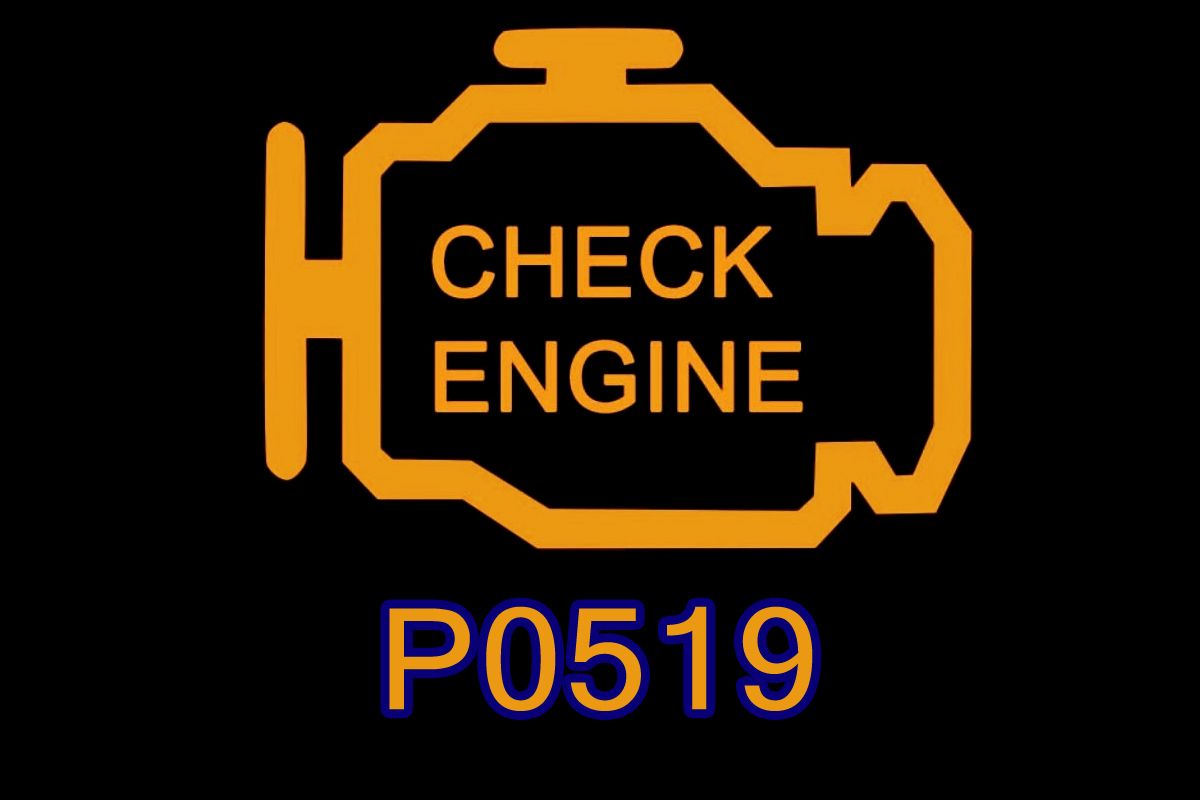
P0519 Idle Air Control (IAC) System Performance
The P0519 trouble code means the engine control module (ECM/PCM) has detected a problem with the performance of the Idle Air Control (IAC) system.
The IAC system is responsible for controlling the amount of air entering the engine when the accelerator is not being pressed. By adjusting idle airflow, the engine control system can maintain a stable idle speed despite changes in engine load.
P0519 is therefore not simply an “IAC valve is bad” code. It means the control module believes the idle-speed control system is not responding or operating as expected.
The cause can be the IAC valve itself, but it can also be related to the throttle body, intake air leaks, wiring, sensors, carbon deposits, engine vacuum, or the control strategy used by the ECM.
What is the Idle Air Control system?
On older and some electronically controlled gasoline engines, the IAC valve controls a bypass passage around the throttle plate.
When the accelerator pedal is released, the throttle plate is almost closed. The engine still needs a controlled amount of air to continue running.
The IAC system allows the ECM to regulate this airflow.
For example, when the engine is cold, additional airflow may be required to maintain the correct idle speed.
When the headlights, A/C compressor, cooling fan, power steering system, or electrical loads increase engine load, the ECM may also adjust idle airflow to prevent the engine RPM from dropping too far.
The system therefore constantly works to keep the engine at the desired idle speed.
What does “Performance” mean in P0519?
The Performance part of P0519 is important.
The ECM is not necessarily detecting a completely open or shorted circuit.
Instead, it believes the IAC system is not achieving the expected idle-control behavior.
For example, the ECM may command additional idle airflow, but the engine speed does not respond as expected.
Or the ECM may repeatedly adjust the IAC system while the idle remains unstable.
A simplified example would be:
ECM commands more idle air → engine RPM should increase slightly → RPM does not respond correctly → P0519 may be stored.
The opposite can also happen. The engine may receive too much air and idle excessively high even though the ECM is attempting to reduce airflow.
Important: not every modern engine has a separate IAC valve
This is particularly important when diagnosing P0519 on newer vehicles.
Older engines commonly use a dedicated IAC valve.
Many modern gasoline engines, however, use an electronic throttle body to control idle airflow instead of a separate IAC valve.
In those systems, the ECM controls the throttle plate itself to regulate idle speed.
Therefore, the exact component associated with P0519 depends on the vehicle's design.
A technician should check the vehicle-specific service information before assuming there is a separate IAC valve.
Common causes of P0519
Dirty or sticking IAC valve
On engines equipped with a separate IAC valve, carbon deposits can restrict the airflow passage or cause the valve mechanism to stick.
The valve may then fail to respond accurately to ECM commands.
Carbon buildup around the throttle body
A dirty throttle body can significantly affect idle airflow.
Carbon deposits around the throttle plate can change the amount of air entering the engine when the throttle is closed.
This can cause the ECM's idle-speed calculations to become inconsistent.
Vacuum or intake air leak
An air leak downstream of the throttle can introduce unmetered air into the engine.
Possible sources include:
-
Cracked vacuum hoses
-
Intake manifold gasket
-
PCV hoses
-
Brake booster hose
-
EVAP-related hoses
-
Throttle body gasket
-
Intake ducting
A vacuum leak can make the engine idle too high or unstable and can make the ECM appear unable to control idle speed.
Faulty IAC valve
The valve's electrical motor, solenoid, or internal mechanism can fail.
A valve may also become mechanically worn and unable to position itself accurately.
Throttle body problem
On electronic-throttle vehicles, the throttle body can effectively perform the idle-air-control function.
A sticking throttle plate, throttle motor problem, position-sensor issue, or carbon buildup can therefore contribute to P0519.
Electrical wiring problem
Damaged wiring or poor connector contact can prevent the ECM from controlling the IAC system correctly.
Possible problems include:
-
Broken wires
-
Corroded terminals
-
Loose connectors
-
Short circuits
-
Poor grounds
-
Power-supply problems
Faulty engine sensors
The ECM needs accurate information to determine how much idle airflow is required.
Problems with sensors such as the throttle-position sensor, engine coolant temperature sensor, mass airflow sensor, manifold absolute pressure sensor, or crankshaft position sensor can affect idle control.
The sensor itself may not be the component named by the code, but incorrect sensor data can cause the ECM to mismanage idle speed.
Symptoms of P0519
Depending on the vehicle and the underlying cause, symptoms can include:
-
Check Engine Light
-
Rough idle
-
Idle speed too high
-
Idle speed too low
-
Idle speed fluctuating
-
Engine RPM rising and falling
-
Engine stalling when coming to a stop
-
Stalling when electrical loads are applied
-
Stalling when the A/C compressor engages
-
Difficult cold idle
-
Delayed return to normal idle
-
Engine surging
-
Poor drivability at low speed
In some cases, the vehicle may drive normally once the engine is above idle speed.
This is because the problem is primarily related to airflow control at closed throttle.
Why does the engine need idle air control?
When the throttle is closed, the engine still needs air to continue running.
The ECM has to maintain a balance between:
-
Airflow
-
Fuel injection
-
Ignition timing
-
Engine load
-
Desired RPM
The required airflow changes constantly.
For example, switching on the A/C compressor adds engine load. Turning on electrical equipment can increase alternator load. On some vehicles, moving the steering wheel at low speed can also increase engine load.
The ECM must anticipate or react to these changes so that engine speed does not suddenly fall.
If the IAC system cannot respond correctly, the engine may stumble or stall.
Cold-start problems and P0519
Idle-air control is particularly important when the engine is cold.
A cold engine generally requires different airflow and fuel control than a fully warmed engine.
If the IAC valve is dirty or sticking, the engine may:
-
Start and immediately stall
-
Start with very low RPM
-
Idle roughly
-
Require accelerator input to remain running
-
Have an unusually high idle
If the problem disappears after the engine warms up, the IAC system and related temperature inputs deserve particular attention.
Can a vacuum leak cause P0519?
Yes.
A vacuum leak can make it difficult for the ECM to control idle speed.
For example, suppose the ECM commands the IAC valve to provide only a small amount of bypass air.
If a cracked hose allows additional unmetered air into the engine, the actual airflow will be higher than the ECM expects.
The engine may then idle too high.
The ECM attempts to reduce the commanded idle airflow, but the unwanted air continues entering the engine.
Eventually, the control system may determine that the desired idle speed cannot be achieved and store P0519.
This is why replacing the IAC valve without checking for vacuum leaks can result in an unsuccessful repair.
Can a dirty throttle body cause P0519?
Yes.
Carbon buildup around the throttle plate can alter the amount of air entering the engine at closed throttle.
This is especially important on electronic-throttle systems where the throttle body controls idle airflow directly.
Cleaning may resolve the problem in some cases, but care is required.
Some electronic throttle bodies have specific cleaning procedures, and certain vehicles require an idle relearn or throttle adaptation procedure after cleaning or replacement.
Simply spraying cleaner into the throttle body without following the manufacturer's procedure is not always appropriate.
How P0519 should be diagnosed
The first step is to scan the vehicle for all stored and pending fault codes.
Other codes can be extremely useful.
For example, additional throttle-position, MAF, MAP, coolant-temperature, fuel-trim, or misfire codes may point toward the actual cause.
Freeze-frame data should also be reviewed to see when P0519 was detected.
The technician should then determine whether the vehicle actually uses a separate IAC valve or whether idle airflow is controlled through the electronic throttle body.
Check actual idle speed against commanded idle speed
Live data is extremely useful for this code.
Where supported, compare:
-
Desired idle speed
-
Actual engine speed
-
IAC command
-
Throttle angle
-
MAF or MAP readings
-
Engine coolant temperature
-
Fuel trims
-
A/C status
If the ECM is commanding substantial idle-air correction but engine speed does not respond appropriately, the problem becomes easier to isolate.
Inspect the IAC valve and air passages
On a vehicle with a dedicated IAC valve, inspect the valve and its airflow passages.
Carbon buildup can restrict movement or airflow.
The valve should be tested according to the manufacturer's procedure rather than assuming that it can be judged simply by looking at it.
Some IAC valves can be tested electrically, while others require more specific actuator or scan-tool testing.
Inspect the throttle body
For electronic-throttle systems, inspect:
-
Throttle plate
-
Carbon deposits
-
Throttle motor
-
Throttle-position signals
-
Electrical connector
-
Wiring
-
Air intake duct
The throttle plate should not be forced open aggressively on systems where the manufacturer specifies a particular cleaning procedure.
After cleaning or replacement, an adaptation procedure may be required.
Check for vacuum leaks
A smoke test can be very useful when an intake leak is suspected.
The technician should inspect:
-
Intake manifold
-
Vacuum hoses
-
PCV system
-
Brake booster hose
-
EVAP hoses
-
Throttle body seal
-
Intake ducting
Fuel-trim data can also provide clues.
If the engine is compensating for an apparent lean condition, an unmetered-air leak becomes more suspicious.
Check the MAF and MAP sensors
The ECM depends on accurate information about engine airflow and load.
A contaminated or defective MAF sensor can report incorrect airflow.
A faulty MAP sensor can provide incorrect manifold-pressure information.
Either condition can affect the ECM's calculation of how much air and fuel are required at idle.
Therefore, P0519 should not always be treated as an isolated IAC problem.
Check engine coolant temperature information
The ECM uses coolant temperature to determine the appropriate idle strategy.
If the coolant temperature sensor incorrectly reports that the engine is extremely cold or extremely hot, the ECM may command an inappropriate idle speed.
A cold-engine scan can provide a useful plausibility check.
After the vehicle has been sitting for several hours, coolant temperature should generally be reasonably consistent with the actual ambient/engine temperature.
Check the electrical circuit
If the mechanical airflow system appears correct, the IAC electrical circuit should be tested.
Depending on the vehicle, this may include:
-
Power supply
-
Ground
-
Control signal
-
Motor/solenoid operation
-
Wiring continuity
-
Short circuits
-
Connector condition
The correct specifications should come from the vehicle manufacturer's service information.
There is no universal IAC resistance or voltage value that can be applied to every engine.
Do not replace the IAC valve based only on P0519
This is a common diagnostic mistake.
P0519 tells you that the idle air control system is not performing as expected.
It does not prove that the IAC valve itself is defective.
A vacuum leak, dirty throttle body, incorrect sensor data, wiring fault, or mechanical engine problem can produce the same code.
The diagnosis should identify why the desired idle speed cannot be achieved before replacing components.
Can P0519 cause engine stalling?
Yes.
If the idle-control system cannot provide the correct amount of air, the engine may not be able to maintain stable RPM when the throttle closes.
Stalling can be especially noticeable when:
-
Coming to a stop
-
Turning on the A/C
-
Switching on electrical loads
-
Turning the steering wheel at low speed
-
Starting a cold engine
-
Releasing the accelerator after acceleration
If the engine repeatedly stalls in traffic, the problem should be repaired promptly because it can create a safety risk.
P0519 vs. other idle-related codes
P0519 should not be confused with codes that specifically identify a low or high idle condition.
The exact meaning of neighboring idle-control codes varies by manufacturer, but generally:
P0519 focuses on IAC system performance.
It is therefore possible for the engine to have a normal-looking idle at the moment the code is scanned while the ECM has previously detected that the control system was unable to achieve the expected behavior.
A practical diagnostic example
Suppose an engine starts normally but the idle repeatedly rises to an unusually high RPM.
The technician scans the vehicle and finds P0519.
Instead of replacing the IAC valve immediately, the technician checks the live data.
The ECM is commanding the idle system toward minimum airflow, but the engine RPM remains too high.
A smoke test then reveals a cracked PCV hose allowing unmetered air into the intake.
The IAC system was not necessarily defective. It was simply unable to compensate for the additional air entering the engine.
After repairing the vacuum leak, the idle returns to normal and the code does not return.
This is a good example of why P0519 should be interpreted as a system-performance problem, not as a direct diagnosis of a particular component.
What should be repaired?
The correct repair depends on the diagnostic findings.
Possible repairs include:
-
Cleaning or replacing the IAC valve
-
Cleaning the IAC airflow passage
-
Cleaning the throttle body
-
Performing throttle/idle relearn
-
Repairing a vacuum leak
-
Replacing damaged intake hoses
-
Repairing IAC wiring
-
Repairing connector terminals
-
Replacing a faulty throttle body
-
Replacing an incorrect sensor
-
Repairing a power or ground circuit
-
Addressing an underlying engine or fuel-control problem
Final thoughts on P0519
P0519 Idle Air Control (IAC) System Performance means the ECM/PCM has determined that the engine's idle-air control system is not behaving as expected.
The code does not automatically mean that the IAC valve has failed.
A proper diagnosis should determine how the particular vehicle controls idle airflow, then compare commanded idle operation with actual engine behavior. The IAC valve or electronic throttle body, intake system, vacuum leaks, wiring, connectors, MAF/MAP information, coolant temperature data, and related engine-control parameters may all need to be considered.
The most effective approach is to find why the ECM cannot achieve the desired idle behavior, rather than replacing the first component associated with the code.