TR
TR EN
EN

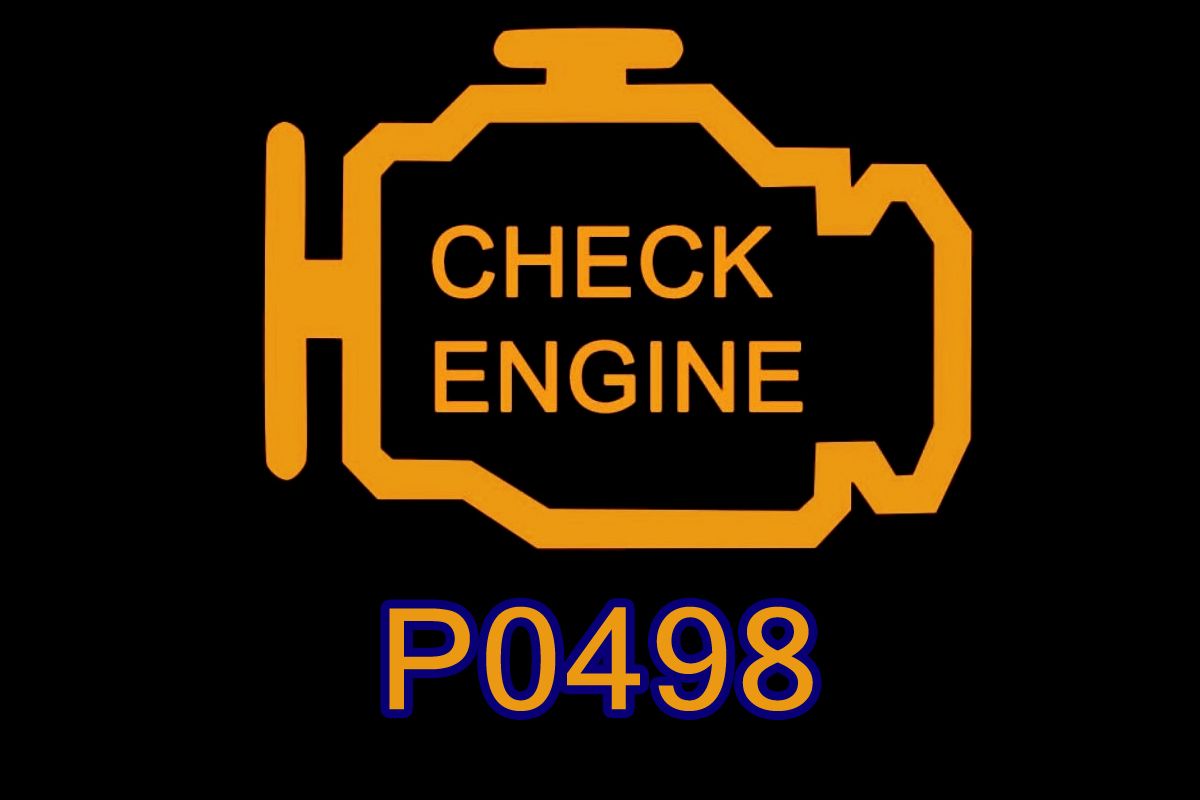
P0498 Evaporative Emission System Vent Valve Control Circuit Low
The P0498 trouble code means the engine control module (ECM/PCM) has detected a low electrical condition in the control circuit of the EVAP system vent valve.
The EVAP system is responsible for controlling fuel vapors that would otherwise escape from the fuel tank into the atmosphere. Instead of allowing these vapors to vent freely, the system stores them in the charcoal canister and later sends them into the engine to be burned.
The important point with P0498 is the word “Low.”
This code primarily indicates that the ECM is seeing an electrical signal or circuit condition below the expected level. It does not simply mean that the EVAP system has low pressure or that the fuel tank is not venting correctly.
What Is the EVAP Vent Valve?
The EVAP vent valve controls the flow of fresh air into and out of the evaporative-emission system.
A simplified EVAP system can include:
-
Fuel tank
-
Fuel tank pressure sensor
-
Charcoal canister
-
EVAP purge valve
-
EVAP vent valve
-
Vapor lines
-
ECM/PCM
During normal operation, fuel vapors are captured by the charcoal canister.
When the engine is operating under suitable conditions, the ECM opens the EVAP purge valve and allows stored vapors to enter the intake system.
The vent valve controls the other side of the EVAP system and allows the system to be properly vented when required.
During certain EVAP leak tests, the ECM can close the vent valve so the system can be sealed and its pressure or vacuum monitored.
What Does “Circuit Low” Mean?
P0498 is primarily an electrical circuit diagnosis.
The ECM expects to see a particular electrical condition from the vent-valve control circuit.
If the circuit voltage is lower than expected, the ECM may store P0498.
Possible causes include:
-
Short to ground
-
Damaged wiring
-
Faulty vent valve
-
Internal solenoid failure
-
Poor connector connection
-
Corroded terminals
-
Incorrect power supply
-
Blown fuse
-
Poor ground
-
Control-driver problem inside the ECM
A clogged charcoal canister or blocked vent filter can cause other EVAP problems, but those conditions do not automatically explain a circuit-low code.
Common Symptoms of P0498
P0498 can exist with very few noticeable driving symptoms.
Possible symptoms include:
-
Check Engine Light
-
EVAP-related emissions fault
-
Difficulty passing an emissions inspection
-
Fuel odor in some cases
-
Difficulty refueling in some cases
-
Fuel pump nozzle repeatedly clicking off
-
EVAP system unable to complete its self-test
-
Other EVAP-related trouble codes
Unlike an engine misfire or throttle problem, P0498 often does not cause obvious drivability problems.
The vehicle may start, accelerate and drive normally while the Check Engine Light remains illuminated.
Common Causes of P0498
Faulty EVAP vent valve
The vent valve contains an electrically controlled solenoid.
The solenoid can develop an internal short or other electrical failure, causing the control circuit to draw abnormal current or produce a voltage lower than expected.
Short to ground
A control wire that becomes damaged and contacts the vehicle chassis or another ground can pull the circuit voltage down.
This is one of the most important possibilities when a code specifically says “Circuit Low.”
Damaged EVAP wiring
The EVAP vent valve is often located underneath the vehicle, near the fuel tank or charcoal canister.
This area is exposed to:
-
Water
-
Road salt
-
Dirt
-
Heat
-
Vibration
-
Stones and debris
Consequently, wiring damage and connector corrosion are common possibilities.
Corroded connector
Moisture or corrosion inside the vent-valve connector can alter the electrical characteristics of the circuit.
A connector can look acceptable externally while having damaged or loose terminals internally.
Power supply problem
Some EVAP vent valves receive battery voltage from a fuse or relay while the ECM controls the other side.
If the power supply is missing or abnormal, the ECM may detect an incorrect circuit condition.
Blown fuse
If the vent valve shares a power circuit with other components, a blown fuse can disable the valve.
In this situation, other seemingly unrelated electrical components may also exhibit problems.
Faulty ECM/PCM driver
The ECM controls the vent valve through an internal driver circuit.
An internal driver failure is possible, but it should generally be considered only after the valve, wiring, power supply and connectors have been proven correct.
Where Is the EVAP Vent Valve Located?
The exact location varies by vehicle.
It is commonly found:
-
Near the fuel tank
-
Near the charcoal canister
-
On or close to the EVAP canister assembly
-
On the underside of the vehicle
Because it is frequently mounted underneath the vehicle, the vent valve can be exposed to significantly more environmental contamination than many engine-bay components.
This makes visual inspection particularly important.
How to Diagnose P0498 Correctly
The most useful approach is to diagnose the electrical circuit first, rather than immediately performing an EVAP leak test.
Check All Stored Codes
Start by scanning all relevant modules.
Look for other codes involving:
-
EVAP purge
-
EVAP leaks
-
Fuel tank pressure
-
Vent valve
-
Fuel tank
-
System voltage
If P0498 is accompanied by another EVAP code, the codes should be considered together.
Inspect the Vent Valve
Locate the EVAP vent valve and inspect:
-
Connector
-
Wiring
-
Valve housing
-
Mounting
-
Vent filter
-
Signs of water intrusion
-
Physical damage
-
Corrosion
Pay particular attention to wiring that runs along the chassis and fuel tank.
Check the Electrical Supply
Determine how the valve is controlled on that particular vehicle.
A common arrangement is:
Battery voltage → vent-valve solenoid → ECM control circuit
The ECM may control the valve by switching the ground side.
However, this is not universal.
The manufacturer's wiring diagram should therefore be used to identify:
-
Power
-
Ground
-
Control wire
-
Connector terminals
Test the Valve Solenoid
The resistance of the vent-valve solenoid can be checked where the manufacturer's procedure specifies a resistance test.
An abnormal resistance reading can indicate:
-
Open coil
-
Shorted coil
-
Internal electrical damage
However, there is no universal EVAP vent-valve resistance value.
A resistance value that is correct for one valve may be incorrect for another.
The manufacturer's specification should always be used.
Check for a Short to Ground
Because P0498 identifies a low circuit condition, check the control wire for an unintended connection to ground.
This should be done with the appropriate modules disconnected according to the manufacturer's diagnostic procedure to avoid damaging an ECM driver.
The goal is to determine whether the control wire is being pulled low somewhere between the ECM and vent valve.
Perform a Voltage-Drop Test
A simple continuity test is not always enough.
A wire can have continuity but still have excessive resistance under load.
Check the circuit under operating conditions and look for abnormal voltage drops across:
-
Wiring
-
Connectors
-
Grounds
-
Power supply connections
This can reveal faults that an ordinary resistance test misses.
Use a Bidirectional Scan Tool
If supported, command the EVAP vent valve ON and OFF using the scan tool.
Then observe:
-
Valve response
-
Circuit voltage
-
Current draw
-
Fuel-tank pressure
-
EVAP system behavior
If the ECM commands the valve but the electrical response is incorrect, the valve or circuit becomes the primary area of investigation.
Check the Fuel Tank Pressure Sensor
The fuel-tank pressure sensor is not the same component as the vent valve, but its information can help diagnose the system.
During an EVAP test, observe whether tank pressure changes as expected when the system is commanded.
If the vent valve operates electrically but pressure does not respond correctly, then investigate:
-
Blocked vent path
-
Blocked filter
-
Charcoal canister
-
Vapor lines
-
Fuel tank pressure sensor
-
Other EVAP components
This prevents an electrical problem from being confused with a physical flow restriction.
Can P0498 Be Caused by a Blocked EVAP Vent?
A blocked vent can certainly cause EVAP-system problems, but a blockage alone does not necessarily explain P0498.
P0498 specifically identifies a low electrical circuit condition.
If the valve operates electrically but air cannot flow through the system, another EVAP fault may be more appropriate depending on the vehicle's diagnostic strategy.
Therefore, separate these two questions:
Is the valve's electrical circuit working?
and
Is the EVAP system physically capable of venting?
Both may need to be tested, but they are not the same diagnosis.
Can P0498 Cause Difficulty Refueling?
It can, particularly if the vent valve is stuck closed or the EVAP system cannot properly release displaced air and fuel vapor while refueling.
The driver may notice:
-
Fuel nozzle repeatedly clicking off
-
Very slow refueling
-
Fuel tank pressure behavior that seems abnormal
However, difficulty refueling can have other causes, including a blocked vapor path or canister problem.
If refueling problems exist together with P0498, the vent system should be inspected physically as well as electrically.
Can P0498 Cause a Fuel Smell?
It can contribute to fuel-vapor-related symptoms if the EVAP system is not operating correctly.
However, a fuel smell should never automatically be attributed to an EVAP electrical code.
A visible fuel leak or damaged fuel/vapor line is a separate safety concern and should be investigated immediately.
P0498 and the Charcoal Canister
The charcoal canister stores fuel vapors, but it is not the same component as the vent valve.
A damaged or saturated canister can cause EVAP problems, but replacing it simply because P0498 is stored is usually not justified.
The electrical circuit should first be tested.
If the vent valve works electrically but the EVAP system still cannot achieve the required pressure or vacuum, then the canister and vapor plumbing become more relevant.
P0498 and the EVAP Purge Valve
The purge valve and vent valve perform different jobs.
The purge valve controls vapor flow from the charcoal canister toward the engine intake.
The vent valve controls ventilation of the EVAP system.
Therefore:
P0498 does not automatically mean the purge valve is faulty.
Replacing the purge valve when the vent-valve circuit is actually shorted or damaged will not solve the problem.
P0498 After Fuel-System or EVAP Repairs
If P0498 appeared immediately after work around the fuel tank or EVAP system, inspect the repaired area first.
Relevant work includes:
-
Fuel pump replacement
-
Fuel tank removal
-
EVAP canister replacement
-
Vent-valve replacement
-
Fuel-line work
-
Rear suspension work
-
Underbody repairs
Check for:
-
Pinched wiring
-
Unconnected connectors
-
Damaged terminals
-
Incorrectly routed wiring
-
Damaged vapor lines
-
Incorrect valve installation
P0498 vs P0499
These two codes are closely related.
P0498 – Evaporative Emission System Vent Valve Control Circuit Low
The ECM detects a low electrical condition in the vent-valve control circuit.
P0499 – Evaporative Emission System Vent Valve Control Circuit High
The ECM detects a high electrical condition in the vent-valve control circuit.
Both are primarily electrical circuit diagnoses, although the exact monitoring strategy varies between manufacturers.
P0498 vs an EVAP Leak Code
This distinction is also important.
An EVAP leak code indicates that the system cannot maintain the expected pressure or vacuum.
P0498 specifically points toward the electrical control circuit of the vent valve.
A vehicle can therefore have:
P0498 without a significant physical EVAP leak
or
an EVAP leak without P0498.
It is also possible for both types of faults to occur simultaneously.
A Practical Diagnostic Sequence
A sensible diagnostic order is:
Scan all modules → record freeze-frame data → locate the EVAP vent valve → inspect connector and wiring → verify power supply → test the control circuit → test the valve solenoid → check for a short to ground → command the valve with a scan tool → monitor fuel-tank pressure → inspect the vent path and canister if necessary → clear the code and perform an EVAP monitor drive cycle.
This sequence helps separate an electrical circuit fault from a physical EVAP-flow or leak problem.
Final Diagnostic Summary
P0498 – Evaporative Emission System Vent Valve Control Circuit Low means the ECM has detected an abnormally low electrical condition in the EVAP vent-valve control circuit.
The most likely areas to investigate are the vent valve, its connector, wiring, power supply and control circuit.
Because the vent valve is often located underneath the vehicle, corrosion, water intrusion and damaged wiring deserve particular attention.
A blocked EVAP passage or saturated charcoal canister can cause other EVAP symptoms, but they should not automatically be blamed for a circuit-low code.
The best diagnosis is therefore to first prove that the vent valve receives the correct electrical supply and responds correctly to the ECM command. Only after the electrical side is confirmed should the physical EVAP system—canister, vapor lines, vent filter and fuel-tank pressure—be investigated for flow or pressure problems.
In short, P0498 is primarily an electrical EVAP vent-valve problem, not simply an EVAP leak or fuel-tank pressure problem.