TR
TR EN
EN

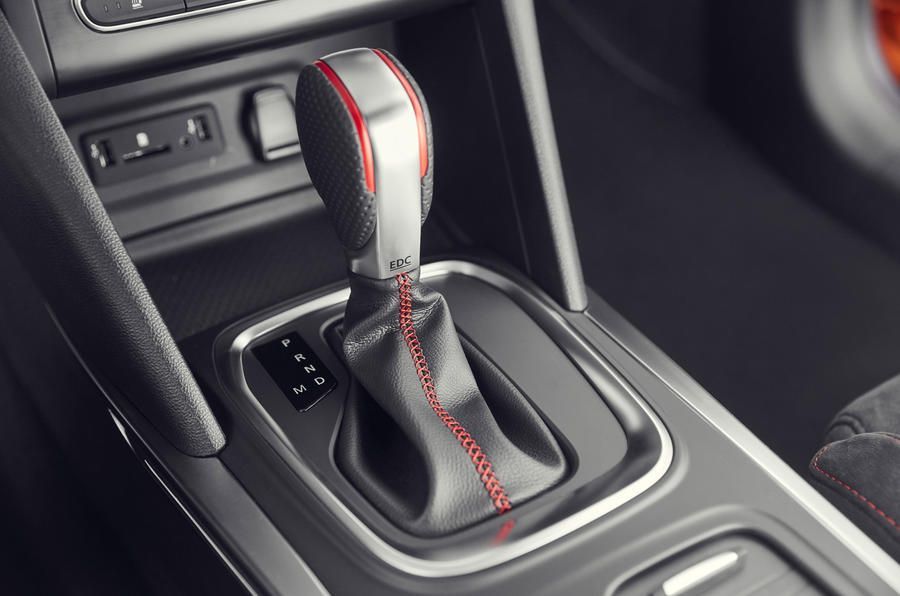
What Is an EDC Transmission and How Does It Work?
An EDC transmission is a type of dual-clutch automatic transmission developed for vehicles that need the convenience of an automatic gearbox while maintaining fast gear changes and good fuel efficiency.
EDC stands for Efficient Dual Clutch. Renault uses the EDC name for its dual-clutch transmissions, particularly in models equipped with electronically controlled automatic gearboxes.
Unlike a conventional automatic transmission that typically uses a torque converter, an EDC transmission uses two clutches. One clutch generally handles one set of gears, while the other controls the remaining gears. This arrangement allows the transmission to prepare the next gear before it is actually needed.
The result is quick gear changes with relatively little interruption in power delivery.
How Does an EDC Transmission Work?
The basic operating principle of an EDC transmission is similar to other dual-clutch transmissions.
The gearbox contains two separate clutch systems and two gear paths.
One clutch can control:
-
1st gear
-
3rd gear
-
5th gear
-
7th gear, where applicable
The other clutch can control:
-
2nd gear
-
4th gear
-
6th gear
-
Reverse
The exact arrangement depends on the specific EDC transmission design.
While the vehicle is moving in one gear, the transmission can already select the next appropriate gear on the other shaft.
For example, while the vehicle is moving in 3rd gear, 4th gear can be preselected. When the transmission decides that an upshift is required, one clutch disengages while the other engages.
This happens electronically and hydraulically within a very short period.
Why Does an EDC Have Two Clutches?
The two-clutch design is the most important feature of an EDC transmission.
In a traditional manual transmission, the driver operates a single clutch pedal and manually selects gears.
In an EDC transmission, the electronic control system performs these operations automatically.
One clutch is responsible for one group of gears, while the second clutch handles the other group.
Because the next gear can be selected in advance, the transmission does not have to search for and engage the next gear after the current gear has been completely released.
This is one of the reasons EDC transmissions can change gears very quickly.
The Role of the Mechatronic Unit
The mechatronic unit is one of the most important components in an EDC transmission.
It combines electronic control and hydraulic actuation.
The transmission control system continuously evaluates information from various sensors, including:
-
Vehicle speed
-
Engine speed
-
Throttle position
-
Accelerator pedal position
-
Selected gear
-
Clutch position
-
Transmission temperature
-
Input and output shaft speeds
-
Brake pedal status
Based on this information, the control system determines when to change gears and how much clutch pressure is required.
The mechatronic system then operates the appropriate hydraulic or electromechanical actuators.
This allows the transmission to automatically control gear selection and clutch engagement without driver intervention.
EDC Transmission at Low Speed
Low-speed driving is one of the most important areas when discussing dual-clutch transmissions.
At highway speeds, an EDC can operate very smoothly because the clutches are generally fully engaged.
At very low speeds, however, the transmission has to control clutch engagement carefully.
When creeping forward in traffic, parking, reversing, or moving uphill slowly, the clutch may partially engage and disengage to control vehicle movement.
This creates heat and wear.
For this reason, an EDC can behave differently during parking and stop-and-go traffic compared with a conventional torque-converter automatic transmission.
A small amount of hesitation or engagement sensation at very low speed does not automatically mean that the transmission is defective. However, strong juddering, excessive slipping, burning smells, or repeated warning messages should be investigated.
What Is the Difference Between EDC and a Conventional Automatic Transmission?
The biggest difference is the mechanism used to transfer engine power.
A conventional automatic transmission generally uses a torque converter together with planetary gear sets.
An EDC uses two clutches and mechanically selected gear sets.
This creates several important differences.
EDC transmissions can provide very fast gear changes and direct power transmission.
A torque-converter automatic can generally provide smoother low-speed operation because the torque converter allows controlled slip between the engine and transmission.
This means an EDC can feel more direct and sometimes more like a manual transmission, particularly during low-speed maneuvering.
EDC vs Manual Transmission
An EDC transmission is mechanically related to a manual transmission in several ways.
Both systems use:
-
Clutches
-
Gear sets
-
Synchronizers or equivalent gear engagement mechanisms
-
Mechanical power transmission
The major difference is who controls the system.
In a manual transmission, the driver operates the clutch and selects gears.
In an EDC transmission, electronic control units and actuators perform these operations automatically.
This provides automatic driving convenience without completely abandoning the mechanical efficiency of a conventional geared transmission.
What Are the Advantages of an EDC Transmission?
EDC transmissions offer several important advantages.
Fast gear changes
Because the next gear can be prepared in advance, gear changes can be extremely quick.
Good fuel efficiency
A dual-clutch gearbox can transmit engine torque efficiently because it does not rely on the continuous hydraulic slip associated with a conventional torque converter.
This can help reduce fuel consumption under suitable driving conditions.
Direct driving feel
An EDC often feels more connected to the engine than some traditional automatic transmissions.
Acceleration can feel immediate because power is transmitted through a mechanically engaged clutch rather than through a torque converter.
Automatic driving convenience
The driver does not need to operate a clutch pedal or manually select gears during normal driving.
Manual mode
Many EDC-equipped vehicles also allow manual gear selection through the gear selector or steering-wheel paddles, depending on the vehicle.
What Are the Disadvantages of an EDC Transmission?
EDC technology also has some disadvantages.
Low-speed behavior
Parking and crawling in heavy traffic can place considerable demand on the clutches.
Some drivers may notice slight hesitation or engagement characteristics that are less noticeable in a conventional automatic transmission.
Clutch wear
The clutches are wear components. Their lifespan depends heavily on driving conditions and how the vehicle is used.
Frequent stop-and-go traffic, aggressive launches, towing, steep hills, and repeated low-speed maneuvering can increase clutch wear.
Mechatronic problems
The mechatronic unit is technologically complex. A sensor, actuator, hydraulic component, solenoid, or electronic control problem can affect transmission operation.
Repair costs
When a major EDC component fails, repair costs can be significant, particularly if the clutch assembly or mechatronic unit requires replacement.
What Are the Common Symptoms of EDC Problems?
An EDC transmission can display several warning signs when a component begins to malfunction.
Juddering during takeoff
A vehicle that shakes or vibrates strongly while moving away from a stop may have a clutch-related problem.
However, engine misfires, worn engine mounts, and other drivetrain problems can produce similar symptoms.
Delayed engagement
If there is a noticeable delay after selecting Drive or Reverse before the vehicle begins moving, the transmission should be inspected.
Possible causes include hydraulic pressure problems, clutch issues, actuator problems, or control-system faults.
Harsh gear changes
Strong impacts or unusually aggressive shifts may indicate problems with clutch control, hydraulic pressure, sensors, software, or internal transmission components.
Transmission slipping
Engine RPM may increase without a corresponding increase in vehicle speed.
This can indicate excessive clutch slip.
Difficulty selecting gears
The transmission may struggle to select a particular gear or may remain in a limited number of gears if the control system detects a serious problem.
Transmission warning message
An EDC-equipped vehicle may display a transmission warning or enter a protective operating mode when the control system detects a fault.
Burning smell
A strong burning smell after repeated low-speed maneuvering or heavy clutch use can indicate excessive clutch temperature.
Noise from the transmission
Whining, grinding, rattling, or abnormal mechanical noises may indicate a bearing, gear, clutch, or other internal problem.
Why Does EDC Judder?
Clutch judder is one of the most commonly discussed issues with dual-clutch transmissions.
Several factors can cause it.
Possible causes include:
-
Clutch wear
-
Contaminated clutch surfaces
-
Excessive clutch temperature
-
Incorrect clutch adaptation
-
Mechatronic problems
-
Incorrect clutch control
-
Flywheel problems
-
Oil contamination
-
Software or calibration issues
-
Engine or transmission mount problems
A mild engagement characteristic at very low speed is not necessarily a failure.
However, strong and repeated vibration during takeoff should be diagnosed rather than automatically attributed to normal EDC behavior.
What Is EDC Clutch Adaptation?
The transmission control system needs to know exactly how the clutch engages and disengages.
Over time, clutch characteristics can change because of wear and operating conditions.
The transmission can compensate for some of these changes through clutch adaptation.
During a diagnostic procedure, a technician may perform an adaptation or relearning procedure when appropriate.
This can be particularly important after certain clutch, mechatronic, or transmission repairs.
However, adaptation is not a magic solution for a mechanically worn clutch. If the clutch is physically damaged or excessively worn, software adaptation cannot restore the lost friction material.
Does EDC Transmission Oil Need to Be Changed?
This depends on the specific EDC transmission.
Not every EDC gearbox uses the same design, lubrication system, or maintenance schedule.
Some dual-clutch transmissions use wet clutches, where the clutch assemblies operate in transmission fluid.
Others use dry-clutch designs.
A wet-clutch transmission has different lubrication and cooling requirements from a dry-clutch system.
Therefore, the correct fluid type, specification, capacity, and replacement interval must always be determined according to the exact transmission code and vehicle specification.
Using an incorrect transmission fluid can cause serious problems with clutch operation and hydraulic control.
Dry EDC vs Wet Dual-Clutch Transmission
Dual-clutch transmissions can generally be divided into dry-clutch and wet-clutch designs.
A dry-clutch system does not immerse the clutch discs in transmission oil.
This can reduce mechanical losses and may improve efficiency, but clutch temperature management can become more challenging in certain driving conditions.
A wet-clutch system uses transmission fluid to lubricate and cool the clutch assembly.
Wet systems are generally better suited to applications requiring higher torque capacity and greater thermal management.
The specific EDC transmission used by a Renault vehicle therefore matters greatly when discussing reliability, maintenance, fluid requirements, and repair procedures.
How Can You Make an EDC Transmission Last Longer?
Driving style has a significant effect on clutch life.
Avoid unnecessarily holding the vehicle on a steep hill using the accelerator. Use the brake or appropriate vehicle functions instead.
During heavy traffic, avoid constantly creeping forward by repeatedly allowing the vehicle to move only a few centimeters at a time.
When parking, use controlled movements rather than repeatedly switching rapidly between Drive and Reverse.
It is also important to avoid unnecessary hard launches and excessive clutch slipping.
Other useful practices include:
-
Follow the manufacturer's maintenance requirements.
-
Use only the correct transmission fluid where applicable.
-
Investigate abnormal vibration early.
-
Do not ignore transmission warning messages.
-
Avoid continuing to drive when severe slipping occurs.
-
Have clutch adaptation performed when the manufacturer's procedure requires it.
-
Check for oil leaks around the transmission.
-
Diagnose electronic faults before replacing expensive components.
Is an EDC Transmission Reliable?
The reliability of an EDC transmission depends heavily on the exact transmission design, vehicle application, maintenance, driving conditions, and service history.
It is not accurate to describe every EDC transmission as either universally reliable or universally problematic.
A properly maintained EDC can provide many years of service.
However, its dual-clutch construction and complex mechatronic control system mean that repairs can be more involved than those of a simple manual transmission.
The most important factors are correct maintenance, appropriate driving habits, and early diagnosis of abnormal symptoms.
How Is an EDC Transmission Diagnosed?
When an EDC develops a problem, a proper diagnosis should begin with a diagnostic scan.
The technician should check the transmission control module for stored and current fault codes.
However, reading fault codes alone is not enough.
A proper diagnosis may also involve checking:
-
Clutch adaptation values
-
Clutch temperature
-
Hydraulic pressure
-
Input shaft speed
-
Output shaft speed
-
Gear selection commands
-
Clutch actuator operation
-
Mechatronic operation
-
Transmission fluid condition
-
Wiring and connectors
-
Battery and charging voltage
-
Engine operating parameters
A road test can also be extremely useful because the behavior of the transmission under acceleration, deceleration, low-speed maneuvering, and gear changes can help identify the source of the problem.
EDC Transmission Maintenance
There is no single maintenance procedure that applies to every EDC gearbox.
The correct maintenance schedule depends on the exact transmission.
Important areas include:
Transmission fluid
If the transmission uses serviceable fluid, the correct specification and replacement procedure should be followed.
Clutch system
Clutch wear should be monitored when symptoms such as juddering or slipping appear.
Mechatronic system
Electronic and hydraulic control components should be checked when gear selection or clutch operation becomes abnormal.
Software and adaptation
In some cases, software updates or adaptation procedures may be relevant to transmission operation.
Leaks
Fluid leaks can cause lubrication, cooling, or hydraulic control problems depending on the transmission design.
Final Thoughts
The EDC transmission is essentially a dual-clutch automatic gearbox designed to combine automatic driving convenience with fast gear changes and efficient mechanical power transmission.
Its two-clutch architecture allows the next gear to be prepared before it is needed, which is why EDC transmissions can shift quickly and provide a direct driving feel.
At the same time, the dual-clutch design makes low-speed operation, clutch temperature, adaptation, and mechatronic control particularly important.
A properly maintained EDC can work smoothly for a long time, but symptoms such as strong juddering, slipping, harsh gear changes, delayed engagement, abnormal noises, burning smells, or transmission warning messages should not be ignored.
The most important point is that EDC is not a single identical gearbox used in every vehicle. Different EDC generations and transmission designs can have different clutch systems, fluid requirements, torque capacities, control strategies, and maintenance procedures. For this reason, diagnosis and maintenance should always be based on the exact transmission fitted to the vehicle.