TR
TR EN
EN

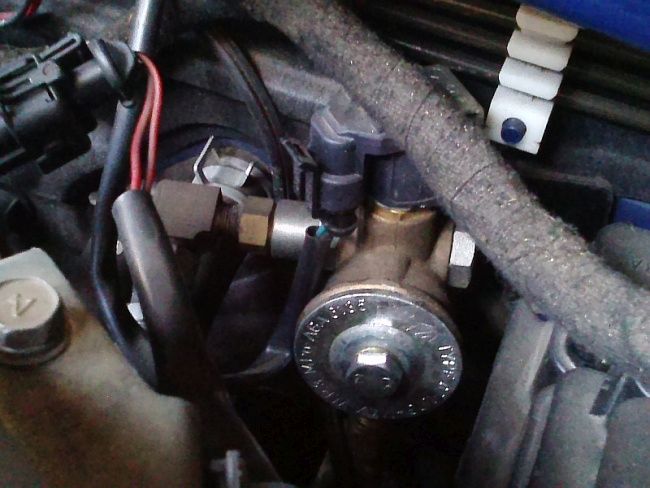
What Does an LPG Gas Cut-Off Valve Do? What Are Its Faults and Symptoms?
The LPG gas cut-off valve, commonly known as an LPG solenoid valve, is an important component in many LPG fuel systems. Its main purpose is to control the flow of LPG and stop the fuel supply when LPG operation is not permitted or when the engine is switched off.
Depending on the LPG system design, one or more electrically controlled valves may be used. A valve can be located near the LPG tank and multivalve assembly, on or near the reducer, or elsewhere in the LPG fuel line.
The exact arrangement varies between older mixer-type systems and modern sequential LPG systems.
What Is an LPG Gas Cut-Off Valve?
An LPG gas cut-off valve is generally an electrically operated solenoid valve that opens or closes the LPG fuel path.
Inside the valve is an electromagnetic coil and a mechanical valve mechanism.
When the appropriate electrical signal is supplied, the coil creates a magnetic field and moves the valve into the open position. When the electrical signal is removed, the valve normally returns to its closed position.
The basic principle is:
Electrical command present → Valve opens → LPG flow is allowed
Electrical command removed → Valve closes → LPG flow is stopped
This allows the LPG system to control fuel flow electronically.
Where Is the LPG Gas Cut-Off Valve Located?
Its location depends on the LPG system.
It may be found:
-
Near the LPG tank
-
As part of or near the multivalve assembly
-
On the LPG reducer
-
In the LPG fuel line
-
In some older systems, as part of the gasoline/LPG changeover arrangement
Modern sequential LPG systems and older mixer systems can have significantly different layouts.
Therefore, the presence, number, and exact function of the valves should be determined according to the specific LPG system rather than assuming that every vehicle uses the same configuration.
What Does the Gas Cut-Off Valve Do?
Its primary function is to control LPG flow.
When the engine is operating on LPG, the valve can open to allow fuel to reach the appropriate part of the system.
When LPG operation is stopped, the valve closes.
For example, the LPG system may close the valve when:
-
The engine is switched off
-
The vehicle is operating on gasoline
-
The LPG ECU detects an unsafe operating condition
-
LPG pressure or another system parameter is outside the permitted range
-
The LPG system detects a fault that requires fuel shutoff
The valve therefore contributes both to fuel control and system safety.
Why Is the Gas Cut-Off Valve Important for Safety?
An LPG system must not continue supplying fuel when the engine is no longer operating normally.
When the engine stops, the LPG control system can remove the electrical command from the solenoid valve, causing it to close.
This helps prevent uncontrolled LPG flow through the system.
However, the valve is only one part of the overall safety system. The tank multivalve, pressure regulation system, hoses, fittings, injectors, ECU and other components also play important roles.
Common Symptoms of a Faulty LPG Gas Cut-Off Valve
A faulty valve can produce different symptoms depending on whether it is stuck closed, unable to open properly, leaking internally, or suffering from an electrical problem.
Common symptoms include:
-
The vehicle does not switch to LPG
-
The engine stalls when switching to LPG
-
The engine switches to LPG and then immediately returns to gasoline
-
LPG pressure does not reach the expected level
-
LPG operation becomes intermittent
-
The valve does not produce its normal operating sound
-
The LPG system reports a valve or solenoid-related fault
-
The vehicle runs normally on gasoline but poorly on LPG
-
The LPG system loses fuel supply under certain conditions
-
The problem appears and disappears intermittently
These symptoms do not prove that the gas cut-off valve itself is defective. A wiring, ECU, pressure, regulator, or sensor problem can produce very similar symptoms.
What Happens If the Valve Stays Closed?
A valve that remains closed can prevent LPG from reaching the rest of the fuel system.
The result may be:
-
No LPG operation
-
Failure to switch from gasoline to LPG
-
Engine stalling immediately after the changeover
-
Insufficient LPG pressure
-
Automatic return to gasoline
If the vehicle runs perfectly on gasoline but cannot operate on LPG, the LPG fuel supply path should be investigated.
The gas cut-off valve is one possible cause, but the reducer, pressure sensor, LPG ECU, wiring and other components must also be checked.
What Happens If the Valve Does Not Open Properly?
A valve does not necessarily have to fail completely.
It can become weak, slow, contaminated, mechanically restricted, or electrically unstable.
In such a case, LPG flow may be insufficient.
The vehicle might:
-
Run normally at idle
-
Hesitate during acceleration
-
Lose power at higher RPM
-
Switch back to gasoline under heavy load
-
Develop unstable LPG pressure
-
Show intermittent LPG operation
This type of fault can be difficult to identify because the vehicle may appear normal under light loads.
Electrical Faults in the LPG Gas Cut-Off Valve
Because the valve is electrically controlled, its electrical circuit is critical.
Possible electrical faults include:
-
Broken wire
-
Short circuit
-
Corroded connector
-
Loose terminal
-
Damaged solenoid coil
-
Blown fuse
-
Relay problem
-
Poor ground
-
Low supply voltage
-
Faulty ECU output circuit
If the valve does not operate, the first step should not automatically be replacing the valve.
The electrical supply and control signal should be measured to determine whether the valve is actually receiving the command required to operate.
LPG Solenoid Coil Failure
The solenoid coil can fail internally.
For example, the coil may develop:
-
An open circuit
-
An internal short circuit
-
Excessive resistance
-
A temperature-dependent fault
A coil can sometimes work when cold and fail after heating up.
This can result in an intermittent LPG problem that is difficult to reproduce during a quick inspection.
The coil should be tested according to the manufacturer's specifications. Resistance measurement can be useful, but it is not always sufficient by itself to prove that the valve will operate correctly under real operating conditions.
Wiring and Connector Problems
The LPG wiring harness is exposed to engine-bay conditions such as:
-
Heat
-
Vibration
-
Moisture
-
Oil
-
Dirt
-
Chemicals
Over time, the wiring insulation can deteriorate and connectors can develop poor terminal contact or corrosion.
A poor connection may cause the valve to work intermittently.
For example, the vehicle might switch to LPG normally one day and fail to switch the next day.
If the problem changes when the vehicle passes over bumps or when the engine moves under acceleration, the wiring and connectors should be carefully inspected.
Can a Gas Cut-Off Valve Cause High LPG Consumption?
A gas cut-off valve is not normally responsible for calculating the amount of fuel injected into the engine. Fuel quantity is primarily determined by the LPG ECU, LPG injectors, pressure conditions, calibration, and other parts of the system.
Therefore, high LPG consumption should not automatically be attributed to the gas cut-off valve.
Other possible causes include:
-
Incorrect LPG calibration
-
Excessive LPG pressure
-
Incorrect injector settings
-
LPG injector problems
-
Reducer problems
-
MAP sensor errors
-
Incorrect temperature readings
-
Fuel-trim problems
-
Ignition faults
-
Engine mechanical problems
If a valve does not close correctly, however, it can create a fuel-control or safety problem depending on the system design and should be inspected.
Can a Gas Cut-Off Valve Fault Be Confused With an LPG ECU Fault?
Yes.
The LPG ECU may be responsible for controlling the solenoid valve. If the valve does not operate, it may initially appear that the ECU has failed.
There are at least two different possibilities:
The ECU sends the correct command, but the valve does not operate.
In this case, the valve, coil, connector, or wiring near the valve becomes more suspicious.
The valve itself is functional, but the ECU does not provide the required control signal.
In this situation, the ECU output circuit, wiring, power supply, ground, or ECU itself may need further investigation.
This distinction can only be made properly through electrical testing.
Gas Cut-Off Valve and LPG Pressure Problems
The gas cut-off valve can affect the LPG pressure available to the rest of the system if it fails to open correctly.
A pressure problem may then appear as:
-
Poor acceleration
-
Hesitation
-
Power loss
-
Switching back to gasoline
-
Engine stalling
-
Difficulty switching to LPG
However, low LPG pressure can also be caused by:
-
Low tank pressure
-
Restricted fuel flow
-
Reducer problems
-
Filter restrictions where applicable
-
Excessive LPG demand
-
Faulty pressure sensor
-
Incorrect calibration
Therefore, actual LPG pressure should be measured rather than assuming that the valve is responsible.
Can a Gas Cut-Off Valve Cause the Engine to Stall?
Yes, if it prevents the required LPG fuel supply.
For example, if the vehicle switches from gasoline to LPG but the valve does not open correctly, the engine may suddenly lose its fuel supply and stall.
However, the same symptom can be caused by an incorrectly calibrated LPG system, insufficient reducer pressure, faulty LPG injectors, incorrect temperature information, or a problem with the LPG ECU.
The timing of the stall is therefore important.
If the engine stalls immediately when the system changes to LPG, the fuel supply and changeover strategy should be investigated.
How Is an LPG Gas Cut-Off Valve Diagnosed?
A proper diagnosis should start with the complete LPG system rather than replacing the valve immediately.
A technician can check:
-
LPG ECU fault codes
-
Valve power supply
-
Valve control signal
-
Solenoid coil condition
-
Wiring continuity
-
Connector condition
-
Fuse and relay operation
-
LPG pressure
-
Reducer operation
-
LPG temperature
-
Pressure sensor readings
-
ECU live data
-
System behavior during LPG changeover
The valve should also be evaluated under the conditions in which the problem actually occurs.
What Should Be Checked Before Replacing the Valve?
Before replacing an LPG gas cut-off valve, several questions should be answered.
Does the valve receive the correct electrical supply?
If not, replacing the valve will not solve the problem.
Does the LPG ECU send the correct control command?
If the ECU does not command the valve, the problem may be elsewhere in the control circuit.
Is the solenoid coil within the manufacturer's specifications?
An open or shorted coil can indicate a faulty valve.
Is the valve mechanically operating?
An electrically functional coil does not always guarantee that the mechanical valve mechanism is operating correctly.
Is LPG pressure normal?
A pressure measurement can help determine whether the valve is actually restricting fuel flow or whether another component is responsible.
Should You Drive With a Suspected Gas Cut-Off Valve Fault?
If the problem is limited to the vehicle refusing to operate on LPG and the vehicle runs normally on gasoline, continuing to drive on gasoline may be possible depending on the specific fault.
However, if there is an LPG odor, suspected leakage, uncontrolled LPG flow, damaged fuel-line components, or another safety-related concern, the vehicle should not be operated until the LPG system has been professionally inspected.
LPG odor should never be considered a normal symptom.
Gas Cut-Off Valve Faults Should Not Be Diagnosed by Symptoms Alone
The most important point is that a gas cut-off valve can cause LPG system problems, but many other components can create the same symptoms.
For example, failure to switch to LPG could be caused by the valve, but it could also result from low reducer temperature, incorrect pressure, a faulty pressure sensor, ECU control problems, wiring faults, or incorrect calibration.
Likewise, power loss under load does not automatically indicate a valve problem.
A proper diagnosis should follow the complete path:
ECU command → electrical supply → wiring → solenoid valve → LPG fuel flow → reducer → pressure → LPG injectors → engine operation
This approach makes it possible to determine whether the gas cut-off valve is actually defective or whether the real problem lies elsewhere in the LPG system.