TR
TR EN
EN

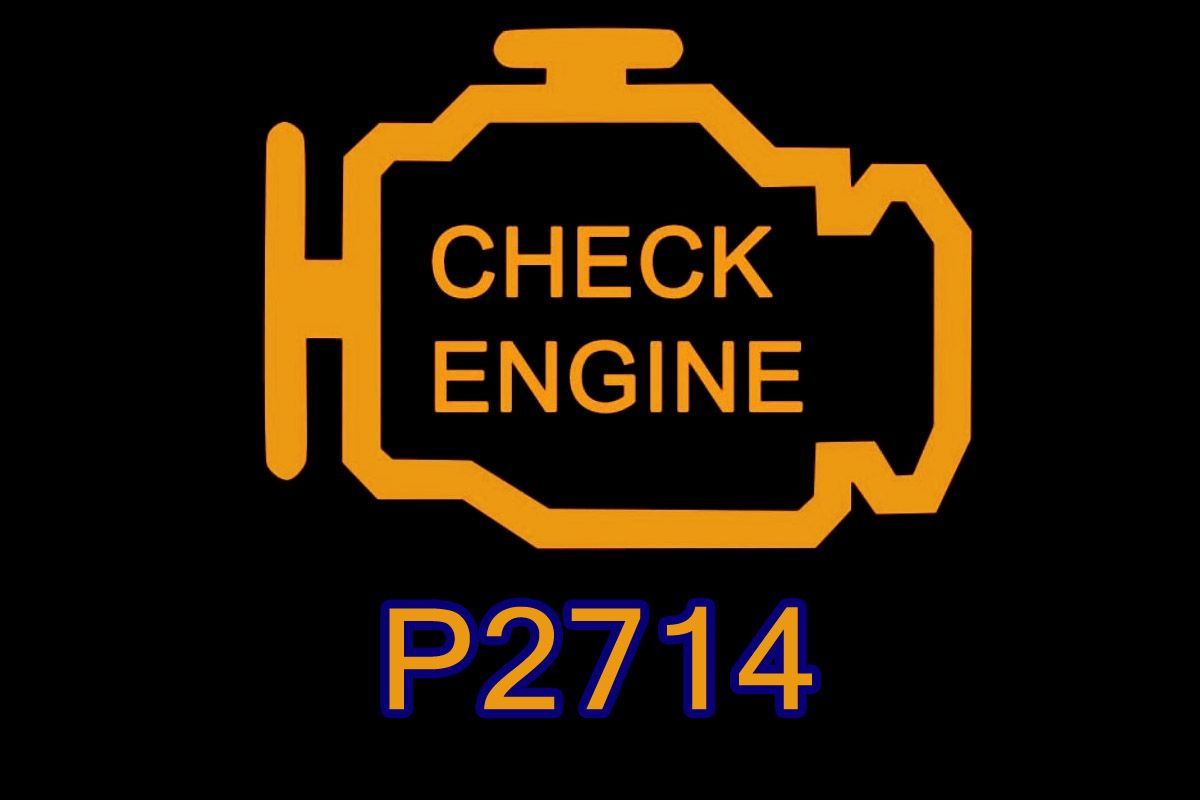
P2714 Pressure Control Solenoid "D" Performance/Stuck Off
P2714 is a transmission-related OBD-II diagnostic trouble code indicating that the transmission control module (TCM) has detected a problem with Pressure Control Solenoid “D”.
The code has two closely related descriptions: Performance and Stuck Off.
In practical terms, the transmission is not producing the hydraulic pressure behavior that the control module expects from pressure control solenoid D. The solenoid may be unable to apply the required pressure, may be mechanically stuck in the wrong position, or the transmission may not be responding correctly even though the electrical command is being sent.
This does not automatically mean that the solenoid itself has failed.
The actual cause can be electrical, hydraulic, mechanical, fluid-related, or related to the valve body or transmission control system.
What Does Pressure Control Solenoid D Do?
Automatic transmissions use hydraulic pressure to operate internal clutches, brakes, bands, and other transmission mechanisms.
Modern transmissions do not simply produce one fixed hydraulic pressure.
The TCM continuously adjusts pressure according to conditions such as:
-
Vehicle speed
-
Engine torque
-
Throttle position
-
Transmission temperature
-
Selected gear
-
Input speed
-
Output speed
-
Shift timing
-
Load
-
Driving conditions
Pressure control solenoids regulate this hydraulic pressure.
Solenoid D is one of these electronically controlled pressure-regulating devices.
The exact function of Solenoid D is manufacturer- and transmission-specific. It may control pressure to a particular clutch circuit, hydraulic passage, regulator circuit, or another transmission function.
Therefore, it is not safe to assume that “Solenoid D” always controls the same gear on every vehicle.
What Does “Stuck Off” Mean?
The phrase Stuck Off is important.
The TCM is effectively detecting that the pressure-control function associated with Solenoid D is not becoming active as expected.
The module may command the solenoid to increase or regulate hydraulic pressure, but the expected transmission response does not occur.
That can happen because:
-
The solenoid is electrically defective
-
The solenoid is mechanically stuck
-
The valve it controls is sticking
-
Hydraulic pressure is insufficient
-
The transmission fluid is contaminated
-
The valve body has internal wear
-
An internal transmission circuit is leaking
-
The solenoid cannot generate the commanded pressure
-
The TCM's command is not reaching the solenoid
So “stuck off” does not necessarily mean the electrical circuit is permanently switched off.
It describes the detected operating behavior.
Why Hydraulic Pressure Matters
An automatic transmission depends on hydraulic pressure to apply its internal friction elements.
If pressure is too low or cannot be controlled correctly, a clutch may not apply firmly enough.
That can produce:
-
Slipping
-
Delayed engagement
-
Harsh or abnormal shifts
-
Gear flare
-
Incorrect gear operation
-
Transmission overheating
-
Reduced acceleration
A pressure-control solenoid therefore has a much more important role than simply switching a circuit on and off.
It is often regulating pressure continuously or through rapid electronic control.
Common Causes of P2714
There is no single component responsible for every P2714 fault.
Pressure Control Solenoid D
The solenoid itself may be worn, electrically damaged, contaminated, or mechanically stuck.
A solenoid can sometimes work correctly when cold but become unreliable as transmission fluid temperature increases.
Contaminated transmission fluid
Dirty or degraded fluid can interfere with solenoid movement and hydraulic passages.
Small particles can cause a spool or valve to stick.
Incorrect transmission fluid
Using the wrong fluid can alter hydraulic characteristics and may affect shift and pressure control.
Transmission fluid should always meet the exact specification required for that transmission.
Low transmission fluid level
Insufficient fluid can cause hydraulic pressure problems, especially under acceleration, cornering, or other conditions where the transmission's fluid supply becomes unstable.
However, low fluid is not automatically the cause of P2714.
Valve-body problems
The valve body contains numerous passages, valves, springs, and control circuits.
Wear or contamination can prevent the pressure-control circuit associated with Solenoid D from operating correctly.
A mechanically worn valve body can therefore produce a solenoid performance code even when the solenoid itself is functional.
Internal hydraulic leakage
Worn seals, damaged passages, or internal transmission components can allow hydraulic pressure to escape.
The TCM may command Solenoid D correctly, but the transmission cannot achieve the expected pressure.
Electrical wiring problem
The solenoid requires a proper electrical connection.
Possible problems include:
-
Broken wire
-
Short circuit
-
Corroded connector
-
Loose terminal
-
Damaged transmission harness
-
Poor connection
-
Fluid intrusion into a connector
Poor power or ground
Depending on the transmission design, an electrical supply or grounding problem can affect solenoid operation.
If multiple solenoid codes appear together, a shared electrical problem becomes particularly important to investigate.
Transmission pump problem
A worn or damaged pump can produce inadequate hydraulic pressure.
In this situation, Solenoid D may be blamed by the diagnostic system even though the underlying problem is insufficient hydraulic pressure throughout the transmission.
Internal transmission wear
Worn clutches, seals, drums, bushings, or other hydraulic components can cause abnormal pressure behavior.
TCM fault
A control-module problem is possible, but it should generally be considered after the solenoid, wiring, fluid, hydraulic system, and mechanical components have been tested.
Symptoms of P2714
P2714 can cause anything from a minor shift-quality problem to severe transmission malfunction.
Possible symptoms include:
-
Check Engine Light
-
Transmission warning light
-
Harsh shifting
-
Delayed shifting
-
Slipping transmission
-
Gear flare during shifts
-
Delayed Drive engagement
-
Delayed Reverse engagement
-
Incorrect gear selection
-
Transmission stuck in one gear
-
Limp mode
-
Reduced acceleration
-
Higher engine RPM
-
Transmission overheating
-
Abnormal transmission noise
-
Poor fuel economy
Some vehicles may continue driving almost normally at first.
That does not necessarily mean the problem is minor.
A pressure-control problem can become more severe as the transmission continues operating with incorrect hydraulic pressure.
Why the Transmission May Shift Normally at First
P2714 can be intermittent.
A solenoid may operate normally under one set of conditions and fail under another.
For example, the transmission may behave correctly when cold but develop a problem after the fluid becomes hot.
This can happen because:
-
Fluid viscosity changes
-
Internal clearances change with temperature
-
A sticking valve becomes more noticeable
-
Electrical resistance changes
-
A worn solenoid becomes less responsive
-
Internal hydraulic leakage increases
This is why freeze-frame data and transmission temperature are useful during diagnosis.
P2714 Is Not Automatically a Bad Solenoid
This is perhaps the most important diagnostic point.
The DTC identifies a control-system performance problem involving Pressure Control Solenoid D.
It does not prove that the solenoid itself is defective.
Imagine a transmission where Solenoid D is commanded to increase pressure.
The solenoid operates correctly.
However, the valve body has excessive internal wear and hydraulic pressure escapes through a worn passage.
The transmission still fails to achieve the expected pressure.
The TCM can detect the resulting performance problem and set P2714.
Replacing the solenoid would not repair that transmission.
How P2714 Should Be Diagnosed
A systematic diagnosis is much more reliable than immediately replacing the solenoid.
Start With a Complete Transmission Scan
Scan the TCM as well as the ECM.
Look for additional codes involving:
-
Other pressure-control solenoids
-
Shift solenoids
-
Transmission pressure sensors
-
Transmission temperature
-
Gear-ratio errors
-
Input/output speed sensors
-
Communication
-
Low system voltage
If several solenoids are affected simultaneously, investigate common electrical or hydraulic causes before replacing individual components.
Check the Freeze-Frame Data
Transmission-related freeze-frame information can be extremely useful.
Look for:
-
Transmission fluid temperature
-
Engine RPM
-
Vehicle speed
-
Selected gear
-
Commanded gear
-
Throttle position
-
Input speed
-
Output speed
-
Commanded pressure
-
Pressure feedback where available
If P2714 consistently occurs during a particular shift or only when the transmission is hot, the diagnostic direction becomes much clearer.
Check the Transmission Fluid
Fluid level and condition should be checked according to the manufacturer's procedure.
Do not assume that every transmission uses the same checking method.
Some transmissions require:
-
A specific fluid temperature
-
A level plug
-
A dipstick
-
A scan tool to monitor temperature
-
A particular gear-selection procedure
Inspect the fluid for signs of:
-
Severe discoloration
-
Burning odor
-
Metal particles
-
Excessive debris
-
Incorrect fluid condition
If the fluid is badly contaminated, the transmission should not simply be treated as a solenoid replacement job.
Inspect for Fluid Leaks
Check the transmission and surrounding areas for external leakage.
Low fluid caused by a leak can eventually create hydraulic pressure problems.
Look around:
-
Transmission pan
-
Seals
-
Axles
-
Cooler lines
-
Electrical connector
-
Case joints
A leak should be repaired before attempting to diagnose pressure-control performance.
Test the Solenoid Electrical Circuit
The technician should identify the exact Solenoid D circuit using the vehicle-specific wiring diagram.
Depending on the design, testing can involve:
-
Power supply
-
Ground
-
Control signal
-
Resistance
-
Voltage drop
-
Current draw
-
Wiring continuity
-
Short-to-ground testing
-
Short-to-power testing
There is no universal resistance or voltage value for Pressure Control Solenoid D.
The correct specification depends on the transmission.
Static resistance alone is also not always enough to prove that a solenoid is functioning correctly.
A solenoid may have acceptable resistance while still sticking mechanically or failing under operating conditions.
Use a Scan Tool for Active Testing
If supported, a professional scan tool can command the pressure-control solenoid.
The technician can observe whether the transmission responds to the command.
The important question is not simply:
“Does the solenoid click?”
The more useful question is:
“Does the transmission produce the expected hydraulic response when Solenoid D is commanded?”
That distinction helps separate an electrical solenoid problem from a hydraulic or mechanical transmission problem.
Compare Commanded and Actual Pressure
Some transmissions provide pressure-related data through the scan tool.
If the TCM commands a particular pressure but the actual or calculated pressure does not follow the command, further investigation is necessary.
Depending on the transmission, a mechanical hydraulic pressure test may be required.
This can reveal whether the transmission is actually generating the pressure expected by the control system.
Inspect the Valve Body
If the solenoid circuit is good but pressure behavior remains incorrect, the valve body becomes a major suspect.
Possible problems include:
-
Sticking spool valve
-
Contamination
-
Worn valve bore
-
Damaged spring
-
Restricted passage
-
Internal hydraulic leakage
In some transmissions, the pressure-control solenoid is integrated into the valve body or solenoid assembly.
The correct repair procedure therefore depends heavily on transmission design.
Consider Internal Transmission Wear
If fluid, wiring, solenoid operation, and valve-body function are satisfactory, internal transmission wear may need to be investigated.
Possible causes include:
-
Worn clutch pack
-
Damaged seals
-
Internal pressure leakage
-
Worn pump
-
Damaged hydraulic passages
-
Mechanical damage
If P2714 appears together with significant slipping, burnt fluid, and metal debris, the possibility of internal transmission damage becomes more serious.
Could Low Battery Voltage Cause P2714?
Yes, unstable vehicle voltage can interfere with electronically controlled transmissions.
A weak battery, charging-system problem, poor ground, or power-supply fault can cause unusual transmission behavior and multiple electrical DTCs.
However, low system voltage should not automatically be blamed for P2714.
If other modules are also reporting voltage or communication problems, the charging and power-supply system should be checked early in the diagnosis.
Could a Transmission Fluid Change Fix P2714?
Sometimes, but not always.
If the problem is caused by:
-
Incorrect fluid
-
Severely degraded fluid
-
Contamination
-
Low fluid level
correcting the fluid problem may improve transmission operation.
But a fluid change cannot repair:
-
A failed solenoid
-
Worn valve body
-
Damaged wiring
-
Internal hydraulic leakage
-
Worn clutch components
-
Failed transmission pump
A fluid service should therefore be based on the actual condition of the transmission rather than used as a blind attempt to clear the code.
P2714 vs P2713
These codes are closely related.
P2713 – Pressure Control Solenoid “D” Performance or Stuck Off
and
P2714 – Pressure Control Solenoid “D” Performance/Stuck Off
may appear in diagnostic databases with slightly different wording depending on the vehicle, scan tool, and manufacturer-specific implementation.
The exact definition should therefore be verified against the vehicle's manufacturer service information.
This is especially important because transmission DTC numbering and solenoid assignments can vary between manufacturers.
P2714 vs P2715
P2715 generally refers to Pressure Control Solenoid “D” Stuck On.
That creates an important contrast:
P2714: Solenoid D performance/stuck off
P2715: Solenoid D stuck on
The first points toward insufficient or absent commanded pressure behavior, while the second indicates that the pressure-control function appears to remain active when it should not.
P2714 vs a Transmission Pressure Sensor Code
A pressure sensor code and P2714 are not necessarily the same problem.
A pressure sensor DTC generally indicates that the sensor circuit or sensor signal is abnormal.
P2714 focuses on the performance of the pressure-control solenoid function.
However, a faulty pressure sensor can cause the TCM to misinterpret hydraulic pressure and may contribute to a solenoid-performance code.
Therefore, related pressure-sensor codes should always be considered.
Can You Drive With P2714?
Driving with P2714 is not recommended for an extended period, particularly if the transmission is already showing symptoms.
Short-distance driving may be possible when:
-
Shifts remain normal
-
There is no slipping
-
There is no severe delay engaging Drive or Reverse
-
The transmission is not overheating
-
The vehicle is not in limp mode
However, avoid heavy acceleration, towing, and prolonged high-load operation until the cause is known.
Driving becomes much more urgent if there is:
-
Severe slipping
-
Harsh or unpredictable shifts
-
Loss of gears
-
Delayed engagement
-
Burning transmission-fluid smell
-
Transmission overheating
-
Loud mechanical noise
-
Limp mode
Continuing to drive a transmission with a serious hydraulic-pressure problem can turn a relatively limited repair into a much more expensive internal transmission repair.
Does P2714 Mean the Transmission Needs to Be Replaced?
Absolutely not by itself.
Possible repairs range from relatively simple electrical work to major transmission repair.
The final repair could involve:
-
Correcting transmission fluid level
-
Repairing a fluid leak
-
Replacing incorrect or contaminated fluid
-
Repairing wiring
-
Repairing a connector
-
Replacing Pressure Control Solenoid D
-
Cleaning or servicing the valve body
-
Repairing a sticking valve
-
Replacing a pressure sensor
-
Repairing the transmission pump
-
Repairing internal hydraulic leakage
-
Rebuilding part of the transmission
-
Replacing the transmission in severe cases
The code alone cannot determine which repair is required.
Why Solenoid D Identification Matters
“Solenoid D” is not a universal physical location.
One transmission may have Solenoid D controlling a particular clutch circuit, while another transmission may assign the same letter to a completely different hydraulic function.
The technician therefore needs the transmission's:
-
Exact model
-
Wiring diagram
-
Solenoid identification
-
Hydraulic circuit diagram
-
Manufacturer specifications
before testing or replacing the component.
This is particularly important when ordering parts. Searching for “Pressure Control Solenoid D” without identifying the transmission can result in the wrong component.
A Logical Diagnostic Sequence
A reliable P2714 diagnosis can follow this order:
Scan all modules and record every transmission-related DTC.
Review freeze-frame data, especially transmission temperature and commanded gear.
Check transmission fluid level and condition using the manufacturer's procedure.
Inspect for external leaks.
Identify the exact Pressure Control Solenoid D and its circuit.
Inspect the connector and transmission wiring.
Test power, ground, control circuit, and solenoid electrical characteristics.
Use scan-tool active testing where available.
Compare commanded solenoid operation with actual transmission response.
Perform hydraulic pressure testing if necessary.
Inspect the valve body if electrical tests are satisfactory but hydraulic response is incorrect.
Investigate internal transmission wear if the hydraulic system cannot maintain the required pressure.
This progression helps prevent the common mistake of replacing the solenoid before determining whether the transmission is actually capable of responding to it.
The Repair Depends on Where the Pressure Is Being Lost
P2714 ultimately comes down to a mismatch between what the TCM commands and what the transmission actually does.
If the command never reaches the solenoid, the problem is electrical.
If the command reaches the solenoid but the solenoid does not operate, the solenoid may be faulty.
If the solenoid operates but pressure does not respond, the problem may be in the valve body, pump, hydraulic circuit, or internal transmission.
That distinction is what makes a proper diagnosis so important.
Final Perspective
P2714 should be treated as a transmission pressure-control performance problem, not simply as a command to replace Pressure Control Solenoid D.
The “Stuck Off” description means the TCM is not seeing the pressure-control function become active as expected. The cause could be a defective solenoid, contaminated fluid, low fluid level, damaged wiring, a sticking valve, worn valve body, weak pump, internal hydraulic leakage, or another transmission problem.
The best diagnostic approach is to follow the complete chain:
TCM command → electrical circuit → Solenoid D → hydraulic pressure → valve body → internal transmission response.
Only after that chain has been tested can you determine whether the repair is an electrical fix, a solenoid replacement, valve-body service, or a more extensive transmission repair.