TR
TR EN
EN

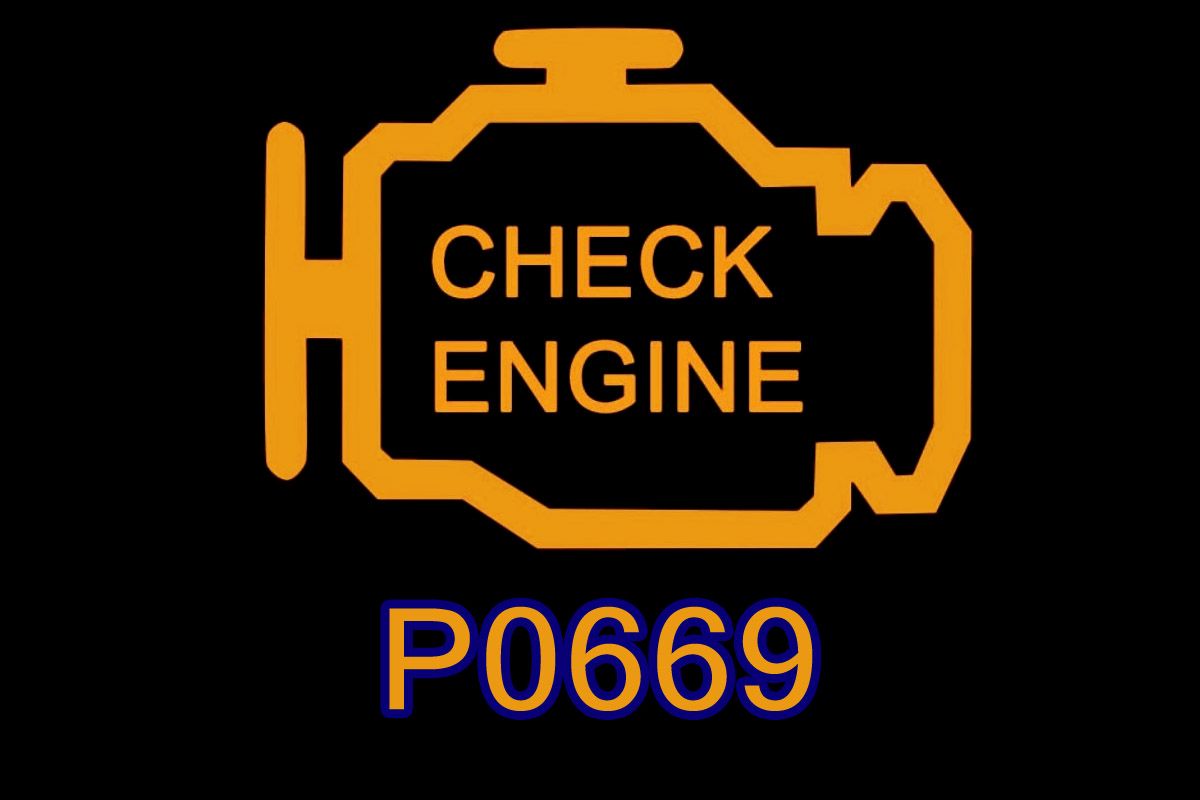
P0669 PCM/ECM/TCM Internal Temperature Sensor Circuit High
The P0669 – PCM/ECM/TCM Internal Temperature Sensor Circuit High diagnostic trouble code (DTC) indicates that the vehicle's control system has detected an abnormally high signal or voltage from an internal temperature sensor circuit inside the PCM, ECM, or TCM.
This code is different from a conventional engine coolant temperature sensor or transmission fluid temperature sensor fault. The sensor referenced by P0669 is associated with the internal temperature monitoring of a control module.
Depending on the vehicle, the module may use this temperature information to monitor its own operating temperature and protect its electronic components from excessive heat.
What Does P0669 Mean?
In simple terms:
The PCM, ECM, or TCM has detected an excessively high electrical signal from its internal temperature sensor circuit.
The control module contains sensitive electronic components that can be affected by excessive temperature.
An internal temperature sensor allows the module to monitor its own thermal condition.
When the signal from this sensor is outside the expected range on the high side, P0669 may be stored.
The fault may be related to:
-
Internal temperature sensor
-
Sensor circuit
-
Module power supply
-
Wiring
-
Connector
-
Internal control module circuitry
-
Control module software
-
Excessive module temperature
What Is the PCM/ECM/TCM?
The terminology depends on the vehicle.
PCM – Powertrain Control Module
The PCM can combine engine and transmission control functions in one module.
ECM – Engine Control Module
The ECM primarily controls engine operation.
TCM – Transmission Control Module
The TCM primarily controls the automatic transmission.
Some vehicles use separate modules, while others integrate several functions into a single control unit.
P0669 can therefore refer to the internal temperature monitoring circuit of the applicable powertrain control module.
What Does "Circuit High" Mean?
The word "High" in P0669 does not necessarily mean that the module is physically overheating.
It means the control system is detecting an electrical signal that is higher than the expected range for the internal temperature sensor circuit.
Depending on the sensor design, a high signal may correspond to an abnormal sensor reading rather than simply a high physical temperature.
This distinction is important.
You should not automatically assume that P0669 means the ECM is overheating.
What Causes P0669?
Possible causes include:
-
Internal temperature sensor failure
-
Internal PCM/ECM/TCM circuit failure
-
Damaged module connector
-
Corroded terminals
-
Wiring problem
-
Short to voltage
-
Poor electrical connection
-
Excessive module temperature
-
Control module power-supply problem
-
Ground problem
-
Software or calibration issue
-
Internal electronic component failure
The exact cause depends heavily on the vehicle's control-module design.
Can the Internal Temperature Sensor Fail?
Yes.
The internal temperature sensor can develop an electrical or electronic fault.
If the sensor is integrated directly into the control module circuit board, it may not be separately replaceable.
In such cases, repair may involve specialized electronic repair or replacement of the control module.
Can a Wiring Problem Cause P0669?
Yes, depending on the vehicle design.
If the internal temperature sensor has an external circuit, damaged wiring or a short to voltage can produce an excessively high signal.
Inspect the relevant harness and connector for:
-
Damaged wires
-
Short circuits
-
Corrosion
-
Loose terminals
-
Bent pins
-
Water intrusion
-
Poor previous repairs
Can a Bad Connector Cause P0669?
Yes.
A poor connection at the ECM, PCM, or TCM can alter the sensor signal.
Look for:
-
Corroded terminals
-
Loose pins
-
Bent contacts
-
Water contamination
-
Damaged connector locks
-
Poor terminal tension
Because control modules contain numerous circuits in a single connector, careful inspection is important.
Can Module Overheating Cause P0669?
Yes, potentially.
If the control module actually becomes excessively hot, its internal temperature monitoring system may detect the condition.
Possible causes of excessive module temperature include:
-
Poor ventilation
-
Heat from nearby engine components
-
Damaged module cooling arrangement
-
Incorrect module mounting
-
Excessive under-hood temperature
-
Electrical problems causing abnormal internal heat generation
However, a P0669 "circuit high" code does not by itself prove that the module is overheating.
Can a Bad Battery Cause P0669?
Possibly.
A weak battery or unstable electrical supply can sometimes cause control-module errors.
Check:
-
Battery voltage
-
Battery terminals
-
Ground connections
-
Cranking voltage
-
Charging voltage
If P0669 appears together with several unrelated electrical DTCs, system voltage should be checked early in the diagnostic process.
Can a Bad Alternator Cause P0669?
Potentially.
An alternator with excessive or unstable output can create abnormal electrical conditions throughout the vehicle.
Check the charging system if P0669 occurs together with:
-
Overvoltage codes
-
Undervoltage codes
-
Multiple module communication errors
-
Battery-related faults
Symptoms of P0669
Symptoms vary considerably depending on the vehicle and whether the problem is an actual overheating condition or an electrical sensor fault.
Possible symptoms include:
-
Check Engine Light
-
Transmission warning light
-
Reduced engine performance
-
Transmission shifting problems
-
Limp mode
-
Intermittent stalling
-
Difficult starting
-
Poor throttle response
-
Communication problems
-
Multiple warning lights
In some vehicles, there may be few noticeable symptoms apart from the Check Engine Light.
Can P0669 Cause Limp Mode?
Yes, it can.
If the vehicle's control system believes that a critical control module is operating outside its safe temperature range, it may activate a protective strategy.
Depending on the vehicle, this may involve:
-
Reduced engine power
-
Limited RPM
-
Restricted transmission operation
-
Fixed gear selection
-
Reduced torque
The exact strategy is manufacturer-dependent.
Can P0669 Cause Transmission Problems?
Yes, particularly when the TCM is involved.
If the TCM's internal temperature monitoring circuit reports an abnormal condition, the transmission control system may enter a protective mode.
Possible symptoms include:
-
Harsh shifting
-
Delayed shifting
-
Incorrect gear selection
-
Transmission stuck in one gear
-
Limp mode
-
Torque converter control problems
If P0669 is associated with the PCM rather than the TCM, transmission symptoms may not occur.
Can P0669 Cause Engine Problems?
Yes, depending on which module is affected.
If the ECM or PCM is affected, the vehicle may experience:
-
Reduced engine power
-
Poor throttle response
-
Stalling
-
Difficult starting
-
Irregular engine operation
However, P0669 does not automatically indicate an engine mechanical problem.
Can P0669 Cause a No-Start Condition?
It is possible, but not typical.
If the affected control module develops a serious internal fault, communication or engine-control functions may be disrupted.
A complete module failure can potentially result in a no-start condition.
If the engine does not start, however, other causes must also be investigated rather than assuming P0669 is solely responsible.
How Is P0669 Diagnosed?
Because P0669 can involve internal electronics, diagnosis should be systematic.
1. Scan all modules
Do not look only at the engine ECU.
Scan:
-
ECM
-
PCM
-
TCM
-
ABS module
-
Body control module
-
Other networked modules
Look for additional communication or voltage-related DTCs.
2. Check battery and charging voltage
Verify that the vehicle's electrical system is operating normally.
3. Inspect the control-module connector
Check for:
-
Corrosion
-
Water
-
Loose terminals
-
Bent pins
-
Damaged locks
4. Inspect related wiring
If the sensor circuit has an external connection, inspect the wiring carefully.
5. Check for excessive module temperature
Determine whether the module is actually becoming unusually hot.
Check the module's location, ventilation, mounting, and surrounding heat sources.
6. Check live data
If supported by the diagnostic scanner, monitor the internal module temperature.
Compare the reported temperature with realistic ambient and module temperatures.
7. Check for software updates
Some manufacturers may have updated software or calibrations addressing module temperature-monitoring problems.
8. Evaluate the module itself
If the external wiring, power, ground, and environmental conditions are correct, internal module failure becomes more likely.
Can a Scan Tool Diagnose P0669?
Yes, and a capable scan tool can be extremely useful.
Depending on the vehicle, it may display:
-
Internal module temperature
-
Module voltage
-
Module status
-
Freeze-frame data
-
Communication status
-
Additional manufacturer-specific DTCs
Freeze-frame data is particularly useful because it can show the conditions under which P0669 was stored.
Why Is Freeze-Frame Data Important?
Freeze-frame information may show:
-
Engine RPM
-
Vehicle speed
-
Coolant temperature
-
Battery voltage
-
Ambient temperature
-
Transmission temperature
-
Module operating conditions
If P0669 occurred while the module was extremely hot, this supports a thermal problem.
If the reported internal temperature is implausible even when the vehicle is cold, an electrical or internal sensor fault becomes more likely.
What If P0669 Appears When the Engine Is Cold?
This is an important diagnostic clue.
If the vehicle has been sitting for several hours and the control module reports an extremely high internal temperature, the actual module temperature is unlikely to explain the reading.
This points more strongly toward:
-
Sensor fault
-
Circuit fault
-
Internal module problem
-
Incorrect signal
What If P0669 Appears Only When the Vehicle Is Hot?
A temperature-dependent fault can indicate:
-
Actual module overheating
-
Heat-related electronic failure
-
Wiring expansion or movement
-
Connector problems
-
Internal circuit failure
Compare live data and freeze-frame information when the fault occurs.
Can P0669 Be Caused by Poor Ground?
Yes, potentially.
A poor ground can alter voltage references and cause control modules to interpret sensor signals incorrectly.
Check:
-
Module ground
-
Engine ground strap
-
Battery negative connection
-
Chassis ground
-
Voltage drop under load
Can P0669 Be Caused by Water Damage?
Yes.
Water entering the control-module connector can cause:
-
Corrosion
-
Short circuits
-
Increased resistance
-
False sensor readings
-
Communication problems
If the vehicle has recently experienced flooding, heavy water exposure, or engine-bay washing, inspect the module and connector carefully.
Can Software Cause P0669?
Possibly.
A software or calibration issue can result in an incorrect interpretation of internal temperature data.
If the manufacturer has released a software update or technical service information related to the fault, updating or reprogramming the module may resolve the problem.
Is P0669 a Serious Code?
It can be serious, depending on the cause.
If the code is caused by an internal sensor circuit problem but the module is otherwise operating normally, the vehicle may continue to run.
However, if the module is genuinely overheating or beginning to fail internally, continued operation could lead to:
-
Intermittent engine problems
-
Transmission problems
-
Limp mode
-
Stalling
-
No-start conditions
-
Communication failures
For this reason, P0669 should not simply be cleared and ignored.
Can You Drive With P0669?
Short-term driving may be possible if the vehicle operates normally, but the fault should be diagnosed as soon as practical.
Avoid continued driving if you experience:
-
Sudden loss of power
-
Stalling
-
Transmission malfunction
-
Repeated limp mode
-
Multiple warning lights
-
No-start conditions
-
Strong electrical burning smell
These symptoms can indicate a more serious control-module or electrical problem.
How Is P0669 Repaired?
The repair depends on the confirmed cause.
Possible repairs include:
-
Repairing wiring
-
Repairing or replacing damaged terminals
-
Cleaning corrosion from connectors
-
Repairing module power or ground
-
Correcting charging-system voltage
-
Improving module cooling or mounting
-
Updating module software
-
Repairing the internal temperature sensor circuit
-
Repairing the control module
-
Replacing and programming the control module
If the temperature sensor is integrated into the module, replacing the sensor separately may not be possible.
Does P0669 Mean the ECM/PCM/TCM Must Be Replaced?
No.
This is one of the most important points when diagnosing this code.
A control-module replacement should generally be considered only after checking:
-
Battery voltage
-
Charging voltage
-
Power supply
-
Ground
-
Connector condition
-
Wiring
-
Communication
-
Actual module temperature
-
Live-data plausibility
-
Software/calibration
Replacing an expensive control module without testing these items can result in an unnecessary repair.
Can the Module Be Repaired?
Sometimes.
If the internal temperature sensor or another electronic component on the circuit board has failed, specialized electronic repair may be possible.
Whether this is practical depends on:
-
Module design
-
Availability of replacement components
-
Manufacturer procedures
-
Repair specialist capability
-
Vehicle immobilizer and programming requirements
If the module is replaced, programming or configuration may be required.
Common Diagnostic Mistakes
Assuming "Circuit High" means the ECM is physically overheating
The code describes an electrical signal condition. It does not automatically prove excessive physical temperature.
Replacing the control module immediately
Power, ground, wiring, connector, and software should be checked first.
Ignoring system voltage
Low or unstable voltage can create electronic control-module faults.
Ignoring other DTCs
Additional communication or voltage codes can provide important clues.
Clearing the code without checking freeze-frame data
Freeze-frame information can reveal whether the fault occurred during a genuine high-temperature condition.
P0669 vs. Other Internal Temperature Sensor Codes
The final digit identifies the type of electrical condition.
P0669 → PCM/ECM/TCM Internal Temperature Sensor Circuit High
Related codes in this group may include:
P0668 → PCM/ECM/TCM Internal Temperature Sensor Circuit Low
The exact diagnostic interpretation can vary by manufacturer, so vehicle-specific service information should always be consulted.
How Do You Clear P0669?
The correct process is:
Scan all modules → Record all DTCs → Check freeze-frame data → Check battery and charging voltage → Inspect module power and ground → Inspect connectors → Check wiring → Verify actual module temperature → Check live data → Check software updates → Repair the confirmed fault → Clear the DTC → Test-drive the vehicle → Rescan
If P0669 returns, the underlying problem has not been resolved.
Final Thoughts on P0669
P0669 – PCM/ECM/TCM Internal Temperature Sensor Circuit High indicates that the control system has detected an abnormally high signal from the internal temperature sensor circuit of the applicable powertrain control module.
Possible causes include an internal sensor fault, wiring or connector problem, short to voltage, poor ground, unstable system voltage, excessive module temperature, software issue, or internal control-module failure.
The most important diagnostic point is that P0669 does not automatically mean the ECM, PCM, or TCM is overheating or must be replaced.
A proper diagnostic sequence should be:
Check freeze-frame data → Check battery and charging voltage → Inspect module power and ground → Inspect connectors and wiring → Verify actual module temperature → Check live data → Check software → Evaluate the control module.
If the vehicle also experiences limp mode, transmission problems, stalling, repeated warning lights, or intermittent no-start conditions, the fault should be investigated promptly because a failing powertrain control module can eventually affect critical engine or transmission functions.