TR
TR EN
EN

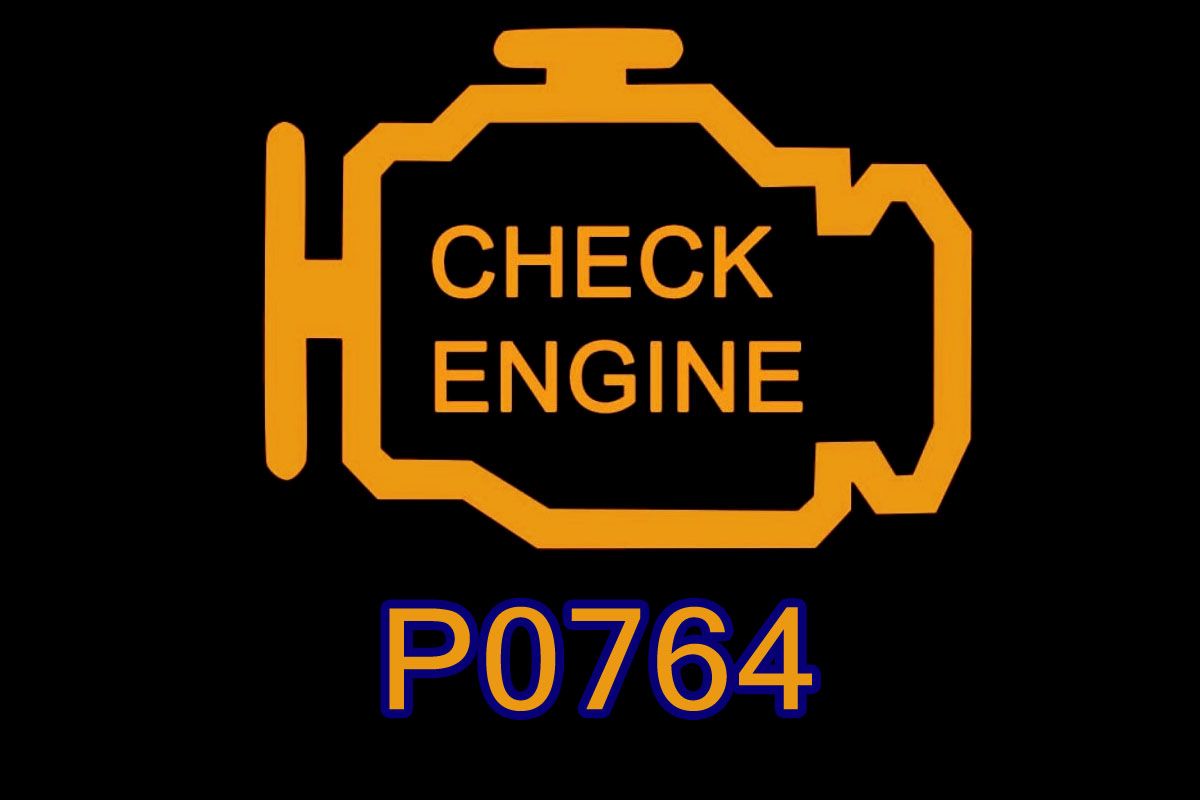
P0764 Shift Solenoid "C" Intermittent
The P0764 trouble code is an OBD-II diagnostic trouble code associated with Shift Solenoid "C" in an automatic transmission.
P0764 – Shift Solenoid "C" Intermittent
This code means that the Transmission Control Module (TCM) has detected an intermittent or inconsistent problem involving Shift Solenoid "C" or its control circuit.
Unlike a code indicating that the solenoid is permanently stuck ON or OFF, P0764 indicates that the problem comes and goes. The solenoid may work normally for several minutes, several gear changes, or even several driving cycles before the abnormal condition appears again.
This makes P0764 particularly important to diagnose carefully because the vehicle may appear to operate normally when the technician is testing it.
The cause can be electrical, mechanical or hydraulic. Common possibilities include a loose connector, damaged wiring, corrosion, an internally failing solenoid, contaminated transmission fluid, a sticking valve or an intermittent TCM control problem.
What Does P0764 Mean?
Automatic transmissions use electronically controlled solenoids to regulate hydraulic fluid.
The TCM continuously changes the operating state of these solenoids according to:
-
Vehicle speed
-
Engine load
-
Throttle position
-
Transmission temperature
-
Selected gear
-
Input shaft speed
-
Output shaft speed
-
Driving conditions
The basic control process is:
TCM → Electrical Command → Shift Solenoid "C" → Hydraulic Circuit → Gear/Clutch Operation
Normally, Solenoid "C" should respond consistently to the TCM's commands.
With P0764, the TCM detects that the expected operation is intermittent or inconsistent.
For example, the system may behave normally:
ON → OFF → ON → OFF
and then suddenly produce:
ON → OFF → No response → ON
The exact detection criteria vary by transmission manufacturer.
What Is Shift Solenoid "C"?
Shift Solenoid "C" is an electronically controlled valve used to regulate transmission-fluid flow.
Depending on the transmission design, it may influence:
-
Gear changes
-
Clutch application
-
Brake application
-
Shift timing
-
Hydraulic pressure
-
Specific gear combinations
The letter "C" does not represent a universally standardized gear function.
A Solenoid "C" in one transmission may perform a different hydraulic function from Solenoid "C" in another transmission.
Therefore, the exact function of the solenoid must be determined from the manufacturer's transmission documentation.
What Does "Intermittent" Mean?
The word intermittent is the most important part of P0764.
It means the problem does not remain present continuously.
For example, the vehicle may:
-
Shift normally when cold
-
Develop a problem after warming up
-
Work normally at low speeds
-
Fail during a specific gear change
-
Work after restarting the engine
-
Fail again later
-
Operate normally during one road test and fail during another
This behavior often points toward a connection, wiring or temperature-sensitive component.
Why Are Intermittent Transmission Faults Difficult to Diagnose?
A permanent failure is relatively easy to reproduce.
An intermittent fault is different.
The technician may inspect the vehicle and find:
-
Normal solenoid resistance
-
Normal connector voltage
-
Normal wiring continuity
-
Normal shifting
Yet the code remains stored.
This is why intermittent faults require more than a simple resistance measurement.
A connection may be perfect when stationary but fail because of:
-
Vibration
-
Heat
-
Harness movement
-
Engine/transmission movement
-
Moisture
-
Corrosion
-
Thermal expansion
Symptoms of P0764
The symptoms depend on the transmission and the hydraulic function of Solenoid "C".
Possible symptoms include:
-
Check Engine Light
-
Transmission warning light
-
Intermittent harsh shifting
-
Intermittent delayed shifting
-
Erratic gear changes
-
Transmission slipping
-
Shift flare
-
Unexpected downshifting
-
Failure to shift
-
Missing gear
-
Transmission stuck in one gear
-
Delayed Drive engagement
-
Delayed Reverse engagement
-
Limp mode
-
Reduced acceleration
-
Poor fuel economy
-
Increased transmission temperature
The important characteristic is that the symptoms may disappear temporarily.
What Does P0764 Feel Like While Driving?
The transmission may shift perfectly and then suddenly shift harshly.
This is a classic characteristic of an intermittent solenoid or circuit problem.
A gear may occasionally fail to engage.
The transmission can hesitate before completing a shift.
Engine RPM may suddenly rise.
If clutch engagement is interrupted, the engine can flare during the shift.
The transmission may suddenly enter limp mode.
After cycling the ignition, the vehicle may temporarily return to normal operation.
The problem may become worse as the transmission heats up.
An internally failing solenoid can behave differently at different temperatures.
Common Causes of P0764
Intermittently failing Shift Solenoid "C"
The solenoid may be beginning to fail internally.
Loose electrical connection
A connector terminal may lose contact because of vibration.
Corroded connector
Corrosion can create increased resistance or intermittent electrical contact.
Damaged wiring
A wire can be partially broken internally while still appearing intact from the outside.
Harness movement
Transmission movement can cause an intermittent open circuit.
Heat-damaged wiring
High temperatures can affect insulation and electrical connections.
Transmission-fluid contamination
Debris can cause the solenoid to stick intermittently.
Sticking solenoid plunger
The solenoid may work when cold but begin sticking when fluid temperature changes.
Valve-body problem
A hydraulic valve may intermittently stick because of contamination or wear.
Internal transmission harness problem
The internal wiring harness may have an intermittent connection.
Low transmission-fluid level
Low fluid can contribute to unstable hydraulic operation.
Incorrect transmission fluid
Incorrect fluid characteristics can affect hydraulic control.
TCM control problem
An intermittent TCM driver or control issue is possible, although less common than wiring or solenoid problems.
Is P0764 Serious?
P0764 can become serious if it affects transmission operation.
Because the problem is intermittent, some drivers may ignore it after the symptoms disappear.
That can be a mistake.
If the affected solenoid controls a clutch or gear-change circuit, repeated incorrect operation can cause:
-
Clutch slip
-
Harsh engagement
-
Excessive heat
-
Accelerated wear
-
Additional transmission faults
The good news is that P0764 does not automatically mean that the transmission needs to be rebuilt or replaced.
An intermittent electrical connection or solenoid may be the actual cause.
Can You Drive With P0764?
If the vehicle is currently shifting normally, a short drive to a repair facility may be possible.
However, intermittent transmission faults should not be ignored simply because the vehicle temporarily feels normal.
Stop driving and have the vehicle inspected if you experience:
-
Severe slipping
-
Violent shifting
-
Loss of Drive
-
Loss of Reverse
-
Transmission overheating
-
Repeated limp mode
-
Strong burning transmission-fluid smell
P0764 vs. P0761
P0761 – Shift Solenoid "C" Performance / Stuck Off
The system detects that Solenoid "C" is not performing correctly or appears to be stuck OFF.
P0764 – Shift Solenoid "C" Intermittent
The problem occurs inconsistently.
P0764 vs. P0762
P0762 – Shift Solenoid "C" Stuck On
The solenoid is detected as remaining active.
P0764 – Shift Solenoid "C" Intermittent
The solenoid or its circuit behaves abnormally only at certain times.
P0764 vs. P0763
P0763 – Shift Solenoid "C" Electrical
The code identifies an electrical malfunction involving Solenoid "C".
P0764 – Shift Solenoid "C" Intermittent
The abnormality is specifically intermittent.
If P0763 and P0764 appear together, the electrical circuit deserves particularly careful inspection.
P0764 vs. P0760
P0760 – Shift Solenoid "C" Malfunction
A general malfunction involving Solenoid "C".
P0764 – Shift Solenoid "C" Intermittent
The system has identified inconsistent operation.
Where Is Shift Solenoid "C"?
Its location varies according to transmission design.
It may be:
-
Inside the transmission
-
Installed in the valve body
-
Beneath the transmission pan
-
Part of a solenoid pack
-
Integrated into a mechatronic unit
Some transmissions provide direct access to individual solenoids.
Other designs require removal of the valve body or solenoid assembly.
How to Diagnose P0764
Intermittent faults require a slightly different diagnostic strategy than permanent faults.
1. Scan the TCM for all codes
Use a professional scan tool to retrieve:
-
Current codes
-
Stored codes
-
Pending codes
-
Freeze-frame data
-
Transmission temperature
-
Commanded gear
-
Actual gear
-
Solenoid commands
-
Input speed
-
Output speed
Do not focus only on P0764.
Another code may reveal the actual cause.
2. Check the freeze-frame data
Determine the conditions under which the code was recorded.
Pay attention to:
-
Vehicle speed
-
Engine RPM
-
Transmission temperature
-
Throttle position
-
Engine load
-
Selected gear
-
Battery voltage
If the code always appears at a specific temperature or during a particular shift, this is valuable diagnostic information.
3. Determine whether the fault is temperature-related
Test the vehicle when:
-
Cold
-
Warm
-
Fully at operating temperature
An internally failing solenoid may only malfunction once the transmission reaches a particular temperature.
4. Inspect the transmission connector
Look carefully for:
-
Corrosion
-
Loose pins
-
Bent terminals
-
Water intrusion
-
Fluid contamination
-
Damaged locking mechanism
An intermittent connector problem can be difficult to see.
5. Perform a wiggle test
With the appropriate precautions, move the wiring harness while monitoring the solenoid circuit or scan-tool data.
If the signal changes when the harness moves, an intermittent wiring problem becomes highly likely.
6. Inspect the entire harness
Look for:
-
Chafing
-
Broken insulation
-
Pinched wires
-
Melted insulation
-
Areas rubbing against metal
-
Poor previous repairs
A wire can be internally broken even when its insulation looks normal.
7. Test circuit continuity
Check the Solenoid "C" circuit between the TCM and transmission.
However, a basic continuity test may not reveal a fault that only occurs under vibration or heat.
8. Test for voltage drops
Voltage-drop testing can reveal resistance in:
-
Connectors
-
Terminals
-
Ground circuits
-
Power feeds
-
Wiring
This is often more useful than simply checking whether continuity exists.
9. Measure solenoid resistance
Measure Solenoid "C" resistance according to the manufacturer's procedure.
Compare the reading with the vehicle-specific specification.
It is useful to repeat the test at different temperatures if the manufacturer's procedure permits it.
A solenoid that changes dramatically with temperature may indicate an internal fault.
10. Monitor the solenoid command
Use a scan tool to observe whether the TCM commands Solenoid "C" ON and OFF consistently.
If the command changes correctly but the transmission does not respond, the problem may be mechanical or hydraulic.
11. Check the actual control signal
An oscilloscope can be useful when the solenoid uses PWM control.
This can reveal:
-
Missing signals
-
Irregular signals
-
Voltage abnormalities
-
Intermittent dropouts
12. Inspect the transmission fluid
Check the fluid for:
-
Correct level
-
Correct specification
-
Abnormal color
-
Burnt odor
-
Metal particles
-
Clutch material
Contamination can cause intermittent solenoid sticking.
13. Inspect the internal harness
If the external wiring passes inspection, the internal transmission harness should be considered.
Internal connectors can develop intermittent faults that only appear with temperature or vibration.
14. Test the solenoid mechanically
If the electrical circuit is good, the solenoid should be checked for mechanical movement.
A solenoid can have normal electrical resistance and still stick intermittently.
15. Inspect the valve body
If the solenoid command and electrical circuit are normal but hydraulic operation is inconsistent, inspect the valve body.
Possible problems include:
-
Sticking valves
-
Worn valve bores
-
Contamination
-
Restricted passages
-
Internal hydraulic leakage
16. Check hydraulic pressure
If necessary, perform hydraulic pressure testing according to the manufacturer's specifications.
Pressure that changes unexpectedly can help identify a hydraulic problem.
17. Evaluate the TCM
Only after the solenoid, wiring, connectors and hydraulic components have been tested should the TCM become a primary suspect.
Can a Bad Shift Solenoid Cause P0764?
Yes.
An internally failing solenoid can work normally under some conditions and fail under others.
Temperature is particularly important.
Can Wiring Cause P0764?
Yes, and wiring should be one of the first things checked.
Possible problems include:
-
Partially broken wire
-
Chafing
-
Loose terminal
-
Corrosion
-
Intermittent short
-
Poor repair
Can a Bad Connector Cause P0764?
Yes.
A connector that loses contact because of vibration or temperature changes can produce an intermittent code.
Can Dirty Transmission Fluid Cause P0764?
Yes.
Contaminated fluid can cause the solenoid plunger or related valve to stick intermittently.
Can Low Transmission Fluid Cause P0764?
Low fluid can contribute to transmission-control problems, but it is not usually the direct cause of an electrical intermittent code.
The fluid level should nevertheless be checked.
Can a Bad Valve Body Cause P0764?
Yes.
A valve-body valve may stick intermittently because of contamination, wear or temperature-related changes.
Can a Bad TCM Cause P0764?
Yes, but it is not the first thing that should be replaced.
An intermittent TCM driver or internal control problem is possible, but the external circuit and solenoid should be verified first.
Can P0764 Cause Harsh Shifting?
Yes.
If Solenoid "C" participates in a shift-control circuit, intermittent operation can produce unpredictable hydraulic pressure changes.
Can P0764 Cause Transmission Slipping?
Yes, depending on the transmission.
If the affected circuit controls clutch engagement, intermittent pressure loss or incorrect pressure can cause slipping.
Can P0764 Cause Limp Mode?
Yes.
The TCM may enter a fail-safe strategy if it detects repeated abnormal solenoid operation.
Can P0764 Cause Transmission Overheating?
Potentially.
Repeated incorrect clutch engagement or slipping can increase transmission temperature.
Can P0764 Damage the Transmission?
It can if the problem is ignored for a long time.
An intermittent fault can become more frequent and eventually permanent.
If it causes clutch slip, every occurrence can generate additional heat and wear.
Common Diagnostic Mistakes With P0764
Replacing the solenoid immediately
The problem may actually be in the wiring or connector.
Testing the vehicle only when cold
An intermittent fault may only appear after the transmission becomes hot.
Performing only a static resistance test
The solenoid may measure correctly while cold and fail when hot.
Ignoring the wiring harness
A partially broken wire can be extremely difficult to identify visually.
Ignoring vibration
A connector may work perfectly while stationary but fail while driving.
Ignoring the internal harness
Some transmission faults originate inside the transmission.
Ignoring fluid contamination
Debris can cause intermittent mechanical sticking.
Replacing the TCM too early
The TCM should not be blamed before the complete circuit has been verified.
What Is the Correct Repair for P0764?
The correct repair depends on the cause.
Possible repairs include:
-
Replacing Shift Solenoid "C"
-
Repairing damaged wiring
-
Repairing an intermittent open circuit
-
Repairing a short circuit
-
Replacing damaged connector terminals
-
Cleaning corrosion
-
Repairing water intrusion
-
Repairing the internal transmission harness
-
Correcting transmission-fluid level
-
Using the correct transmission fluid
-
Servicing the valve body
-
Cleaning contaminated hydraulic passages
-
Repairing hydraulic-pressure problems
-
Updating TCM software where applicable
-
Reprogramming the TCM
-
Replacing the TCM if its failure is confirmed
How to Test the Vehicle After Repair
Because P0764 is intermittent, the post-repair test should be more thorough than simply clearing the code.
Verify that:
-
Solenoid "C" responds consistently
-
Electrical signals remain stable
-
Wiring does not lose continuity during movement
-
Connectors remain secure
-
Solenoid resistance remains within specification
-
Transmission fluid is at the correct level
-
Gear changes are smooth
-
No slipping occurs
-
No unexpected downshifts occur
-
Transmission temperature remains normal
-
Limp mode does not activate
-
No additional transmission codes appear
-
P0764 does not return
The vehicle should be tested under different temperatures, speeds, gears and throttle positions.
Frequently Asked Questions About P0764
What does P0764 mean?
P0764 means the transmission control system has detected an intermittent problem involving Shift Solenoid "C" or its control circuit.
Does P0764 mean Shift Solenoid "C" is bad?
No. The problem may be caused by wiring, connectors, contamination, the valve body or the TCM.
Can a loose connector cause P0764?
Yes.
Can a broken wire cause P0764?
Yes, particularly if the wire is only making contact intermittently.
Can dirty transmission fluid cause P0764?
Yes. Contamination can cause intermittent solenoid or valve sticking.
Can low transmission fluid cause P0764?
It can contribute to transmission problems, although it is not normally the direct cause of an electrical intermittent code.
Can a bad valve body cause P0764?
Yes.
Can a bad TCM cause P0764?
Yes, although it should be considered only after the solenoid and circuit have been properly tested.
Can P0764 cause harsh shifting?
Yes.
Can P0764 cause transmission slipping?
Yes, depending on the function of Solenoid "C".
Can P0764 cause limp mode?
Yes.
Can P0764 cause overheating?
It can if the intermittent fault causes clutch slip or repeated abnormal shifting.
Can I drive with P0764?
If the vehicle is currently shifting normally, a short drive to a repair facility may be possible. However, intermittent transmission problems should be diagnosed promptly because they can become more frequent.
Does P0764 mean the transmission needs to be replaced?
No. The problem may be caused by a solenoid, wiring, connector, valve body or control-system fault.
Final Thoughts on P0764
P0764 – Shift Solenoid "C" Intermittent indicates that the transmission control system has detected inconsistent operation involving Shift Solenoid "C".
The most important characteristic of this code is that the fault comes and goes.
A vehicle can shift perfectly during one test and behave incorrectly later. For that reason, simply measuring solenoid resistance once and finding a normal value is not enough.
A good diagnostic sequence is:
Scan Data → Freeze-Frame → Temperature Check → Wiring → Connectors → Wiggle Test → Voltage Drop → Solenoid → Internal Harness → Valve Body → Hydraulic Pressure → TCM
Particular attention should be given to temperature, vibration and wiring movement. These conditions can expose intermittent faults that are impossible to reproduce while the vehicle is stationary.
Most importantly, P0764 does not automatically mean that the transmission is damaged or that a complete transmission replacement is necessary. Finding the exact source of the intermittent fault before replacing expensive components is the key to a proper repair.