TR
TR EN
EN

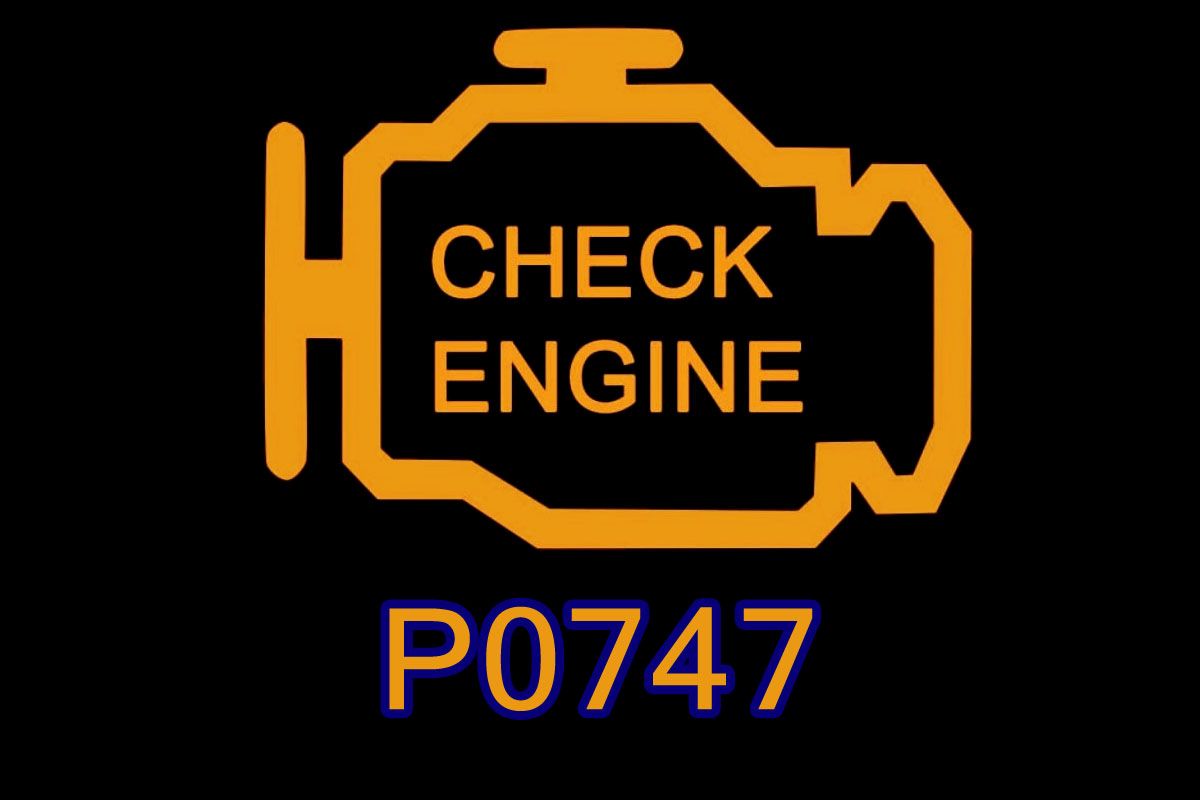
P0747 Pressure Control Solenoid "A" Stuck On
The P0747 trouble code is an OBD-II diagnostic trouble code related to the operation of Pressure Control Solenoid "A" in an automatic transmission.
P0747 – Pressure Control Solenoid "A" Stuck On
This code means that the Transmission Control Module (TCM) has detected that Pressure Control Solenoid "A" is remaining in the ON state when it should not, or that the transmission is showing a hydraulic condition consistent with the solenoid being stuck active.
The problem can be caused by a mechanically stuck solenoid, an electrical control problem, contaminated transmission fluid, a sticking valve in the valve body, damaged wiring, a shorted circuit or, less commonly, a TCM fault.
It is important to distinguish P0747 from P0748, which indicates an electrical fault, and P0749, which indicates an intermittent condition. P0747 is specifically associated with a stuck-ON condition.
What Does P0747 Mean?
An automatic transmission uses electronically controlled pressure-control solenoids to regulate transmission-fluid pressure.
The TCM constantly adjusts transmission pressure according to:
-
Engine load
-
Throttle position
-
Vehicle speed
-
Engine RPM
-
Transmission temperature
-
Selected gear
-
Input shaft speed
-
Output shaft speed
The simplified operating path is:
TCM → Pressure Control Solenoid "A" → Hydraulic Circuit → Clutch / Brake → Transmission Operation
When the TCM commands the solenoid to change state but detects that the hydraulic or electrical behavior remains consistent with the solenoid being ON, it can set:
P0747 – Pressure Control Solenoid "A" Stuck On
The exact detection strategy depends on the vehicle manufacturer.
What Is Pressure Control Solenoid "A"?
Pressure Control Solenoid "A" is an electronically controlled hydraulic valve responsible for regulating transmission-fluid pressure.
Depending on the transmission, it can affect:
-
Main line pressure
-
Clutch pressure
-
Shift quality
-
Clutch engagement
-
Shift timing
-
Torque converter operation
-
Transmission protection
The exact function varies considerably between transmission designs.
Therefore, the letter "A" does not identify the same physical or hydraulic function on every vehicle.
The manufacturer's transmission service information should be consulted to identify the exact solenoid and hydraulic circuit.
What Does "Stuck On" Mean?
"Stuck On" means that the transmission control system believes Pressure Control Solenoid "A" is remaining active when the TCM expects it to reduce or stop its operation.
There are several ways this can happen.
Mechanical sticking
The solenoid may physically remain open or active because of contamination or internal damage.
Electrical activation
A shorted control circuit may continuously energize the solenoid.
Valve-body problem
A hydraulic valve may remain in a position that produces the same result as an active solenoid.
Control-module problem
The TCM may incorrectly maintain the solenoid command.
This is why replacing the solenoid without testing the circuit can lead to an incorrect repair.
Symptoms of P0747
Possible symptoms include:
-
Check Engine Light
-
Transmission warning light
-
Harsh shifting
-
Firm gear changes
-
Delayed shifting
-
Erratic shifting
-
Transmission slipping
-
Engine RPM fluctuations
-
Delayed Drive engagement
-
Delayed Reverse engagement
-
Limp mode
-
Reduced acceleration
-
Poor fuel economy
-
Increased transmission temperature
The severity depends on the function of Pressure Control Solenoid "A" in the particular transmission.
What Does P0747 Feel Like While Driving?
Harsh shifts
If the solenoid causes excessive hydraulic pressure, clutch engagement may become too aggressive.
Delayed or abnormal shifts
Incorrect pressure control can interfere with the timing of gear changes.
RPM flare or slipping
If clutch pressure does not match the required operating condition, the transmission may slip.
Unexpected shift behavior
The TCM may not be able to establish the intended pressure.
Limp mode
The transmission may enter a fail-safe strategy to prevent additional damage.
Symptoms that change with temperature
A mechanically sticking solenoid may behave differently when the transmission is cold compared with when it is fully warmed up.
Common Causes of P0747
Pressure Control Solenoid "A" mechanically stuck
The solenoid may be contaminated or internally damaged.
Shorted solenoid circuit
A short to power can continuously energize the solenoid.
Damaged wiring
A damaged harness can create an unintended electrical connection.
Corroded connector
Corrosion can alter circuit resistance and solenoid control.
Loose connector terminal
Poor contact can produce abnormal solenoid operation.
Internal transmission harness problem
The fault may exist inside the transmission.
Contaminated transmission fluid
Debris can interfere with solenoid movement.
Sticking valve-body valve
A hydraulic valve may remain in the wrong position.
Worn valve body
Excessive wear can cause incorrect pressure control.
Low transmission-fluid level
Insufficient fluid can create hydraulic problems.
Incorrect transmission fluid
Incorrect fluid properties can affect hydraulic control.
Internal transmission wear
Worn clutches or seals can create pressure-control symptoms.
TCM failure
A failed output driver can potentially keep the solenoid energized.
Is P0747 Serious?
Yes, P0747 can be a serious transmission fault.
Pressure Control Solenoid "A" plays an important role in transmission hydraulic control.
If the solenoid remains active when it should not, the transmission may experience:
-
Excessive hydraulic pressure
-
Harsh shifts
-
Incorrect clutch engagement
-
Clutch slip
-
Excessive heat
-
Accelerated component wear
However, P0747 does not automatically mean that the transmission needs to be replaced.
The problem may be caused by a solenoid, wiring, connector, fluid contamination or valve-body problem.
Can You Drive With P0747?
It is best to limit driving until the problem has been diagnosed.
If the vehicle shifts normally and the warning light is the only symptom, a short trip to a repair facility may be possible.
However, avoid driving if you notice:
-
Severe slipping
-
Violent shifting
-
Loss of Drive
-
Loss of Reverse
-
Transmission overheating
-
Strong burnt-fluid smell
-
Severe loss of acceleration
-
Persistent limp mode
Continuing to drive while the transmission is slipping can turn a relatively simple repair into a much more expensive transmission problem.
P0747 vs. P0746
P0746 – Pressure Control Solenoid "A" Performance / Stuck Off
The solenoid is not producing the expected result or is detected as stuck OFF.
P0747 – Pressure Control Solenoid "A" Stuck On
The solenoid is detected as remaining active.
These codes describe different solenoid-state conditions.
P0747 vs. P0748
P0747 – Pressure Control Solenoid "A" Stuck On
The system detects a condition consistent with the solenoid remaining active.
P0748 – Pressure Control Solenoid "A" Electrical
The system identifies an electrical fault in the solenoid circuit.
A P0748 electrical problem can potentially cause incorrect solenoid operation, but the diagnostic descriptions are different.
P0747 vs. P0749
P0747 – Pressure Control Solenoid "A" Stuck On
The system detects a persistent or defined ON-state condition.
P0749 – Pressure Control Solenoid "A" Intermittent
The fault occurs inconsistently.
If a problem appears only occasionally, P0749 may be more appropriate depending on the manufacturer's diagnostic strategy.
P0747 vs. P0745
P0745 – Pressure Control Solenoid "A" Malfunction
A general malfunction involving the solenoid.
P0747 – Pressure Control Solenoid "A" Stuck On
A more specific condition in which the solenoid is detected as active when it should not be.
Where Is Pressure Control Solenoid "A"?
Its location depends on the transmission.
It may be:
-
Inside the transmission
-
Installed in the valve body
-
Beneath the transmission pan
-
Integrated into a solenoid pack
-
Part of a mechatronic assembly
Some transmissions permit individual solenoid replacement.
Others require removal or servicing of the complete valve-body or solenoid assembly.
How to Diagnose P0747
Diagnosis should determine whether the solenoid is electrically being held ON or mechanically stuck ON.
1. Scan the TCM
Retrieve all transmission-related codes.
Check:
-
Current codes
-
Pending codes
-
History codes
-
Freeze-frame data
-
Commanded solenoid state
-
Solenoid duty cycle
-
Transmission temperature
-
Vehicle speed
-
Engine RPM
-
Selected gear
Other codes may identify an underlying electrical or hydraulic issue.
2. Check freeze-frame data
Determine the conditions under which P0747 was stored.
Pay attention to:
-
Transmission temperature
-
Vehicle speed
-
Engine RPM
-
Throttle position
-
Engine load
-
Selected gear
-
Battery voltage
This can reveal whether the problem occurs during a specific shift or temperature range.
3. Check transmission fluid level
Verify the fluid level according to the manufacturer's procedure.
An incorrect fluid level can create additional hydraulic symptoms.
4. Inspect transmission fluid condition
Look for:
-
Burnt odor
-
Excessive darkening
-
Metal particles
-
Clutch material
-
Contamination
5. Inspect the transmission connector
Check for:
-
Corrosion
-
Loose terminals
-
Bent pins
-
Water intrusion
-
Fluid contamination
-
Damaged connector locks
6. Inspect the wiring
Look for:
-
Shorted wires
-
Chafing
-
Melted insulation
-
Pinched wires
-
Poor previous repairs
-
Harness contact with hot components
A short to power is particularly important when diagnosing a stuck-ON condition.
7. Determine the circuit configuration
Find out whether the solenoid is controlled through:
-
TCM-controlled power
-
TCM-controlled ground
-
A PWM circuit
-
Another manufacturer-specific configuration
This information is necessary before electrical testing.
8. Check for a short to power
If the control wire remains powered when the TCM commands the solenoid OFF, a shorted circuit may be keeping the solenoid active.
9. Check the TCM command
Use a suitable scan tool to determine whether the TCM is actually commanding the solenoid ON.
This is one of the most important diagnostic steps.
If the TCM commands OFF but the circuit remains energized, the problem may be electrical.
If the TCM commands OFF and the electrical circuit also turns OFF but hydraulic pressure remains high, a mechanical or hydraulic problem becomes more likely.
10. Measure solenoid resistance
Compare the resistance with the manufacturer's specification.
An abnormally low resistance can indicate an internal short.
An open circuit can indicate a failed coil.
However, resistance alone cannot determine whether the solenoid is mechanically stuck.
11. Test the solenoid under command
If supported, command the solenoid ON and OFF using appropriate diagnostic equipment.
Observe whether its electrical state changes correctly.
12. Check voltage and current
Where applicable, verify that current changes appropriately as the TCM changes the solenoid command.
A current measurement can be particularly useful for identifying an electrical short or an internally damaged coil.
13. Inspect the internal transmission harness
If the external circuit is correct, inspect the internal harness.
Internal harness damage can cause solenoid-control problems that are not visible from outside the transmission.
14. Check hydraulic pressure
Measure transmission pressure where the manufacturer's procedure provides test points.
Compare actual pressure with the expected pressure.
15. Inspect the valve body
If the electrical circuit is correct but pressure remains abnormal, inspect the valve body for:
-
Sticking valves
-
Debris
-
Restricted passages
-
Worn valve bores
-
Internal leakage
16. Inspect the solenoid mechanically
If the solenoid is receiving the correct electrical command but remains hydraulically active, it may be mechanically stuck.
17. Evaluate internal transmission components
If the solenoid and valve body are functioning correctly but pressure remains abnormal, internal transmission wear may need to be investigated.
18. Test the TCM
If the wiring, solenoid and hydraulic components are verified, the TCM control driver may need to be tested.
The TCM should not be replaced solely because P0747 is present.
Can a Bad Pressure Control Solenoid Cause P0747?
Yes.
A mechanically stuck solenoid or internally shorted solenoid coil can cause P0747.
Can Wiring Cause P0747?
Yes.
A shorted control wire can keep the solenoid energized.
Can a Bad Connector Cause P0747?
Yes.
A damaged or contaminated connector can alter solenoid control.
Can Dirty Transmission Fluid Cause P0747?
Yes.
Contaminated fluid can cause the solenoid or valve body to stick.
Can Low Transmission Fluid Cause P0747?
Low fluid can cause hydraulic problems, although it is not normally the direct reason a solenoid becomes electrically stuck ON.
The fluid level should nevertheless be checked.
Can a Bad Valve Body Cause P0747?
Yes.
A sticking valve can produce hydraulic behavior consistent with a solenoid remaining active.
Can a Bad TCM Cause P0747?
Yes, although it is less common.
A failed TCM output driver can continuously command the solenoid.
Electrical testing should be performed before replacing the module.
Can P0747 Cause Harsh Shifting?
Yes.
If the solenoid causes excessive pressure, clutch engagement can become too aggressive.
Can P0747 Cause Transmission Slipping?
Yes, depending on the transmission.
Incorrect pressure control can result in improper clutch engagement.
Can P0747 Cause Limp Mode?
Yes.
The TCM may enter fail-safe mode to protect the transmission.
Can P0747 Cause Transmission Overheating?
Yes, potentially.
Abnormal clutch operation or repeated shifting problems can increase transmission temperature.
Can P0747 Damage the Transmission?
Yes, if ignored.
Continued abnormal pressure control can contribute to:
-
Clutch wear
-
Excessive heat
-
Fluid degradation
-
Valve-body wear
-
Internal transmission damage
Common Diagnostic Mistakes With P0747
Replacing the solenoid immediately
The solenoid may be mechanically fine while the wiring is keeping it energized.
Ignoring a short to power
A shorted control wire is an important possibility with a stuck-ON code.
Checking only solenoid resistance
A normal resistance reading does not prove that the solenoid is mechanically functioning correctly.
Ignoring the valve body
A sticking hydraulic valve can create the same pressure behavior.
Replacing the valve body without testing the electrical circuit
The problem may be an electrical short.
Replacing the TCM too early
The TCM should be considered only after the complete circuit has been verified.
Assuming the transmission needs replacement
P0747 does not automatically indicate catastrophic internal transmission damage.
What Is the Correct Repair for P0747?
The correct repair depends on the confirmed cause.
Possible repairs include:
-
Replacing Pressure Control Solenoid "A"
-
Repairing a shorted control wire
-
Repairing damaged wiring
-
Repairing an open or high-resistance circuit
-
Replacing damaged connector terminals
-
Cleaning electrical corrosion
-
Repairing water intrusion
-
Repairing the internal transmission harness
-
Correcting transmission-fluid level
-
Using the correct transmission fluid
-
Servicing the valve body
-
Cleaning contaminated hydraulic passages
-
Repairing worn valve bores
-
Repairing hydraulic-pressure problems
-
Updating TCM software where applicable
-
Reprogramming the TCM
-
Replacing the TCM if its failure is confirmed
How to Test the Vehicle After Repair
After the repair, verify that Pressure Control Solenoid "A" responds correctly to TCM commands.
Check that:
-
The solenoid turns ON and OFF as commanded
-
The control circuit is not shorted
-
Solenoid resistance is within specification
-
Power and ground are correct
-
Connector terminals are secure
-
Wiring remains stable
-
Hydraulic pressure is within specification
-
Gear changes are normal
-
No slipping occurs
-
Transmission temperature remains normal
-
Limp mode does not activate
-
No additional transmission codes appear
-
P0747 does not return
The road test should include different gears, speeds, throttle positions and transmission temperatures.
Frequently Asked Questions About P0747
What does P0747 mean?
P0747 means the transmission control system has detected that Pressure Control Solenoid "A" is stuck ON or is producing a condition consistent with remaining active.
Does P0747 mean the pressure-control solenoid is bad?
No. Wiring, a short circuit, contaminated fluid, the valve body and the TCM can also cause the code.
Can a shorted wire cause P0747?
Yes.
Can a bad connector cause P0747?
Yes.
Can dirty transmission fluid cause P0747?
Yes. Contamination can cause mechanical sticking.
Can low transmission fluid cause P0747?
It can contribute to hydraulic problems, although it is not normally the direct cause of an electrically stuck solenoid.
Can a bad valve body cause P0747?
Yes.
Can a bad TCM cause P0747?
Yes, although it is less common.
Can P0747 cause harsh shifting?
Yes.
Can P0747 cause transmission slipping?
Yes, depending on the transmission's hydraulic design.
Can P0747 cause limp mode?
Yes.
Can P0747 cause transmission overheating?
It can, especially if abnormal pressure results in clutch slip or repeated harsh engagement.
Can I drive with P0747?
If the vehicle is shifting normally, a short trip to a repair facility may be possible. If there is severe slipping, violent shifting, overheating or loss of gears, continued driving should be avoided.
Does P0747 mean the transmission needs to be replaced?
No. The fault may be caused by a solenoid, wiring, connector, valve body or TCM.
Final Thoughts on P0747
P0747 – Pressure Control Solenoid "A" Stuck On indicates that the transmission control system has detected an ON-state condition from Pressure Control Solenoid "A" when the solenoid should not remain active.
The most important diagnostic question is:
Is the solenoid actually stuck ON, or is an electrical or hydraulic problem making it appear stuck ON?
A logical diagnostic sequence is:
Scan Tool → Freeze-Frame → Fluid → Connector → Wiring → Short-to-Power Test → TCM Command → Solenoid Test → Internal Harness → Hydraulic Pressure → Valve Body → Internal Transmission → TCM
Do not automatically replace the solenoid or transmission.
A relatively simple problem such as a shorted wire, damaged connector or contaminated solenoid can produce P0747. On the other hand, if the electrical system is functioning correctly, the diagnosis should move toward the solenoid, valve body and hydraulic system.
Finding the actual cause is essential because continuing to operate a transmission with incorrect pressure control can eventually lead to clutch wear, overheating and more expensive internal transmission damage.